
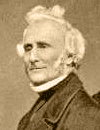
Thoughts on 2 Corinthians From Miscellaneous Papers
The sermon explores the fear of worldliness in 2 Corinthians and the apostle's response to it, highlighting the importance of valuing power in the Spirit and excluding the flesh and its advantages.
John Gifford Bellett discusses the various fears expressed by the Spirit concerning the churches, including warnings against Judaizing, infidelity, abusing grace, and worldliness. In 2 Corinthians, the apostle addresses the fear of worldliness specifically in the Corinthian church, where they were influenced by a man of worldly advantages and were drawn to outward appearances. The apostle contrasts his own ministry, focused on spiritual strength and weakness in Christ, with the corrupting influence of the worldly man in Corinth, urging believers not to be unequally yoked with such influences.
Text
In the midst of the fears and warnings of the Spirit concerning the churches, we may observe that He is alarmed for them on several and different grounds, as expressed in different epistles and by different apostles.
1. He specially warns them respecting Judaizing, i.e., religiousness, or the observance of rites and ordinances. This fear is expressed in the letters to Galatia, Colosse, and Philippi.
2. He fears for them respecting the working of an infidel mind, the mind which, corrupted by reasoning, denies mysteries. This is seen in 1 John 4: 1; 2 Peter 3: 3, 4.
3. He fears for them also on the ground of abusing grace, or licentiousness, the practical denial of godliness while boasting in grace and liberty. This is seen in 2 Peter 2 and in Jude.
4. He fears also worldliness.
It is this last feature of fear filling the mind of the Spirit about the saints or churches, and shaping apostolic ministry, which has just struck me in connection with 2 Corinthians.
This is a distinct character of fear. It is not an apprehension of religiousness, or infidelity, or licentiousness corrupting the churches; it is formally distinct from each of these. The Grecian style may have exposed the Corinthians specially to a simple worldly attraction, to the pretensions of a man of refinement and station and independence, -- who had much in the flesh; that is, from nature and from circumstances, that was attractive and showy. This was worldliness.
The fear about Corinth was not respecting religious or Judaizing influence. Neither was it (at least in the second epistle) from the working of an infidel mind, or from the sports of an unclean and lustful nature, but "the god of this world " was feared by the apostle.
A certain man appears to have gained attention, who had much more both from nature and from circumstances than the apostle; and the saints at Corinth were moved by this. He was, I believe, as modern language speaks, a gentleman. He had a fine person and an independent fortune. He had many advantages of that kind; and the Corinthians were under that evil influence -- to some extent they had been beguiled. They were looking on things after the outward appearance. They were suffering a man vaunting of himself, and lording it over them, and taking occasion by some low and worldly advantages he possessed from nature and from circumstances to be somebody.
Such a bad condition the apostle has to contend with. Affection and confidence toward himself had been withdrawn in measure, because he had no such advantages to boast. And surely he was fully purposed not to affect such things at all. If is true, he would be independent as well as the other, but it should arise from his working with his own hand, not from advantages of fortune, as we say. And though he had certain things of which he might boast in the flesh, he would glory rather in his infirmities. He would be "weak in Christ," i.e., in fellowship with Him who was "crucified in weakness," that all his strength might be spiritual, or resurrection-strength.
The natural advantages which this man had he used, taking to himself the importance and value which attach to such things in the world. And some of the saints were corrupted. But against such association he protests in 2 Cor. 6, "Be ye not unequally yoked," he says. And the manner of this man he exposes more fully, setting big own way forth as contrary to it, in 2 Cor. 10 - 12.
And in doing this, in offering himself as a practical witness of a way different from this man of the world, we may notice these particulars:
1. The apostle refuses to know himself, or to be known by the saints, save according to his measure in the Spirit, and not as he was by nature or in the flesh.
2. He glories only in either his infirmities or in such dignities as separated him from all worldly estimation, as his, rapture into paradise; for the world would not understand such honour.
Such an one does the apostle present himself in contradiction of the man who gloried in the flesh. We may know how hard it is to follow him in such a path, in a willingness to be weak -- that we may be strong; in his decision to know Christ in the weakness of His cross, so that whatever strength he knew might be as of resurrection. (2 Cor. 13: 4)
I dare say some were tempted to undervalue the office or apostleship of Paul, because he had not the advantage in the flesh of other apostles. He had not companied with the Lord in the days of His flesh; and in his own flesh he had a thorn. This may further have exposed him to observation by those who judged after the flesh. But the apostle was willing that his ministry or office should remain unrecommended by anything the world could appreciate. He valued only that power of God, that power in the Spirit which accompanied his ministry, and which was fitted to tell on hearts and consciences, power which linked him with the Lord in life or resurrection.*
*These features in Paul's ministry show how the flesh is now excluded, and all its advantages, from the divine idea of ministry.
Every symptom of weakness in man's account gathered round the blessed Lord in the day of His crucifixion: desertion and denial by those who should have stood with Him, the enmity of man in every form in which it could have expressed itself, the forsaking of God, all the malice and purpose of Satan. This was the full exhibition of all that was weak, miserable, and despised in the world's account. None were for Jesus, all was against Him, and even nature seemed to join. But Paul was willing that his ministry should be in moral sympathy with His.
Generally, as to this epistle, I would say, it might distribute itself as follows:
2 Cor. 1 - 2: 13. In this portion the apostle speaks of his trials in the gospel, and answers Objections made to him because of his not having visited Corinth a second time.
2 Cor. 2: 14 - 7: 4. This is a parenthesis. The apostle presents his ministry in several characteristics of it.
2 Cor. 7: 5-16. Here the apostle resumes and pursues the point from which he had departed at chapter 2: 13. He expresses his joy in the Corinthians, and in the grace that was in them.
2 Cor. 8, 9. This is quite incidental.
2 Cor. 10 - 13. The great and leading purpose of the epistle occupies these chapters. The apostle contemplates the way of a certain injurious teacher who had acquired influence at Corinth, and he intimates the fruit of that influence; largely, also, exhibiting his own way as a teacher in contradiction of him who was then corrupting the saints.
This may be read as a general analysis of the epistle, I believe.
I might observe, that the apostle's commendation of the Corinthians in chapter 7, previous to his large and fervent rebuke of them in chapters 10 - 13, may remind us of the way of the Spirit in His addresses to the seven churches in the Revelation; for in each of them there is a beginning with a commendation, and then (when called for) an enlarging in the way of rebuke and condemnation.
Sermon Outline
- I. The Spirit's Fear for the Churches
- A. Fear of Judaizing
- B. Fear of Infidelity
- C. Fear of Licentiousness
- D. Fear of Worldliness
- II. The Fear of Worldliness in 2 Corinthians
- A. The Grecian style and worldly attraction
- B. The influence of a man of refinement and station
- C. The Corinthians' attraction to worldly things
- III. The Apostle's Response
- A. Refusing to know himself by worldly standards
- B. Glorifying in infirmities and resurrection strength
- C. Presenting himself as a witness of a different way
- IV. The Apostle's Ministry
- A. Valuing power in the Spirit
- B. Excluding the flesh and its advantages
- C. Sympathizing with Christ's weakness
Key Quotes
“Be ye not unequally yoked” — John Gifford Bellett
“I would be weak in Christ, i.e., in fellowship with Him who was 'crucified in weakness', that all my strength might be spiritual, or resurrection-strength.” — John Gifford Bellett
“The flesh is now excluded, and all its advantages, from the divine idea of ministry.” — John Gifford Bellett
Application Points
- We should value power in the Spirit and exclude the flesh and its advantages in our ministry.
- We should be willing to be weak, that we may be strong, and that our ministry may be in line with Christ's crucifixion.
- We should not be unequally yoked with worldly things, but rather present ourselves as witnesses of a different way.