
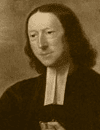
John Wesley's Explanatory Notes - Matthew 14
John Wesley explores the conflict between John the Baptist and Herod, highlighting the importance of standing firm in one's faith and the consequences of compromising with the world.
John Wesley discusses the events surrounding the beheading of John the Baptist and the subsequent actions of Jesus. He highlights Herod's internal conflict and fear of public opinion, which led to the tragic execution of an innocent man. Wesley emphasizes the providence of God, noting how the life of a holy man was sacrificed to the whims of a corrupt ruler and his family. He also reflects on Jesus' withdrawal to a solitary place, underscoring the importance of seeking solitude for prayer and reflection amidst the chaos of ministry. Ultimately, Wesley reassures that God will reward His faithful servants for their suffering in the afterlife.
Text
XIV. 1. At that time - When our Lord had spent about a year in his public ministry. Tetrarch - King of a fourth part of his father's dominions. Mark 6:14.
Verse 2. He is risen from the dead - Herod was a Sadducee: and the Sadducees denied the resurrection of the dead. But Sadduceeism staggers when conscience awakes.
Verse 3. His brother Philip's wife - Who was still alive. Mark 6:17.
Verse 4. It is not lawful for thee to have her - It was not lawful indeed for either of them to have her. For her father Aristobulus was their own brother. John's words were rough, like his raiment. He would not break the force of truth by using soft words, even to a king.
Verse 5. He would have put him to death - ln his fit of passion; but he was then restrained by fear of the multitude; and afterward by the reverence he bore him.
Verse 6. The daughter of Herodias - Afterward infamous for a life suitable to this beginning.
Verse 8. Being before instructed by her mother - Both as to the matter and manner of her petition: She said, Give me here - Fearing if he had time to consider, he would not do it: John the Baptist's head in a charger - A large dish or bowl.
Verse 9. And the king was sorry - Knowing that John was a good man. Yet for the oath's sake - So he murdered an innocent man from mere tenderness of conscience.
Verse 10. And he sent and beheaded John in the prison, and his head was given to the damsel - How mysterious is the providence, which left the life of so holy a man in such infamous hands! which permitted it to be sacrificed to the malice of an abandoned harlot, the petulancy of a vain girl, and the rashness of a foolish, perhaps drunken prince, who made a prophet's head the reward of a dance! But we are sure the Almighty will repay his servants in another world for what ever they suffer in this.
Verse 13. Jesus withdrew into a desert place - 1. To avoid Herod: 2. Because of the multitude pressing upon him, Mark 6:32: and 3. To talk with his disciples, newly returned from their progress, Luke 9:10: apart - From all but his disciples. John 6:1.
Verse 15. The time is now past - The usual meal time. Mark 6:35; Luke 9:12.
Verse 22. He constrained his disciples - Who were unwilling to leave him. Mark 6:45; John 6:15.
Verse 24. In the evening - Learned men say the Jews reckoned two evenings; the first beginning at three in the afternoon, the second, at sunset. If so, the latter is meant here.
Verse 25. The fourth watch - The Jews (as well as the Romans) usually divided the night into four watches, of three hours each. The first watch began at six, the second at nine, the third at twelve, the fourth at three in the morning. If it be thou - It is the same as, Since it is thou. The particle if frequently bears this meaning, both in ours and in all languages. So it means, John 13:14,17. St. Peter was in no doubt, or he would not have quitted the ship.
Verse 30. He was afraid - Though he had been used to the sea, and was a skilful swimmer. But so it frequently is. When grace begins to act, the natural courage and strength are withdrawn.
Verse 33. Thou art the Son of God - They mean, the Messiah.
Verse 35. Mark 6:45.
Sermon Outline
- I. Introduction to the Ministry of John the Baptist
- A. John's public ministry lasted about a year
- B. Herod, a Sadducee, was opposed to John's message
- II. The Conflict Between John and Herod
- A. Herod's marriage to Philip's wife was unlawful
- B. John's words were rough, but truthful
- III. The Death of John the Baptist
- A. Herod's fear and reverence for John restrained him
- B. Herod's daughter, influenced by her mother, sought John's head
- IV. The Reaction of Jesus
- A. Jesus withdrew from the crowd to avoid Herod
- B. Jesus took time to talk with his disciples
Key Quotes
“But we are sure the Almighty will repay his servants in another world for what ever they suffer in this.” — John Wesley
“How mysterious is the providence, which left the life of so holy a man in such infamous hands!” — John Wesley
“So it frequently is. When grace begins to act, the natural courage and strength are withdrawn.” — John Wesley
Application Points
- We must stand firm in our faith, even in the face of opposition and adversity.
- God will repay his servants in the next life for what they suffer in this life.
- When we experience the power of grace, our natural courage and strength may be withdrawn, but we must trust in God's providence.