
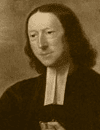
John Wesley's Explanatory Notes - Matthew 17
Jesus teaches his disciples about the importance of faith, humility, and prayer in relation to his divine nature and identity.
John Wesley expounds on the transfiguration of Jesus, emphasizing the divine glory revealed through Christ as He converses with Moses and Elijah, affirming His messianic role. Wesley highlights the importance of faith, noting that even a small amount can achieve great things, and stresses the necessity of prayer and fasting in overcoming spiritual challenges. He also addresses the disciples' struggle with unbelief and the need for divine strength to fulfill their mission. The sermon concludes with Jesus' teaching on freedom from obligations as the Son of God, while still choosing to act in love and peace.
Text
XVII. 1. A high mountain - Probably Mount Tabor. Mark 9:2; Luke 9:28.
Verse 2. And was transfigured - Or transformed. The indwelling Deity darted out its rays through the veil of the flesh; and that with such transcendent splendour, that he no longer bore the form of a servant. His face shone with Divine majesty, like the sun in its strength; and all his body was so irradiated by it, that his clothes could not conceal its glory, but became white and glittering as the very light, with which he covered himself as with a garment.
Verse 3. There appeared Moses and Elijah - Here for the full confirmation of their faith in Jesus, Moses, the giver of the law, Elijah, the most zealous of all the prophets, and God speaking from heaven, all bore witness to him.
Verse 4. Let us make three tents - The words of rapturous surprise. He says three, not six: because the apostles desired to be with their Master.
Verse 5. Hear ye him - As superior even to Moses and the prophets. See Deuteronomy 18:17.
Verse 7. Be not afraid - And doubtless the same moment he gave them courage and strength.
Verse 9. Tell the vision to no man - Not to the rest of the disciples, lest they should be grieved and discouraged because they were not admitted to the sight: nor to any other persons, lest it should enrage some the more, and his approaching sufferings shall make others disbelieve it; till the Son of man be risen again - Till the resurrection should make it credible, and confirm their testimony about it.
Verse 10. Why then say the scribes, that Elijah must come first - Before the Messiah? If no man is to know of his coming? Should we not rather tell every man, that he is come, and that we have seen him, witnessing to thee as the Messiah?
Verse 11. Regulate all things - In order to the coming of Christ.
Verse 12. Elijah is come already - And yet when the Jews asked John, Art thou Elijah? He said, I am not, John 1:21. His meaning was, I am not Elijah the Tishbite, come again into the world. But he was the person of whom Malachi prophesied under that name.
Verse 14. Mark 9:14; Luke 11:37.
Verse 15. He is lunatic - This word might with great propriety he used, though the case was mostly preternatural; as the evil spirit would undoubtedly take advantage of the influence which the changes of the moon have on the brain and nerves.
Verse 17. O unbelieving and perverse generation - Our Lord speaks principally this to his disciples. How long shall I be with you? - Before you steadfastly believe?
Verse 20. Because of your unbelief - Because in this particular they had not faith. If ye have faith as a grain of mustard seed - That is, the least measure of it. But it is certain, the faith which is here spoken of does not always imply saving faith. Many have had it who thereby cast out devils, and yet will at last have their portion with them. It is only a supernatural persuasion given a man, that God will work thus by him at that hour. Now, though I have all this faith so as to remove mountains, yet if I have not the faith which worketh by love, I am nothing. To remove mountains was a proverbial phrase among the Jews, and is still retained in their writings, to express a thing which is very difficult, and to appearance impossible. Matthew 21:21; Luke 17:6.
Verse 21. This kind of devils - goeth not out but by prayer and fasting -What a testimony is here of the efficacy of fasting, when added to fervent prayer! Some kinds of devils the apostles had cast out before this, without fasting.
Verse 22. Mark 9:30; Luke 9:44.
Verse 24. When they were come to Capernaum - Where our Lord now dwelt. This was the reason why they stayed till he came thither, to ask him for the tribute. Doth not your Master pay tribute? - This was a tribute or payment of a peculiar kind, being half a shekel, (that is, about fifteen pence,) which every master of a family used to pay yearly to the service of the temple, to buy salt, and little things not otherwise provided for. It seems to have been a voluntary thing, which custom rather than any law had established.
Verse 25. Jesus prevented him - Just when St. Peter was going to ask him for it. Of their own sons, or of strangers? - That is, such as are not of their own family.
Verse 26. Then are the sons free - The sense is, This is paid for the use of the house of God. But I am the Son of God. Therefore I am free from any obligation of paying this to my own Father.
Verse 27. Yet that, we may not offend them - Even those unjust, unreasonable men, who claim what they have no manner of right to: do not contest it with them, bat rather yield to their demand, than violate peace or love. O what would not one of a loving spirit do for peace! Any thing which is not expressly forbidden in the word of God. A piece of money - The original word is a stater, which was in value two shillings and sixpence: just the sum that was wanted. Give for me and thee - Peter had a family of his own: the other apostles were the family of Jesus. How illustrious a degree of knowledge and power did our Lord here discover! Knowledge, penetrating into this animal, though beneath the waters; and power, in directing this very fish to Peter's hook, though he himself was at a distance! How must this have encouraged both him and his brethren in a firm dependence on Divine Providence.
Sermon Outline
- I. The Transfiguration of Jesus
- A. Jesus' appearance was transformed, shining like the sun
- B. Moses and Elijah appeared, confirming Jesus' identity
- C. The apostles were instructed to listen to Jesus
- II. The Importance of Faith
- A. Jesus' disciples had little faith, which hindered their ability to cast out demons
- B. Jesus taught that even a small amount of faith can move mountains
- C. Faith must be accompanied by love to be effective
- III. The Power of Prayer and Fasting
- A. Prayer and fasting can be effective in casting out demons
- B. Jesus demonstrated the power of prayer and fasting by providing for the apostles' needs
- IV. The Importance of Humility
- A. Jesus taught that even the Son of God must submit to human authority
- B. Jesus' humility is an example for his followers
- V. The Provision of God
- A. God provides for his people's needs
- B. Jesus demonstrated God's provision by providing a fish for the apostles' needs
Key Quotes
“His face shone with Divine majesty, like the sun in its strength; and all his body was so irradiated by it, that his clothes could not conceal its glory, but became white and glittering as the very light, with which he covered himself as with a garment.” — John Wesley
“If ye have faith as a grain of mustard seed, ye shall say unto this mountain, Remove hence to yonder place; and it shall remove; and nothing shall be impossible unto you.” — John Wesley
“This kind of devils goeth not out but by prayer and fasting” — John Wesley
Application Points
- Faith, even in small amounts, can be effective in moving mountains and achieving great things.
- Prayer and fasting can be powerful tools in casting out demons and achieving spiritual growth.
- Humility is essential for following Jesus, even as the Son of God must submit to human authority.