
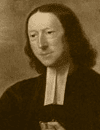
John Wesley's Explanatory Notes - Matthew 19
Jesus teaches that it is difficult for rich people to enter the kingdom of heaven due to their attachment to worldly possessions and wealth.
John Wesley expounds on Matthew 19, emphasizing Jesus' teachings on marriage, divorce, and the challenges of wealth. He highlights that while Moses permitted divorce due to the hardness of hearts, Jesus calls for a return to God's original design of marriage as a sacred union. Wesley also discusses the difficulty for the rich to enter the kingdom of heaven, illustrating that true discipleship may require radical sacrifices. He reassures that those who forsake worldly attachments for the sake of the kingdom will be rewarded abundantly. Ultimately, Wesley encourages believers to embrace the call to follow Christ wholeheartedly, regardless of societal expectations.
Text
XIX. 1. He departed - and from that time walked no more in Galilee. Mark 10:1.
Verse 2. Multitudes followed him, and he healed them there - That is, wheresoever they followed him.
Verse 3. The Pharisees came tempting him - Trying to make him contradict Moses. For every cause - That is, for any thing which he dislikes in her. This the scribes allowed.
Verse 4. He said, Have ye not read - So instead of contradicting him, our Lord confutes them by the very words of Moses. He who made them, made them male and female from the beginning - At least from the beginning of the Mosaic creation. And where do we read of any other? Does it not follow, that God's making Eve was part of his original design, and not a consequence of Adam's beginning to fall? By making them one man and one woman, he condemned polygamy: by making them one flesh, he condemned divorce.
Verse 5. And said - By the mouth of Adam, who uttered the words. Genesis 2:24.
Verse 7. Why did Moses command - Christ replies, Moses permitted (not commanded) it, because of the hardness of your hearts - Because neither your fathers nor you could bear the more excellent way. Deuteronomy 24:1; Mark 10:2; Luke 16:18.
Verse 9. And I say to you - I revoke that indulgence from this day, so that from henceforth, Whosoever, &c.
Verse 11. But he said to them - This is not universally true; it does not hold, with regard to all men, but with regard to those only to whom is given this excellent gift of God. Now this is given to three sorts of persons to some by natural constitution, without their choice: to others by violence, against their choice; and to others by grace with their choice: who steadily withstand their natural inclinations, that they may wait upon God without distraction.
Verse 12. There are eunuchs who have made themselves eunuchs for the kingdom of heaven's sake - Happy they! who have abstained from marriage (though without condemning or despising it) that they might walk more closely with God! He that is able to receive it, let him receive it - This gracious command (for such it is unquestionably, since to say, such a man may live single, is saying nothing. Who ever doubted this?) is not designed for all men: but only for those few who are able to receive it. O let these receive it joyfully!
Verse 13. That he should lay his hands on them - This was a rite which was very early used, in praying for a blessing on young persons. See Genesis 48:14,20. The disciples rebuked them - That is, them that brought them: probably thinking such an employ beneath the dignity of their Master. Mark 10:13; Luke 18:15.
Verse 14. Of such is the kingdom of heaven - Little children, either in a natural or spiritual sense, have a right to enter into my kingdom. Matthew 18:3.
Verse 16. And behold one came - Many of the poor had followed him from the beginning. One rich man came at last. Mark 10:17; Luke 18:18.
Verse 17. Why callest thou me good - Whom thou supposest to be only a man. There is none good - Supremely, originally, essentially, but God. If thou wilt enter into life, keep the commandments - From a principle of loving faith. Believe, and thence love and obey. And this undoubtedly is the way to eternal life. Our Lord therefore does not answer ironically, which had been utterly beneath his character, but gives a plain, direct, serious answer to a serious question.
Verse 19. Exodus 20:12. &c
Verse 20. The young man saith, All these have I kept from my childhood -So he imagined; and perhaps he had, as to the letter; but not as to the spirit, which our Lord immediately shows.
Verse 21. If thou desirest to be perfect - That is, to be a real Christian: Sell what thou hast - He who reads the heart saw his bosom sin was love of the world; and knew he could not be saved from this, but by literally renouncing it. To him therefore he gave this particular direction, which he never designed for a general rule. For him that was necessary to salvation: to us it is not. To sell all was an absolute duty to him; to many of us it would be ali absolute sin. The young man went away - Not being willing to have salvation at so high a price.
Verse 24. It is easier for a camel to go through the eye of a needle, (a proverbial expression,) than for a rich man to go through the strait gate: that is, humanly speaking, it is an absolute impossibility. Rich man! tremble! feel this impossibility; else thou art lost for ever!
Verse 25. His disciples were amazed, saying, Who then can be saved? - If rich men, with all their advantages, cannot? Who? A poor man; a peasant; a beggar: ten thousand of them, sooner than one that is rich.
Verse 26. Jesus looking upon them - To compose their hurried spirits. O what a speaking look was there! Said to them - With the utmost sweetness: With men this is impossible - It is observable, he does not retract what he had said: no, nor soften it in the least degree, but rather strengthens it, by representing the salvation of a rich man as the utmost effort of Omnipotence.
Verse 28. In the renovation - In the final renovation of all things: Ye shall sit - In the beginning of the judgment they shall stand, 2 Corinthians 5:10. Then being absolved, they shall sit with the Judge, 1 Corinthians 6:2: On twelve thrones - So our Lord promised, without expressing any condition: yet as absolute as the words are, it is certain there is a condition implied, as in many scriptures, where none is expressed. In consequence of this, those twelve did not sit on those twelve thrones: for the throne of Judas another took, so that he never sat thereon.
Verse 29. And every one - In every age and country; not you my apostles only; That hath forsaken houses, or brethren, or wife, or children - Either by giving any of them up, when they could not be retained with a clear conscience or by willingly refraining from acquiring them: Shall receive a hundred-fold - In value, though not in kind, even in the present world.
Verse 30. But many first - Many of those who were first called, shall be last - Shall have the lowest reward: those who came after them being preferred before them: and yet possibly both the first and the last may be saved, though with different degrees of glory. Matthew 20:16; Mark 10:31; Luke 13:30.
Sermon Outline
- I. Introduction to the passage
- A. Jesus' departure from Galilee and the multitudes following him
- B. The Pharisees' attempt to tempt Jesus
- II. Jesus' response to the Pharisees
- A. His use of scripture to confute their accusations
- B. His condemnation of polygamy and divorce
- III. Jesus' teaching on marriage and divorce
- A. His statement on the original design of marriage
- B. His explanation of Moses' permission for divorce
- C. His revocation of that permission
- IV. Jesus' teaching on singleness and marriage
- A. His statement on eunuchs who have made themselves eunuchs for the kingdom
- B. His explanation of the kingdom of heaven
- V. Jesus' encounter with the rich young man
- A. The young man's question and Jesus' response
- B. Jesus' teaching on the difficulty of rich people entering the kingdom
- VI. Conclusion
- A. Jesus' teaching on the impossibility of rich people entering the kingdom
- B. His promise of reward for those who have forsaken worldly possessions
Key Quotes
“He who made them, made them male and female from the beginning - At least from the beginning of the Mosaic creation.” — John Wesley
“By making them one man and one woman, he condemned polygamy: by making them one flesh, he condemned divorce.” — John Wesley
“It is easier for a camel to go through the eye of a needle, (a proverbial expression,) than for a rich man to go through the strait gate: that is, humanly speaking, it is an absolute impossibility.” — John Wesley
Application Points
- We should be willing to give up our attachment to worldly possessions and wealth in order to follow Jesus.
- Jesus promises a reward to those who have forsaken worldly possessions and devoted themselves to him.
- We should not be discouraged if we are not the first to follow Jesus, but rather be willing to learn from those who came after us.