
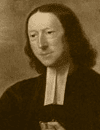
John Wesley's Explanatory Notes - Matthew 8
Jesus teaches about the importance of faith, obedience, and humility, and demonstrates his authority and power over nature.
John Wesley expounds on Matthew 8, illustrating the faith of a leper and a centurion who approached Jesus for healing. He emphasizes the significance of the centurion's faith, noting that it surpassed that of many Israelites, and highlights Jesus' authority over sickness and evil spirits. Wesley also reflects on the call to discipleship, urging followers to prioritize their commitment to Christ over worldly concerns. The sermon concludes with a reminder of the cost of following Jesus and the necessity of faith in His power to heal and deliver.
Text
VIII. 2. A leper came - Leprosies in those countries were seldom curable by natural means, any more than palsies or lunacy. Probably this leper, though he might not mix with the people, had heard our Lord at a distance. Mark 1:40; Luke 5:12.
Verse 4. See thou tell no man|-Perhaps our Lord only meant here, Not till thou hast showed thyself to the priest-who was appointed to inquire into the case of leprosy. But many others he commanded, absolutely, to tell none of tho miracles he had wrought upon them. And this he seems to have done, chiefly for one or more of these reasons: 1. To prevent the multitude from thronging him, in the manner related Mark 1:45. 2. To fulfil the prophecy, Isaiah 42:1, that he would not be vain or ostentatious. This reason St. Matthew assigns, Matthew 12:17, &c. 3. To avoid the being taken by force and made a king, John 6:15. And, 4. That he might not enrage the chief priests, scribes, and Pharisees, who were the most bitter against him, any more than was unavoidable, Matthew 16:20,21. For a testimony - That I am the Messiah; to them - The priests, who otherwise might have pleaded want of evidence. Leviticus 14:2. Chapter Overview
5. There came to him a centurion - A captain of a hundred Roman soldiers. Probably he came a little way toward him, and then went back. He thought himself not worthy to come in person, and therefore spoke the words that follow by his messengers. As it is not unusual in all languages, so in the Hebrew it is peculiarly frequent, to ascribe to a person himself the thing which is done, and the words which are spoken by his order. And accordingly St. Matthew relates as said by the centurion himself, what others said by order from him. An instance of the same kind we have in the case of Zebedee's children. From St. Matthew, Matthew 20:20, we learn it was their mother that spoke those words, which, Mark 10:35,37, themselves are said to speak; because she was only their mouth. Yet from verse 13, Matthew 8:13, Go thy way home, it appears he at length came in person, probably on hearing that Jesus was nearer to his house than he apprehended when he sent the second message by his friends.
Luke 7:1.
Verse 8. The centurion answered - By his second messengers.
Verse 9. For I am a man under authority - I am only an inferior officer: and what I command, is done even in my absence: how much more what thou commandest, who art Lord of all!
Verse 10. I have not found so great faith, no, not in Israel - For the centurion was not an Israelite.
Verse 11. Many from the farthest parts of the earth shall embrace the terms and enjoy the rewards of the Gospel covenant established with Abraham. But the Jews, who have the first title to them, shall be shut out from the feast; from grace here, and hereafter from glory. Luke 13:29.
Verse 12. The outer darkness - Our Lord here alludes to the custom the ancients had of making their feast in the night time. Probably while he was speaking this, the centurion came in person. Matthew 13:42,50; ; ; .
Verse 14. Peter's wife's mother - St. Peter was then a young man, as were all the apostles. Mark 1:29; Luke 4:38.
Verse 16. Mark 1:32; Luke 4:40.
Verse 17. Whereby was fulfilled what was spoken by the Prophet Isaiah -He spoke it in a more exalted sense. The evangelist here only alludes to those words, as being capable of this lower meaning also. Such instances are frequent in the sacred writings, and are elegancies rather than imperfections. He fulfilled these words in the highest sense, by bearing our sins in his own body on the tree: in a lower sense, by sympathizing with us in our sorrows, and healing us of the diseases which were the fruit of sin. Isaiah 53:4.
Verse 18. He commanded to go to the other side - That both himself and the people might have a little rest.
Verse 19. Luke 9:57.
Verse 20. The Son of man - The expression is borrowed from Daniel 7:13, and is the appellation which Christ generally gives himself: which he seems to do out of humility, as having some relation to his mean appearance in this world. Hath not where to lay his head - Therefore do not follow me from any view of temporal advantage.
Verse 21. Another said - I will follow thee without any such view; but I must mind my business first. It is not certain that his father was already dead. Perhaps his son desired to stay with him, being very old, till his death.
Verse 22. But Jesus said - When God calls, leave the business of the world to them who are dead to God.
Verse 23. Mark 4:35; Luke 8:22.
Verse 24. The ship was covered - So man's extremity is God's opportunity.
Verse 26. Why are ye fearful - Then he rebuked the winds - First, he composed their spirits, and then the sea.
Verse 28. The country of the Gergesenes - Or of the Gadarenes - Gergesa and Gadara were towns near each other. Hence the country between them took its name, sometimes from the one, sometimes from the other. There met him two demoniacs - St. Mark and St. Luke mention only one, who was probably the fiercer of the two, and the person who spoke to our Lord first. But this is no way inconsistent with the account which St. Matthew gives. The tombs - Doubtless those malevolent spirits love such tokens of death and destruction. Tombs were usually in those days in desert places, at a distance from towns, and were often made in the sides of caves, in the rocks and mountains. No one could pass - Safely. Mark 5:1; Luke 8:26.
Verse 29. What have we to do with thee - This is a Hebrew phrase, which signifies. Why do you concern yourself about us? 2 Samuel 16:10. Before the time - The great day.
Verse 30. There was a herd of many swine - Which it was not lawful for the Jews to keep. Therefore our Lord both justly and mercifully permitted them to be destroyed.
Verse 31. He said, Go - A word of permission only, not command.
Verse 34. They besought him to depart out of their coasts - They loved their swine so much better than their souls! How many are of the same mind!
Sermon Outline
- I. The Healing of the Lepers
- A. The leper's faith and obedience
- B. The Lord's command to the leper
- II. The Centurion's Faith
- A. The centurion's humility and faith
- B. The Lord's praise of the centurion's faith
- III. The Lord's Ministry
- A. The Lord's compassion and healing
- B. The Lord's authority and power
- IV. The Cost of Following the Lord
- A. The Lord's call to discipleship
- B. The cost of leaving worldly attachments
- V. The Lord's Power over Nature
- A. The Lord's control over the winds and waves
- B. The Lord's care for his people
Key Quotes
“See thou tell no man, but go thy way, shew thyself to the priest, and offer for thy cleansing, those things which Moses commanded, for a testimony unto them.” — John Wesley
“I have not found so great faith, no, not in Israel.” — John Wesley
“The Son of man hath not where to lay his head.” — John Wesley
Application Points
- We should have faith and trust in God's power and authority.
- We should be obedient to God's commands and follow his will.
- We should cultivate humility and recognize our dependence on God.