
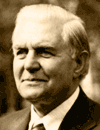
Studies in Esther - Part 2
The sermon explores the themes of sin, redemption, and the transformative power of God through the story of Esther and the characters involved.
Major Ian Thomas explores the transformation of King Ahasuerus in the book of Esther, illustrating the struggle between the sin principle represented by Haman and the righteousness embodied by Mordecai. He emphasizes that true redemption involves a radical change in character, moving from a state of fleshly independence to one of complete reliance on God. Thomas warns against the dangers of preserving aspects of our sinful nature, likening it to Saul's failure to remember God's command regarding Amalek. He highlights that God desires obedience over sacrifice, and that the flesh, represented by Amalek, is ultimately condemned. The sermon concludes with a call to recognize our total dependence on Christ for true transformation and victory over sin.
Full Transcript
A brief word of capitulation, King Ahasuerus, to whom we have been introduced in the first verse of the third chapter of the book of Esther, will represent human personality, the heart, the soul, mind, emotion, will. We introduced to him at the commencement of the story, completely under the influence of and totally identified with Haman, the son of Hamadeus, the Aragite, whom we discovered yesterday to be an Amalekite, Amalek being the grandson of Esau, and we have thought to establish the fact that Haman represents that sin principle of satanic origin, at once hostile to God, not subject to the law of God, and neither indeed can the flesh. On the other hand, at the close of the story, we shall discover the same King Ahasuerus will be under the influence of and totally identified with the righteousness of Mordecai, a very vivid picture illustrating to us that radical change of character that alone imitates a true redemptive work of God in the heart of a forgiven sinner.
Now, yesterday, we were tracing Amalek back to Esau, and just to refresh our minds, if you turn to the book of Obadiah, I'm sorry to be so awkward, but one of the minor prophets, I don't know what this peculiar noise is, but if anybody sees it, hit it. Obadiah comes amongst the minor prophets after Daniel and Hosea, that's the nearest sort of point of reference, Daniel onwards, Hosea, and then Joel, and then through Amos, and then you'll come to the book of Obadiah, just one little chapter before Job, between Amos and Job.
But it's interesting, you see, because of the relentless thread of divine revelation given to us by the Holy Spirit, establishing in accurate spiritualization those expositional constants about which I spoke to you yesterday, the vision of Obadiah, thus saith the Lord God, concerning Egon, and remember who that is, that's Esau, the word meaning red like his porridge, we have heard a rumor from the Lord, and an ambassador is sent among the heathens, a riot is taking place, and rise, let us rise up against her ambassador, behold I have made thee small among the heathens, art greatly despised, notice this concerning Egon, the pride of thine heart hath deceived thee, thou that dwellest in the clefts of the rock, whose habitation is high, that saith in his heart, who shall bring me down to the
ground, though thou exalt thyself as the eagle, and though thou set thy nest among the stars, thus will I bring thee down, saith the Lord, verse 6, how are the things of Esau searched out, how are his hidden things sought out, verse 8, shall I not in that day, saith the Lord, even destroy the wise men I lead on, and understand them out of Mount Zeus, God at war with Esau, Esau says God have I hated, for Esau was the one who despised his birthright, threw it back into God's face, and had all that it took without God to be man, that is essentially the attitude of independence that is characteristic of the flesh, now would you turn with me in the book of Numbers to the 22nd chapter, Numbers 22, the 22nd chapter of Numbers and it concerns Amalek, Balak in verse 4 of Numbers 22, Balak the son
of Zippor was king of the Moabites at that time, he sent messengers therefore unto Baalam the son of Baal, Esau which is by the river of the land of the children of his people, to call him saying behold there is a people come out from Egypt, behold they cover the face of the earth, and they abide over against me, come now therefore I pray thee curse me this people, for they are too mighty, peradventure I shall prevail that we may smite them, that was the reputation that Israel had earned, and the people whom God miraculously had redeemed out of Egypt, says Baalam king of the Moabites, they cover the face of the earth, they are too mighty for me, wouldn't it be a wonderful thing, if that was the reputation that the redeemed people of God had earned in Sydney or Australia, they cover the
face of the earth, they are too mighty for me, what a wonderful thing that would be, Balak calls upon Baalam to curse this people, turn to chapter 23 and verse 7, Baalam took up his parable and said, Balak the king of Moab hath brought me from Aaron out of the mountains of the east saying come curse me Jacob, come defy Israel, Jacob whom God loved, Baalam said how shall I curse whom God hath not cursed, how shall I defy whom the Lord hath not defied, for you see when Esau repudiated the birthright, God repudiated Esau, and God chose Jacob, Jacob who despised himself, and God changed his heart and God changed his name, and that Israel would become that people who were to be the human vehicle of God's redemptive purpose in re-establishing divine government in the area of human personality,
I want to say that again and again and again until it's been burnt into your hearts and minds, for this ultimately is the purpose of Calvary, that the whole human personality, mind, emotion and middle might be sent into orbit around an entirely new center, anything less than that falls short of conversion, anything less than that falls short of regeneration, anything less than that is totally unworthy of that to which Christ shed his blood upon the cross, nothing less than that constitutes Christianity, a total re-orientation of the human soul about an entirely new center, Christ in the power of his resurrection, and Israel the seed of Jacob were now to be those in whom this wonderful purpose of God should be fulfilled and brought to its consummation, so turn to chapter 24, number 24,
it's the same thing, verse 15, Balaam took up his parable and said, Balaam the son of Beor hath said, and the man whose eyes are open hath said, he hath said which heard the words of God, and knew the knowledge of the Most High, which saw the vision of the Almighty, falling into a trance but having his eyes open, here's a man speaking with his eyes open, spiritually, and then he speaks prophetically in the 17th verse, I shall see him but not now, I shall behold him but not now, there shall come a star out of Jacob, and a scepter, a royal scepter, the scepter of a king shall rise out of Israel, and shall smite the corners of Moab and destroy all the children of Sheol, and Edom shall be a possession, Seir also shall be a possession for his enemies, and Israel shall do valiance, out of Jacob
shall come he that shall have dominion, this was to be the royal seed, this was to be the seed who should be born of the seed of Abraham, and you'll remember that this was the message brought to Mary upon the lips of the angel Gabriel, behold thou shall concede in thy womb and bring forth a son shall call his name Jesus, he shall be great and shall be called the son of the highest, and the Lord God shall give unto him the throne of his father David, and he shall reign over the house of Jacob forever, and of his kingdom there shall be no end, and this is that to which Phraelim is referring prophetically in the twenty-fourth of Numbers, out of Jacob shall come he that shall have dominion, whose kingdom shall have no end, verse 20, and when he looked on Amalek he took up his parable and said
Amalek was the first of the nations but his latter end shall be that he perish forever, the expression Amalek was the first of the nations needs a word of explanation, it means Amalek was the first of the nations to withstand Israel after they had come through the Red Sea out of Egypt in their onward march on and into the land of Canaan, Amalek was the first of the nations, Amalek it was that was standing astride their pathway forbidding them passage, and against whom Moses sent Joshua out to fight with a rod held high that spoke of a God given victory, a victory already won not a battle already lost, but his latter end shall be that he perish forever, there is no good thing in Amalek, there is no good thing in the flesh, God says no flesh will ever glory in his presence, its end is to
perish forever, now turn to Deuteronomy chapter 25, two verses, Deuteronomy 25 verse 17, I want you to notice again the relentless consistency of the Holy Spirit, verse 17 of Deuteronomy 25, remember what Amalek did unto thee by the way when you were come forth out of Egypt, how he met thee by the way and smote behind most of thee, even all that was feeble behind thee when thou was faint and weary, and he feared not God, there's no fear of God in the eyes of Amalek, Amalek is of the ilk of Esau, Amalek despises the birthright, Amalek throws his chest down and says I don't need a crutch and I don't need God, I have all that it takes, lose God lose nothing, that's Esau, that's Edom, that's Amalek, that's the flesh pig-headed independence of God, and that is the nature of sin singularity,
from which all sins plural stem, pig-headed independence, of which Christians may be as guilty equally with the unregenerate, and of this we shall discover much more, God says remember Amalek, he smote behind most of thee, those that were feeble when thou was faint and weary, Amalek always hits you when you're down, Amalek loves to kick you when you're low, Amalek is always lurking round every corner, Amalek is waiting for those who drag their feet, Amalek is waiting for the lonely and the discouraged, Amalek delights to hit you when you're down, God says remember Amalek, this is something that you may never forget, God says there is something that you may forget, and that you don't have the right to remember, God says I will remember your sins, no more, he says I won't pretend you
haven't sinned, he says I will remember your sins, I will remember every one of your sins, but in the light of the shed blood of my dear son, I will remember, I will remember your sins, but I will remember no more, now isn't that wonderful, he says I'll put them away as far as the east is from the west, I'll bury them in the depths of the sea, he says I'll put them behind my back, he says though your sins be as scarlet, they'll be as white as wool, red like crimson, whiter than the snow, God says I will remember your sins no more, and God says you do not have the right to remember what I forget, now I say that advisedly for there are some folks who try to make merchandise of your souls, and would have you believe that you can purchase by dragging up the dirty parts, all the dirty linen
and displaying it, and they say that's the price of revival, that's the price of blessing, that's the price of sanctification, that's the price of victory, be preoccupied with your own wickedness and be constantly thinking about it, remember your sins, no God says I remember your sins no more, and you do not have the right to remember what I for my dear son's sake, am prepared to forget, it is a repudiation of the adequacy of his atonement, it is a throwback of his sins, the cleansing efficacy of his own precious shed blood, sin concessed is sin forgiven, and sin forgiven is sin forgotten, that's God's principle, but he says this if you do not have the right to remember what I forget, you do not have the right to forget what I remember, and I remember Amalek, now Amalek is not talking
about the sins that God forgives and forgets, Amalek speaks of the sin principle from which every sin as an act stems, it is the root from which springs the fruit, and God says I remember Amalek, now in these closing moments this morning, to forge the final link between this preliminary study with the book of Esther, we need to examine for a little while the story of a man who forgot to remember, and for that purpose you'll have to turn to the 15th chapter of the first book of Samuel, 1 Samuel chapter 15, he's introduced to his first in the ninth chapter, he's the son of Cain, and it says that he was a choice young man, chapter 9 verse 2, and of goodly, there was not among the children of Israel of goodly a person than he, from his shoulders and upward he was higher than any of the
people, this is so, and our first introduction to him in the ninth chapter of 1 Samuel, is at once charming, tall, fine physique, humble, courteous, considerate, you couldn't help but have loved him, admired him, respected him, he was a good friend, and yet something terrible was to happen that would twist his whole personality, and turn this charming promising young individual into a bitter old murderous man, who died destitute of all hope, only to lament a wasted life having played the fool, for he forgot to remember, it was he that was chosen to be king, not by God's expressed desire, but in answers of a clamor of the crowd, for the Jews wanted to have a king like the rest, they didn't want to be unique, it was in God's economy that only God should be his people's king, but in the end
he gave them what they wanted, and it's always a dangerous thing to get from God what you want, and if you try hard enough you'll nearly always get it, and there's nothing more pathetic than seeing Christians impoverished by the things they want, that they have got from God, instead of being made inexpressibly wealthy by the things they need, which God so longs to give, so you go on clamoring away to God for what you want, and one day you'll get it, and he will send with it leanness to your soul, that's what happened to Israel, they clamored for a king, and they got one, and it was Saul, chapter 15, 1 Samuel 15, we'll only have time to glance at the chapter and pick up the salient thoughts, Samuel also said of the Saul, the Lord sent me to anoint thee to be king over his people over
Israel, now therefore hearken thou unto the voice of the words of the Lord, in other words if you are going to act on God's behalf as king in the midst of his people, it behoves you to know God's mind in every manner, and execute God's judgment, verse 2, thus saith the Lord of hosts, I remember that which Amalek did to Israel, I remember Amalek, this is something that God says he will never forget, for he is at war with Amalek from generation to generation, how he laid for him, what he did to Israel, how he laid for him in the way when he came up from Egypt, now go and smite Amalek, and utterly destroy all that they have, and spare them not, but slay both man, woman, infant and suckling ox, sheep, camels and ants, God says there is no good thing in Amalek, there is absolutely nothing
salvageable in Amalek, all is under the sentence of death, all must be destroyed, I will have nothing of Amalek, nothing of Amalek will ever under any circumstances meet with my truth, well the instructions were pretty clear, and Saul both then smote the Amalekites from Havilah until thou canst assure that it is over against Egypt, verse 8, and he took Agag the king of the Amalekites alive, have you got the link, Haman the son of Hamadeus, the Agagant, the Amalekite, and Saul forgot to remember, and he spared Agag the king of the Amalekites alive, that there might be born one day of the descendants of the man he spared, the enemy of the Jews, who with sadistic wickedness would do them to death on one bloody day of assassination and murder, it all traces back to the man who forgot to
remember, he utterly destroyed it says verse 8, all the people with the edge of the sword, but Saul and the people spared Agag, and the best of the sheep, and the best of the oxen, and the best of the fattens, and the best of the lamb, all that was good, all that was what, in Amalek, all that Saul presumed to find good in what God had totally condemned and banned, that was the sin of Saul, and this is the sin of the church, this is the sin of the Christian, this is the sin of the preacher, this is the sin of the Sunday school superintendent, this is the sin of the missionary on the mission field, this is the sin of the Christian organizers, that we will not accept God's verdict upon what we are apart from what Christ is, we say it's fanatical, we say that God is too severe, we say that
he's taking things too far, there must be something good in me, there must be something that I can salvage of what I am, that I can dedicate to God's service, yes that's exactly and precisely what Saul said, he spared Agag the king, he was such a charming individual, and he spared everything he said that was good, but, end of verse 9, everything that was vile and refuse, that they destroyed utterly, and king Saul and the people presumed to discern in Amalek between what was good and what was bad, when God said there is no good thing in Amalek, how much of your flesh have you been preserving, how much of that old adamic nature have you been preserving because it's so charming and so promising and so gifted, the very very best of course for God, then came the word of the Lord under Samuel
verse 10 saying, it repented me that I have set up Saul to be king, he is turned back from following me, he has not performed my command, and Saul was met by Samuel, and verse 13 Saul said to him, he knew all the jargon, he knew all the pretty language of dedication, blessed be thou the Lord, I have performed the command to the Lord, I've just come back from smiting the Amalekites, just what God told me, but Samuel was unimpressed, as any true spiritually discerning man of God today is unimpressed by much that hits the headlines in the context of Christian activity in the 20th century, Samuel was unimpressed, Samuel said what needed then this bleating of the sheep in my midst and the lowing of the oxen which I hear, if you have executed God's judgments against Amalek and all that Amalek
hadn't was, there's an awful lot of noise from the day, the bleating of the sheep and the lowing of the oxen, the church of Jesus Christ is full of it today, the bleating of the sheep in the pew and the lowing of the oxen in the pool, and God is completely unimpressed, old Saul said don't get me wrong, don't misinterpret our motives, they brought them from the Amalekites for the people's bed, the best of the sheep and the best of the oxen to sacrifice unto the Lord thy God, the rest of course, the rest which was obviously bad, we've utterly destroyed, don't get our motives wrong, we've kept the best for God, God says the best of what I hate, the best of what I've condemned, the best of what I sentenced to death, God hates the flesh, God hates all that man is apart from Jesus Christ, God
hates the best that you can do for God, how our hymns mislead us, how we sing again and again, I will do my best for Jesus, God hates your best, there's only one person whom God has credited with the right to behave and you all need his redeemed sin, and that is his son Jesus Christ, all that you and I are apart from what Jesus Christ is went with him into the grave, and the only person to whom the Father in heaven gave the right to rise again from the dead was Jesus Christ, and he is the only person who has been credited by the Father to occupy the redeemed humanity of forgiven sin, for me to live is Christ, when Christ who is our light shall appear, then shall we appear with him in glory, God does not want your best, he hates it, he doesn't need it, not where Christ has been thrown, for
he is completely satisfied with all that Christ is and all that Christ can do, and this is the hardest lesson for any Christian to learn, I am nothing, I have nothing, I can do nothing, and it was this principle that was violated first by the devil himself, when he said I am, I have, and I can, apart from God, and my place will be above the stars of heaven, and I'll be like God, and he perpetrated it in Adam and perpetuated it in mankind, and it's come down to you and to me by birth, in that the flesh dominates our human personality, and exhibits this pig-headed attitude of independence, that says I have all that it takes to do my best for God, and God says I hate you, Rebellion is of the sin of witchcraft, verse 23, stubbornness is as iniquity and idolatry, because thou hast rejected the
word of the Lord, he hath also rejected thee, hath the Lord as great delight in burnt offerings and sacrifices, as in obeying the voice of the Lord, behold to obey is better than sacrifice, to hearken than the pack of rams, God is interested in your sacrifices, God is not interested in your sacrificial service, God is interested only in the obedience of faith that yields to truth with ease, as Saul is rejected, Samuel said under him verse 28, the Lord has rent the kingdom of Israel from thee this day, and has given it to a neighbor of thine, that is better than thine, I wish we had time to glance at that neighbor, one moment, 50 words first Psalm, you'll see, this is the better neighbor, remember God rejected self-sufficient Esau, and he took Jacob who despised himself, and God changed
his heart, and changed his name, and God rejects this charming individual Saul now, and accepts a neighbor better than he, what are the characteristics of a man better than Saul, here they are, a man who has discovered his own wickedness, who cries out in repentance toward God, blood out my transgressions, verse 2 of Psalm 51, wash me truly from my iniquity, and cleanse me from my sin, I acknowledge my transgressions, my sin is ever before me against thee, the only have I sinned and done this evil in thy sight, I've committed murder by proxy, that I might commit adultery with a man's widow, purge me with his sins, he says, for behold, verse 5, I will shake them in iniquity, and send it my mother conceiving, creating me, verse 10, a clean heart, which I don't have, O God, and renew a right
spirit within me, which I don't possess, God says David, there's no good thing in me, I'm rotten through and through, God says, and this is the neighbor that is better than Saul, he has nothing, he is nothing, he can do nothing, apart from me, and David qualifies, back into 1 Samuel, all he can say, as you may well remember, at the end of his days, chapter 26, verse 21, behold, I have played the fool, and have earned a seed, and he enlists the assistance of the diviner, after Samuel is dead, brings up his spirit, and complains that God is departed from me, verse 15 of 1 Samuel 28, he answereth me no more, neither by prophets, nor by dreams, therefore I have told thee that thou mayest make known unto me what I shall do, he calls up the spirit of Samuel, and says, the heavens are as brass,
God doesn't answer me, God doesn't talk to me, then says Samuel, wherefore then dost thou ask of me, seeing the Lord is departed from thee, and is become thine enemy, and the Lord hath done to thee as he spake by me, for the Lord hath rent the kingdom out of thy hand, and given it to thy neighbor, even to David, listen, verse 18, because thou obeys not the voice of the Lord, nor executes his fierce wrath upon Amalek, therefore hath the Lord done this thing unto thee, to say, you have shown mercy to Amalek, and God has rejected you, this is the last miserable part of the story, turn to the first chapter of the second book, and here we'll have to finish, you know that Saul tried to commit suicide, but he failed, and he came to pass after the death of Saul, when David was returned from the
slaughter of the Amalekites, he came to pass on the third day, verse 2, that behold a man came out of the camp from Saul with his clothes rent, and earth upon his head, and so it was when he came to David that he fell to the earth and did a patient, and David said unto him, from whence art thou, he said unto him, out of the camp of Israel I may escape, David said unto him, how went the matter, I pray thee tell me, he answered, that the people had fled from the battle, many of the people also fallen and dead, Saul and Jonathan his son are dead also, and David said to the young man that told him, how knowest thou that Saul and Jonathan his son be dead, listen, the young man told him as I happened by chance upon Mount Gilbert, behold Saul leaned upon his steed, and lo the chariots and
horsemen followed hot after him, and when he looked behind him he saw me, and he called unto me, and I said, here am I, I am always ready, I am always available, I am always on hand when you need me, he said, who art thou, and I answered him, I am an Amalekite, and I love to hit the man when he is down, that is my business, he said unto me again, stand I pray thee upon me, and slay me for anguish is come upon me, because my life is yet whole in me, so I stood upon him, boasts the Amalekite, and I sue him, because I was sure that he could not live after that he was fallen, I killed him, that is the job of an Amalekite, show mercy to an Amalekite, but an Amalekite will never show mercy to you, I killed him, and I took the crown that was upon his head, yes that is the dirty business of an
Amalekite, show mercy to the flesh and it will slay you, and it will rob you of your crown, this is the sad story of a man who forgot to repent.
Sermon Outline
- I points: - Introduction of King Ahasuerus and Haman - Haman as a representation of sin and the flesh - Transformation of Ahasuerus through Mordecai
- II points: - The significance of Amalek in scripture - God's judgment on Amalek - The connection between Amalek and Esau
- III points: - The role of Balaam and the prophecy of Israel's future - The importance of recognizing God's chosen people - Contrast between Jacob and Esau
- IV points: - Saul's failure to remember God's command - The consequences of preserving the flesh - God's rejection of Saul for disobedience
- V points: - The nature of sin and independence from God - The need for total surrender to Christ - God's perspective on human efforts
Key Quotes
“There is no good thing in Amalek, there is no good thing in the flesh.” — Major Ian Thomas
“Sin confessed is sin forgiven, and sin forgiven is sin forgotten.” — Major Ian Thomas
“God does not want your best, he hates it, he doesn't need it.” — Major Ian Thomas
Application Points
- Recognize the areas of your life where you may be preserving the flesh instead of fully surrendering to God.
- Understand that true obedience to God requires a complete rejection of what He has condemned.
- Embrace the transformative power of Christ to reorient your life around Him as the new center.