
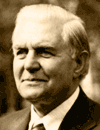
Youth Convention at Fairhaven 1964-01 Returning to the Principles
The Christian life is not a pattern to be followed, but a principle to be understood, and it is only possible to live this life by being inhabited by God and reproducing his character in terms of humanity.
In this sermon, the speaker reflects on his own journey of understanding the true meaning of the Christian life. He admits that despite preaching for years, he realized that he had missed the point and lacked a deep understanding of the divine nature. The speaker emphasizes the importance of recognizing that it is God's divine power that enables believers to live a godly life. He also highlights the tragic reality of many churches playing church without truly understanding the essence of Christianity. The sermon concludes with a reference to Peter's denial of Jesus and the speaker's realization that true dedication to God requires surrendering our own desires and embracing God's plan.
Full Transcript
Thank you very much for those kindly words of introduction. It's certainly my privilege and my joy to be with you, and I've been looking forward with eager anticipation to this day and to the hours that we're going to spend together with each other. It'll be my purpose in the three sessions in which it will be my privilege to speak to you, to maybe draw the threads together in the broad context of all the other facts and information that you may gather in the course of your discussions and panels.
It's very easy to detach our Christianity from Jesus Christ. And the moment you do that, it becomes an impersonal, dead thing, it becomes a religion. The moment you detach your Christianity from Jesus Christ, then your Christianity is not only impersonal to him, it becomes impersonal to yourself.
It's just your profession of faith, it's the things that you believe. And Christianity detached from Jesus Christ makes absolutely no impact whatever upon your character. It may in measure conform you to certain imposed patterns of behaviour to which you submit yourself to become acceptable in the particular Christian society to which you adhere, but it doesn't ultimately change your character.
Only Christ does that. And I trust that throughout the course of this day we shall, under God, be able to discover some of the basic principles of the Christian life. Because essentially, you see, the Christian life is not a pattern, but a principle.
And my one concern will be to introduce you, as God helps me, to a principle to which you can return again and again and again and yet again and always find it true. And the more you return to the principle, the more wonderful it will become and ever increasingly will your experience of that principle multiply and this will be the measure of your spiritual maturity. But in the accumulation of facts, in the coming to know and understand the doctrines, we can still be extremely confused in our thinking.
I was speaking yesterday lunch hour with a missionary of the China Inland Mission and he told me the story of a man in China as told to him by a Chinaman. He was a man who wanted to sell some bamboo. He had a great big long piece of bamboo and he came to the village from the country district in which he lived and when he got to the gate of the village, it was a walled village, he was holding the bamboo, you see, this way and it just wouldn't go through.
That was a bit baffling. And so as the bamboo wouldn't go through that way, he turned it upright, but he found it was too tall, it wouldn't go through that way either. And then he was really perplexed.
It wouldn't go through that way and it wouldn't go through that way. And so he was deeply distressed about this, but there was a man sitting on the top of the gate and he could see the predicament in which the man was and he said, look here, if you hand me that bamboo and you go through, I'll hand it over the top and give it to the other side. Well, he thought that's wonderfully intelligent.
And so he handed the bamboo that wouldn't go through that way and wouldn't go through that way to the man on top and he went through and the man on the top handed it to him, the other side, and it was wonderful. Never known a man as intelligent as that. So he said, I'd like to have a word, I'd like to talk to you.
Tell a man like you, let's have a cup of coffee. And so they had a cup of coffee together. In the course of the conversation, he discovered that that man had a son and he had a daughter.
So he thought they could get together on this. He said, I'd like to be related to you, an intelligent man like you. I'd like my family to be, you know, related to such an intelligent family.
I've got a daughter and you've got a son. What about my engaging my daughter to your son? So they agreed this over the cup of coffee. And the man got home and he explained everything to his wife and how his mission had almost come to failure because he couldn't get the bamboo through that way and he couldn't get the bamboo through that way.
It was a man, a very, very clever man who sat in the gate and helped him over. And he said, I was so impressed, we had a cup of coffee and I discovered he'd got a son and we'd got a daughter. So we got together about this and I've engaged our daughter to his son.
And his wife was nearly hysterical. She sobbed and cried. Nothing would comfort her.
Until at last a lady came in who managed to do the trick and she said, well, what is really your problem? Well, she said, this fool husband of mine, he's engaged our daughter to a man twice her age. How old's your daughter? She said, one. And how old's the man's son? Two.
And so the woman said, oh, well, don't be concerned about that. Wait till next year, then your daughter will be two and then she'll be as old as her husband. A little bit of confused thinking.
But do you know, that sounds very stupid. But quite frankly, do you know I've discovered that there are countless Christians just about as confused as that in their thinking about the Christian life. And yet it's gloriously simple.
It's profound, but wonderfully simple. But we miss the point. We try it this way and we try it that way and we're baffled.
And we find some clever solution to our problem. And just confuse ourselves that much more. You know, God has very little to say to us in the Bible.
Very little. But what he has to say to us, he says again and again and again and yet again. If you were to take out from the Gospels, for instance, everything that the Lord Jesus Christ had to say to his disciples, you would discover, if you analyzed it, that it was very, very little.
It was the same thing. Again and again and again. That's just how simple the Christian life is.
But we've made it complicated to keep ourselves in business. You know, the purpose of every preacher is to preach himself out of business, not into business. And I believe that if once you grasp the principle in all its sheer simplicity but its utter profundity of what it really involves to be a Christian, it's going to revolutionize your Christian life.
And it's going to decomplicate you. And introduce you to that quality of life that the Lord Jesus described as superlative. The purpose for which he came into the world.
He said, I'm come that you might have life and that you might have it abundantly. If I were to ask you what it is that Jesus Christ did to save you, I wonder what your answer would be. Probably, without a moment's hesitation, and you would say it with a deep sense of gratitude in your heart, he died to save me.
And yet the strange thing is, you'd be wrong. You see, if you turn with me to the fifth chapter of the Epistle to the Romans, and the tenth verse, you'll find the verse from which the title to this particular conference, or the theme, that is to be pursued, has been derived. Romans, chapter five, and verse ten.
For if, when we were enemies, we were reconciled to God by the death of his Son, much more, superlatively much more, infinitely much more, being reconciled, an accomplished fact, we shall be saved by his life. It isn't the death of Christ that saves you, except in a very limited sense. It's an essential sense.
It's a sense in which his death must save you, if ever you are to be saved by his life. But the much more of your salvation is not that quality of salvation that is yours through his reconciling and atoning death. The much more the superlative of your salvation is that way in which he literally saves you by his life, twenty-four hours and every day.
The death of Christ reconciles you to God. But your reconciliation to God through the death of Christ was designed in God's eternal purpose to make it possible for you to be saved by his life. His death qualifies you for the life he lived.
Reconciliation to God through his death is the work of a moment. And I suppose most of you who are here this morning can look back to that moment in your life when, convicted by the Holy Spirit of the fact that you were a guilty sinner, becoming aware of the fact that Christ, nineteen hundred years ago, died upon the cross as a historical fact, in all the sinlessness of his utter manhood, being made sin for us, there being imputed or credited to him our guilt, that there might be imputed or credited to us his righteousness. You can look back to that day when, in humble, simple, childlike faith, you said, Lord Jesus, I take you as my redeemer, I rest the whole weight of my need as a guilty sinner upon the adequacy of your atoning death, and though I do not deserve it, I claim redemption through your all-pervading name.
And you were redeemed. That's how I was redeemed. That's how I was reconciled to God.
Quarter nine, Saturday night, thirteenth of August, nineteen twenty-seven. I could almost take you to the great blade of grass where it took place in the boys' camp in England. That wasn't my salvation.
I thought it was. I thought it was for seven years. And that's why for seven years I lived such a miserable existence as a Christian.
In spite of all the enthusiasm with which I threw myself into the service of Jesus Christ, at the age of fifteen I volunteered for the mission field, began to preach on the streets of London and the parks of London when I was fifteen years of age and didn't stop preaching from that time until now. Led the Christian group at school and when I left school to go to university at the age of seventeen to become a doctor to go as a medical missionary to Africa. With no greater ambition I can honestly say than to be made under God a blessing to my fellow men and to lead them to that unique relationship with Jesus Christ that redeems the sinner from hell and makes him fit for heaven.
At the age of nineteen, seven years after my conversion I was played out, utterly exhausted, tired, beaten, defeated. I'd never led a soul to Christ. For the last two years I'd been preaching three times every Sunday and almost every night of the week.
I discovered seven years after my conversion that quite frankly I hardly knew a thing about the Christian life. I'd missed the point completely. I was trying to make it go through that way and I was trying to make it go through that way.
And people on the gate were always offering me clever solutions to my problem but I never found the answer. I was just as bewildered and as baffled at the end as I was at the beginning. And there are some of you just like that.
That's a fact. You've been converted for five years, ten years, maybe more, or six months. So don't be angry with me if I say it.
Although you've received the Christian life you haven't yet begun to live it. Because quite frankly as yet you don't know what the Christian life is. I believe that's why God has called us here this day that we might discover through his word what the Christian life really is.
Reconciled to God by his death you are to be saved by his life. The saving life of Christ. Imagine that all that Christ came for into this world was to redeem you through his reconciling death and make you fit for heaven.
And you've missed the whole point of what God was at in sending his son into this world. That's why the Bible can still be so baffling to you in spite of the fact that you believe it and love it. That's why it can be so boring to you.
You would pick up an extremely cleverly written novel if it happened to be your habit to read novels, which isn't mine. But you read the first chapter where then probably by the end of the first chapter you'd get some idea of which way the direction the plot was going and did you have a clear idea of course how it was going to work itself out. Until you'd read the second chapter.
And then you'd realize that you'd missed the point in the first chapter but now you really know until you read the third chapter. And every succeeding chapter only goes to bewilder you more and baffle you more as to what the man is really at until by the time you're half way through the book you're so frustrated you look at the last chapter and see what really happened. But having now got to the end of the book you recognize that every chapter played its part in building up the ultimate plot of what really happened in the end.
Now supposing you were to start reading that book again. Nothing would deceive you. You know the plot.
You know what the author is at. Now that's just like the Bible. You see until you've got a clear grasp in your mind of what God is really at in redemption.
You can turn to various parts of the Bible and take a little verse here and a little passage there and moralize. It will still leave you bewildered and baffled as to what really God had in mind. What has God got in mind for you personally in Jesus Christ.
Well just turn with me to the first chapter of the Bible. Genesis chapter 1. And let's discover what God was at when he created man. That may give us a clue as to what God is at when he redeems man.
The 26th verse of the first chapter of Genesis. And God said let us make man in our image. After our likeness.
Verse 27. So God created man in his own image. So what was the purpose of God in man's creation? God likeness.
To be in the image of God. Another word that we use for God like is godly. But in a sense because we've got so accustomed to using the term godly we've forgotten really what it really means.
It's just a vague expression that means that a man is good. No it's not that. To be godly means simply that you are godlike.
To be godly means nothing more nor less than God himself can express his nature in terms of your humanity. That you are literally nothing more nor less in the very image of the God who made you. That's godliness.
And when God created man in his innocency, in his perfection. Not only did God make man to be godlike but he gave him all that it takes to be godlike. Then something happened.
And the man who was created in the image of God, godlike, ceased to be godlike. Why do you think he ceased to be godlike? Because something happened whereby man forfeited what it takes to be godlike. He could profess to be godlike.
He might even want to be godlike. But there was denied to him the power thereof. And do you know what it produced? Here's the picture.
You'll find it in Paul's second epistle to Timothy. Third chapter. To Timothy, chapter three and verse one.
This know also that in the last days perilous times shall come. For men shall be lovers of their own selves, covetous, boasters, proud, blasphemers, disobedient to parents, unthankful, unholy, without natural affection, truth-breakers, false accusers, incontinent, fierce, despisers of those that are good, traitors, heady, high-minded, lovers of pleasures more than lovers of God, having a form of, what's this? Godlike. Having a form of godlike.
But denying the power thereof. Practicing religion. Singing hymns.
Going to church. Even reading their Bibles. Sometimes saying their prayers.
Having all the outward trappings of godlikeness, but denying the power thereof. Not having what it takes. And that's why their form of godlikeness, their practice of religion, the religious veneer that had been imposed upon them by their Christianized society in which they happened by the accident of birth to be born, leaves them utterly unchanged in terms of character or behavior.
And when you see you have a form of godlikeness that denies the power thereof, you're not godlike, you're ungodly. So we have these two pictures given to us. Man created godlike because he had all that it took to be godlike.
And man ungodlike, ungodly, even in the practice of religion, because he doesn't have what it takes to be godlike. All right. Now turn to Romans again, and turn back to that fifth chapter.
To which we have already made reference. Romans chapter five and verse six. For when we were yet without strength, what does that mean? Denying the power thereof.
If you are without strength, you are without power. When we were yet without strength. In other words, when we did not have what it takes.
In due time, Christ died for what kind of people? The ungodlike. Why were they ungodlike? Because they were without strength. Because though they may have had a form of godlikeness, it denied the power thereof.
So God created man to be godlike and gave man all that it takes to be godlike, but something happened that forfeited man all that it takes to be godlike, and he became ungodlike. But in due time, Christ came, while men were ungodlike, ungodly, because they were without the strength, without what it takes to be godlike, and died for it. When we were yet without strength, in due time, Christ died for the ungodlike.
Why do you think Christ died for the ungodlike? That somehow by virtue of the efficacy of that atoning, reconciling death, those who were ungodlike because they were without strength, on the basis of his atoning death, might receive once again what it takes to be godlike. Do you know what it takes to be godlike? God. That's how simple it is.
Because God created man to be inhabited by God, for God. As that human vehicle through whom God would be in man the origin of his own image, the cause of his own effect. God in man reproducing his own character in terms of man's humanity.
What it takes to be godlike is God, and therefore what it takes to be a man is God. It takes God to be a man, as God intended man to be. Nothing less.
And that's why it takes Christ to be a Christian. Because you see, Christ in a Christian puts God back into a man. Is that very complicated? Now you understand what that tense verse means, don't you? If when we were enemies we were reconciled to God by the death of his sign, much more now.
Being reconciled, at peace with God our maker, whose holiness our sin outraged, through the death of Christ, who died for the ungodly when they were without strength. Without what it takes. If when we were enemies we were reconciled to God by the death of his sign, much more now.
Being reconciled. The foundation having been laid upon which God can restore to man what it takes to be godlike. We shall be saved by his life.
Because you see, it takes God to be a man, therefore it takes Christ to be a Christian. Because Christ in the Christian puts God back into the man. And from now on, reconciled to God by his death, I'm going to be saved by his life.
For the Lord Jesus Christ, who has come back to indwell my redeemed humanity in the gracious presence and person of his Holy Spirit, is once more in me going to be the origin of his own image. The cause of his own effect. 2 Peter chapter 1. For three years, in all sincerity, Peter, with unchallenged devotion, loyalty, sentimental attachment, dedication and enthusiasm, tried to be a good Christian.
He tried to be a disciple. He was trying to play effectively the role of an apostle. And failed miserably.
Because for those three miserable years of sincere human endeavour, Peter was trying to do the impossible. He was trying to be the cause of his own effect. Trying to be in himself the origin of his own image.
He was trying to be a good Christian. And he thought he had what it took. And that's why, just before the Lord Jesus was crucified, he came up and said, Master, though all men forsake you, I won't.
You can count on me. If there's one upon whom you can rest your whole confidence, Peter's the name. Even if it costs me death itself, I could die for you.
And Jesus Christ was completely unimpressed. Was Peter insincere? Not a bit of it. I can assure you this, that if Peter had been sitting in this meeting here today, and at the close of the meeting the speaker were to make an invitation and invite any man or woman prepared to lay down their lives utterly in total dedication to Jesus Christ, without any cant or insincerity, Peter would have been one of the first to stand.
Peter would have been one of the first to come to the front. And Jesus Christ would have been equally unimpressed. And that's why today countless thousands of men and women and boys and girls respond to public invitations and Christ is as unimpressed today with their display of sincere enthusiasm as he was with that of Peter's 1900 years ago.
You remember the death of the five missionaries amongst the Orca Indians? Did anybody ever tell you that story? I'm sure they did. And on the basis of that story in the last five years, literally thousands if not tens of thousands of men and women have stood in solemn dedication as the challenge has gone out in the name of five men who gave themselves selflessly in the name of the Orca Indians for Jesus Christ, who'll take their place? And in their thousands they've stood. I was at Briarcrest Bible School, Bible Institute in Canada, some fourteen months ago.
And a missionary from the Orca Indians was there. She said for five years, in their hundreds and in their thousands, men and women, young men and women, full-blooded young men and women have been standing in solemn dedication to take the place of the men who died. She said, do you know how many have arrived? Not one.
Not one. Well, it made it a very successful missionary meeting. After all, when the speaker's got two or three hundred people standing on their feet, everybody pats him on the back and they all go home well satisfied.
Except God. We've learned to play church. And the tragedy is this.
Not without sincerity. Just simply trying to get the bamboo through that way and the bamboo through that way, that's all. Nobody ever showed them how to get the bamboo through the right way.
Peter found this out. Before the cock crows, you'll deny me three times. And Peter was really indignant.
That did violence to his sense of dignity. His sense of loyalty. That challenged his integrity.
He voiced his indignation. It says more vehemently he declared his utter dedication. And there came in a slip of a girl.
Oh, you're one of his lot, aren't you? I'm not. Never seen the man before. Oh, he's got a strange accent.
Cock crow. Three times it happened. And to add color to his denial.
At last, like the Galilean fisherman he was, he cursed and swore. And he could almost have touched him. With his hand.
And the Lord Jesus quietly turned. And the second time, the cock crowed. And Peter went out and wept bitterly.
The bitterness of self-discovery. Wonderful day for Peter. You see, when the cock crows, it's the dawn of a new day.
The most wonderful thing that can ever happen in the life of a boy or a girl or a man or a woman who is a Christian. Is for the cock. That heralds your graduation.
Out of the bitterness of self-despair. Out of the bitterness of self-discovery. Out of the bitterness of failure to graduate at last.
Into life as God intended life to be. God-given life. Life that can only have its origin in God himself.
Instead of our mock heroics. That's what Peter was talking about when he wrote this second epistle. Simon Peter, a servant and an apostle of Jesus Christ.
To them that have obtained. Light. Precious.
Faith. And he had already learned that to have faith was something more than believing text. To have faith now for Peter was something more than being able to recite John 3.60 and say that's true.
That isn't faith. Nobody ever got redeemed. Nobody ever got to heaven.
And nobody ever learned to live the Christian life through believing John 3.60. The devil believes. You can memorize the Bible from Genesis to the Revelation. And congratulate yourself.
On your capacity to memorize. And maybe it won't make the slightest difference to your character. Because you see it isn't the truth you know that changes your life.
It's the truth you do. That's why John said. If we say that we have fellowship with him.
And walk in darkness. If we say but walk. In darkness.
We do not the truth. We know the truth. We say the truth.
But we don't do the truth. And faith is doing the truth. Not believing it.
Faith is doing the truth you believe. And when you do the truth you believe. It means you do what you're told.
And when you do the truth. The truth behaves. And when truth behaves.
Truth becomes righteous. This is the precious faith that Peter is talking about. According he says verse 3. Of this first chapter of his second epistle.
According as his divine power hath given unto us all things that pertain unto life and what? God like. He said there was a time not so long ago when I thought I had it. I was adequate.
I was mobilizing all my resources. On Christ's behalf. I was inclined to believe that Jesus Christ had considered himself extremely fortunate.
That he had a man like me on his side. I really believed I had what it took. Till the clock drew.
And I buried my head in shame. And wept hot bitter stinging tears. And discovered the bankruptcy of my own soul.
Now I know that it is his divine power that gives to us. All that it takes. All that pertain.
Unto life and God likeness. Through the knowledge of him. Who hath called us by and to glory.
And virtue. Whereby are given unto us exceeding great and precious promise. That by thee.
The truth. You might be partakers of the divine nature. Because that's what it takes.
Partakers of the divine nature. This is the divine power that gives to us all that pertains to life and God likeness. That we literally have become nothing less than partakers of his divine nature.
Peter says I see it now. I didn't want the cross. I tried to persuade him.
And deter him. When he said that he was going to Jerusalem. And that there he would be delivered into the hands of wicked men.
And be it done to death. But on the third day he would rise again from the dead. With the best will in the world.
I stood astride his path. And I said not so Lord this shall never be. I didn't want the cross.
But then I didn't understand the cross. I didn't see what God was at. But I see it now.
I see that the death he died simply was the means whereby I could be qualified to receive the life that he lived. That only by his reconciling act that would restore me a guilty sinner to a peace relationship with God my maker. Could my humanity once more be inhabited by his deity.
And these hands become his hands. And my lips his lips. And my mind his mind.
And my eyes his eyes. And my cheek his cheek. My total being body soul spirit mind emotion and will.
My total personality filled and flooded with God himself. I see it now. This is the gospel.
This is the good news. That I was designed in God's eternal purpose. First created and now redeemed and spiritually regenerated.
To be the human vehicle through whom God will express spontaneously his own divine life. And create in me his own image. I see it now.
I didn't know it then. That's why I was so stubbornly dedicated to my own dedication. That's why I exercised so much faith in my own faith.
I missed the point. I was reconciled to God by his death so that I could be saved by his life. See it now.
That's what God's been trying to tell me all the time. But I tried it this way and I tried it that way. We produce all kinds of complicated solutions to the problem.
Instead of listening to God. To the sheer simplicity which is in Jesus. He died for me.
For what I've done. He rose again. He rose again.
To live in me and take the place of what I am. What could be less complicated than that? And so now I agree with my brother Paul. To me to live is Christ.
Partake of the divine nature. And now Jesus Christ in me is going to be the origin of his own image. The cause of his own effect.
And all that is incumbent upon me is to maintain that attitude towards the Lord Jesus that places my humanity in unreserved availability to his indwelling deity. And that's the Christian life. To me to live is what? Christ.
Does that sound very complicated? Of course it isn't. The amazing thing is this. We can frame it and hang it on the wall.
And never get it off the wall. Into the experience of our life. That's the biggest problem.
Sing to it. Talk about it. Preach about it.
Everything except do it. And act on the assumption that it's true. Now of course when the Lord Jesus having redeemed you through his death steps back into your life in the power of his resurrection through the Holy Spirit there's a radical change of government if you'll give him the sovereignty.
You no longer walk after the flesh. Now you walk after this divine nature that's been imparted to you. Christ himself.
You become a new creation. One of God's new men. You see.
Godliness is not produced by your capacity to imitate God. You don't have what it takes to imitate God. Did you ever think it through? Supposing God-likeness was the consequence of your capacity to imitate God.
Or Christ-likeness your, the consequence of your capacity to imitate Christ. Or as is so often said, just think what would Jesus do? And then you do the way he would do. That's, that's, that's sanctification.
That's being good. Just think what he would do. Detached from Jesus Christ.
Just think as though he were living 1,900 years ago what he would do. And then you do what he would do. All right.
Try it. Don't you see that any act of imitation derives not from the imitated but from the imitator? Any act of imitation doesn't derive its capacity from the object of the imitation but from the person who imitates the object. A person that I may be imitating may be totally unaware of the fact that I'm imitating.
They are completely impersonal to the act of imitation. If I produce a perfect imitation of that particular object there's only one person who deserves the credit. I do.
My capacity to imitate. A small boy in the back of the class while the teacher's back is turned can imitate him. Maybe to the great amusement of everybody in the class.
How much is the teacher contributing to the act of imitation? Nothing except to be the impersonal object of it. And if God-likeness is the consequence of your capacity to be like God, to imitate his behavior or imitate the behavior of Jesus Christ or for that matter you see a truly genuinely God-like man and so you imitate his God-likeness. The moment you do so you kill him.
Because your behavior simply derives from your capacity to imitate. And a monkey can do that. Or a parrot.
And God-likeness does not derive from an ape-like capacity to imitate. God-likeness is the exclusive consequence of God's capacity to reproduce himself in man. Exclusively.
And if you have never discovered this you haven't begun to understand what it means to be a Christian. Now I'm fully aware that some of the things that I'm saying to you at the moment are a little bit baffling. Maybe almost confusing.
I've long since become accustomed to this. And I'm not a bit discouraged. You'll discover that some of the somewhat confusing and baffling things that I'm saying to you will become increasingly logical.
Until suddenly something will click and you'll kick yourself. You'll say, well of course. Why didn't I see that before? But you'll never understand it unless you take time out to discover what God has to say about you and how he made you.
How this is in point of fact a function. And that's why during the course of the day we're going to do some very hard work. And I appreciate the close attention that you're giving and that you're going to continue to give.
And I believe that it will be investment of your time that will reward you for eternity. You see, God created man in such a way that it is possible for God to reproduce himself in man. To understand that we've got to understand to some small degree how God made him.
And that's why he tells in the first epistle to the Thessalonians and the fifth chapter and the 23rd and the 24th verse. 1 Thessalonians 5, verse 23. And the very God of peace sanctify you wholly and I pray your whole spirit and soul and body be preserved blameless under the coming of our Lord Jesus Christ.
Faithful is he that calleth you. What does he go on to say then? Who himself also will do it. Everything to which the Lord Jesus calls you is something which he himself is going to do in you.
This is the very heart of the gospel message. This is what makes Christianity something more than a religion. Something more than a mere ethic.
Something more than a political creed. Something more than an ideological philosophy of life. Faithful is he that calleth you who himself will also do it.
Everything to which he calls you he does. For it is God who worketh in you both to will and to do his good pleasure. For one good reason.
If he himself did not do it, who calls you to it, you wouldn't have what it takes. And all that God accomplished so triumphantly in Jesus Christ when he died upon that rugged Roman gallows and the third day God raised him from the dead. Everything that he accomplished there was designed to restore to you all that it takes to be man as God intended man to be.
He wants to make you man again. On earth, on the way to heaven. Fit not only for heaven when you die, but fit on earth on the way to heaven.
The Lord Jesus himself taking up residence in you. The only hope of glory. The origin of his own image.
And the cause of his own affair. Did you ever see electricity? Did you? No man has seen electricity at any time. And yet we're sitting in this building and enjoying light.
Some of which is coming from these lamps. Are these lamps producing the light? You each one of you know enough to recognize the fact that these lamps are not producing the light that we are enjoying. The lamps are simply the means whereby the electricity which is invisible is making itself visible in terms of light.
You haven't even been interested in these lamps. I doubt whether even you've glanced at them. Because in themselves they are totally unimportant were it not for the fact that they are created with a unique capacity to receive that upon which they must constantly depend if they are to function for the purpose for which they were created.
Those lamps were created to receive the invisible electricity. And so to allow that invisible electricity to work in and through them that the invisible electricity through the lamp can declare itself in terms of light. And you can enjoy the light but you still haven't seen electricity.
Yet both the cause, the electricity and the light, the effect come from the same source of power. No man has seen God at any time. And yet the amazing thing is this that God created man as these lamps were created to receive the invisible God.
And that man might so depend upon the invisible God within him that that invisible God within him both working in and through him might declare God. So man was created to make an invisible God visible. But as the electricity must be exclusively the cause of its own effect and the origin of its own image in light.
So God in you and me, Christ in you and me must exclusively be the cause of his own effect. The origin of his own image in light. Say what would happen if one of these lamps suddenly decided to be the cause of its own effect? Supposing one of these lamps suddenly assumed an attitude of arrogant independence and refused to be servile in its dependence upon this thing called electricity.
I'll be a lamp in my own right. What would happen to it? It would go out. And that's what happened when man fell into sin.
He believed the devil's lie for the devil persuaded man that he could be man without God. That he could lose God and lose nothing. He could be the origin of his own image.
Said the devil to man, you can be like God and you won't die. And he believed it. And the first man Adam died by faith in a lie.
He did the lie. As you and I may live by faith when we do the truth. And what happened when Adam fell into sin was that he forfeited all that it takes for a man to be godlike.
And what God did in Christ upon the cross was done that a man might receive what it takes. To be switched on again. Christ in you.
Nothing less than that. To be saved by his light. Let's have a word of prayer.
Sermon Outline
- The Christian Life: A Principle, Not a Pattern
- The Christian life is not a pattern to be followed, but a principle to be understood
- The principle of the Christian life is to be godlike, to be inhabited by God
- This principle is not just a vague expression, but a fundamental truth
Key Quotes
“The Christian life is not a pattern, but a principle.” — Major Ian Thomas
“What it takes to be godlike is God, and therefore what it takes to be a man is God.” — Major Ian Thomas
“It takes Christ to be a Christian, because Christ in a Christian puts God back into a man.” — Major Ian Thomas
Application Points
- The Christian life is not just about following a set of rules or patterns, but about understanding and applying the principle of being godlike.
- It is only possible to live the Christian life by being inhabited by God and reproducing his character in terms of humanity.
- Christ is the key to living the Christian life, and it is only through Him that we can become godlike and reproduce God's character.