
The Sermon on the Mount-(Continued 5) Matthew 7:1-12
The sermon emphasizes the importance of not judging others, the power of prayer, and the golden rule of treating others as we would have them treat us.
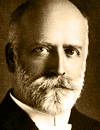
R.A. Torrey continues his exposition of the Sermon on the Mount, focusing on the principles of judgment and prayer. He emphasizes that we should not judge others harshly, as the measure we use will be applied to us, and we must first address our own faults before helping others. Torrey highlights the importance of prayer, encouraging believers to ask, seek, and knock, assuring them that God, as a loving Father, will provide good things to those who earnestly seek Him. He concludes with the Golden Rule, urging Christians to treat others as they wish to be treated, which encapsulates the essence of Christian duty.
Text
DISCOVERY OF THE FACTS
1. Whom and How to Judge, vv. 1-6 What does our Lord forbid our doing in v. 1? What reason does He give? Have we any illustration in the Bible of one who judged another and was in turn judged himself? (See for example Luke 7:39-50.) What other reasons are given in the Bible for not judging others? (Ro. 2:1; 14:3, 4, 10, 13; 1 Cor. 4:3, 5; James 4:11, 12.) Does this passage forbid all forming of estimates of others? (See v. 6.) What is the difference between estimates and judgments?
How far have we a right to form estimates of others? In what spirit should we form them? (1 Cor. 13:4-7.) With what judgment shall we be judged ourselves? With what measure will God measure to us? To whose faults is the average man sharp-sighted? To whose faults is he totally blind? What should we look at before we look at the mote that is in our brother's eye? What is the average man ready to pull out? What should we cast out first? When can we see clearly to cast out the mote that is in our brother's eye?
If a man is eager to deal with the faults of others before he has dealt with his own, what is he? What is meant by not giving that which is holy unto dogs? (v. 6; compare Prov. 9:7, 8; 23:9; Acts 13:45, 46.) What is meant by not casting pearls before swine? What are the pearls we should not cast before swine? Who are swine? (2 Peter 2:22, note context.) Is there any lesson here for the personal worker? When only should we decide whether a man is a dog or a hog? Ought our opinion when thus formed be final?
What will be the result if we cast pearls before swine? 2. The Power of Prayer, vv. 7-12 What is the way to get things? What is the simple definition of prayer suggested by v. 7? Does God really answer prayer? (21:22; Mark 11:24; Luke 11:9, 10; 18:1; John 14:13, 14; 15:7; 16:23, 24; James 1:5, 6; 1 John 3:22; 5:14, 15.) If we do not get a thing by mere asking, what should we do next? If we do not get it by seeking, what should we do? What will be the result if we seek? What will be the result if we knock?
Why are not more doors open unto us? How many that ask receive? Is this the statement of general principle, or does it teach that every one that asks gets everything that he asks? Is it true as a general principle that men that ask have things given them? Of whom ought we to ask if we would be most sure of getting them? Is it true as a general principle that the one that seeketh findeth? What does a man generally get? How ought we to seek? (Jer. 29:12, 13.) When ought we to seek? (Is. 55:6.)
To whom are doors open? What proof does our Lord offer that our Father will give us good things? What thought of God here underlies the doctrine that He answers prayer? What conception of God do men lose sight of when they deny that He answers prayer? Do facts of experience warrant the conception of God that He is a Father, and not a mere Lawgiver? What does an earthly father usually give his son? Will our heavenly Father give us as good things? What reason have we for believing that He will deal better with us than we do with our own children?
To whom does He give good things? Why haven't we more good things? (James 4:2.) Who is wiser, the man who speculates how it is possible for God to answer prayer or the man who goes to God and asks for things and gets them? How should the fact that our heavenly Father is ready to give us whatsoever we ask Him lead us to act toward others (v. 12)? Does our Lord merely bid us not to do unto others what we would not have them do unto us? What does He bid us do? How many things that we wish others to do unto us should we do unto others (v. 12, R.
V.)? How should we talk about others? How should we sell goods to others? How should we buy goods from others? How in general should we deal with others? What is summed up in this Golden Rule? Has any man ever perfectly kept it? Can any man be saved by keeping it? Why not? If one should perfectly keep it would it cover all a man's duty? (Matt. 22:37, 38.) CLASSIFICATION OF TEACHINGS
1. God
Father, dwells in heaven, gives good things to them that ask Him, 11; judges man with the judgment with which they judge others, metes out to us with the measure we mete out to others, 2.
2. The Christian's Duty
Should not judge (i. e., form final and decisive opinions against men), 1; should form such estimates of men as are necessary to govern our conduct toward them; should scrutinize carefully the beam in his own eye before he looks at the mote that is in his brother's eye, 3; should first cast the beam out of his own eye before he tries to pull the mote out of his brother's eye; when he has really cast the beam out of his own eye, should help his brother to get the mote out of his eye, 5; should not give that which is holy unto dogs, should not cast pearls before swine, 6; should pray, seek, knock, 7; should do all things unto others which he desires that others should do unto him, 12.
3. Prayer
What prayer is: asking for what we want, 7.
How to pray: persistently, 7; expectantly, 8; definitely, 7, 8, 11.
To whom to pray: Our Father which is in heaven, 11.
Results of praying: we get what we ask, 7, 8; we get all good things, 11.
Sermon Outline
- I. Whom and How to Judge
- A. Do not judge others
- B. Do not form final and decisive opinions against men
- C. Form estimates of men as necessary to govern conduct
- II. The Power of Prayer
- A. Prayer is asking for what we want
- 'B. How to pray: persistently, expectantly, definitely'
- 'C. To whom to pray: Our Father which is in heaven'
- III. The Golden Rule
- A. Do unto others as you would have them do unto you
- B. This rule is a summary of all Christian duty
Key Quotes
“Judge not, that ye be not judged.” — R.A. Torrey
“Ask, and it shall be given you; seek, and ye shall find; knock, and it shall be opened unto you.” — R.A. Torrey
“For if ye love them which love you, what thank have ye? for sinners also love those that love them.” — R.A. Torrey
Application Points
- We should not judge others, but rather form estimates necessary to govern our conduct toward them.
- We should pray persistently, expectantly, and definitely, and seek and knock for what we need.
- We should do unto others as we would have them do unto us, including in our speech, business dealings, and general conduct.