
Oneness
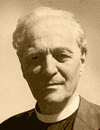
Richard Wurmbrand explores the profound concept of God's oneness as a composite unity that reflects in creation and human relationships.
Richard Wurmbrand delves into the mystique of numbers, asserting that God's oneness is intertwined with the concept of unity and synthesis of conflicting forces. He explains that man, like God, is a composite unity of body, soul, and spirit, reflecting the divine nature. Wurmbrand highlights the Hebrew language's distinction between absolute unity and composite unity, using the example of the Father, Son, and Holy Ghost as a composite unity within God. He emphasizes the idea that every individual, as a reflection of God's oneness, is interconnected and shares in God's divine nature.
Text
The assertion that God is One, is part of the mystique of numbers. If God is identical with the number one, He must have qualities in common with this number. There is no such thing as an Absolute One. "One" simply represents a synthesis of conflicting forces. Man is one because he is a synthesis of body, soul and spirit. These again are a synthesis of other entities. An atom is a synthesis of conflicting elementary particles. The Hebrew language has two expressions for the word "One". Absolute unity and composite unity. God is called a Composite Unity - a plural word - "Eloheinu" : We maintain that God is divisible, because number one is divisible - Father, Son and Holy Ghost. All God's children share His divine Nature. John 10:34, "Ye are gods." (We are made god, but GOD remains ONE.)
The number one is also capable of being multiplied, but unlike all other numbers, because however much one multiplies it by itself it always remains one. "One" is the only number whose square root is equal to itself: That is why Jesus, as man, was able to say, "He that hath seen me hath seen the Father."
So we have retained the saying of the early Christians, "Every time you look at a brother you look at God."
God has been called One, because every number is a quantity related to One and so the whole creation is related to God.
Sermon Outline
-
I
- Understanding the concept of 'One' in relation to God
- Exploring the qualities of the number one
- The significance of composite unity
-
II
- The synthesis of conflicting forces in creation
- The relationship between body, soul, and spirit
- The nature of atoms as a synthesis
-
III
- The implications of God's divisibility
- The divine nature shared among God's children
- The meaning of John 10:34
-
IV
- The unique properties of the number one
- Jesus' declaration of unity with the Father
- Seeing God in our relationships with others
-
V
- The relationship of all creation to God
- The importance of recognizing God in others
Key Quotes
“Every time you look at a brother you look at God.” — Richard Wurmbrand
“He that hath seen me hath seen the Father.” — Richard Wurmbrand
“God has been called One, because every number is a quantity related to One.” — Richard Wurmbrand
Application Points
- Recognize the divine nature in others and treat them with reverence.
- Reflect on the unity and diversity within your own life and relationships.
- Embrace the idea that God's oneness invites us to seek harmony in our communities.