
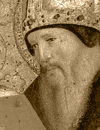
Confessions - Book Vii - Chapter Iii
St. Augustine explores the origin of evil, emphasizing free will as the root cause of sin while affirming God's immutability and justice.
In this devotional sermon, St. Augustine delves into the profound question of the origin of evil, affirming God's unchanging and just nature. He reflects on the role of free will in human sinfulness and the justice of divine punishment. Augustine also wrestles with the mystery of the devil's fall, providing deep theological insights that continue to resonate with believers seeking understanding of evil and grace.
Text
4. But as yet, although I said and was firmly persuaded that thou our Lord, the true God, who madest not only our souls but our bodies as well--and not only our souls and bodies but all creatures and all things--wast free from stain and alteration and in no way mutable, yet I could not readily and clearly understand what was the cause of evil. Whatever it was, I realized that the question must be so analyzed as not to constrain me by any answer to believe that the immutable God was mutable, lest I should myself become the thing that I was seeking out. And so I pursued the search with a quiet mind, now in a confident feeling that what had been said by the Manicheans--and I shrank from them with my whole heart--could not be true. I now realized that when they asked what was the origin of evil their answer was dictated by a wicked pride, which would rather affirm that thy nature is capable of suffering evil than that their own nature is capable of doing it.
5. And I directed my attention to understand what I now was told, that free will is the cause of our doing evil and that thy just judgment is the cause of our having to suffer from its consequences. But I could not see this clearly. So then, trying to draw the eye of my mind up out of that pit, I was plunged back into it again, and trying often was just as often plunged back down. But one thing lifted me up toward thy light: it was that I had come to know that I had a will as certainly as I knew that I had life. When, therefore, I willed or was unwilling to do something, I was utterly certain that it was none but myself who willed or was unwilling--and immediately I realized that there was the cause of my sin. I could see that what I did against my will I suffered rather than did; and I did not regard such actions as faults, but rather as punishments in which I might quickly confess that I was not unjustly punished, since I believed thee to be most just. Who was it that put this in me, and implanted in me the root of bitterness, in spite of the fact that I was altogether the handiwork of my most sweet God? If the devil is to blame, who made the devil himself? And if he was a good angel who by his own wicked will became the devil, how did there happen to be in him that wicked will by which he became a devil, since a good Creator made him wholly a good angel? By these reflections was I again cast down and stultified. Yet I was not plunged into that hell of error--where no man confesses to thee--where I thought that thou didst suffer evil, rather than that men do it.
Sermon Outline
-
I. The Immutable Nature of God
- God is free from stain and alteration
- God is not mutable
- Understanding God's nature prevents false beliefs about evil
-
II. The Origin of Evil and Free Will
- Evil is not from God but from free will
- Manicheans wrongly attribute evil to God
- Sin arises from human choice, not divine creation
-
III. The Justice of God in Punishment
- Suffering is a consequence of sin
- God's judgment is just and deserved
- Recognition of personal responsibility for sin
-
IV. The Mystery of the Devil's Fall
- Questioning the origin of the devil's wicked will
- The devil was originally a good angel
- Reflection on the coexistence of good creation and evil
Key Quotes
“I now realized that when they asked what was the origin of evil their answer was dictated by a wicked pride.” — St. Augustine
“I was utterly certain that it was none but myself who willed or was unwilling--and immediately I realized that there was the cause of my sin.” — St. Augustine
“I did not regard such actions as faults, but rather as punishments in which I might quickly confess that I was not unjustly punished.” — St. Augustine
Application Points
- Recognize personal responsibility in the choices that lead to sin.
- Trust in God's justice even when facing the consequences of sin.
- Reflect on the immutable nature of God to avoid false beliefs about evil.
Frequently Asked Questions
What does St. Augustine say about the nature of God?
He emphasizes that God is immutable, free from stain and alteration, and cannot be the source of evil.
How does Augustine explain the origin of evil?
He attributes evil to the misuse of free will by created beings rather than to God.
Why does Augustine reject the Manichean view?
Because it wrongly claims that God is capable of suffering evil, which contradicts God's immutable nature.
What role does free will play in sin according to Augustine?
Free will is the cause of sin, as individuals choose to do evil, resulting in just consequences.
How does Augustine view God's justice in relation to human suffering?
He sees suffering as a just punishment for sin, reflecting God's righteous judgment.