
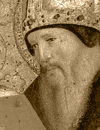
Confessions - Book Viii - Chapter X
St. Augustine explains the internal conflict of the human will as a single soul torn between competing desires, rejecting the notion of two separate minds and emphasizing the need for truth and divine light.
In this teaching sermon, St. Augustine addresses the nature of the human will and the internal conflict experienced by the soul. He refutes the Manichean belief in two opposing minds and explains that the struggle is within one unified soul torn by sin. Augustine calls listeners to reject false doctrines and embrace the truth found in God’s light for spiritual enlightenment and peace.
Text
22. Let them perish from thy presence, O God, as vain talkers, and deceivers of the soul perish, who, when they observe that there are two wills in the act of deliberation, go on to affirm that there are two kinds of minds in us: one good, the other evil. They are indeed themselves evil when they hold these evil opinions--and they shall become good only when they come to hold the truth and consent to the truth that thy apostle may say to them: \"You were formerly in darkness, but now are you in the light in the Lord.\"[257] But they desired to be light, not \"in the Lord,\" but in themselves. They conceived the nature of the soul to be the same as what God is, and thus have become a thicker darkness than they were; for in their dread arrogance they have gone farther away from thee, from thee \"the true Light, that lights every man that comes into the world.\" Mark what you say and blush for shame; draw near to him and be enlightened, and your faces shall not be ashamed.[258]
While I was deliberating whether I would serve the Lord my God now, as I had long purposed to do, it was I who willed and it was also I who was unwilling. In either case, it was I. I neither willed with my whole will nor was I wholly unwilling. And so I was at war with myself and torn apart by myself. And this strife was against my will; yet it did not show the presence of another mind, but the punishment of my own. Thus it was no more I who did it, but the sin that dwelt in me--the punishment of a sin freely committed by Adam, and I was a son of Adam.
23. For if there are as many opposing natures as there are opposing wills, there will not be two but many more. If any man is trying to decide whether he should go to their conventicle or to the theater, the Manicheans at once cry out, \"See, here are two natures--one good, drawing this way, another bad, drawing back that way; for how else can you explain this indecision between conflicting wills?\" But I reply that both impulses are bad--that which draws to them and that which draws back to the theater. But they do not believe that the will which draws to them can be anything but good. Suppose, then, that one of us should try to decide, and through the conflict of his two wills should waver whether he should go to the theater or to our Church. Would not those also waver about the answer here? For either they must confess, which they are unwilling to do, that the will that leads to our church is as good as that which carries their own adherents and those captivated by their mysteries; or else they must imagine that there are two evil natures and two evil minds in one man, both at war with each other, and then it will not be true what they say, that there is one good and another bad. Else they must be converted to the truth, and no longer deny that when anyone deliberates there is one soul fluctuating between conflicting wills.
24. Let them no longer maintain that when they perceive two wills to be contending with each other in the same man the contest is between two opposing minds, of two opposing substances, from two opposing principles, the one good and the other bad. Thus, O true God, thou dost reprove and confute and convict them. For both wills may be bad: as when a man tries to decide whether he should kill a man by poison or by the sword; whether he should take possession of this field or that one belonging to someone else, when he cannot get both; whether he should squander his money to buy pleasure or hold onto his money through the motive of covetousness; whether he should go to the circus or to the theater, if both are open on the same day; or, whether he should take a third course, open at the same time, and rob another man\\
Sermon Outline
-
I
- Refutation of dual minds theory
- Explanation of one soul with conflicting wills
- Critique of Manichean beliefs
-
II
- Description of internal struggle within the will
- Sin as punishment dwelling in the soul
- The unity of the self in conflict
-
III
- Examples of conflicting desires all being potentially evil
- The fallacy of labeling one will good and another evil
- Call to embrace truth and divine enlightenment
Key Quotes
“Let them perish from thy presence, O God, as vain talkers, and deceivers of the soul perish, who... affirm that there are two kinds of minds in us: one good, the other evil.” — St. Augustine
“While I was deliberating whether I would serve the Lord my God now... it was I who willed and it was also I who was unwilling.” — St. Augustine
“Both wills may be bad: as when a man tries to decide whether he should kill a man by poison or by the sword.” — St. Augustine
Application Points
- Recognize that internal conflicts are struggles within one soul, not between separate entities.
- Reject false teachings that divide the self and instead seek unity through truth in God.
- Draw near to God for enlightenment to overcome the darkness of sin and confusion.
Frequently Asked Questions
What does Augustine mean by two wills in one soul?
He means that a single soul experiences conflicting desires or impulses, not that there are two separate minds or substances within a person.
How does Augustine view the Manichean belief in two opposing natures?
He rejects it as false and explains that both conflicting wills can be bad, and that the soul is one, not divided into two opposing substances.
What is the source of the internal conflict according to Augustine?
The conflict arises from sin dwelling within the soul, a punishment inherited from Adam, causing the will to be torn.
How can one overcome this internal strife?
By consenting to the truth and drawing near to God, the true Light, one can be enlightened and freed from the darkness of false beliefs.