
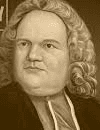
On the Cause of Skepticism
Thomas Reade explores the roots of skepticism in Christianity, emphasizing the dangers of pride and the importance of humility in faith.
Thomas Reade delves into the multitude of opinions and divisions in the religious world, attributing it to the pride of human hearts leading to uncharitableness and combats within the church. He emphasizes the danger of seeking to be wise above what is written in the Bible, resulting in heterodox opinions and theological errors rooted in unbelief and pride. Reade urges humility, faith, and submission to the Scriptures, highlighting the importance of clinging to clear truths and humbly accepting the mysteries beyond human understanding.
Text
21. ON THE CAUSE OF SKEPTICISM
What a multitude of opinions we find in the religious world! How many different sects and parties! each walling themselves round with their own peculiar tenets, and maintaining their own views of doctrine as the only standard of truth. But, in the midst of all this diversity of sentiment, how busy is the great enemy of souls in sowing the tares of uncharitableness, angry zeal, violent passions, and every unchristian temper in the Gospel field. The visible church has too long been the arena for combats which have ended in deluges of blood.
Witness those many persecutions which have been carried on by Christians against Christians in almost every age. "Oh Almighty God, look down upon your church, the vine which your own right hand has planted, that the boar out of the woods may not waste it, nor the wild beast of the field devour it. Return, we beseech you, Oh God of hosts; look down from heaven, behold, and visit this vine." It may be useful to inquire, from where arises all this angry disputation in the professing Christian world?
It arises, chiefly, from the pride of our hearts. To contend earnestly for the faith once delivered to the saints, is a duty; "to give place, no, not for an hour," to those who seek to destroy the foundation of our faith, is a duty. There is, however, an existing evil of great magnitude, and which springs from that pride of intellect, which seeks to be wise above what is written. Man is not willing to act upon the plain, revealed command of Heaven. He must search and pry into the secret counsels of Jehovah.
He wishes to ascertain why the Almighty issues such and such commands. He endeavors to bring every revelation from God to the rule and standard of his own peculiar mode of reasoning; and when two declarations present themselves before him, apparently opposed to each other, though practically leading to the same point, that is, the glory of God and the salvation of the soul; instead of humbly receiving both, as stated in the word of truth, and seeking to draw from each the practical improvement intended by them, he cannot rest until he has filled up the seeming chasm with his own confused ideas, thinking thereby to vindicate the ways of God to man!
Now, as each inquirer claims an equal right to fill up this chasm in his own way, and as very few will entirely submit to the system of another; so on this account it is, that the Christian world is filled with such heterodox opinions. Thus, leaving the sure path of revealed truth, men plunge into an ocean of inexplicable difficulties, and, by laboring to be wise above what is written, become very fools in divine things. "Lord, grant that I may never exercise myself in matters which are too high for me; which you did never intend should be fully known in this present state; no, which I cannot comprehend, until the natural blindness of my understanding be wholly removed.
In heaven, all darkness will be excluded. Here, I know but in part; there, if admitted by your grace, I shall know, even as also I am known. Make my soul then, Oh Lord, as a weaned child. Give me that simplicity of faith which cheerfully receives, as truth, all that you have revealed, though mystery surround me on every side." I find many plain and clear declarations, which nothing but a willful hatred of the truth can misrepresent and pervert. On these I would continually dwell; from them I would draw all the sweetness and comfort, wisdom and strength, which they were mercifully designed to convey.
As a newborn babe, may I desire the sincere milk of the word, that I may grow thereby. I find other declarations high and sublime; far surpassing man's understanding. From these, I would learn humility. To these, I would submit my reason with humble reverence. By these, I would exercise my faith, and place implicit confidence in the word of truth, although many things therein be difficult to comprehend, and many past finding out. While Peter acknowledges that, in the epistles of his beloved brother Paul, are some things hard to be understood; he also declares, that the unlearned and unstable twist them, as they do also the other Scriptures, unto their own destruction.
From these considerations, I perceive how wonderfully the holy Scriptures are calculated to instruct the humble believer, while they bewilder the proud skeptic. Like the cloud in the wilderness, they afford light to the Israel of God, while "the disputer of this world" is left in darkness. "Who is wise? He will realize these things. Who is discerning? He will understand them. The ways of the Lord are right; the righteous walk in them, but the rebellious stumble in them." Hosea 14:9.
All theological and practical errors originate in the unbelief and pride of our hearts. We are continually pained with instances illustrative of this truth. Many who, to all outward appearance, set out well, holding the grand essentials of Christianity, and exhibiting the humble walk of the Christian, have, by degrees, got so high in doctrines, as to pass over the limits of the precepts, considering every enforcement of the moral law as derogatory to the freeness and liberty of the Gospel.
The promises are to them like the manna for sweetness, while the precepts resemble the bitter waters of Marah. By this perverted view of the Gospel of grace, which makes provision for the holiness, as well as the acceptance, of the believer, they endeavor to disunite what God has inseparably joined together. Advancing in their career of bold inquiry and daring investigation; leaving the precincts of the written word, and soaring into the interminable region of wild conjecture; they fall at length, giddy with their flight, into the fatal revelries of fanatical delusion, skeptical indifference, Socinian heresy, or deistical profaneness.
Such wandering stars, leaving their proper orbit, afford an awful warning to the church of Christ; and happy is he who learns wisdom from their end, and thereby resists the first risings of pride and unhallowed speculation. Some, indeed, are restored by that sovereign grace which they have abused; while others are left to the misery of their own delusions, according to Jude, who denominates them "wandering stars, to whom is reserved the blackness of darkness forever." In the midst of surrounding darkness and abounding iniquity; in the midst of distracting opinions and guilty fears: Where must we look for saving help?
To whom for refuge fly? Who dare presume to plead our cause Before the throne on high? It is Jesus pleads his people's cause, Before the eternal throne; Presents the merit of his blood, And claims them for his own. Oh! for a lively, vigorous faith, To feel this blessing mine; Make me, Oh Lord, of saving grace A monument divine. On you, a helpless worm I fall, On you alone depend; I'll trust your grace-- 'tis infinite, And knows nor bound nor end.
Father! behold me in your Son;
Oh! send your Spirit down,
To fit me for eternal joys,
And seal me for your own.
Sermon Outline
- I points: - Introduction to the diversity of opinions in Christianity - The role of pride in religious disputes - The consequences of uncharitableness among believers
- II points: - The danger of seeking to understand God's commands beyond revealed truth - The chasm between human reasoning and divine revelation - The folly of trying to reconcile conflicting truths
- III points: - The importance of humility in understanding Scripture - The distinction between the humble believer and the proud skeptic - The consequences of straying from the written word
- IV points: - The relationship between belief, pride, and theological errors - The dangers of abandoning moral law for the sake of grace - Warnings from those who have fallen into skepticism
- V points: - The necessity of looking to Jesus for salvation - The role of faith in receiving God's grace - The prayer for divine assistance in faith
Key Quotes
“To contend earnestly for the faith once delivered to the saints, is a duty.” — Thomas Reade
“All theological and practical errors originate in the unbelief and pride of our hearts.” — Thomas Reade
“Oh! for a lively, vigorous faith, to feel this blessing mine.” — Thomas Reade
Application Points
- Seek to understand Scripture with a humble heart, recognizing the limits of human reasoning.
- Avoid the pitfalls of pride by grounding your faith in the revealed truths of the Bible.
- Look to Jesus as the source of grace and salvation, trusting in His advocacy before God.