
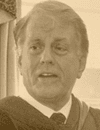
Cries No.1 Forgive them (full)
Tony Sargent explores the profound significance of Jesus' first cry from the cross, 'Father, forgive them,' emphasizing the unparalleled grace and forgiveness extended even to His enemies.
In this deeply reflective sermon, Tony Sargent examines the first of Jesus' seven cries from the cross, focusing on the profound plea for forgiveness. Drawing from Luke's Gospel and rich theological insight, Sargent reveals the character of Jesus as the sinless Son of God who prays for His enemies amidst suffering. The sermon challenges listeners to grasp the depth of divine forgiveness and to embody that forgiveness in their own lives.
Full Transcript
Let's stand and sing. When I surveyed the wondrous cross, On which the Prince of Glory died, My richest gain I count but loss, And poor contempt on all my pride. Forbid it, Lord, that I should boast, Faith in the death of Christ my God.
All the vain things that charmed me most, I sacrifice them to His blood. See from His head, His hands, His feet, Sorrow and love flow mingled down. Did e'er such love and sorrow meet, Or thorns compose so rich a crown? Were the whole realm of nature mine, That were an offering far too small, Love so amazing, so divine, Demands my soul, my life, my all.
Do sit down and let's turn to the Word of God as it's found in the Gospel of Luke. Luke writes with a compassion and an insight that gives his Gospel a flavor over against the others. Luke was a companion of Paul as we reminded ourselves these past Sunday mornings.
He was also a doctor and it's from the perspective of a very sensitive doctor that he pens the account of the crucifixion of our Lord sometimes including material that none of the other Gospelers include. Maybe because, although I cannot prove this, I think there is evidence that suggests this, that he spent some time in his researches in the company of Mary, the mother of our Lord Jesus. Some of the insights that he gets at the beginning of the life of Jesus as narrated in his Gospel, he draws from that source.
It seems to me that there are two or three further comments, several further comments that he makes as he unfurls the life of our Lord Jesus where his informant could well have been Mary. So, with that in mind, let's pick up the story of the tremendous death of our beloved Saviour as found in the twenty-third chapter of Luke's Gospel. And the twenty-sixth verse, Luke twenty-three verse twenty-six.
As they, that is the Praetorian guard for our Lord, had been in the company of Pilate. As they, Pilate's soldiers, led him, the Lord Jesus, away, they seized Simon from Cyrene, who was on his way from the country, and put the cross on him and made him carry it behind Jesus. A large number of people followed him, including women, who mourned and wailed for him.
Jesus turned and said to them, daughters of Jerusalem, do not weep for me, weep for yourselves and for your children, for the time will come when you will say, Blessed are the barren women, the wombs that never bore and the breasts that never nursed. Then they will say to the mountains, Fall on us, and to the hills, cover us. For if men do these things when the tree is green, what will happen when it is dry? To other men, both criminals, were also led out with him to be executed.
When they came to the place called the Skull, there they crucified him along with the criminals. One on his right, the other on his left. Jesus said, Father, forgive them, for they do not know what they are doing, and they divided up his clothes by casting lots.
The people stood watching, and the rulers even sneered at him. They said, He saved others? Let him save himself, if he is the Christ. Of God, the Chosen One, the soldiers also came up and mocked him.
They offered him wine, vinegar, and said, If you are the King of the Jews, save yourself. There was a written notice above him which read, This is the King of the Jews. Joy's got a song for us.
I'd like you to join with me first in singing number 753, When I feel the touch of your hand upon my life. We'll sing that through twice, and then I'll add something. When I feel the touch of your hand upon my life, It causes me to sing a song that I've never heard before.
When I feel the touch of your hand upon my life, It causes me to sing a song that I love you. So from deep within me, my spirit's laying a thousand to you. You are my King, you are my God, and I love you.
I love you for showing me your mercy and grace. But Jesus in heaven, my Savior, my God. I love you, Lord, for all that.
I love you, Lord, for all of you are my sin. I love you for giving me your spirit within. But Jesus in heaven, my Savior, my God.
I love you, Lord, most Lord, for all that you are. I love you the most, Lord, for all that you are. Now would you turn to 346.
It's a song which sometimes is wrongly placed in the children's section of older hymn books. The great divine who wrote this, William Howe, anticipates the same sort of sentiments as you find in that hymn, When I survey the wondrous cross. I said anticipates, he reflects, Isaac Watts.
The concept of surveying the cross is the idea of staying there and looking up and pondering it and weighing it and trying to work it through the implications. Well, 346, it takes you to the cross. Let's read the first two verses together, then we'll sing from the third.
It is a thing most wonderful, almost too wonderful to be, that God's own Son should come from heaven and die to save a child like me. And yet I know that it is true. He chose a poor and humble lot and wept and toiled and mourned and died for love of those who loved him not.
Verse three will stand. I sometimes think about the cross and shut my eyes and try to see the cruel nails and crown of thorns and Jesus crucified for me. But even could I see him die, I could but see a little part of that great love, which like a fire is always burning in his heart.
I cannot tell how he could love a child so weak and full of sin His love must be most wonderful if he could die my love to win. It is most wonderful to know his love for me so free and sure but it is more wonderful to see my love for him so faint and poor. And yet I know to love him more I'll love with him until I see the end.
Do be seated. Thank you for coming this morning. I particularly wanted to hold these services because I wanted to give myself the discipline of coming around the Word of God during this week which is so full of memories for Christian people.
And even if I had been preaching just to an empty pew, it would have been worthwhile for the exercise of just coming to the Word of the Lord again and asking myself, as I've asked for thirty years and more, why did Jesus die? The wonder of the cross never ceases to amaze me and even though I must have taken communion a thousand times, if not more, I've never lost the freshness that he loved me and he gave himself for me and the bread and the wine they bespeak, the body and the blood of our Lord Jesus. So we enter into the holy place and we contemplate afresh the day that Jesus died and all that led up to that and what devolved from it. So with Dr. Luke's account, the twenty-third chapter of his gospel in our hands, let's set the agenda from where Luke leads in the beginning of giving us the final installments of the life of the Lord Jesus as he researched them.
There were seven cries which Jesus offered from the cross and each cry was significant. Each one led from one to the other in a logical order, even though it's perhaps not occurred to you in this understanding before. Each cry takes him to a point of total isolation where it's just him.
He starts off, for example, with this cry that was the first one which will occupy our attention for the major part of our time together in which there are in front of him those who have put him on the cross and those who are mocking him. The thirty-fourth verse says, Let his Father forgive them, for they know not what they're doing. So there's a group of people that he directs these words to.
And then he narrows it and he speaks in the second cry that comes from his lips to one of the men who will actually be a follower of his who also dies on the cross alongside him. And Jesus says, Today you will be with me in paradise. And then on the third occasion he looks out and he sees Mary and he arrests the attention of John and he says to the latter, Behold your mother.
And to Mary, Behold your son. So from dealing with the unbelieving community he moves to a man who has just become a member of the church, so to speak, and then to his mother. And then he narrows it even more and it's just him and the Father, him and his God.
And he utters that cry in the darkness, Why have you forsaken me? And then he confesses how his lips are dry and he says, I thirst. And finally he utters that lion's roar of triumph. It is finished.
But the seven cries from the cross, they move from one to the other, from the general to the particular, from the many to a handful to just the Lord Jesus and his Father. And that's how you are to approach Golgotha and what happened there, the increasing isolation of our Lord Jesus Christ. So, this morning, we look at the first cry, taking just four, up to and including Good Friday morning.
Father, forgive them, for they know not what they are doing. Let's concentrate first of all upon the person and his circumstance. The person and his circumstance.
Who offers this cry? Who is it to whom Luke refers when he says in that 26th verse, they led him away? Who is it who is brought to the place called Golgotha? Who is it that Luke has at the forefront of his mind when he says in verse 32, there they crucified him? Who is it? Jesus of Nazareth. When one of his early colleagues reflects upon his life in the Acts of the Apostles in the tenth chapter and the thirty-eighth verse, Peter says of Jesus, he went about doing good. Who is this man who utters this cry from the cross about forgiveness? He is a good man.
Good. Good towards single people, for he related to the widow and the orphan. Good towards the sinner.
For the Lord Jesus, when such people are brought across his path, dismisses those who accuse them, and he deals with them as a tender pastor, counselor, and one who can grant absolution. Good. Good to the sick.
The lepers could speak of the goodness of Jesus. The blind could tell you how that good man came across their path and restored their vision. The man who utters the cry, who is he? I tell you, he is a good man.
On one occasion, Jesus said, there is none good but one. And what he was, in effect, telling us is that God is impeccable. That means to say that there is no blemish in God.
You take the greatest preacher and give a flashback of his life, and he will blush at some point. Take the holiest person you've ever known and place it alongside the goodness of God. You see their grayness like you see an inferior claim to be white when placed against the newly fallen snow.
Jesus is good. And the goodness of such a quality that you can only conclude when you review the pilgrimage of this man. He's more than just a man.
He is the good, the representative of God on earth. Who is it who says, Father forgive them for they know not what they do. The man who utters the cry is the Son of God, Jesus of Nazareth.
But what about the place from which he uttered the cry? We've already touched on it. Verse 33, they took him to a place called the Skull and that's the Greek translation of the Hebrew. They took him to Golgotha, not the place where corpses are left to die.
The Jews would not have allowed that. It was too near to Jerusalem. It's not called the place of the skulls.
It's no reference therefore to a funeral park, a cemetery. It's called the place of the skull because well, in a very peculiar fashion, the rock face that overlooks the area does seem to depict the two holes of the head of a man. And so Golgotha gets its name.
And conveniently placed by the side of Golgotha is the ever-burning refuse tip where the rubbish of Jerusalem is brought out and consumed by the fires. There, domestic rubbish is dumped. Also, human garbage is hung.
For Golgotha becomes in Jerusalem like the end of Oxford Street used to be in London, the place where murderers were hung. Where does Jesus speak from when he says, Father forgive them for they know not what they do? The place from which the cry was uttered was that rocky protrusion called Golgotha. Take away the romantic idea of the Green Hill far away.
The hymn is beautiful, but the fact of the matter is that Golgotha was flanked by one of the busiest roads so that people on the donkey or on the camel or Roman soldiers marching by in their legions could cast a glance across at that very public place where people were hung, crucified, and they could say to the individual, he got his just desserts. That's the place from which the cry was uttered. And what about the people to whom Jesus directs his comments? Father, forgive them, for they know not what they are doing.
Who are these people? Verse 27, there were a large number. Verse 32, two other men, both criminals alongside Jesus. More particularly, verse 35, the people who stood watching and even more specifically, the rulers and then the soldiers.
Jesus has the religious mafia in mind. The vox populi, the people who articulated for the crowd what they believed the crowd wanted to say, they sneered at him. And that is a word that is found in the 35th verse of this chapter with its Hebrew equivalent in the Messianic Psalm, Psalm 22, where the picture is drawn of a number of folk who, in mocking poise, quoting the literal language of the Hebrew as it is put into the authorized version, they shoot out their lips.
They cause their mouth organs to be a sort of launching pad for the worst mockery that people could ever release and spray into the stratosphere. Forgive them, the religious mafia who sneer. Forgive them, the Roman militia who also engage in their own equivalent for mockery as they suggest that Jesus is the king of the Jews.
And so offer him wine vinegar and bring other bits and pieces of paraphernalia to dress him with in order to increase the ridicule that's heaped upon him. Father, forgive them. Who speaks? A good man? The best that ever lived? From where does he speak? From the place of the skull? From his naked exposure in the public place of Golgotha? And of whom does he speak? Of the militia? Of the religious mafia? Words which are incredible because there is no vindictiveness in them.
Two books in recent days have moved me to tears. By recent days I speak of the last two years. One was Terry Waite's account of his life in Lebanon, in Beirut.
I wept because I've always had a fear of the dark, probably because my earliest recall is being in an air raid shelter, and I've always hated the dark. Intense darkness, I can't stand it. And thinking of Waite, bigger than myself, heavier than myself, sometimes pushed into an icebox, a refrigerator, gasping for breath as a result of his asthma.
That really broke me. And then Nelson Mandela and his book The Long Walk to Freedom. I ransacked that book to try to find how it was that man could come through the experience that he passed through and not have any vindictiveness.
I find Nelson Mandela a difficult man to understand. But I have some insights, at least into his psyche. I'm not utterly confused.
But when I come to this man, I have no categories in which to interpret him. I have no explanations to give to you. That's why I wanted whether no one had come to these sessions or not, I wanted for my own personal disciplines to stand again in front of that cross and ask about this man who is crucified.
You see, he says, Father, forgive. And he speaks a most astonishing word without any bitterness, without any rancor. And he directs it to these who are responsible for his nakedness.
For his shame. That's the person. And that's the circumstance with which we are greeted as we look at Dr. Luke's account of the death of our Lord Jesus Christ.
The man who speaks, he speaks of a pardon. So, from the man we must proceed to the prayer and its significance. For that is what this cry is.
Father, forgive them. They know not what they do. He's an incredible man, a man of prayer, our Lord Jesus.
I mean, you find him at the beginning of his ministry praying. And you find him at the end of his ministry praying. Saturated throughout all of his pilgrimage is this propensity, this habitual discipline of coming to God and bringing to him the thoughts of his mind and asking for his direction as the day unfurls.
So, here is our Lord Jesus and he's praying. And the first word we look at its explanation. Is forgive.
Father, forgive them. At the beginning of Christ's passion, he does not pray for his disciples. He does not pray for his earthly mother.
He does not pray for himself. Brothers and sisters, the prayer that is released from his lips, that comes from his heart, is for his enemies. And that is mind-blowing.
That's what I mean when I say, I look at the word and try and find some explanation. What is he saying? Forgive, lay aside, leave, remit. It's a word that I understand and yet I don't understand.
It's a word I need to know more of. And as a sinner, I appreciate that if I am forgiven, then I have to forgive. Forgiveness, don't misunderstand me, is natural to me.
I mean by that, I have asked God to forgive me for so much. It has to be natural there for me to forgive others. But the hardest thing for God to do is to forgive.
The thing that brings God the greatest challenge is to forgive. You see, if you have been forgiven, then to forgive is natural. I go further.
If you have been forgiven, then to forgive is your duty. I go even further. If you have been forgiven, the test of that is your willingness to forgive.
Because it is only the forgiven who can really forgive. But if you have been forgiven, then there is some wrong that you have done. There is something for which you need to apologize.
There is an abject contrition that must be part and parcel of your demeanor. There is a repentance. There is a remorse.
All this I identify with. I know something of remorse. I know something of self-hatred.
Therefore, for me to forgive is natural. But God, God has no need to apologize. God remains impeccable without spot, without blemish.
So one theologian risks saying forgiveness is to man the plainest of duties. To God it is the profoundest of problems. What is sin? Sin is to do violence against God.
The immediate harm done may be registered on the human scale as witnessed David and his multiple sins. But when David comes to his senses he realizes against thee the only have I sinned and done this evil in thy sight. Romans 8-7 will tell you that sin is violating the law of God.
Somebody recently has written a book entitled Whatever Happened to Sin. You see, we moderns, we back off using the word sin, don't we? We talk about diminished responsibility. You know, you shouldn't blame him, blame his genes.
G-E-N-E-S Blame his environment. If he hadn't fallen out of the window when he was a little boy he wouldn't have knocked his head, therefore he wouldn't be acting in the way that he does as a man. Now there is such a thing as diminished responsibility.
Someone who is mentally deranged. We think of a child not being as responsible as an adult, therefore you cannot indict a child under ten for crimes that he may have committed. But the fact of the matter is that when you've done with the qualifications and the twentieth century explanations, sin is sin.
And sin is a violation of the law of God. Then why can't God forgive like you and I forgive? Because there is an infinite distinction between God and you. You forgive because you have been forgiven.
God has no need to forgive. It is his law that is being violated. And whoever says, well why can, why was Easter a necessity? Why couldn't God just forgive as I forgive? Shows a fundamental misunderstanding of the nature of God and the problem of sin.
God cannot just wipe the slate clean. He cannot forgive as a forgiven sinner forgives. Because the sin that has been engaged in is a violation of his law, a violation of his nature.
Our Lord Jesus speaks this prayer and he asks for forgiveness to be granted to the militia, to the mafia, to the Jews and to the Gentiles. And he does knowing that he still has to continue with the horrendous process of being crucified. For the forgiveness that will come will be as a result of a penalty that God himself will go through and take and bear the penalty of God dying for the sins of men and women.
A God who never needed to be forgiven entering into the failure of your sinfulness and my sinfulness to make it possible for absolution. So if we've looked at the explanation of the word forgive, now let's look at the intonation. It was a prayer, Father, a prayer that is addressed to an individual, a prayer the timing of which was significant.
Verse forty-four will tell you that it was about the sixth hour and darkness came upon the whole land. Our Lord was crucified and the beginning of the crucifixion was at high noon. You'll have to think this one through carefully to understand, but as far as God is concerned, there is only one day.
The day of creation, the creation is at the beginning. The day of the second advent is the end of the day. There's only one day and in that first day sin came into the world.
And at the end of God's day, the day of the Lord, sin shall be dealt with. The soul that sins, it will die. The holiness of God is so understood by the Old Testament writers that one of them writes the imprecatory psalms which speaks about God dashing his enemies as a child might be dashed to pieces against a stone.
And we sensitive mortals think how awful. You move to the end of the book of Revelation and there are the prayers of the saints that come from below the throne saying how long oh Lord, how long? And what you have in both testaments is a cry for the vindication of the holiness of God. Sin has come into the world at the beginning of the day.
And by the end of the eternal day, sin has to be dealt with. And it's high noon and Jesus comes carrying his cross to Golgotha and he pauses as he has been placed on that cross and he cries at high noon in the middle of the day of the Lord. Father, forgive, forgive.
But he does not go cap in hand. This is no pleading. This is a point of assertion.
All things in heaven and earth have been given to him. The kingdom is his. It is on the basis of what he has achieved and what is coming to its consummation that he makes this declaration.
Father, forgive, knowing full well that his prayer will be answered. Father, forgive, forgive them. Father, are you hearing me? Forgive them for what they are doing right now.
You see, the word forgive also has the connotation suffer. Leave them alone for a little longer, Father. Let them continue to do what they are doing.
Keep back those hordes of angels that are leaning over the balustrades of heaven who at one word from you will come and materialize and in physical form will put to flight my tormentors. They don't know what they are doing, putting me to the cross. But you know and I know and the Spirit knows it's high noon.
It's the time for the cleansing of the sins that started with Adam and have permeated throughout the whole of this day so that when the day comes to its close and in glory I return there shall be men and women for whom I have died who will not suffer eternal torment, eternal perdition. Father, suffer them to do what they are about to do. Do not stop this crucifixion.
Let it go to its final point so that the work that you gave me to achieve when I came on earth shall be fulfilled and in all their evil conniving and in all their mockery as they shoot out their lips forgive them. Forgive them when they acknowledge my gospel and the work at high noon. May their sin be placed to my account and my righteousness transferred to them.
The prayer and its significance finally the prayer and its consequence How do you describe Christianity? The most beautiful definition I've come across from a modern pen simply says this Christianity is the religion of the forgiven. You can't say that of Islam. I would to God you could say it of Hinduism but you can't.
Christianity is the religion of the forgiven. This is why Jesus came into the world. Sin runs its course and Jesus dies.
Oh yes there's no happy immediate answer at the cross. He doesn't come down. He is bloodstained.
He is bedraggled. He is in such a condition that no artist has ever dared to draw him. Think of tragedy and raise it to its infinite degree and you see there in Jesus Christ there is nothing wonderful about the cross looked at from that vantage point.
It's bloody it's awful it's obscene. But it's also the way in which he who was just died for and made possible the salvation of sinners. He who knew no sin became sin.
The just died for the unjust. That's the consequence. And we live at the human scale as opposed to that divine day to which scripture makes reference and acknowledges in both testaments.
But at the literal level in the human time scale the ripples of what happened that Good Friday continue and they reach us at the end of the twentieth century and we know that we are bathed in the forgiveness that comes from the cross. But the cross is just as though it happened yesterday. You lose the freshness of the communion and you've virtually lost your faith.
I see the cross in Pilate's hall. I mark the wrathful mean. There shouts of crucify appall with blasphemy between.
And of that shouting multitude I feel that I am one. And in that din of choices rude I recognize my own. T'was I that shed that sacred blood.
I nailed him to the tree. I crucified the Lamb of God. I joined the mockery.
They take Jesus and he's crucified at high noon and he cries out one of seven cries and you analyze it and you find it's a prayer and he embraces a large community and later on as the hours go by he prays for another group and then one person and then it's just him and the Father Jesus in the isolation of the cross interacting with his Father leading to the final cry it is finished what you wanted me to do is complete high noon and there's hope for the world. More of that tomorrow. Let's pray.
I sometimes think about the cross and close my eyes and try to see the print of thorns the print of nails the crown of thorns and Jesus crucified for me. Father we thank you. Thank you for the bravery of our Savior.
Thank you for his lack of vindictiveness. Thank you that he prayed for those who persecuted him. Thank you that at midday in the one day that you see the whole of history the Lord Jesus came and dealt with our sin so that when at the end justice is seen to be done and your wrath is directed to those who are unrepentant there will be an innumerable company of people saved by the blood of Christ preserved in a time for eternity yours because his blessed Christ thank you for the forgiveness which you have offered undeserving people may our lives indicate the measure of our gratitude for your sake Amen.
So let's sing again what kind of love is this 750 that gave itself for me I am the guilty one yet I go free 750 stand what kind of love is this that gave itself for me I am the guilty one yet I go free what kind of love is this a love I've never known I didn't even know his name what kind of love is this what kind of man is this that died in agony he who had done no wrong was crucified for me what kind of man is this who laid aside his throne that I may know the love of God what kind of man is this by grace I have been saved it is the gift of God he destined me to be his son such is his love oh I have never seen no ear has ever heard nor has the heart of man conceived what kind of love is this well tomorrow I want to show you how Lord Jesus dealt with the criminal on the cross a man who was like Judas a man who was like you and me and how our Lord Jesus dealt with him and the significance of that action so though there's not time to go through all of the seven cries from the cross that's the agenda for tomorrow and you might like to read through this account again and the other accounts in preparation perhaps persuade a friend also to come with you tomorrow for an hour of meditation and prayer Father we thank you Jesus of Nazareth the man who did good thank you blessed Saviour for your death on the cross thanking you Holy Spirit for opening our eyes to understand at least a little of those events at high noon now may your blessing the blessing of the Triune God Father Son and Spirit make this a very special Holy Week for us Amen Good morning God bless you
Sermon Outline
-
I. The Person Who Utters the Cry
- Jesus as the Good Man and Son of God
- His impeccable nature and unique goodness
- The significance of His identity in the context of the cross
-
II. The Place of the Cry
- Golgotha: The Place of the Skull
- The public and shameful nature of crucifixion
- The reality versus romanticized views of the cross
-
III. The People Addressed in the Cry
- Religious leaders and Roman soldiers mocking Jesus
- The crowd and their rejection
- The absence of vindictiveness in Jesus’ plea
-
IV. The Significance of the Prayer 'Father, Forgive Them'
- Jesus praying for His enemies, not Himself or friends
- The profound challenge and nature of divine forgiveness
- The call for believers to forgive as they have been forgiven
Key Quotes
“Father, forgive them, for they know not what they are doing.” — Tony Sargent
“If you have been forgiven, the test of that is your willingness to forgive.” — Tony Sargent
“Jesus is good. And the goodness of such a quality that you can only conclude when you review the pilgrimage of this man.” — Tony Sargent
Application Points
- Reflect on Jesus' example by choosing to forgive those who have wronged you.
- Approach the cross with a deeper understanding of Jesus' love and mercy.
- Cultivate a habit of prayer, especially praying for others including enemies.