
Have You Lost the Wonder?
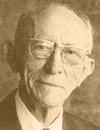
Vance Havner's sermon emphasizes the importance of maintaining childlike wonder and humility in our faith journey.
In this sermon, the disciples approach Jesus and ask him who is the greatest in the kingdom of heaven. Jesus responds by calling a little child and placing them in the midst of the disciples. He then tells them that unless they become like little children, they will not enter the kingdom of heaven. Jesus emphasizes the importance of humility and receiving little children in his name. He warns that anyone who offends or causes harm to these little ones would be better off with a millstone around their neck and drowned in the sea. The sermon also mentions the life and preaching of Gypsy Smith, a renowned evangelist known for his simplicity and originality.
Full Transcript
At the same time came the disciples unto Jesus, saying, Who is the greatest in the kingdom of heaven? And Jesus called a little child unto him, and set him in the midst of them, and said, Verily I say unto you, except ye be converted, and become as little children, ye shall not enter into the kingdom of heaven. Whosoever therefore shall humble himself as this little child, as saying, is greatest in the kingdom of heaven, and whoso shall receive one such little child in my name, receive it me. But whoso shall offend one of these little ones which believe in me, it were better for him that a millstone were hanged about his neck, and that he were drowned in the depths of the sea.
Gypsy Smith, the great evangelist, died in true gypsy tradition on a journey in his 87th year. He was called to preach as a lad, sang and preached the gospel around the world. He was simple and original and colorful.
He used to say, I was born in a field, don't put me in a flower pot. He was not a theologian. He would have agreed with Sam Jones, who said that he liked flowers, but not botany and religion, but not theology.
Or Billy Sunday, who used to say that he didn't know any more about theology than a jackrabbit did about ping pong. Well, I don't see why a man can't like religion and theology both, but that was gypsy for you. Somebody told him he ought to take music lessons, ought to learn how to sing from his diaphragm.
He said he didn't want to sing from his diaphragm, he wanted to sing from his heart. I heard it was too big for him. He said the way he worked it was, he'd read until he saw one of those big words coming, and then he'd stop right on this side and make a few remarks, and then start reading on the other side of that reading.
They asked the gypsy, what is the secret of the freshness of your ministry way into the 80s? And he said, I have never lost. I heard him in Stony Brook, New York, just before he died, and he hadn't lost. A preacher ought to have the mind of a scholar and the heart of a scholar.
And the problem is how to tell. Smith had the heart of a child. He never lost the wonder.
And this, I think, is one thing our Lord meant in Matthew 18.3, except she be converted and become as little children. Children have not lost the wonder. They've not been here long enough to get used to it.
They still have a sense of surprise. Anything can happen. Everything's new.
And at 18, you have old age. It's so expensive. They lose the wonder to the magic of childhood.
It's high time somebody asked it, because youngsters become cynical now, fed up, sophisticated, old men and women, before they're out of their teens. We're in the TV age. We've seen everything, heard everything.
I wonder what it would take to surprise. I preached in Indiana some time ago, and the wonderful people. How true that is.
We get smart too soon. We lose. Well, the young people are not entirely.
Teddy Roosevelt, and it practically killed him. Never got over the fear. But he said, it's my last chance to be.
And people who knew Theodore Roosevelt did something. You don't just watch the Ephesians work. I think some Christian man came eating and drinking, and he speaks in a loud voice.
He stands still. But in the third place, a revival into him and all, because this secret has been kept from the wise. We don't look for miracles.
We don't see many. Told me about a drought. Governor came, and there'd been a drought.
Now, we can reach that sad state. I didn't want to say they used to come too, but they're used now. Nothing does me more good than a brand new taste and a zest than those to think that leaving your first love meant that you were a confront.
But the power is gone. Samson in a treadmill. And you get into the singing in the choir.
We sing, I stand up. This generation wants to sit amused, entertained, instead of some years ago on a train crossing. If you've been to the pool, I've never lost them.
A few summers ago, I was in a bar. He was for me. And as we walked up, and Billy said to me, and then I slipped back to the little neo this and that.
Sermon Outline
-
I
- Introduction to the concept of wonder in faith
- The significance of humility as seen in children
- The danger of losing childlike wonder
-
II
- Examples from Gypsy Smith's life
- The importance of maintaining a fresh perspective
- The role of surprise in faith
-
III
- Cynicism in modern youth
- The impact of societal influences on wonder
- The call to return to childlike faith
-
IV
- Miracles and the expectation of the extraordinary
- The contrast between past and present faith experiences
- Encouragement to seek renewal in faith
Key Quotes
“I have never lost the wonder.” — Vance Havner
“Children have not lost the wonder. They've not been here long enough to get used to it.” — Vance Havner
“We get smart too soon. We lose.” — Vance Havner
Application Points
- Reflect on the simplicity of your faith and seek to embrace a childlike perspective.
- Challenge yourself to find joy and surprise in everyday experiences of faith.
- Encourage younger generations to explore their faith without the burden of cynicism.