
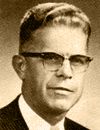
Commentary Notes - Judges
Walter Beuttler's sermon on Judges explores the cycles of sin and deliverance in Israel's history and the consequences of apostasy.
Walter Beuttler preaches on 'The Hook of Judges,' highlighting the repeated cycle of sin, judgment, repentance, and deliverance in the book. The key phrase 'every man did that which was right in his own eyes' reflects the chaos and anarchy that ensued in Israel due to their disobedience and apostasy. The message of the book reveals the deterioration of a nation, the providence of God in national affairs, and the consequences of religious apostasy on a national scale.
Text
A. THE HOOK OF JUDGES
1. This book takes its name from the twelve civil and military rulers (excluding Abimelech who was a usurper) whom God raised up to govern Israel until the formation of the kingdom
2. God's choice of these men illustrates and demonstrates Zech. 4:6 and 1 Cor. 1:26-29
3. The events recorded in Judges cover several centuries
4. The book records seven apostasies, seven oppressions, and seven deliverances in a repeated cycle of sin, judgment, repentance, and deliverance
5. Judges closes with an appendix of five chapters in which Israel is in a complete state of anarchy
6. The key phrase of the book is "every man did that which was right in his own eyes," 21:25
B. THE MESSAGE OF THE BOOK
The book of Judges reveals to us:
1.The cause, process, and result of the deterioration of a nation
2. The working of the providence of God in national affairs
3. That toleration of worldliness leads to admiration, and admiration to conformity
4. The basic weakness and ultimate failure of every form of human government
5. That religious apostasy is the root-cause of national deterioration
6. That national chaos is the consequence of national apostasy
(With due acknowledgement to Pulpit Commentary and G. Campbell Morgan--Living Messages of the Books of the Bible)
FAILURE OF ISRAEL, 1:1-3:4
A. COMPROMISE OF ISRAEL, 1:1-2:5
1. In general, what does chapter 1 record? The failure of Israel in not driving out the nations
2. Explain the apparent inability of God to drive out the inhabitants of the valley, 1:19: God could not give Israel his full support because of their failure to give him full obedience
3. Note the two kinds of enemies in 1:19 and suggest their spiritual counterpart:
(1) Inhabitants of the mountain - The dangers inherent in mountain experiences, such as selfishness, Luke 9:27-35
(2) Inhabitants of the valley - The dangers inherent in valley experiences, such as discouragement, Num. 21:4
4. Point out Israel's mistake in 1:28: They put the enemies to tribute instead of driving them out
B. DECLENSION OF ISRAEL, 2:6-3:4
1. What does the angel of the Lord do in 2:1-2? He remonstrates with Israel for their failure to obey God's commandment to drive out these nations
2. The result of this failure will be what, 2:3? That these nations will become:
(1) Thorns to give them pain and sorrow
(2) Snares to entice them away from God
3. What does 2:4-6 show? That remorse might come too late to alter the course of events
4. What is said about the new generation in 2:10-11?
(1) They knew not the Lord
(2) They did not know the works of God
(3) Israel's failure began with the new generation
5. 2:11-15 demonstrates what?
(1) The consequences of compromise
(2) The absolute necessity of complete separation
6. Of what does 2:16-19 give a summary? Of the national declension of Israel during the period of the Judges
7. These very nations now become an instrument in the hand of God, 2:20-3:4. How? As a source of temptation and test of obedience
APOSTASY OF ISRAEL, 3:5-16:31
A. APOSTASY'S COURSE, 3:5-8:32
1. The progressive course of Israel's apostasy is well described in 3:5-8. Note four steps:
(1) They dwelt among the Canaanites
(2) They united with the Canaanites
(3) They forgot "the Lord their God"
(4) They turned to other gods
2. Enumerate the judges of the following apostasies and make a pertinent statement concerning each:
(1) The first apostasy, 3:5-11 - Othniel, Caleb's brother, upon whom the Spirit of the Lord came
(2) The second apostasy, 3:12-31
a. Ehud, "a man lefthanded" (without a right hand)
b. Shamgar, he delivered Israel with an ox goad
(3) The third apostasy, 4:1-5:31
a. Deborah, a prophetess who accompanied Barak
b. Barak, he refused to go without Deborah
(4) The fourth apostasy, 6:1-8:32 - Gideon, who defeated the Midianites with 300 men
3. Comment on the following passages:
(1) 6:13 - The evil which befell them and the absence of miracles was due to their disobedience
(2) 6:14 - Gideon's might lay in the fact of a divine commission - he heard from God
(3) 6:15-16 - A low economic and social status is no liability in service for God - it may be an asset
(4) 6:25-32 - God subjects Gideon to a severe test of obedience and proves that he is with him (6:16)
(5) 6:36-40 - The fleece was not for guidance, but for confirmation and reassurance
(6) 7:1-8 - God safeguards his glory (7:2) by making victory naturally impossible
(7) 7:9-15 - Gideon's fear and timidity obliges God to give him further reassurance
(8) 7:16-25 - This is a classic example of God's employment of naturally insufficient and unorthodox means to accomplish his purpose
(9) 8:1-3 - This is a sad example of a frustrated ego and an excellent reason for their exclusion
(10) 8:22-23 - Gideon respected the sovereignty of God, the people did not
(11) 8:24-27 - Gideon allowed the fruits of victory to become a snare and a substitute for God
B. APOSTASY'S COURSE, 8:33-16:31
1. In regards to the fifth apostasy, 8:33-10:5, what may be seen in:
(1) 8:33? The propensity of the human heart toward idolatry
(2) 8:35? The ungratefulness of the human heart
(3) 9:1-57? The power of divine providence in meting out retribution
2. During the period of the sixth apostasy, 10:6-12:15, what may be observed from:
(1) 10:13-16? God's compassion for the repentant
(2) 11:1-29; Heb. 11:32? That a person with a social stigma may still be on God's honor roll
(3) 11:30-40? The danger of making rash vows
3. Who was the judge during the seventh and last apostasy of the book, 13:1-16:31? Samson
4. What fact concerning Samson is recorded more than any other, 13:25; 14:6; 14:19; 15:14? That the Spirit of the Lord came upon him
5. Samson's use of the jawbone, 15:15-19, demonstrates what? The power of the Spirit to produce the most unlikely results with the most unsuitable means
6. Comment on:
(1) 16:4-17 - Samson trifled with the secret of his power and gravitated toward disaster
(2) 16:19 - Keeping the anointing is contingent on keeping the secret of the anointing
(3) 16:20 - Power does not lie in the formula
(4) 16:20 - It is possible to loose the anointing without being aware of it - until needed
(5) 16:21 - The loss of the anointing brings spiritual blindness, bondage, and servitude
(6) 16:22-31 - Lost power may be restored by restoring the secret of power
ANARCHY OF ISRAEL, 17:1-21:25
A. RELIGIOUS ANARCHY, 17:1-18:31
1. To what does 17:6 primarily refer in the light of the context? To the religious life of the individual
2. Concerning apostate religion, what do the following passages show?
(1) 17:3? It makes its own God
(2) 17:4-5? It establishes its own mode of worship by copying God's
(3) 17:6? It establishes its own standards of religion andrejects those of God
(4) 17:10? It sinks to the commercial level
(5) 17:11-13? It expects divine blessing because it copies a divine institution
3. To what does 18:1a primarily refer in the light of the context? To the national religious life
4. The linking of the tribe of Dan in chapter 18 with the apostate Micah in chapter 17 is intended to show what? That individual religious degeneration leads to national religious degeneration
5. The contents of chapters 17 to 18 as a whole show what in the light of the other apostasies? That apostasy leads to individual and national rejection of the sovereignty of God in the religious life of the nation
B. MORAL ANARCHY, 19:1-30
1. To what does 19:1a primarily refer in the light of the context? To the moral life of the individual
2. Chapter 19 is intended to show that religious degeneration is followed by what? Moral degeneration
3. The horrible incident in 19:29 constitutes what? A divine indictment of Israel for their degenerate moral state
C. POLITICAL AND SOCIAL ANARCHY, 20:1-21:25
1. To what does 21:25 primarily refer in the light of the context? To political degeneration
2. Chapter 20 is intended to show what in the light of chapter 19? That moral degeneration leads to political degeneration
3. The social problem in chapter 21 shows what? That political degeneration leads to social degeneration
4. Account for the silence of God notwithstanding the people's cries in 21:2-3:
(1) There was no mourning for sin
(2) There was no humbling for transgression
(3) There was no return to God
(4) Their offerings meant nothing without repentance
5. The concluding statement of the book, 21:25, emphasizes what? That national apostasy inevitably leads to national chaos
Sermon Outline
- I points: - '{''A'': ''Introduction to the book and its significance'', ''B'': ''Key themes and phrases'', ''C'': ''Overview of Israel''s cycles of sin and deliverance''}' - The Hook of Judges
- II points: - '{''A'': ''Deterioration of a nation'', ''B'': ''God''s providence in national affairs'', ''C'': ''Consequences of religious apostasy''}' - The Message of the Book
- III points: - '{''A'': ''Compromise and declension'', ''B'': ''Apostasy''s course and its consequences'', ''C'': ''Anarchy in Israel''}' - Failure of Israel
- IV points: - '{''A'': ''Individual religious life'', ''B'': ''National religious life'', ''C'': ''Consequences of apostasy''}' - Religious Anarchy
- V points: - '{''A'': ''Moral degeneration'', ''B'': ''Political degeneration'', ''C'': ''Social consequences of national chaos''}' - Moral and Political Anarchy
Key Quotes
“The key phrase of the book is 'every man did that which was right in his own eyes.'” — Walter Beuttler
“Religious apostasy is the root-cause of national deterioration.” — Walter Beuttler
“National apostasy inevitably leads to national chaos.” — Walter Beuttler
Application Points
- Recognize the importance of obedience to God's commands to avoid spiritual decline.
- Understand that compromise with worldly influences can lead to national and personal chaos.
- Reflect on the need for repentance and return to God in times of moral and spiritual decline.