
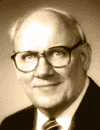
What Kind Of Creature Do You Want To Be?
Warren Wiersbe teaches that unlike animals, humans can choose what kind of spiritual creature they want to be, urging believers to be like sheep who follow Christ as their shepherd for true sufficiency and security.
In this insightful sermon, Warren Wiersbe explores the unique ability of humans to choose their spiritual nature, contrasting impulsive and stubborn animals with the humble sheep that follow Christ. He emphasizes the sufficiency, security, and restoration found in Jesus as the Good Shepherd. Wiersbe also cautions believers to adhere to the timeless truths of Scripture and avoid the allure of false teachings and novel theological trends. This teaching encourages listeners to embrace their identity as sheep under the care of the Lord, ensuring a life of spiritual fulfillment and protection.
Full Transcript
Like you and me are the only creatures in God's creation who can choose what kind of creatures we want to be. When kittens are born they know they're going to grow up and be cats, which is probably unfortunate. When puppies are born they're going to grow up and become dogs, we know that.
But when a baby is born you're not sure what kind of a creature it's going to be. Now if that offends you that I should use animals to talk about our precious children and grandchildren, just keep in mind that we use this kind of language frequently, don't we? We say, watch out for him, he's as slippery as an eel, or you're like a bull in a china shop, or a boy, she's as strong as a bull, or you're as dirty as a pig. We use language like this, the Bible uses language like this, it's called analogy, what is true of one thing is true of another and so we make a comparison.
Now we have several options, you've got to decide what kind of creature you want to be. For example, Psalm 32, verse 9, if we want to we can be horses or mules. Do not be like the horse or like the mule which have no understanding, which must be harnessed with bit and bridle else they will not come near you.
The horse and the mule, of course you know the obvious difference, the horse is impulsive and rushes ahead and some people are like that. The mule is obstinate, can be, stubborn and just digs in and stays behind, and there are people like that. And as we all know, we don't call it obstinance or stubbornness, we call it conviction.
We can be like the horse or the mule, God says don't do that. Or we can be like the ox. Turn to Proverbs chapter 7, kind of a long passage I'm going to read.
Did you know that some young men become like the ox? Proverbs chapter 7, verse 6, for at the window of my house I looked through my lattice and saw among the simple I perceived among the youths a young man devoid of understanding. Passing along the street near her corner, and he took the path to her house in the twilight, in the evening, in the black and dark night. Everyone that does evil hates the light.
And there a woman met him with the attire of a harlot and a crafty heart. She was loud and rebellious, her feet would not stay at home. At times she was outside, at times in the open square, lurking at every corner.
So she caught him and kissed him. With an impudent face she said to him, I have peace offerings with me. Today I have paid my vows.
So I came out to meet you diligently to seek your face, and I found you. I have spread my bed with tapestry, colored coverings of Egyptian linen. I have perfumed my bed with myrrh, aloes, and cinnamon.
Come, let us take our fill of love until morning. Let us delight ourselves with love, for my husband is not at home. He has gone on a long journey, has taken a bag of money with him, and will come home on the appointed day.
With her enticing speech she caused him to yield. With her flattering lips she seduced him. Immediately he went after her as an ox goes to the slaughter, or as a fool to the correction of the stocks, till an arrow struck his liver.
As a bird hastens to the snare, he did not know it would cost his life. Now, therefore, listen to me, my children. Pay attention to the words of my mouth.
Do not let your heart turn aside to her ways. Do not stray into her paths, for she has cast down many wounded, and all who were slain by her were strong men. Her house is the way to hell, descending to the chambers of death.
The commandment says, do not commit adultery. Why not? Hollywood does it. Television advertises it.
They do it in Washington, D.C. And a lot of folks have seemed to get away with it. But the Word of God says, watch out, because it will turn a person into an animal, and that animal will be slaughtered. It could be a horse, or a mule, or an ox.
I don't like any of those. Well, let me give you some more options. How about a hog or a dog? 2 Peter chapter 2. Now, 2 Peter chapter 2 is about false teachers, false teachers who bring a false salvation and give people a false assurance that they're saved.
We have that today, you know. Verse 18 of 2 Peter chapter 2, talking about these false teachers, for when they speak great swelling words of emptiness, I like that, bombastic speech, oh, it sounds so good, but when you start to think about it, what did they say? They allure through the lusts of the flesh, through lewdness, the ones who have actually escaped from those who live in error. While they promise them liberty, they themselves are slaves of corruption.
For by whom a person is overcome, by him also he is brought into bondage. For if, after they have escaped the pollutions of the world through the knowledge of the Lord and Savior Jesus Christ, they are again entangled in them and overcome. The latter end is worse for them than the beginning.
See, here are people who make a profession of faith in Christ. They don't escape the corruption of the world. That's what true believers do.
We've escaped the corruption that's in the world because we have a new nature. These folks don't get a new nature. They only escape pollution, and they're washed on the outside but not changed on the inside.
The latter end is worse for them than the beginning, for it would have been better for them not to have known the way of righteousness than having known it to turn from the holy commandment delivered to them. Here it is. But it has happened to them, according to the true proverb, a dog returns to his own vomit.
Wouldn't you like to have a picture of that hanging in your living room? A dog returning to its vomit, Proverbs 26. Then he adds, "...and a sow having washed to her wallowing in the mire." Here's a dog that's sick. It doesn't feel good, so it throws up.
Feels better. Here's a pig. Filthy.
Gets washed. Looks better. But the pig is still a pig, and the dog is still a dog.
I've met people like this. They've gone to a religious meeting someplace, and they came out feeling better, or even looking better, but they weren't better. And you wait long enough, and the sow goes right back to the swamp, to the mud, and the dog goes back to eat the vomit that had been thrown up, goes right back to the very thing that made him sick.
And somebody says, isn't that too bad about George? He lost his salvation. Bless your heart, he never had it. So we can be like the horse, impulsive, run ahead.
We can be like the mule, stubborn. We can be like the ox and go off to the slaughter. We can be like the hog and the dog, pretend like we're changed, but we aren't.
Say, I don't want to be any of those. I'm glad. Because there's only one animal that God's going to let into heaven.
You know what it is? Sheep. Sheep are not as strong as horses and mules or oxen. Sheep are not as intelligent as horses or dogs or hogs.
Scientists tell us that one of the most intelligent creatures is the hog. E.B. White made a fortune off of that when he wrote Charlotte's Web. It's true.
They've discovered that they are amazingly intelligent animals. Just the opposite is the sheep. Sheep are dumb.
They're defenseless. They easily go astray. And the only animal God's going to accept up in heaven is a sheep.
Jesus said in John chapter 10, my sheep hear my voice, and I know them. In fact, he knows them by name. I know them, and they follow me, and I give to them eternal life, and they shall never perish.
Neither shall anyone pluck them out of my hand. That's a great statement. Are you one of his sheep? Was there a time in your life when you looked up and said, you know, I've been dumb.
I've been wandering. I've gone astray. I'm a sheep not having a shepherd, but I want a shepherd, and I believe Jesus died for me.
And Lord Jesus, I want to come to you now as a lost sheep, and I want to be a found sheep. I want to be one of your sheep, and so I'm going to trust you. And the Lord Jesus says, you're one of my sheep.
I know you. I know your name. You're in my flock.
I'm giving you eternal life. You'll never perish. That ever happen to you? In other words, can you honestly say tonight from your heart, the Lord is my shepherd? Not the Lord is a shepherd.
Not the Lord is the shepherd. The Lord is my shepherd. That brings us, of course, to a passage that everyone knows by heart, the 23rd Psalm.
The Lord is my shepherd. At this point, somebody says, so what? Well, everybody has a shepherd. That's true.
Everybody has a shepherd. Unsafe people have shepherds that they're following. It might be a baseball star, a Hollywood star, some guru.
Everybody's following some leader. But we who know Christ as our Savior, we say, we're sheep. We're weak, and we're defenseless, and we're easily gone astray, but we're sheep, and we've trusted him, and we can say the Lord is my shepherd.
Well, when you can say that, dear friend, you end up with two marvelous assurances. Look at Psalm 23. The Lord is my shepherd, I shall not want.
There's the first assurance, sufficiency. Sufficiency. And he deals with that in verses 2 and 3. Then in verse 4, he says, I will fear no evil.
Oh, the Lord is my shepherd, I have sufficiency, I shall not want. The Lord is my shepherd, I have security, I will not fear. We've just come through an election.
I don't pay much attention to election oratory. I just don't. But I've noticed this in the past when I have heard echoes of election oratory.
Everybody running for office promises these two things. You put me into office, you'll have sufficiency for your medical bills, for your retirement, jobs for everybody. And you put me into office, you'll have security.
You can walk the streets at night, and you don't have to worry about atomic war. And this is what every politician is peddling. Sufficiency.
Security. And they can't produce it. And here's the Lord Jesus, who's not even a politician, who says, look, if you'll become a sheep and come to me, I'll give it to you.
I'll give you sufficiency. You'll be able to say, the Lord is my shepherd, I shall not want. I'll give you security.
You'll be able to say, the Lord is my shepherd, I will not fear. I shall not want. Let's talk about sufficiency.
What kind of sufficiency do we have in the Lord Jesus? Verse 2, he makes me to lie down in green pastures. He leads me beside the still waters. Now, don't spiritualize that.
What is it that sheep live on? Grass and water. You know what he's saying here? The Lord is my shepherd. I have sufficiency for the necessities of life.
When the shepherd leads the sheep out, he takes them to the pasture. They've got to have the grass. He takes them to the waters.
Sheep do not like running water. They're afraid of it, so he dams it up and creates a pool of still water that they might go in and get a drink. Water and food, the necessities of life.
The Lord's Prayer says, give us this day our daily bread, the necessities of life. Paul says to us, my God shall supply all your need according to his riches in glory by Christ Jesus, the necessities of life. Folks, God takes care of his children.
God takes care of his sheep. Now, sheep are not too gifted at taking care of themselves, but God takes care of his sheep. And no matter how young you are or no matter how old you are, if you can say, the Lord is my shepherd, then you can say, I have sufficiency for the necessities of life.
The trouble with us in America is that we don't know the difference between necessities and luxuries. Perhaps you heard about the man who was moving into a big manor house and the people on the moving vans were unloading all of these things and his neighbor happened to be a Quaker. Quakers believe in simplicity of life.
And the Quaker was standing there watching all of these things going in. And then his new neighbor came by and he said, neighbor, I would speak with thee. Man came over and said, what do you want? Neighbor said to Quaker, if ever thou dost need anything, come and tell me about it, and I will tell thee how to get along without it.
You see, most of the people in the world look at us in America as absolutely inordinately rich and compared to them we are. We don't think we are though. He restores my soul, says Psalm 23 verse 3. Now we've moved from the necessities of life to the emergencies of life.
The sheep has wandered off, and in wandering off, looking for greener pastures someplace, got away from the flock, and sheep don't see too well. And so the shepherd had to go on out and find him, bring him back. I'm glad the Lord Jesus does that.
Maybe somebody here tonight has wandered away from the flock. There was a time when you were with God's people and you followed the shepherd. That word shepherd, you know, means pastor.
The Lord is my pastor. But now you've wandered off, and you found something here and something. You don't know how dangerous your situation is.
But if I can say the Lord is my shepherd, then I have provision and protection, provision for the necessities of life, and provision for the emergencies of life. It's a dangerous thing to be a wandering sheep. Dangerous.
We might say, well, I can make it alone. No, no, no, no. Sheep flock together.
They're not loners. Sheep flock together. And I've discovered in my years of Christian walk that I need God's people.
I need the church. I need the encouragement, the prayers of God's people. So here's an emergency.
He counts his sheep. He says, one is missing. He goes off and finds it.
The Lord is my shepherd. I shall not want in the emergencies of life. He restores my soul.
Maybe somebody ought to be restored here tonight. That word restore carries the idea of revives. Here's the shepherd out looking for the sheep.
The sheep has gone off someplace. No pasture, no water, no protection. The wolves are closing in.
Oh, my. And the shepherd finds the sheep and takes the sheep. I like the way that Jesus puts it in the parable.
He says that when he finds it, he puts it on his shoulders, plural. Not shoulder, shoulders. He throws it like this, and he gets ahold of the front legs and the back legs, and he holds that sheep secure.
If he did it like this, he might lose it. He restores my soul. People might look at you tonight and say, my, she's a fine Christian.
He's a great Christian. But they don't know you've wandered. You've wandered away.
There's an emergency. The siren is about to sound. And the Lord Jesus tonight says, come on back.
I'm going to come and get you. He restores my soul. Verse 3, he leads me in the paths of righteousness for his name's sake.
Doesn't say he spanks me. Doesn't say he puts me on probation. He comes and finds me.
He brings me back. He says, you follow me. Most important thing the sheep can do is stay very close to the shepherd.
My sheep hear my voice. Well, here it is right here, the Word. Where do you hear his voice? The Word.
And I know them, and they follow me. They hear the Word, and they follow. In John 10, he said they won't follow anybody else's voice.
Dr. Ironside used to work with the American Indians out in the Southwest, or I should say over in the Southwest, and try to win them to Christ and build them up. And he and a newly converted American Indian went to Los Angeles for a meeting, and the man had not been saved a great length of time. And he and Ironside were walking down the street, and there on the street corner was a cultist preaching.
You could do this in Los Angeles back in those days. A member of a false cult, Bible in his hand, preaching lies. Well, the Indian, a young Christian, saw this man preaching, saw he had a Bible, thought, well, you know.
So he stops to listen. Ironside kept on walking. He stops to listen.
After a while, he caught up with Dr. Ironside, and Dr. Ironside said to the new Christian, well, what did you think of the preacher? And the Indian said, all the while that man talked, something in my heart said, liar, liar. My sheep hear my voice, said Jesus. They won't follow a hireling.
They won't follow another shepherd because they hear the voice of God in the Word, the necessities of life, the emergencies of life, and the responsibilities of life. What is my responsibility? To let him lead me in the paths of righteousness so that he's glorified for his name's sake. Now, that word paths is an interesting word.
You know what it is? Ruts, R-U-T-S. It means the well-worn paths that have been worn down because others have walked that way before. The sheep's problem was he got away from the shepherd and got into some other area, and then when he brought him back, when the shepherd brought the sheep back, he said, look, here are the well-worn paths.
Now, what I'm going to say may startle some of you, it may bother some of you, but I think most of you will say amen. Beware when some preacher or writer or singer comes along with something brand new in theology. If it's new, it's not true.
If it's true, it's not new. There's nothing new under the sun. And I read some of the books that are coming out today, and some of them by people who ought to know better, trying to be cute and trying to be unique and trying to be different, trying to be up-to-date, and in so doing, they're getting out of the well-worn paths where Jesus has been leading the sheep for centuries.
There's no new way to live a holy life. There's no new way to get the gospel out, new methods. Paul didn't have radio.
He'd have won the whole world if he had. Beware when you get away from the well-worn path. I'm a student of Christian biography.
In my library, I think I have over a thousand biographies, and I haven't read all of them yet, but I've read many of them, and I've noticed something. Whether it is St. Augustine or Hudson Taylor or Charles Spurgeon or Amy Carmichael or Hudson Taylor or David Brainerd or Jonathan Edwards or Susanna Wesley, they all built on the same spiritual principles. And somebody comes and says, oh, there's a whole new insight on this.
Really? It's taken us 2,000 years to find it. Beware. The Lord is my shepherd.
I have sufficiency for the necessities of life, the emergencies of life, the responsibilities of life. Hallowed be thy name. I'm going to follow my shepherd on these well-worn paths that others have walked, and I'm going to do it for his name's sake.
Now we get to verse 4, where we have, I shall not want, but I will fear no evil. Yea, though I walk through the valley of the shadow of death, I will fear no evil. For you are with me, your rod and your staff, they comfort me.
Now he's not talking about sufficiency, he's talking about security. Not talking about provision, he's talking about protection. We live in an enemy world.
Life is dangerous. Bombs go off. People are kidnapped.
Crazy people drive down the street, shooting out of car windows at innocent people. It's even dangerous for babies. They're killed before they have a chance to be born.
A dangerous world. And in verses 4, 5, and 6, the little sheep says, I have security. I have provision, I have protection.
I have sufficiency, I have security. In verses 4 and 5, you find the little sheep looking around. And as he looks around, he says, I'm in a valley.
Now this doesn't just mean death. We use this psalm at funerals. I've used this psalm many, many times at funerals.
Actually, Psalm 23 was not written about funerals. Nothing wrong with using it at a funeral. It's very comforting.
Because verse 6 says, all the days of my life. This psalm is about how we live all the days of our life. Well, we live with his sufficiency, and we live with his security.
But in life, we sometimes find ourselves in a valley. And so here's the sheep looking around. What does he see? Shadows.
Behind some rock there might be an enemy. Snakes or lions. And so here is the sheep going through the valley where there's darkness and danger.
Did you notice the change in pronoun from verses 1, 2, and 3 to verse 4? Verse 2, he makes. He leads. Verse 3, he restores.
He leads. Verse 4, you. Goes from the third person to second.
When he goes through the valley, the sheep looks around and sees all the danger, and he gets scared. Then he looks and says, aha, the shepherd is here. It's not he, it's you.
The Lord Jesus is never nearer to you than when you're going through the valley. The blessing of his presence. The Apostle Paul came to the city of Corinth, as usual, got himself into hot water.
He was discouraged. Corinth was tough. And one night, the Lord Jesus appeared to him and said, Paul, don't be afraid.
I am with you. Stick around. And so he stayed for about 18 months and built a good church.
Some time later, the Apostle Paul was arrested, and Jesus comes to him and says, Paul, I'm with you. Don't be afraid. You're going to witness for me at Rome.
Every time Paul went through a valley, here comes the Lord Jesus on board ship. That awful storm. When I read Acts 27, I get seasick.
It's just that awful storm. And Paul gets up on the deck and he says, hey, folks, God showed up last night. He sent his angel down to say, Paul, don't be afraid.
We're with you. And I'm going to give you everybody on board ship. They're all going to be saved.
Then Paul ends up in prison in Rome at the end of his life. And he writes to Timothy, and he says, Timothy, come on, come and see me, please. Come before winter.
Everybody has deserted me. Can you imagine that? All these Christians in Rome. In Romans chapter 16, about 40 of them are named.
Others are referred to. All these Christians in Rome. He said, everybody has deserted me.
At my last defense, nobody stood with me. Would you want to go to court all by yourself? Then he adds these words in 2nd Timothy 4, but the Lord stood with me. Emmanuel, God with us.
So when we look around and we see all the dangers, then we look right next to us and there's the Lord Jesus. He said, don't be afraid. I am with you.
Now in verse 6, well, verse 5, you prepare a table before me in the presence of my enemies. He comes through the valley now. You are with me.
Your rod, your staff, they comfort me. You can protect me. After we get through the valley, here's the pasture.
But there's still enemies there. By the way, the most dangerous time may be after you come through the valley. You anoint my head with oil.
My cup runs over. I don't like valley experiences, but after it's all over, I can see where God did something good. And the Lord Jesus, the good shepherd, the great shepherd, the chief shepherd, he looks at each sheep and he, oh, you're bruised here, and he puts some oil on it.
You're so thirsty, and he gives them some cool water. We look around and we have security. In verse 6, we look back.
Surely goodness and mercy shall follow me all the days of my life. So we're looking back now. Please believe this.
When we get to the end of the journey and look back, all we're going to see is goodness and mercy. In fact, that word surely in verse 6 is the word that means only. So we've come through the valley.
We look back at that awful experience, and we say, only goodness and mercy have followed me all the days of my life. Now, you can't see that now. Somebody sitting here says, well, if God is so good and so merciful, why did the baby die? If God is so good and so merciful, why was my husband killed in that auto accident? If God is so good and so merciful, how come our loved one didn't survive that surgery? But David is not saying we see this today.
He says, when the sheep get to the end of the journey and look back, they're going to say, you know what? All of those experiences we went through that were so tough, that was God's goodness. That was God's mercy. He doesn't say I get to the end and look back and see all the mistakes I've made now, all the times I strayed away.
No, no. He says, I'm going to look back, and all I'm going to see is goodness and mercy. Remember Joseph? Joseph went through some difficult times.
He said to his brothers, look, you meant it for evil, but God meant it for good. As I look back, all I see is goodness and mercy. David didn't write Psalm 23 when he was a young man.
He was an old man when he wrote it. In fact, I think he wrote Psalm 23 during the time of Absalom's rebellion. He was out there in the wilderness.
Absalom had taken over his palace, his wives, his army, except the men that David had with him. And here's David. And he says, the Lord is my shepherd.
I have sufficiency. The Lord is my shepherd. I have security.
I can look around and see all kind of danger, but He's with me. And as I look back, I can see a lot of mistakes I made, but I don't. There are a lot of things I should have done to Absalom I didn't do.
But as I look back, I don't see my mistakes. I don't even see my trials. I see God's goodness and God's mercy.
Let's believe that today. At the end of this Psalm, he's not looking around and he's not looking back. He's looking ahead.
Surely goodness and mercy shall follow me all the days of my life, all the days of my life, even the days I was in the hospital, even the day we stood there in the cemetery, all the days of my life. Now he looks ahead. And I shall dwell in the house of the Lord forever.
In my Father's house are many mansions. Now, who wants a sheep in their house? God does. God does.
And I'll tell you, folks, when the chief shepherd shows up and calls his flock home, we're going to the Father's house and we're going to dwell there forever. That word forever paralyzes me. The things we value, we value because we're going to lose them someday.
We love our children, our grandchildren, our spouses, our friends, because we know someday they may die. But imagine being in a land where there's no death, and no sickness, and no tears, and no pain. Forever, forever, and ever, and ever, and ever.
It's astounding. But in Jesus Christ, we have security forever. We have sufficiency.
Forever. Now, let me point out something very obvious, and then we'll be on our way. Did you notice that Psalm 23 comes right after Psalm 22? Kind of obvious, isn't it? This is not Psalm 39, it's not Psalm 45, it's Psalm 23.
Do you ever notice the animals in Psalm 22? Psalm 22, as you know, is the psalm of our Lord's suffering on the cross. My God, my God, why have you forsaken me? Look at verse 12. Many bulls have surrounded me.
Strong bulls of Bashan have encircled me. There's a bull. Verse 13, they gape at me with their mouths like a raging and roaring lion.
Oh. Verse 16, dogs have surrounded me. Verse 20, deliver me from the power of the dog.
21, save me from the lion's mouth, from the horns of the wild oxen. When our Lord was dying on the cross, the devil turned his whole zoo loose on him. And notice what Jesus says in verse 6, I'm a worm.
I'm a worm. That's the forgotten I am. You know, I am the true vine, I am the light of the world, I am the bread of life.
How about I am a worm? Here's a worm being attacked by lions and oxen and dogs and bulls after a worm. And the Lord Jesus Christ, the shepherd, became the lamb. In the Old Testament, the sheep used to die for the shepherd.
In the New Testament, the shepherd dies for the sheep. And the shepherd became a lamb, and the lamb became sin. Behold the lamb of God who takes away the sin of the world.
If you're not one of his sheep tonight, I just want you to read Psalm 22 and find out what he went through to save you. Attacked by the devil, attacked by men, forsaken by God, that he might take us to heaven as his sheep. All we like sheep have gone astray.
We've turned everyone to his own way. And the Lord has laid on him the iniquity of us all. Many years ago in Scotland, there was a little boy who was dying.
Pastor used to stop to visit the little boy. He was old enough to know that he was dying. The pastor talked to him about heaven and about Jesus, and the boy trusted the Savior.
The pastor said, now son, I want to teach you something. I want you to remember it. Psalm 23, verse 1. Look at your fingers now.
The Lord is my shepherd. You got that? Yeah. The Lord is my shepherd.
He pointed to each of the fingers on his hand. Now I said, Laddie, it's not the Lord is a shepherd. It's not the Lord is the shepherd.
It's the Lord is my shepherd. So it's that fourth finger that's important. The Lord is my shepherd.
Can you say that? Yes, I can. The Lord is my shepherd. One morning, the little boy didn't wake up on earth.
He woke up in heaven. Do you know what they found? His little hand around his fourth finger. He'd gone to glory saying, the Lord is my shepherd.
Shepherd. He had sufficiency. He had security forever.
Do you? Thank you, Father, for sending Jesus. Thank you, Jesus, for giving your life. Thank you, Holy Spirit, for showing us the Savior.
Thank you for the word. I pray for any here tonight who don't have a shepherd who's taking them to heaven. Thank you, Lord Jesus, that as your sheep, we have your protection and your provision.
Thank you. We don't have to be afraid. Thank you.
You're leading us to the Father's house. And I pray that any here tonight, Lord, who do not have a shepherd, who cannot say the Lord is my shepherd, will trust the Lord Jesus. And if any are afraid, help them to have confidence.
For you have given us your sufficiency and your security forever. Hallelujah. What a Savior.
What a shepherd. Amen. As Dr. Worsby said, we all have a shepherd.
It's a matter of where he's leading.
Sermon Outline
-
I. The Choice of Creature
- Humans uniquely can choose their spiritual nature
- Warning against being like impulsive horses or stubborn mules
- The dangers of following false teachers and corrupt paths
-
II. The Only Accepted Creature: The Sheep
- Sheep symbolize believers who follow Christ
- Sheep are weak and defenseless but protected by the shepherd
- Jesus as the Good Shepherd who knows and cares for His sheep
-
III. Assurances of the Shepherd
- Sufficiency: The Lord provides necessities of life
- Security: The Lord protects and removes fear
- Restoration: The shepherd seeks and revives wandering sheep
-
IV. Following the Well-Worn Paths
- Importance of following established biblical truths
- Beware of new, untested theological ideas
- Christian biography confirms timeless spiritual principles
Key Quotes
“Like you and me are the only creatures in God's creation who can choose what kind of creatures we want to be.” — Warren Wiersbe
“The only animal God's going to accept up in heaven is a sheep.” — Warren Wiersbe
“The Lord is my shepherd, I shall not want... I will fear no evil.” — Warren Wiersbe
Application Points
- Choose daily to follow Jesus as your shepherd, trusting Him for your needs and protection.
- Avoid impulsiveness and stubbornness by submitting to God's guidance and correction.
- Stay rooted in the established truths of Scripture and be wary of new teachings that deviate from biblical principles.