
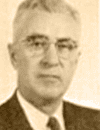
Evangelism 04 a Balanced Local Ch.
The sermon emphasizes the importance of evangelism and teaching in the local church, and highlights the balance between these two aspects of ministry.
In this sermon, the preacher emphasizes the importance of maintaining a balanced approach to the aims of the local church. While evangelism is crucial, the preacher argues that there are other important aspects as well. The Great Commission in Matthew's Gospel is mentioned as a reminder to teach and disciple nations, baptizing them in the name of the Father, Son, and Holy Spirit. The preacher also shares a personal story of someone who came to faith during a breaking of bread service, highlighting the significance of believers coming together in worship. The sermon concludes by suggesting that local churches should regularly assess their balance of aims and ensure they are not neglecting any important aspects.
Full Transcript
I have a great admiration of the Lord's servants to whom he has given the gift of the written ministry. Some of them are still living and some of them are now in heaven, but they are still speaking through the printed page. The Lord has never allowed me to have that privilege.
I am not a writer, but a few years ago, maybe 25 years ago, I asked some of the Christians in Durham, North Carolina, would you like to write out your testimony, how you were saved, some of the details, the background on how you got to know the Lord Jesus as Savior. They did. They handed them in and I discovered that they were not quite fit for print.
So I asked Mr. Alfred P. Gibbs if he would edit them and take out anything that might offend people when they read it, and he did. And that book is now available in your bookstore. There are just a few there, but if you happen to have 60 cents available, you can read the testimonies of people from various backgrounds, how they came to know the Lord Jesus Christ as Savior.
And this is the only time you will find my name in the front of the book just to tell you that it came from Durham, North Carolina. I was terribly distressed last night to discover that there has been a serious misunderstanding, that whoever asked me where I got my name did not give a very specific question, and I misunderstood them. And I discovered after the service a few people said, we were not interested in your last name where you got it, but your first name.
And I'm very sorry that that misunderstanding took place, but I am thankful that I'm still alive and can correct that mistake tonight. The last day of the other century, that would be December 31, 1899, a little boy was born to my parents, and they named him Howard. Five years later, another boy was born, and they gave him the name of Walton.
Later in that same year, Howard took ill with some kidney malfunction and died, and my mother grieved over that for a long time, and she claims that there is no age that you can lose a child that is more difficult than just at age five. And she said, if I have ever have another boy, I would like to do something that no one else has ever done. I would like to attach the boy that died on his name, and I would like to call him Howard Welcome.
If you will move to North Carolina and have a driver's license, they don't pay any attention to your middle name. They will only pay attention to your first name and your last name. And in the highway department, I am Howard W. Detweiler.
The records at the hospital in Durham, where I spent a number of days, also have Howard W. Detweiler, and that's how I got my first name. However, I am not going to allow any further misunderstandings, and whether you like it or not, I'm going to tell you how I got my middle name. But this time, I think I should respect your intelligence.
I'm going to give you four possibilities, and you will pick out the correct one out of those four. Number one. After there are seven girls and a boy appears, what would you expect his name to be? And in many cases, when I say that, at least ladies say, I knew it, I knew it, I knew it, I knew it.
Then I say to myself, well, if she was that sure, why did she bother to ask me? Number two. My grandparents decided to go to Ohio to visit some relatives there, and this was back in those medieval days when they had to go by train, and going to Ohio all the way across Pennsylvania was almost the equivalent of going to the moon. When they came back, they said, we met our relatives, the Bryan family, but we also ran into some Detweilers in Ohio, and one with a rather odd name, and they said, we met one by the name of Welcome Detweiler.
My mother heard it, and she said, that's cute. If it's a boy, and if he's cute, I'm going to name him Howard Welcome. Guess what? Both of those things happened.
Number three. My parents never had an advanced course in biology, nor did they know that Mother Nature had a sense of humor, and so they just presumed that after there are two boys, the third one would have to be a girl. When my father heard the news, it's another boy, he almost fainted.
What in the world would we do? We don't even have a name for a boy, which means he will have to be nameless Detweiler all his life, and that doesn't sound right. It is consternation. What will we do? He spied a doormat.
He looked at the doormat, and he looked at me, and he said, sure enough, there is a resemblance. Number four. When I was born, I made a quick decision, and I said, I'm going to be polite, and I said to Dr. Coburn, thank you, and he said, you're welcome.
Last night, I asked you to turn to Acts chapter 2, and I stopped reading at verse 41, and I want to start reading where I stopped last night at verse 42. Acts chapter 2 and verse 42, and maybe for connection's sake, I should read again from verse 41. Then they that gladly received his word were baptized, and the same day there were added unto them about three thousand souls.
And they continued steadfastly in the apostles' doctrine and fellowship and in breaking of bread and in prayers, and fear came upon every soul, and many wonders and signs were done by the apostles. And all that believed were together and had all things common, and sold their possessions and goods and parted them to all men as every man had need. And they, continuing daily with one accord in the temple and breaking bread from house to house, did eat their meat with gladness and singleness of heart, praising God and having favor with all the people, and the Lord added to the church daily such as should be saved.
In our series of messages on the general theme of evangelism, we began on Sunday night to tell you the simplest definition of evangelism, and you still remember that, an ex-beggar telling a beggar where to find bread. Then we showed you the importance of evangelism, how it is stressed all the way through the scriptures, and we could have gone back as far as the early pages of your Bible. If I were asked where is the earliest mention of someone telling another person about the Lord, I would have to go back to the Garden of Eden, because in the fourth chapter of Genesis, you will read that Cain and Abel each brought an offering to the Lord, and I have to ask the question, who told them to do it? And I'm presuming, until I meet Adam and Eve and they correct me, I am presuming that either Eve or Adam, or both of them, instructed their children.
Maybe they told them about the day that they had sewed fig leaves together for clothing, and that the Lord provided a better garment by the killing of animals and clothed them with skins. I am reasonably sure that Adam or Eve told their sons, in order to approach God, there must be a blood sacrifice. When you come over to the book of Deuteronomy, you have again that you are to instruct these things to your children.
Talk to them while you're walking in the way and all of these things, and right on through the Bible, here is the responsibility of parents telling their children about the way of salvation. I love to hear children give their testimony and say, it was my mom who took me in the bedroom and showed me how to be saved. It was my dad who called me in when I was desperately in need and showed me how to be saved.
That's wonderful, and I know of nothing sadder than parents who look back and say, I would be a very happy person now if I were sure that all my children are going to meet me in heaven. And in spite of everything that parents have done, there seem to be a few cases that still their children are outside of Christ, which proves that you can't save them, not even your own children. You can pray for them, you can do everything that you can, but they are individuals and they are responsible before the Lord to accept or to reject the Lord Jesus Christ as Savior.
We talked last night about the message of evangelism. There are so many inroads coming in and watering down the message, and it may be necessary occasionally for us to open our book and say, just what is the message that will be helpful for those dying sinners that are living all around us? A very ambitious devil is trying to neutralize that message, or water it down, or soft-pedal it, whatever it may be, so that the message is no longer a clear gospel message as it was in the infant church in Acts chapter 2. We looked at Peter's sermon and recognized how faithful he was in presenting the death, burial, and resurrection of Jesus Christ as the only message that will satisfy the human heart. At this point, you would be absolutely justified in saying that Detweiler is a lopsided preacher.
All he sees in his Bible is evangelism, and he has never seen anything else. Wherever he opens his Bible, evangelism sticks out, and I have to gain the confidence of my audience by taking that away from you. I have emphasized up until now that evangelism is very, very important, but in the verses that we read tonight, we will discover that there are other things that are important as well.
You will remember when you go back to the Great Commission in the closing verses of Matthew's gospel, we are told to go into all the world and teach the all nations, or disciple nations, baptizing them in the name of the Father, and of the Son, and of the Holy Ghost, teaching them to observe all things whatsoever I have commanded you, and lo, I am with you always, even unto the end of the world. No, we are not finished. When we have the privilege of leading a soul to Christ, there is something that follows every time.
There's another verse in one of Paul's letters, Paul's letter to Titus, where he says, The grace of God that bringeth salvation hath appeared to all men, teaching us there is something that follows after a person hath come to Jesus Christ. In the natural realm, when a baby is born, you say that's the end, let him root for himself. No, you say the baby now has physical life, but it must be cared for, and it must be nursed and kept going until it matures.
Now, when we present the gospel only, we'll discover that we are not fulfilling the commission. Once more, I referred, maybe on Sunday night, that in Ephesians chapter 4 you have gifts mentioned, and evangelists, pastors, teachers, and I don't want to say evangelist period and stop there. The others are just as necessary to follow the teacher and the pastor, which follows so naturally after that.
I want to remind you that when Paul went on his missionary journeys, and we've been looking at that somewhat in the morning service at 930, the first missionary journey, if you will draw the map on the map where he went from different spots, you will discover that he has made the letter C starting at the bottom. He starts here, and he goes around like this, and he goes around until he almost comes back, and then he stops. It was very close just to come back this way, but he didn't.
He turned around, and he goes back over that C, almost stopping at every place that comes back again. What did he do when he came back? In chapter 14 of Acts, you will say he went back to confirm the thing, to follow the message of salvation with a teaching ministry. If I were to ask you, how do you classify Paul? Was he an evangelist, or was he a teacher, or was he a pastor? You would have a little difficulty, wouldn't you? And I guess you would have to conclude he was an evangelist, and he was a teacher, and he was a pastor, which proves that when we talk about these gifts, we must not segregate them to the extent that a man must say, I only have one gift, evangelist.
I don't care about teaching. That's not right. There is no evangelist who can say, I stick to evangelism alone.
There is no teacher that can say, I fulfill God's command by faith. I want to teach, and that's all. I don't preach the gospel.
I just teach. No. These merge, and everyone has the responsibility to carry on all of these things, as I mentioned in the Great Commission.
But, of course, there are some people who may lean towards one gift. I remember asking a preacher one day, I said, if you had the opportunity of preaching to a group of Christians, and at the same time an opportunity of preaching to a house full of sinners, which one would you select? And he said, I would rather preach ten sermons to Christians than one to sinners. It's just a little more convenient for me to do that.
Now, in my case, I think I would say, that's wonderful. You take that crowd. Give me the house full of sinners.
And yet, I realize that these two have to work together, and we must recognize that in helping people come to the Lord Jesus Christ, there is something that follows. There have been a number of interdenominational gospel projects, and I must not discourage them, because they fill a space that perhaps God has ordained because the church has failed. If the church hadn't failed, it wouldn't be necessary.
But these interdenominational, maybe a city-wide campaign, and the message from the platform is a good, clear, simple gospel message. But there must be some counselors there to help interested people, and they have been instructed, after you meet these people, you say to them, now that you are saved, join the church of your choice. There are many in this city, and you pick out the one that you like best.
I couldn't, with a clear conscience, do that, because I would be incurring the Bible gives no instruction. After you are saved, you just, any old thing, you just pick out the nearest one, or the one with the finest people, or whatever, and that's not true. I have to say to a person, as soon as he is saved, give him some verses on the assurance of salvation, and I'm responsible to tell him, very quickly, the first privilege that you have, now that you are saved, is to follow the Lord Jesus Christ in baptism.
Shall I keep that silent, so I won't offend that person? I wouldn't be fulfilling the commission, would I? Disciple them, and then baptize them in the name of the Father, Son, and Holy Spirit. And I'm still not finished teaching them. Paul doesn't tell us exactly what he taught when he went back over that same category, confirming them, but there are certain things that young Christians need to know.
One of them is the two natures. Soon after a person is saved, he, well, very often, he says, you know, I've never felt so good in my life. I'm not quite sure, but I doubt if I'll ever do anything that's bad anymore.
The devil seems to withdraw, and he says, I'm going to let him alone. I'm going to let him build up self-confidence, and then I'm going to watch my time, and he does. And when the person says, I know a man in Durham who had a pretty serious drinking habit, and he professed it, and he said, this is wonderful.
If there was no heaven at the end of the road, it'd be worth being saved just to have some peace on a way of life that is different. And he said, I know that I'll never take another drink, but he did. And when he did, I tell you, that man was as low as Simon Peter when he wept bitterly.
He didn't believe it could happen. Thank God it only happened once, and that man says, I'm glad God allowed it, because ever after that, I never said I will never take a drink. I said, Lord, I'm a weak man.
I'm liable to give me the grace every day never to do it again, and God honored that prayer. That a person, a young babe in Christ, learned there are two natures, and it is not true that when you are saved, the old Adamic nature leaves. It would be wonderful if that were true.
Thank God it will be true when we step over the threshold, when the trumpet sounds, I'm going to be perfect. But not until then will I be perfect. And there are a number of things that are included in the teaching.
I can't go into all the areas, but I also have a responsibility of telling them, as we were reading tonight, that you not only have the privilege of being baptized, showing publicly that you have put your faith in Jesus Christ, that you are now identified with him in death, burial, and resurrection, but you have a privilege that is only for Christians to remember the Lord. When he provided this feast before he went to the cross, he provided it for those who know him as Lord and Savior. And when an unsaved man comes to me and says, Could I attend the communion service? I have to say, No, you are not allowed to come to the communion service.
You can be there, but you can't break the bread. This is only for those who know the Lord Jesus Christ as Savior. How could you remember someone that you haven't trusted yet? A man in Durham who was not saved, but his wife was, and he had the habit of bringing her to the Lord's Supper and then going home and then coming to the eleven o'clock service, and it got a bit inconvenient, and he said to her, he said, Would it be all right if I came to the early service and stayed, if I didn't partake of the emblems? And she said, Yes.
And he came a few times, sat right with her, passed the emblems by. One morning he came to me, he said, Guess what happened? This morning, during the breaking of bread service, I trusted the Savior. And I said, What happened? Some brother got up and he said, There are many things that we don't understand, but the things that we don't understand we accept by faith, and we believe that Jesus died for us.
And when he said that, that's it. I don't have to understand everything, but I believe it. And he was saved at the Lord's Supper.
It can be done, and don't you read that it is a testimony to the world when Christians, when believers come to break bread. I would like to suggest this evening that a local church, a biblical scriptural local church, has at least four definite aims. There may be more, but I want to hold it down to four aims.
In a four services during the week, you may have a service where you will devote especially to worship, the Lord's Supper, communion, the breaking of bread, the remembrance meeting, whatever you call it, but a time that is especially devoted to worship, and that doesn't mean that you just worship once a week. You can worship every day, and you should worship every day, but in a united form. As to the pattern that Jesus set up, we have the privilege of worshipping him.
We don't pray for missionaries, we don't pray for sick people, we are occupied with the person of Christ and with his triumphant work on Calvary's cross. A very, very blessed service. There is usually a time that we come together for a prayer service, especially for the benefit of prayer, and prayer fellowship is wonderful.
I suppose there are many Christians who never realize the value of prayer until sickness or bereavement strikes, and they feel that extra strength of believers praying, and the Bible suggests that Christians ought to weep with those that weep and rejoice with those that rejoice. This is a wonderful fellowship, and we have a prayer fellowship that is tremendous. The world knows nothing about this.
When the unsaved man goes through these difficulties, neighbors and friends come in and they will say, keep a stiff upper lower lip, or something like that, and good luck to you, and so on. What cold comfort! But believers praying is a wonderful source of encouragement. So there is a prayer fellowship, and we read about that in verse 42.
They came together for prayer and for the breaking of bread. There is usually also a meeting that is set aside especially for teaching the word of God. If you look through your testament and ask the question, how much of this new testament is addressed to sinners, and how much of it is addressed to Christians, you'll be amazed.
The amount of verses that are addressed to sinners is very small as compared to the teaching for believers in the Bible. It is absolutely necessary that the young believer is built up, and built up, and built up, and God's desire is that they may reach maturity, and then as mature Christians they will go out and minister the word, and continue the blessing in the way of ministry. But in the last verse of our reading tonight, we read, and the Lord added to the church daily such as should be saved.
The fourth aim of a biblical local church is evangelism. I have found that some people do not believe this. Someone told me evangelism does not belong to the collective work of the church, it belongs to individuals in the church.
I haven't bought it yet. I don't believe that. I believe God wants a well-balanced assembly to have a collective desire to present the gospel of Jesus Christ, and there is plenty of evidence in the history of the church that God has blessed when God's people unite in a special effort continually to keep Christ lifted up to the community so that sinners will hear the gospel and be saved.
One of the things, perhaps, that will have to be checked is any local church that has these four aims or goals maybe needs, at least the elders need annually, to ask themselves how are we balancing these four things? Have we over-emphasized this one and neglected these three, or over-emphasized this one? And I think it is possible to over-emphasize or have an imbalance in your goal. Now, you won't like it when I tell you that it may be possible to over-emphasize worship, but I think I have seen some evidence. Some preachers will preach worship first, and I believe that.
The quality of your service will not be good unless it is bathed in worship, but I have been at a few meetings where the largest service of the week was the Lord's Supper, and I've raised the question, why is that? And, of course, there is a possibility that there are some sick people. A few times that I was told by the doctor, you should go once per week, and that's your limit, and I selected the Lord's Supper, but I raised the question, and I said, is it possible that preachers have said, worship first, worship first, worship first, to the extent that the hearer said really what he means, worship only. This is what God wants.
All other things are incidental. If you have time, and you feel like it, enter into these other things, but be sure you worship. I remember a preacher in our church in Pennsylvania who came through, and he said, if a person is not willing to promise that he will worship the Lord at the Lord's Supper every Sunday, he should never come.
I wonder where he got that. If that is taught, I will visit someone, and I will say, why did you go to the Lord's Supper? Well, you know what would happen if I didn't? The elders would be there Monday morning at nine o'clock and say, what's the problem? We missed you yesterday. You must be there.
You must break bread, regardless. It's rather difficult for me to understand that a person should be interested in worshiping the Lord, and not have any concern about sinners, or about prayer fellowship, or about the teaching of the word of God. I want you to consider the possibility of overemphasizing and making it a ritual, and you haul your carcass there at the correct time, and you go through the ceremony.
In Matthew 15, our Lord said, this people draw up nigh unto me with their lips, but their heart is far from it. It could be just a ritual. What about the teaching ministry? Can that be overemphasized to the extent that you will minimize the others? On a few occasions, I have been with Christians who are studying the Bible, and splitting hairs, and going into detail, and spending a lot of time, and they are well educated in the knowledge of the holy scriptures, but they don't pass it on.
What would you think of the gardener who fills his deep trees with food in the summertime, locks it up, and never opens it up? The idea is you put it in, so you can take it out and use it, and the idea of a teaching ministry is that you learn in order to use it, and on a few occasions, I think I have met people who almost turned into peacocks because of their knowledge of the word of God. Do you know the difference between the first beast in Revelation 13, and the second beast? Oh, you don't? We should study that. Where is that verse that says, knowledge puffeth up? Sometimes it does.
Get all the knowledge of the Bible, all the teaching you possibly can, but not without using it. Don't ever store it away. God gave it to you that you might use it.
What about evangelism? Can that be overemphasized? Yes, I believe it can. You may be aware of a number of God's children who have a special gift to work with alcoholics, the down-and-outs, in the slum section of the city. My hat goes off to every one of them.
I must admit, I don't have the patience they have. They used to call them rescue missions, and to go down, and those helpless people, they're in the shackles of sin, and bring them to massive salvation, and see them saved. How wonderful! But some of them have done nothing but just given them the gospel, and that's not quite enough.
They must be led on. If that rescue mission is bringing them the way of salvation, and doesn't kiss them goodbye, and go for the next one, and let him alone, that's wonderful. But some of them, perhaps, have overemphasized gospel, and nothing beyond that.
A few years ago, a man from Birmingham, Alabama, in a rescue mission, was traveling to visit some folks up in the North Country, and he stopped at Augusta, Georgia, at 9 30 in the morning, and just in time to remember the Lord for the first time. In the afternoon, he drove up to Durham, North Carolina, and attended our evening service, and after the service, we took them out for some refreshments, and he said, I saw something this morning that's going to help me. We are working in this rescue mission, we are helping these fellows, and they go on for, we keep them dry for two months, and they fall again.
Then we work with them again, and they fall again, and he said, we have never taught them the privilege of remembering the Lord, and he said, I saw something this morning that I think should be included. I have been so focused upon evangelism that I cared for nothing else. There is a possibility that we overemphasize evangelism.
I have one more left, and I can't talk very long on this one. Have you ever met an assembly where you could say, this assembly is overdoing the prayer fellowship? The largest meeting of the week is the prayer meeting. Isn't that terrible? Have you ever? I can't tell you that I've ever seen.
It doesn't happen, does it? And yet, it may be one of the more important ones. Of course, there's a possibility that the prayer meeting is not attended because, well, maybe the elders have not taken care of some details. I think it is possible for a prayer meeting to be 45 minutes long, and three brethren each praying 15 minutes, or maybe two brethren using up the 45 minutes, and people eventually get weary of it.
A prayer meeting should be a place where we can unite. Let me just give you a little experience. About four years ago, we had the usual prayer meeting before the speaker on a Wednesday night, prayer fellowship, and then a speaker.
And we said, you know, let's try, just as an experiment, to have the speaker first. A song, the announcement, and the speaker. At 8.15, he's got to be through, and then we're going downstairs to the Sunday school rooms, and we're going to split up in about seven different groups.
Older men, middle-aged men, younger men, older... No, we can't do that, can we? How would we do that now, on the other side? So, we said to the ladies, you've got a choice. Either older women, middle-aged women, or younger women, or heavy women, middle-weight women, and skinny women. And they said, we'll take the age groups.
We'll take the age groups. And then some of the younger children were also saying, that was an experiment. No, it wasn't an experiment.
It became a permanent thing. And instead of just three brethren, or four brethren taking part, there are, in those 15 or 20 minutes, there are a number of people praying. And if we ever said, how about let's go back to the old routine again? No, no, we enjoy this fellowship.
We've got to know each other much better in our age group to pray about certain things. Maybe certain things that you don't want mentioned up in the auditorium, but among ourselves, we want to mention this particular need. It's been a real blessing.
All right, my message tonight is that we must watch that we keep a balance as to the aims of the local church. And I don't want you to forget that evangelism is a part of just that. The message never changes, but the methods in attending the gospel do change as circumstances change.
For instance, if you were to take your New Testament, especially the book of Acts, and you were to say, I want to follow what Paul did in order to evangelize. Paul headed for the synagogue right away, didn't he? Have you ever heard of any assembly in America that started by a man going to the synagogue? Things have changed, and we have to adjust ourselves. I remember reading in one of Spurgeon's books something that stuck with me.
Faith is full of inventions. The Apostle Paul, in 1 Corinthians 9, says, Unto the Jew I became as a Jew, that I might gain the Jew. To them that are under the law as under the law, that I might gain them that are under the law.
To them that are without law as without law, being not without law unto God, but unto the law of Christ, that I might gain them that are without law. To the weak became I as weak, that I might gain the weak. I am made all things to all men, that I might by all means save some.
This is what Paul had in mind when he went out to preach the gospel. He wanted to reach all those who needed to know the Lord Jesus Christ as Savior. I wonder if the evangelistic zeal in our own assemblies has dwindled to the extent that we no longer hear the voice of newborn babes.
In the natural sense, when a newborn baby comes into the home and you hear that noise, the whole family is happy. Isn't it wonderful? Things got rather drab. We sat around and we moped, but that voice of the newborn babe.
What about the assembly? To hear a person come in and say, He was saved last Saturday night. He was saved on Wednesday night. Continually.
By the way, the last verse that I read mentioned that the Lord added to the church daily, such as we're being saved. Did he mean the universal church or the local church? Either one. I think that each one of us should recognize the necessity of preaching the gospel.
You know what happens to an assembly that doesn't keep on preaching the gospel? Christians have a strange habit of dying, and every time one dies there's one less in the auditorium. And more than ever before, Christians move away because of employment and so on, and that seat is empty. And it has happened a number of times.
An assembly, a good-sized assembly, has just slowly depleted, depleted, dwindled, and dwindled, and finally there's a sign that's up in the yard for sale. And those who remember the good old days when things were buzzing say, isn't that a shame? I never thought I'd see the day when there'd be a for sale sign out there. What a shame.
What happened? There may be various reasons, but it could be we forgot to put emphasis on the fact those seats have to be filled with sinners newly saved by the grace of God to take the place of those that pass on for whatever reason. Now, I still haven't over-emphasized Evangelism, I hope. The balance of all of these things, and God will be blessed if we carry out this.
Again, should there be an unsaved one here, and I am still reasonably a stranger here, I could presume that everyone knows the Lord, but in case you don't, this could be a very important meeting to you. Maybe you felt sort of left out tonight. I've been talking mostly to Christians.
You need not be left off, because Jesus Christ died for you, and you can be saved, and you can have the privilege of being baptized. All the privileges that God has given to his people can be yours, but they can't be yours until the first step is taken, and you can say, Lord, I'm a sinner. I can't save myself.
I believe that Christ died for me. I want to rest in his finished work, and that alone. And if you will do that from the heart, the Bible says, not Tettweiler, the Bible says you have everlasting life, and that will make you happy the remainder of your days.
I would love to speak to you. If there are problems that keep you from trusting the Savior, I'm available. If I'm a stranger and you know someone else here that you know better and have confidence in, you go to that person and tell them, I would like to settle that tonight before I go home, so that I too can enjoy the privileges that God has given to his children.
Let us pray. Our Father, once more we thank thee for thy word, for the instruction thou hast given us, and we pray that we may faithfully live for thee. We thank thee that thou hast given these clear statements of the various privileges and responsibilities that rest upon us, and we pray that thou wilt keep us as balanced Christians, that we shall never have a tendency to go off on tangents and overemphasize certain things at the expense of others.
May we be faithful to thy word. Let every local church that is represented here, and we pray that each one may recognize and work together harmoniously to make Christ known to the sinners, to the upbuilding of thy people, and for the worship of our blessed Savior, we do give thee thanks for all these things in the name of our Lord Jesus Christ. Amen.
Sermon Outline
- The Importance of Evangelism
- The Balance of Evangelism and Teaching
- The Local Church's Role in Evangelism
- Worship and Communion
- Prayer Fellowship
- Teaching and Discipleship
Key Quotes
“Evangelism is the simplest definition of evangelism, an ex-beggar telling a beggar where to find bread.” — Welcome Detweiler
“The devil seems to withdraw, and he says, I'm going to let him alone. I'm going to let him build up self-confidence, and then I'm going to watch my time, and he does.” — Welcome Detweiler
“A man in Durham who was not saved, but his wife was, and he had the habit of bringing her to the Lord's Supper and then going home and then coming to the eleven o'clock service, and it got a bit inconvenient, and he said to her, he said, Would it be all right if I came to the early service and stayed, if I didn't partake of the emblems?” — Welcome Detweiler
Application Points
- Evangelism is a command from God, and it is necessary for the growth and health of the church.
- Parents have a responsibility to teach their children about the way of salvation, and to lead them to Christ.
- A local church should have four main aims: worship, prayer fellowship, teaching, and evangelism.