
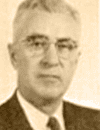
Sunday Night Meditations 33 Message and Song - 1950's
The speaker argues that unhappiness is caused by a guilty conscience over past sins, an inability to find satisfaction for the present, and the uncertainty of the future, and that the only remedy is to trust in Christ and his sacrifice on the cross.
In this sermon transcript, the story begins with a man named Steeda who is desperate to escape a threatening chieftain. He decides to steal money from a villager's hut while the children are asleep. However, as he tries to take the money, a dog bell falls and wakes up the children. Steeda realizes that he cannot conceal his theft and resorts to violence, killing two of the children and injuring the third. The injured child later testifies against Steeda, leading to his conviction for triple murder. Throughout his life imprisonment, a missionary visits the prison regularly to share the gospel, particularly focusing on the story of the cross and Jesus' sacrifice for sinners. The prisoners are deeply moved by this message.
Full Transcript
Greetings to our radio friends. It is our happy privilege once more to turn your thoughts away from the things of time and sense to spiritual things which are so essential to our happiness, for the Word of God says, The happy man is the man who delights and meditates in the law of the Lord continually. And again, in Psalm 105, O give thanks unto the Lord, call upon his name, make known his deeds among the people, sing unto him, sing songs unto him, talk ye of all his wondrous works.
Glory ye in his holy name. Let the heart of them rejoice that seek the Lord. In times like these, yet he's the one, he's Jesus, very true, he's Jesus.
There is something very refreshing in meeting happy people, and there is something very depressing in meeting unhappy people. We are compelled to admit that every individual falls into one of these two classes. In my radio audience, I have reason to believe there are many who deserve the title of being happy people, spreading sunshine and gladness wherever they go.
But I cannot help but believe that there are at least a few in my radio audience who are not happy, whose days are dreary and filled with heavy burdens. In some cases, they may not be apparent, but there is unhappiness there just the same. There should be some reasonable analysis for these existing conditions.
If the happy and unhappy live in the same country, in the same state, in the same city, perhaps on the same street, and the circumstances are for the most part equal, how do we account for the fact that some have joined the mournful tones of the turtle dove, while others the major strains of the lark? Someone might suggest that mirth and misery are inherited, but careful observation will prove that answer to be untrue. A second might suggest that environment will cause the difference, but again careful observation will deny that answer. It must be admitted that circumstances do have some bearing on our happiness, but that is not the answer to the question, for you will often find amid the direst circumstances an abundance of happiness.
At the same time, you will find misery in the palace where there is no material reason for it. I want to take this opportunity to submit to you three reasons or causes for unhappiness. First, a guilty conscience over past sins.
Second, an inability to find satisfaction for the present, and third, the uncertainty of the future. First, the sins of the past have made an indelible impression on the memory. They are quickly and easily committed, but not easily forgotten.
The more effort that is put forth to try to forget them, the more glaring and vivid they remain. You may try to convince yourself that they are all forgiven and forgotten, but unless you have God's word for it that they are forgiven, you may only be in the big class of those who are trying to rest on imaginary forgiveness. If your sins will ever be forgiven so that you can forget them, God will have to do it on his own terms and not on yours, and his terms are through the substitutionary death, burial, and resurrection of the Lord Jesus Christ.
All forgiveness that you try to get on any other ground is imaginary forgiveness, for without the shedding of blood is no remission. Those who are entirely delivered from the guilt of the past are those who have seen in Christ the one who has made sin, and who bore the penalty of our guilt when he died in the sinner's stead on Calvary's cross. Their testimony is, My sin, O the bliss of that glorious thought, my sin not in part, but the whole, is nailed to his cross, and I bear it no more.
Praise the Lord, it is well with my soul." Or, in the words of another hymn, conscience now no more condemns us, for his own most precious blood once for all has washed and cleansed us, cleansed us in the eyes of God. Sweeter rest and peace have filled us, sweeter praise than tongue can tell. God is satisfied with Jesus, we are satisfied as well.
You will never find happiness until you K-N-O-W know that the past is blotted out and forgiven and forgotten. So much for the past. Now for the present.
You will sooner or later discover that there is no true satisfaction for the present apart from knowing Christ. I did not say apart from being religious, for there is a vast difference between being religious and knowing Christ. Your own history may prove my emphatic statement.
You may have been searching for satisfaction for some years, and if you tell me you have found it apart from knowing Christ, you are not telling the truth. I am taking into consideration the possibility of having in my radio audience all kinds of people, the young, the middle-aged, the old, the rich, the poor, the timid, the gay, the good, the bad, the educated, the illiterate, the religious, the infidel. With this in mind, I say to everyone without any reservation or exception, you will never find true satisfaction for the present apart from knowing Christ.
David learned that lesson many years ago, which caused him to write, He satisfied the longing soul. You have nothing to live for until you know Jesus Christ. Now the third cause for unhappiness, the uncertainty of the future.
What would happen to you in the future? You may reply, I don't care, but I know that is not true. You may muster all the breath you can find and bluff yourself, but don't tell me that you don't care. You do care.
It is the fear of that that is gnawing at the roots of your happiness. Face the issue squarely. Will the future find you enjoying the rest and joys of heaven, or the remorse and torments of hell? To know, k-n-o-w, not to hope, but to know, to be guaranteed that heaven is at the end of the road, spells happiness.
To hope, to wonder, to suppose, to be uncertain about it, spells unhappiness. There are thousands of people in this war-torn world who know that the future is secure. They are as certain of heaven as if they were already there.
They are the only real happy people you will find from the face of the earth. I wonder if you are in that class. You should be.
Life is too short to waste in unhappiness. I have seen hundreds of miserable, unhappy people who have found the one and only secret to true and lasting happiness, and they are now radiant with sunshine and happiness. What Christ has done for them, he can do for you, and you will only begin to live when you have found true and lasting happiness in Christ.
I should hardly expect that all of my listeners will agree with me that these three are the basic causes for unhappiness, but I believe them, even if you don't agree, because they are true to human experience. I mention them again. The guilt of the past sin, second, the inability to find satisfaction for the present, and third, the uncertainty of the future.
These are the causes, and here is the remedy. Christ is the answer for all three. The guilt of the past sin? Only Christ can remove that.
Satisfaction for the present? Only Christ can give that. A guarantee of heaven at the end? Only Christ can make that possible. Do you want happiness? How bad do you want it? Are you willing to believe God and receive it by taking Christ as your sin-bearer and as your Savior? There is no alternative.
If you want happiness without taking Christ, you want an impossibility. If you are fed up on being unhappy, I present to you Jesus Christ who can make you happy both now and for eternity. He loved you.
He died for you. He went to Calvary's cross. He bore all the mockery and shame from the hands of men, and then God laid upon him all our sins and iniquities.
I want you to turn to that cross in faith. Receive him as your Lord and Savior. Thank him for dying for you, and if you will, the first real joy that you shall ever have, and that will remain with you for all eternity, may be yours upon accepting Jesus Christ as your Lord and Savior.
God help you to do it right now. Think not to wait a more favorable day. Come while the spirit still dare not to look that tomorrow will do.
Little we know what a day now at his feet he is. Come to the Savior. Greetings to our radio listeners.
Today I want to bring to you a very interesting missionary story from the Belgian Congo regarding the conversion of a very, very bad man. I trust you are found in circumstances so that you will be able to listen to the entire gospel program. But first, here is the message in song.
Why did they nail him to Calvary's tree? Why Jesus, the helper, he nailed Jesus, the dead of my form? Why should he love me, a sinner undone? He nailed Jesus, the dead of my form. My good friend William A. Deans from Nyankundi, Africa, tells the interesting story of the conversion of an African savage by the name of Theda, who was sent by his chief to collect an overdue fine from a tribesman. After collecting the fine, his friends met him as he was returning, with his pockets bulging with the francs.
They persuaded him to buy banana beer, until very soon the money was all spent. Instead of returning to the chief, Theda hid. But as days passed, the chief's insistence and his anger increased, and word was sent out that unless Theda brought the money, he would be dragged before the native court and publicly whipped.
By borrowing from relatives, by selling his goats, Theda made up most of the amount, and lacked only fifty francs. The day of reckoning approached, and he became desperately. He must get the fifty francs.
Other means failing, he determined to steal the money from a villager whom he knew very well. Upon arriving at the hut, he found that the man and his wife were away at the lake fishing, leaving the four children in the grass hut. Here at last was a way to get the fifty francs to satisfy the threatening chieftain.
Theda asked the children if he might spend the night with them until the parents would return. They seemed to be glad to have the visitor and provided a meal just before going to bed. Soon the four children were asleep, and this was Theda's chance to invade the family box at the corner of the hut.
Carefully he lifted the lid and found the money at the very bottom of the box. Suddenly, with a startling rattle, a dog bell tumbled over inside the box, and the children were instantly awakened. "'What are you doing in our father's box?' the oldest girl asked.
Theda's threatening reply silenced the children, and they soon dozed off again. Theda had the money, but how could he conceal his theft? The testimony of the children would certainly expose him, and he would be convicted. What could he do? His sinful, savage heart devised his only course of escape.
I must burn the grass hut while the four children are asleep, and all evidence will be destroyed." In a matter of a few minutes, the flames leaped over the dry grass hut, but the three oldest children were awakened by the crackling in the smoke and crawled out of the burning hut. Theda knew if they escaped his crime would be found out, so he took his huge bush knife and knocked them down as they came through the door. Two of them were killed instantly, but the third fled into the banana grove, painfully wounded, and later recovered in a government hospital to testify against Theda for triple murder, whisk, theft, and arson.
A district court sentenced him to life imprisonment, during which time the missionary visited the prison regularly to proclaim the gospel of God's grace. Of all the simple gospel messages he proclaimed, none created more interest among the prisoners than the story of the cross. They listened breathlessly as the account was given of the Son of God who came from heaven to die in the place of guilty sinners.
They were strangely moved as he told them of the crown of thorns which wicked men pressed upon his brow, the shameful spitting, the scourging, the mockery, the nails driven through his hands, the spear like their own weapon was thrust into his side, and thus the sinless perfect Son of God died as a criminal because he loved guilty sinners who could never be saved apart from his substitutionary death. Even Theda, the ruthless murderer, was drawn by such an almost unbelievable story of divine love and grace. He asked to have an interview with the missionary to make sure that this message included him.
Is it possible that a wicked, guilty man like me can be forgiven through the work that Christ accomplished on the cross? The missionary assured him that the message was to whosoever will with no exception. He reminded him of the dying thief who was also a murderer and was granted paradise because he believed that Christ atoned for his sins. Theda could hardly believe it, but it must be true because God said it, and in simple faith Theda rested his soul for time and for eternity in the finished work of Christ, and then and there the handcuffed prisoner received eternal life.
A few weeks later, the Attorney General of the Congo examined the documents in the district court and decided that the sentence of life in prison was insufficient to pay for Theda's horrible crimes. He had the authority to overrule the district court in Theda's case, and the new sentence was given to be hanged by the neck until dead. Theda heard the grim sentence, but was not unduly moved, for he had the peace of knowing that his past was blotted out on God's record books in heaven.
On the morning of his execution, he peacefully ate his last meal and asked the missionary to take care of his five children. His last words were, Tell my children the story of Jesus and the wonderful salvation he offers to whosoever will, for I do want them to meet me in heaven. He calmly went to the gallows, and from there into the presence of God, all because the Lord Jesus Christ paid the debt of his sins when he died on the cross of Calvary.
Radio friend, do you know that Christ paid the full price that God demanded for your sins? Do you know that you, too, know your sins are blotted out and never be brought up against you? Or, if you will in simple faith rest entirely upon his finished work, you can have the same thing, the same peace that Theda had. Surely if Theda could be saved, you can be saved. If Theda could enjoy the peace of God in the face of the gallows, you may enjoy that same peace.
If you are still unsaved, the main difference between you and Theda is Theda took Christ as his shelter and hiding place, and you have never done it. Can it be that an African savage with a hideous record will enjoy heaven for all eternity, while you, a far more respectable citizen with no glaring sins, will be lost for all eternity? I must remind you that unless your few and apparently insignificant sins are blotted out by the only method that God will approve, you will be lost, while Theda, with a host of others of his kind, will sing the praises of the great Redeemer in heaven. The record of my sins, as man would judge it, is not as black as Theda's, but I had to be saved exactly in the same way as that cruel black savage of the Congo.
Christ loved me no more and no less than he loved Theda, but having received Christ, Theda has as much right to be in heaven as I do, for he was saved by grace, and so was I. Theda had no chance of getting to heaven by his own conduct or life, neither do I have a chance of getting to heaven on the basis of living a good, honest, sincere Christian life. I look forward to the day when in heaven I shall meet Theda, for I have so many things in common with him. I know that together we shall sing his praises, and perhaps some day, together with Theda, we shall sing together unto him who loved us and washed us from our sins in his own blood.
To him be glory, dominion, and power forever. Amen. May God give you an earnest desire to have all your sins blotted out, so that you, too, will be ready and fit for God's happy presence in heaven.
Remember that unless your sins are forgiven, you stand no chance of being in heaven. Christ is the only one that can forgive your sins, and if you will trust him and his opponent's sacrifice, God's word assures us that the moment you trust him, you will be the possessor of eternal life. May God help you to trust him wherever you are right now.
Sermon Outline
- The Causes of Unhappiness
- The Remedy for Unhappiness
- Christ as the Answer for All Three Causes
- The Guilt of the Past Sin
- Satisfaction for the Present
- A Guarantee of Heaven at the End
Key Quotes
“The happy man is the man who delights and meditates in the law of the Lord continually.” — Welcome Detweiler
“You will never find happiness until you K-N-O-W know that the past is blotted out and forgiven and forgotten.” — Welcome Detweiler
“Christ is the answer for all three causes of unhappiness: the guilt of the past sin, satisfaction for the present, and a guarantee of heaven at the end.” — Welcome Detweiler
Application Points
- You will never find true satisfaction for the present apart from knowing Christ.
- The uncertainty of the future can be overcome by trusting in Christ and his sacrifice on the cross.
- The only way to be saved is by trusting in Christ and his sacrifice on the cross.