
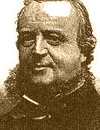
Henricians
Henry, a 12th-century monk, became a great preacher and Bible Christian, denouncing corrupt practices and superstitions, and leading many to reject Catholic churches and practices.
In this sermon, the preacher delves into the meaning of 'witnesses' (martus/martys) in the Bible, highlighting the dual role of a witness as one who has seen or experienced something and one who testifies to what they saw. The sermon emphasizes the importance of being a witness in legal settings and in recounting firsthand knowledge. It also explores how witnesses in the Bible attest to facts, give evidence, and confirm truth through verbal testimony. The preacher connects the concept of witnesses to the Old Testament 'formula' of 'two or three witnesses' and discusses how witnesses in Hebrews 11 exemplify faith in God. The sermon concludes by discussing the significance of being a witness for Jesus, even to the point of martyrdom, and how the power of the Holy Spirit enables believers to be effective witnesses to the truth of God and His coming judgment.
Text
Henry, a monk in the first half of the twelfth century, became a great preacher. He was endowed with extraordinary powers of persuasion, and with a glowing earnestness that swept away the greatest obstacles that mere human power could banish, and he had the grace of God in his heart. He denounced prayers for the dead, the invocation of saints, the vices of the clergy, the superstitions of the church, and the licentiousness of the age, and he set an example of the sternest morality. He was a master-spirit in talents, and a heaven-aided hero, a John Knox, born in another clime, but nourished upon the same all-powerful grace.
When he visited the city of Mans the inferior clergy became his followers, and the people gave him and his doctrine their hearts, and they refused to attend the consecrated mummeries of the popish churches, and mocked the higher clergy who clung to them. In fact, their lives were endangered by the triumph of Henry's doctrines. The rich and the poor gave him their confidence and their money, and when Hildebert, their bishop, returned, after an absence covering the entire period of henry's visit, he was received with contempt and his blessing with ridicule. Henry's great arsenal was the Bible, and all opposition melted away before it.
He retired from Mans and went to Provence, and the same remarkable results attended his ministry; persons of all ranks received his blessed doctrines and forsook the foolish superstitions of Rome and the churches in which they occupied the most important positions. At and around Thoulouse his labors seem to have created the greatest indignation and alarm among the few faithful friends of Romanism, and Catholics in the most distant parts of France heard of his overwhelming influence and his triumphant heresy with great fear. In every direction for many miles around he preached Christ, and at last Pope Eugene III, sent a cardinal to overthrow the heretic and his errors. He wisely took within him, in 1147, the celebrated St. Bernard. This abbot had the earnestness and the temper of Richard Baxter, whom he resembled in some respects. He was a more eloquent man, and he was probably the most noted and popular ecclesiastic in Europe. He speaks significantly for the state of things which he found in Henry's field: "The churches (Catholic) are without people, the people without priests, the priests with due reverence, and, in short, Christians are without Christ; the churches were regarded as synagogues, the sanctuary of God was not held to be sacred, and the sacraments were not reckoned to be holy, festive days lost their solemnity, men died in their sins, souls were snatched away everywhere to the dread tribunal, alas! neither reconciled by repentance nor fortified by the communion. The life of Christ was closed to the little children of Christians, whilst the grace of baptism was refused, nor were they permitted to approach salvation, although the Saviour lovingly proclaims before them, and says, 'Suffer the little children to come to me'"
Elsewhere, St. Bernard, speaking of Henry and other heretics, says, "They mock us because we baptize infants, because we pray for the dead, because we seek the aid of {glorified} saints" That Henry had a great multitude of adherents is beyond a doubt, and that he was a Bible Christian is absolutely certain, and that and his followers rejected infant baptism is the testimony of St. Bernard and of all other writers who have taken notice of the Henricians and their founders. We include to the opinion of Neander that Henry was not a Petrobrusian. We are satisfied that he and his disciples were independent witnesses for Jesus raised up by Baptists, and their founder perished in prison.
Sermon Outline
- Henry's Ministry
- The Impact of Henry's Teachings
- The Response to Henry's Ministry
- Pope Eugene III sent a cardinal to overthrow Henry
- Henry's followers were seen as heretics
- St. Bernard spoke out against the corruption of the Catholic church
Key Quotes
“The churches (Catholic) are without people, the people without priests, the priests with due reverence, and, in short, Christians are without Christ;” — William Cathcart
“They mock us because we baptize infants, because we pray for the dead, because we seek the aid of glorified saints” — William Cathcart
“Suffer the little children to come to me” — William Cathcart
Application Points
- We should be willing to stand up for our faith, even if it means going against the majority.
- The Bible is our greatest resource for understanding God's will and living a righteous life.
- We should be careful not to fall into the trap of superstition and tradition, but instead seek to follow God's Word.