
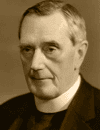
Modern Mysticism
The sermon argues that mysticism is inevitable in the 20th century, driven by a desire for a basis of religious belief rooted in human experience.
W.R. Inge discusses the revival of interest in mystical writers in modern thought, highlighting the influence of philosophers like Fechner and Bradley, as well as the popularity of Maeterlinck's mystical works. The sermon delves into the study of the religious faculty by the growing science of psychology, focusing on personal experiences and phenomena of conversion. Despite differing views between metaphysicians and psychologists, there is a common desire for a mystical basis of religious belief rooted in human experience, emphasizing the importance of the God-consciousness in inner life.
Text
The revival of interest in the old mystical writers is not surprising when we consider the whole trend of modern thought. Among recent philosophers--though Lotze, perhaps the greatest name among them, is unsympathetic, in consequence of his over-rigid theory of personality--the great psychologist Fechner, whose religious philosophy is not so well known in this country as it deserves to be, has with some justice been called a mystic. And our own greatest living metaphysician, Mr F.H. Bradley, has expounded the dialectic of speculative mysticism with unequalled power, though with a bias against Christianity. Another significant fact is the great popularity, all over Europe, of Maeterlinck's mystical works, "Le TrŽsor des Humbles," "La Sagesse et la DestinŽe," and "Le Temple Enseveli."
The growing science of psychology has begun to turn its attention seriously to the study of the religious faculty. Several able men have set themselves to collect material which may form the basis of an inductive science. Personal experiences, communicated by many persons of both sexes and of various ages, occupations, and levels of culture, have been brought together and tabulated. It is claimed that important facts have already been established, particularly in connexion with the phenomena of conversion, by this method.
The results have certainly been more than enough to justify confidence in the soundness of the method, and hope that the new science may have a great future before it. Towards mysticism, recent writers on the psychology of religion have been less favourable than the pure metaphysicians. While the latter have shown a tendency towards Pantheism and Determinism, which makes them sympathise with the general trend of speculative mysticism, psychology seems just at present to lean towards a pluralistic metaphysic and a belief in free-will or even in chance.
This attitude is especially noticeable in the now famous Gifford Lectures of Professor William James[31] and in the recent volume of essays written at Oxford.[32] But even if the rising tide of neo-Kantianism should cause the speculative mystics to be regarded with disfavour, nothing can prevent the religion of the twentieth century from being mystical in type. The strongest wish of a vast number of earnest men and women to-day is for a basis of religious belief which shall rest, not upon tradition or external authority or historical evidence, but upon the ascertainable facts of human experience.
The craving for immediacy, which we have seen to be characteristic of all mysticism, now takes the form of a desire to establish the validity of the God-consciousness as a normal part of the healthy inner life. We may perhaps venture to predict that the Christian biologist of the future will turn the Pauline Christology into his own dialect somewhat after the following fashion:--"The function of religion in the human race is closely analogous to, if not identical with, that of instinct in the lower animals.
Religion is the racial will to live; not, however, to live anyhow and at all costs, but to live as human beings, conforming as far as possible to the highest type of humanity. Religion, therefore, acts as a higher instinct, inhibiting all self-destroying and race-destroying impulses in the interest of a larger self than the individual life." To turn this statement into theological form it is only necessary to claim that the "perfect man" which the religious instinct is trying to form is "the measure of the stature of the fulness of Christ," that that perfect humanity was once realised in the historical Christ, and that the higher instinct within us--ourselves, yet not ourselves--which makes for life and righteousness, and is the source of all the good that we can think, say, or do, may (in virtue of that historical incarnation) be justly called the indwelling Christ. This is all that the Christian mystic needs.
Sermon Outline
- The Revival of Interest in Mysticism
- The Growing Science of Psychology and Mysticism
- The Tension between Metaphysics and Psychology
- The Future of Mysticism
- The inevitability of mysticism in the 20th century
- The desire for a basis of religious belief rooted in human experience
Key Quotes
“The function of religion in the human race is closely analogous to, if not identical with, that of instinct in the lower animals.” — W.R. Inge
“Religion is the racial will to live; not, however, to live anyhow and at all costs, but to live as human beings, conforming as far as possible to the highest type of humanity.” — W.R. Inge
“The higher instinct within us--ourselves, yet not ourselves--which makes for life and righteousness, and is the source of all the good that we can think, say, or do, may (in virtue of that historical incarnation) be justly called the indwelling Christ.” — W.R. Inge
Application Points
- The role of religion is to inhibit self-destructive impulses and promote a higher type of humanity.
- The indwelling Christ is the source of all good and is the perfect humanity that was realized in the historical Christ.
- A basis of religious belief rooted in human experience is essential for the 20th century.