
The "Baptism of the Holy Spirit" refers to a significant spiritual experience in the New Testament, marked by the reception of the Holy Spirit, empowering believers for service and ministry. This concept is primarily rooted in passages such as Acts 1:5, where Jesus promises that His followers will be baptized with the Holy Spirit, and Acts 2:1-4, which describes the Pentecost event when the Holy Spirit descended upon the apostles. This event is seen as the fulfillment of Jesus' promise and signifies the initiation of the church's mission in the world.Theologically, the Baptism of the Holy Spirit is understood as an act of divine grace that occurs at the moment of salvation, where the believer is immersed in the Holy Spirit. This baptism is not to be confused with water baptism; instead, it is a spiritual empowerment that equips believers for witnessing, service, and the manifestation of spiritual gifts (1 Corinthians 12:7-11). Different Christian traditions may interpret the implications and timing of this experience differently, with some viewing it as a distinct subsequent experience to conversion, while others see it as simultaneous with salvation. Regardless, it is universally acknowledged as a foundational aspect of Christian life and empowerment in the New Testament.

In this sermon, the speaker shares a story about a young girl who had a profound impact on the powerful women of her time. The girl preached against prostitution and even caught the attention of intellectuals. The speaker emphasizes the importance of kindling a fire of devotion to God within oneself

In this sermon, the speaker uses the story of three armies lacking water to illustrate the spiritual poverty that exists in the Christian church today. He emphasizes the need for believers to get in touch with God and have faith that can overcome seemingly hopeless situations. The speaker encourages
In this sermon, the preacher shares a story about a woman who worked in Africa and lived in a humble bamboo house. Despite facing potential dangers in the jungle, she had faith and trusted in God's protection. The preacher also talks about attending a meeting where people were sleeping and the preac
In this sermon transcript, the preacher emphasizes the need for conviction and the fear of God in our lives. He describes a powerful experience of God's presence during a church service, where the congregation was deeply moved and cried out for God to do it again. The preacher shares how the Holy Sp

In this sermon, the speaker discusses the importance of being ready for service in the Lord's work. He uses the example of Aaron in Exodus 29, who had been cleansed and surrendered his life to the Lord, but still needed to go through a process of preparation before he was ready for service. The spea
Leonard Ravenhill passionately preaches about John the Baptist as a fiery messenger of God, emphasizing the need for personal revival and the baptism of the Holy Spirit with fire. He calls for believers to seek God earnestly, to break down the walls of unbelief and doubt in their lives, and to be co

Willie Mullan emphasizes the significance of the baptism of the Holy Spirit, explaining its consistent meaning throughout the New Testament. He clarifies that baptism signifies immersion, using examples from the Gospels to illustrate the different types of baptisms, including John's baptism of repen

In this sermon, the preacher emphasizes the importance of prioritizing God above all else. He highlights that many people are willing to accept God as long as they can still have the world as well, but God requires complete devotion. The preacher shares the powerful conversion story of Charles Finne
In this sermon, the speaker emphasizes the importance of reviewing objectives for the Sabbath service. The three objectives mentioned are to honor God, bring members together, and provide a training opportunity for new members. The speaker also highlights the need for the Holy Spirit's guidance and

Ernest O'Neill addresses the struggle of Christians who, despite knowing the right actions, often fail to live them out due to an internal conflict of desires. He emphasizes that the central problem is not a lack of knowledge but the inability to act according to one's true intentions, leading to fr

Derek Prince discusses the distinction between the Baptism in the Holy Spirit and the fullness of the Holy Spirit, emphasizing that while many believe they are filled with the Spirit upon baptism, the New Testament presents a more nuanced understanding. He highlights that the baptism is an immersion
Derek Prince explores the nature of the baptism of the Holy Spirit, emphasizing its dual aspects: the external immersion of the Holy Spirit and the internal reception of His presence. He explains that while many may receive the baptism, it does not guarantee they are filled with the Holy Spirit, as

R.A. Torrey's sermon 'Three Fires' emphasizes the transformative power of the Holy Spirit, as illustrated by the phrase 'He shall baptize you with the Holy Ghost and with fire.' He explains three types of fire: the baptism with fire that reveals and purifies, the fire of judgment that tests our work

John Sung emphasizes the critical need for Christians to be baptized by the Holy Spirit in these end-times to avoid defeat and to empower their witness for Christ. He explains that the baptism of the Holy Spirit equips believers with the whole armor of God, which is essential for standing against sp
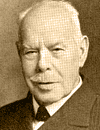
Smith Wigglesworth emphasizes the undeniable evidence of the Baptism of the Holy Spirit, drawing parallels between the modern Pentecostal revival and the experiences of the early church. He recounts his personal journey of seeking the Holy Spirit, highlighting the importance of speaking in tongues a

Hans R. Waldvogel emphasizes that the baptism of the Holy Spirit is not merely an event but a transformative experience where Christ takes over our lives. He explains that true baptism leads to a flow of living water from within, signifying a deep relationship with God and a commitment to live accor

A.B. Simpson emphasizes the significance of the baptism with the Holy Ghost, explaining that it is Christ who baptizes us with the Spirit, enabling us to live a life reflective of His. He draws parallels between the Old and New Testament promises, highlighting that receiving the Holy Spirit follows

Andrew Murray emphasizes the significance of the Baptism of the Spirit, linking it inseparably to the Blood of the Lamb. He explains that while the message of redemption through Christ's sacrifice is more readily understood, the deeper spiritual truth of the Holy Spirit's indwelling is essential for

G.W. North emphasizes the distinct paths of Peter and Paul in their ministries, illustrating how their unique backgrounds shaped their understanding and approach to preaching the Gospel. Peter, rooted in Jewish tradition, struggled to fully embrace the new covenant, while Paul, with his liberal upbr

Art Katz emphasizes the critical role of the Baptism of the Holy Spirit in effectively reaching the Jewish community in the last days. He reflects on the early Church's reliance on the Spirit's power, as demonstrated in the Book of Acts, and challenges contemporary Christians to rekindle that fervor

Chuck Smith discusses the baptism of the Holy Spirit, emphasizing its distinction from regeneration and the necessity of this experience for believers. He references John the Baptist's prophecy about Jesus baptizing with the Holy Spirit and fire, and explains that while all believers receive the Hol
Chuck Smith emphasizes the significance of the baptism of the Holy Spirit, distinguishing it as a separate experience from salvation. He illustrates how this baptism fulfills the deep spiritual thirst within every person, as Jesus invites those who are thirsty to come to Him for living water. Smith
Art Katz emphasizes the critical need for Spirit-filled Christians to actively engage in speaking in tongues and fervent prayer, particularly for the Jewish community, as a means of expressing the urgency of their spiritual condition. He reflects on the early Church's reliance on the Baptism of the
Chuck Smith continues his exploration of the baptism of the Holy Spirit, emphasizing the promises made by John the Baptist and Jesus regarding this experience. He discusses the fulfillment of these promises at Pentecost and the subsequent experiences of the early church, highlighting that the baptis

Charles Finney emphasizes to ministers of the gospel the critical need for the baptism of the Holy Spirit, arguing that true spiritual influence and effectiveness in ministry come not from intellectual attainment but from the empowerment of the Holy Spirit. He points out that many ministers, despite
G.W. North emphasizes the significance of John the Baptist's proclamation that Jesus is the Baptizer with the Holy Spirit, noting that while John called people to his baptism for forgiveness, he did not direct them to Christ for it. This indicates John's understanding of Jesus' mission as far greate
Paris Reidhead emphasizes the necessity of the baptism with the Holy Spirit as a critical step in the Christian life, which is not optional but a responsibility for every believer. He explains that this baptism empowers Christians to fulfill their calling as witnesses for Christ, highlighting that n