
Christ stands as the ultimate fulfillment of the Law, embodying its essence and purpose as revealed throughout Scripture. In Matthew 5:17, Jesus proclaims, 'Do not think that I have come to abolish the Law or the Prophets; I have not come to abolish them but to fulfill them.' This declaration underscores His role as the completion of the Old Testament sacrificial system, which is intricately tied to the Jewish Tabernacle. The Tabernacle, as described in Exodus 25-34, served as a dwelling place for God among His people, foreshadowing the coming of Christ, who would be Immanuel, 'God with us' (Matthew 1:23). Through His sacrificial death and resurrection, Jesus not only satisfied the righteous requirements of the Law (Romans 8:3-4) but also established a new covenant, as foretold in Jeremiah 31:31-34, where God's laws would be written on the hearts of His people. The service and contents of the Tabernacle, rich in symbolism, find their ultimate meaning in Christ, who is our High Priest (Hebrews 4:14) and the Lamb of God (John 1:29) that takes away the sin of the world. Thus, understanding Christ as the fulfillment of the Law deepens our appreciation for the entirety of Scripture and God's redemptive plan.
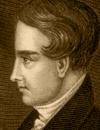
Robert Murray M'Cheyne emphasizes the significance of the Jewish Tabernacle as a shadow of Christ, illustrating how the Mosaic covenant served as a precursor to the Christian covenant. He explains that while the Tabernacle was a worldly sanctuary where God dwelled among His people, it ultimately poi
Robert Murray M'Cheyne emphasizes the significance of the Tabernacle's service, illustrating how the priests performed their duties in the holy place and how the high priest entered the holiest of all once a year with blood for atonement. He draws parallels between the Old Testament practices and Ch
Robert Murray M'Cheyne emphasizes the significance of the Jewish Tabernacle as a shadow of Christ, illustrating how the Mosaic covenant served as a precursor to the Christian covenant. He explains that while the Tabernacle was a worldly sanctuary where God dwelled among His people, it ultimately poi
Robert Murray M'Cheyne explores the significance of the Jewish Tabernacle, emphasizing its role as a meeting place with God and a profound type of Christ. He explains that the Tabernacle, made of worldly materials, foreshadows the heavenly sanctuary established by Christ, who is the new Tabernacle.
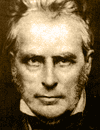
John Nelson Darby explores the significance of the tabernacle as a divine pattern reflecting heavenly realities, emphasizing that the tabernacle serves as a shadow of good things to come, revealing God's relationship with humanity through the law and priesthood. He highlights the contrast between th