
Christian redemption is a profound theme woven throughout Scripture, illustrating God's unyielding love and grace towards humanity. At the heart of this doctrine lies the sacrificial death and resurrection of Jesus Christ, as articulated in John 3:16, where we learn that God gave His only Son so that all who believe in Him may not perish but have eternal life. This act of grace underscores the transformative power of redemption, enabling believers to become new creations, as stated in 2 Corinthians 5:17. The Apostle Paul elaborates on this in Ephesians 1:7, where he affirms that in Christ, we have redemption through His blood, the forgiveness of our trespasses, according to the riches of His grace. Furthermore, the concept of a royal priesthood, as described in 1 Peter 2:9, highlights the believer's new identity and purpose in God's redemptive plan. Through the lens of grace, we also understand the paradoxes of the spiritual life, where weakness is made strong (2 Corinthians 12:9) and judgment is tempered with mercy (James 2:13). Ultimately, Christian redemption invites us to embrace our position in Christ, which transcends our experiences, assuring us of God's unwavering commitment to restore and reconcile us to Himself.

Anne Dutton preaches about the overwhelming love and grace of God, highlighting her own unworthiness and the depths of her sinfulness, yet marveling at God's infinite forbearance and mercy. She shares her experience of being a vessel of mercy, saved by the ransom of Jesus Christ, and forgiven of all

In this sermon, the preacher emphasizes that the law was never meant to be duplicated or imitated by humans. Its purpose is to reveal the reality of human error and our fallen nature. The preacher highlights that trying to fulfill the law is foolish and impossible for human nature. Instead, the prea

John A. Brooks preaches about the priestly function being universal and timeless, bridging the gap between humanity and God. The necessity of mediation through a priest is deeply ingrained in human conscience, acknowledged by enlightened minds across different nations and ages. The priestly office,
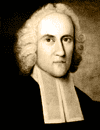
Jonathan Edwards preaches on Psalm 25:11, highlighting how David, in a time of affliction, pleads for pardon based on God's name's sake and the greatness of his sins. Edwards emphasizes that the greatness of our sin is not an impediment to pardon if we come to God for mercy. He explains the need for

Richard E. Bieber preaches about the coexistence of judgment and grace, emphasizing the importance of divine judgment in understanding true grace. He highlights the consequences of sin and the need for repentance, contrasting it with the offer of grace through Jesus Christ. Bieber stresses the neces
In this sermon, Eddie discusses the disconnect between our experience in Christ and our position in Christ as described in the scriptures. He emphasizes the importance of understanding Romans 8:2, which explains that the law does not work in bringing us closer to God. Eddie encourages the young warr

In this sermon, the speaker focuses on the paradox of brokenness leading to release. He refers to the Apostle Paul's experiences in Second Corinthians, where Paul opens up about his sufferings for Christ's sake. Paul initially tries to overcome his struggles, but eventually realizes that there is no