
The concept of Church Distinctiveness refers to the unique identity and purpose of the Christian community, as expressed in the Bible. According to 1 Peter 2:9, believers are called to be a "chosen people, a royal priesthood, a holy nation," set apart from the world to serve and worship God. This distinctiveness is rooted in the Gospel, as seen in Romans 12:2, where believers are exhorted to "not conform to the pattern of this world" but instead be transformed by the renewing of their minds, and is also reflected in Jesus' prayer for his disciples in John 17:14-16, where he asks the Father to protect them from the evil one and sanctify them in the truth. As a result, the Church is called to embody a countercultural witness, demonstrating the values and principles of God's kingdom in a world that often opposes them, as encouraged in Matthew 5:16, to let their light shine before others.

A.W. Tozer emphasizes that the Church's greatest influence comes from its distinctiveness from the world. He argues that the Church's power is directly proportional to how different it is from society, and that attempts to conform to worldly standards dilute its effectiveness. Tozer warns against th
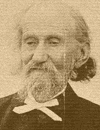
Andrew Murray emphasizes the necessity of yielding to the Spirit of God to overcome the deceptive spirit of the world. He explains that true influence over others comes from a life that is spiritually separated from worldly desires, rather than from mere physical withdrawal. The blinding influence o
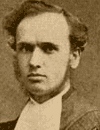
A.B. Simpson emphasizes the concept of spiritual separation in his sermon 'The God of Israel Hath Separated You.' He illustrates how a plant can thrive in unclean surroundings while its roots remain untouched by filth, symbolizing the believer's call to be separate from worldly desires and influence

T. Austin-Sparks emphasizes the distinction between living in the Spirit versus being consumed by the world, using the imagery of the New Jerusalem as a representation of a spiritual people rather than a literal city. He argues that true understanding of spiritual truths requires a separation from w
T. Austin-Sparks emphasizes the distinction between the position of believers in Christ and their actual spiritual condition, as illustrated in his examination of the Corinthian church. He highlights that while some members were failing, others were overcoming, and the letters to the churches serve