
Church doctrine serves as the foundation for the beliefs and practices of the Christian faith, guiding believers in their understanding of Scripture and the nature of God. Central to this doctrine is the authority of Holy Scripture, as emphasized in 2 Timothy 3:16-17, which affirms that all Scripture is inspired by God and profitable for teaching, reproof, correction, and training in righteousness. The church, as the body of Christ, is called to uphold these teachings, reflecting the unity and diversity of its members as described in 1 Corinthians 12:12-27. Furthermore, the doctrine of the church encompasses eschatological views, such as premillennialism and amillennialism, which explore the nature of Christ's return and the fulfillment of God's kingdom on earth, as seen in Revelation 20:1-6. The significance of the church's role in the world is also highlighted in Matthew 28:19-20, where Jesus commissions His followers to make disciples of all nations. As believers engage with historical confessions and catechisms, such as the Dutch Confession and the Heidelberg Catechism, they find a rich heritage that informs their faith and practice, ensuring that the church remains anchored in biblical truth amidst contemporary challenges.
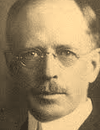
Arno Clemens Gaebelein preaches about the blessed hope of the coming of our Lord, emphasizing the revival of the study of prophecy and the separation of believers based on sound doctrine. He delves into the distinction between the Coming of the Lord for His Saints and with His Saints, addressing the
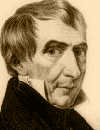
Henry Law preaches about the Church being beloved by God, likening it to a secure and stable spiritual edifice built upon the foundation of prophets and apostles, with Jesus Christ as the chief cornerstone. The Church is cherished by the Lord more than any other place, and every member is deeply lov
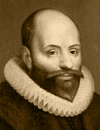
James Arminius discusses the need for examination and revision of the Confession of the Dutch Churches and the Heidelberg Catechism, emphasizing the importance of aligning human writings with the word of God to ensure accuracy and avoid errors. He presents seven key inquiries to be made during this

J.H. Newman preaches about the importance of recognizing and avoiding those who cause divisions and offenses contrary to the true doctrine of the Church. He categorizes the opponents of the Church into three classes: those who reject the Truth, those who receive only a part of the Truth, and those w
J.H. Newman delves into the significance of Holy Scripture and the Church in teaching revealed truth, emphasizing that Scripture contains all necessary articles of faith and the Church has authority in controversies of faith, yet must not contradict Scripture. The Canon of Scripture is affirmed to b
J.H. Newman discusses the importance of understanding the doctrine of the Homilies in the context of the Thirty-fifth Article, emphasizing that the focus is on the overall doctrine rather than every specific statement. He highlights the need to discern the core teachings of the Homilies and how they
J.H. Newman preaches about the importance of understanding the doctrine of the Church through careful examination of Scripture, despite objections or preconceived notions. He emphasizes the need to consider the restoration of this doctrine and its impact on our spiritual system, shifting our perspec
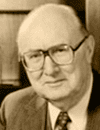
John F. Walvoord delves into 'The Mystery of the Translation of the Saints,' emphasizing the vital significance of this doctrine in the millennial debate. The revelation in 1 Corinthians 15:51-52 unveils the mystery of believers being transformed in a moment, either through resurrection or translati
John F. Walvoord delves into the significant impact of Augustine on theology, particularly in shaping Catholic and Protestant doctrines. Augustine's contributions to the areas of church doctrine, hamartiology, grace, and predestination, as well as his pivotal role in the early history of amillennial

In this sermon, the speaker emphasizes the importance of recognizing Jesus Christ as the head of the spiritual body, which is the church. He refers to Ephesians 4:15, which states that the truth should be thought of in love, leading to growth in Christ. The speaker also mentions Colossians 2, where
In this sermon, the speaker emphasizes the importance of recognizing Jesus Christ as the head of the church. He refers to Ephesians 4:15, which states that the church should grow in truth and love, with Christ as the head. The speaker also mentions Colossians 2, where the concept of Christ's love fo