
Church government is a vital aspect of ecclesiology, reflecting the biblical principles that guide the organization and leadership of the body of Christ. Scripture emphasizes the importance of order and structure within the church, as seen in 1 Corinthians 14:40, where Paul instructs that all things should be done decently and in order. The New Testament presents various models of church leadership, including the roles of elders and deacons, as outlined in 1 Timothy 3:1-13, which provides qualifications for those who aspire to leadership positions. Furthermore, Hebrews 13:17 encourages believers to obey their leaders and submit to their authority, recognizing that they keep watch over their souls. This divine order is not merely a human construct but a reflection of God's design for His people, as demonstrated in Acts 6:1-7, where the early church established a system to address needs while maintaining unity and focus on the ministry of the Word. The balance between authority and mutual accountability is crucial, as seen in Ephesians 4:11-13, where the roles of apostles, prophets, evangelists, pastors, and teachers are given for the equipping of the saints and the building up of the body of Christ. Ultimately, a biblical understanding of church government fosters a community that honors God and effectively fulfills the Great Commission.
A.T. Pierson preaches on questions regarding the eldership, emphasizing the importance of recognized Elders in every church, appointed by the Holy Ghost and confirmed by the possession of necessary qualifications. Believers are called to acknowledge and submit to these appointed leaders. Matters of
In this sermon, the speaker describes a simple service that took place in a forest. Around 36 people gathered at night, led by a brother named George Bastian. He read scriptures and spoke for three hours, followed by a quarter-hour prayer for authorities and persecutors. Afterward, they shared a com

In this sermon, the speaker addresses the question of whether a senior pastor or a team of elders should lead the church. The speaker acknowledges that there are both wise and unwise pastors who may rule in a manner contrary to the Scriptures. The speaker then reads from 1 Peter 5:1-3, which exhorts
Francis Turretin discusses the importance of identifying the true visible church by examining its marks, particularly focusing on the truth of doctrine and its conformity with the word of God through pure preaching and lawful administration of sacraments. He emphasizes the necessity of distinguishin
F.W. Grant delves into the issue of Nicolaitanism, highlighting the danger of clerisy and the rise of a spiritual caste within the Church. He emphasizes the departure from truth and the establishment of a worldly Church under Satan's influence, leading to the subjection of the laity by a privileged

Gareth Evans delves into the practical application of teachings on church government, ministries, finances, and goals, tracing the historical development of the church from its early days to the Reformation. He emphasizes the importance of recognizing and releasing leaders within the church to equip
G.H. Lang preaches about the importance of seeking unanimity in decision-making within the church, emphasizing the need to defer decisions until a unified mind and judgment are reached, as opposed to relying on majority voting. He argues that the scriptural method involves waiting for the Lord to re

Greg Herrick preaches on the essential nature of the church, emphasizing the importance of understanding the church based on what Scripture teaches rather than societal roles. The term 'ekkle„sia' is predominantly used in the New Testament to refer to the church, drawing from its usage in Classical
Greg Herrick delves into the study of ecclesiology, focusing on the church as the assembly of believers indwelt by the Spirit of God, exploring topics like the church's nature, metaphors used to describe it, its relationship to the kingdom of God and Israel, as well as its purpose in the world. The
H.J. Vine delves into the origins and composition of the assembly of God, emphasizing that it began with Christ giving the Spirit to His disciples at Pentecost. The assembly, or church of God, is united with Christ as its exalted Head, who secured eternal redemption through His work on the cross. Pa
Isaac Penington preaches a powerful sermon challenging the rulers, teachers, and people of England to reflect on the foundation of their church, questioning if it was truly built by consulting and waiting on the Spirit of God or if it was constructed based on man's wisdom and political reasons. He u
Isaac Penington preaches about the state of the church under the gospel, highlighting the apostasy from truth that has covered the Earth for ages. He emphasizes the importance of recognizing Christ in his suffering members and the eternal judgment based on how individuals treat them. Penington urges
Isaac Penington preaches about the importance of church-government being led by the Spirit of God, emphasizing the need for submission to His authority within the church. He clarifies that while Christ excluded corrupt human authority from His church, true church-government is necessary and should b
Isaac Penington preaches about the importance of spiritual order and government in the Church of Christ, emphasizing the need for appointed ministers to oversee, instruct, and build up the body of believers. He questions whether Christ gave power of government to his apostles and ministers to preach
J.C. Philpot addresses the question of whether the Church of England, despite its acknowledged benefits, does more harm than good to the nation. He criticizes the Church for hindering improvements like education by imposing its doctrines and exerting unfair influence through persecution and favoriti
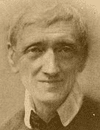
J.H. Newman preaches about the Union of Church and State, highlighting the concerns about attempts to disunite them, which could lead to unjust confiscation of Church property and sacrilegious acts towards God. He warns against blindly supporting the Union without understanding its implications, as
J.H. Newman preaches about the importance of understanding the historical orders of Ministers in Christ's Church, emphasizing the roles of Bishops, Priests, and Deacons. Through a conversation with a humble parishioner named Richard, the significance of apostolic succession in the ministry is explor
In this video, the speaker discusses the points made in the admonition, a document written by Edwin Sam in 1573. The admonition criticizes young men who are seeking to overthrow the ecclesiastical authority and establish a new platform for the church. The speaker also mentions the division within th
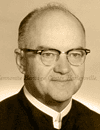
John Christian Wenger preaches about the Anabaptist belief in the church as the final goal of God's redemptive acts, viewing it as the Kingdom of the Messiah prophesied in the Old Testament. Anabaptists emphasized the church's freedom from state control, advocating for a free church where membership
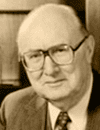
John F. Walvoord delves into the doctrine of the church, emphasizing its central role in the Christian faith. He explores the influence of amillennialism on Roman ecclesiology, tracing its historical development and impact on the church's nature and structure. Walvoord discusses how amillennialism s
Joseph John Gurney preaches about the Christian ministry, highlighting the fallacious claim of the priesthood by Rome, the importance of apostolic succession, and the true qualifier for the ministry being the Holy Spirit. He discusses the diversity of gifts within the church, the unity of believers

Keith Malcomson preaches on the structure and function of the Church as described by Paul in Ephesians and Corinthians. Paul emphasizes the Church as a Body, a Building, and a Bride, highlighting the importance of unity, order, and balance within the body. He explains how God appoints each member in
In this sermon, the speaker emphasizes the importance of understanding the reasons behind our actions in the church. He encourages the congregation to be able to give good reasons for what they do. The sermon then delves into the first mention of the church by Jesus in Matthew 16, specifically focus
In this sermon, the preacher discusses four figures that God gives us to understand the church: the bride, the flock, the body, and the building. The first figure emphasizes the importance of our love and obedience to Christ as the head of the church. The second figure highlights Christ as the sheph

Leonard Verduin discusses the historical conflict between two delineations of the Church: one emphasizing personal faith as the basis for a confessional Church, and the other focusing on including all in a given locality. The Restitutionists in Hesse believed in a Church of regenerate Christians bor
In this sermon, the speaker discusses the book of Romans and its presentation of salvation through Jesus Christ. He emphasizes the importance of having a reverent and faithful mindset, as well as fostering fellowship in the gospel. The speaker also mentions the need for humility, using the example o
Rev. Solomon Apple, a dedicated preacher, reflects on the history and evolution of the Christian Church, emphasizing the importance of sound principles, wisdom, and experience in guiding the church's progress. He discusses the challenges faced by the church in terms of organization, doctrine, and go
Stan Thompson challenges the traditional clergy-laity system by emphasizing the importance of following God's Word over man-made traditions and denominational teachings. He highlights the need for believers to recognize Christ as the only head of the Church and to rely on the leading of the Holy Spi

This sermon delves into the significance of the New Testament Assembly, emphasizing its importance to God and Jesus Christ. It addresses misconceptions about the church and highlights the need for active participation and understanding of its definition. The message explores the concept of the churc
This sermon discusses the wisdom of God in not having denominational headquarters, highlighting how it hinders government control and the spread of error. It emphasizes the importance of local churches being independent and representative of the universal church, composed of saints, elders, and deac
This sermon emphasizes the importance of the local church reflecting the spiritual basis and conduct of the universal church. Each church is meant to be autonomous, self-ruling, self-financing, and self-propagating, directly responsible to the Lord Jesus Christ. While independent, there is also a ca