
The biblical topic of "Faith vs. Law" is a central theme in Christian theology, particularly in the New Testament, where it is discussed in the context of salvation and the relationship between God's grace and human works. According to Romans 3:28, "a person is justified by faith apart from the works of the law," emphasizing the idea that faith in Jesus Christ is the primary means of salvation, rather than adherence to the law. This concept is further developed in Galatians 2:16, which states that "we know that a person is not justified by the works of the law but through faith in Jesus Christ," highlighting the sufficiency of faith for justification. As Ephesians 2:8-9 explains, "by grace you have been saved through faith... not a result of works," underscoring the notion that faith is a gift from God, rather than a product of human effort.

Major Ian Thomas emphasizes that the law was unable to provide salvation, as it merely highlighted humanity's sinfulness and need for redemption. He explains that God's covenant with Abraham foreshadowed the coming of Christ, who fulfilled the law's requirements through His sacrificial death and res

John Nelson Darby emphasizes the distinction between the law and the promise in his sermon on Galatians 3, explaining that while the Galatians were Christians, they mistakenly mixed the law with the gospel. He highlights that true peace comes from faith in Christ's completed work rather than from ad

John Ridley preaches on the profound imagery found in Revelation 6:12-17, emphasizing the great day of God's wrath and the cosmic upheaval that accompanies it. He reflects on the greatness of God and the significance of the Lamb, who bears the sins of humanity, contrasting the earthly powers that wi
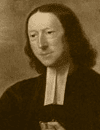
John Wesley preaches on the profound implications of Adam's fall, emphasizing that while sin entered the world through one man's disobedience, it also paved the way for God's grace and the opportunity for redemption through Jesus Christ. He argues that the fall, rather than being solely a source of
John Wesley explores the pervasive influence of the 'mystery of iniquity' that has infiltrated humanity since the fall of man, emphasizing that while God created man upright, sin has spread throughout the earth. He highlights the redemptive work of Christ as the antidote to this iniquity, yet notes

John Owen explores the infinite wisdom of God in the incarnation of Christ, emphasizing that this divine mystery is essential for the redemption of humanity. He highlights that God's wisdom is evident in the way He orchestrated the salvation of mankind through Christ, who embodies both divine and hu

C.H. Spurgeon emphasizes the universal nature of sin among God's elect, as all have strayed like sheep, each with their unique transgressions. He highlights the importance of personal confession, acknowledging that while we share in collective sin, each individual carries their own specific burdens

J.C. Ryle emphasizes the critical question of 'Where are your sins?' urging listeners to confront their sinfulness and the necessity of cleansing through Christ's blood. He asserts that all humans are inherently sinful and cannot cleanse their own sins, highlighting the importance of recognizing one

John Gill expounds on 1 Peter 1:20, emphasizing that Christ was foreordained by God not just in prescience but with a deep, affectionate love as the Mediator. This foreknowledge includes the divine choice of Christ as the sacrificial Lamb, set apart before the foundation of the world for the redempt
John Owen emphasizes the divine wisdom in the work of redemption through Christ, illustrating how humanity's fall stemmed from a desire for self-sufficiency and dominion, which led to ruin. He explains that Christ, being God, willingly took on the form of a servant to restore what was lost, demonstr