
The term "Messiah" originates from the Hebrew word "Mashiach," which means "anointed one." In the biblical context, it refers to individuals who were anointed for specific roles, such as kings, priests, and, in some cases, prophets. The anointing signified God's choice and empowerment for leadership and service. In the Old Testament, figures like Saul and David were considered messiahs in this sense (1 Samuel 10:1; 1 Samuel 16:13), as they were anointed by the prophet Samuel to be kings over Israel.However, the concept of Messiah evolved significantly, especially in prophetic literature. The Hebrew Scriptures contain various prophecies regarding a future anointed leader who would restore Israel and bring about a new era of peace and righteousness. For instance, Isaiah speaks of a coming figure who would bring justice and salvation (Isaiah 9:6-7; Isaiah 11:1-10). In Christian theology, Jesus of Nazareth is identified as the fulfillment of these messianic prophecies, referred to as Christ in Greek, which also means "anointed one" (Matthew 1:16-17; John 1:41). Thus, "Messiah" encompasses both a specific role of anointed leaders in the Old Testament and the ultimate fulfillment of God's promise through Jesus in the New Testament.

In this sermon, the speaker begins by quoting a verse from the Bible that declares the power and authority of the Lord. He then relates this verse to the current situation in Jerusalem, where the nations are gathering against it. The speaker mentions the condemnation of Zionism by the United Nations
In this sermon, the speaker addresses the omission of Isaiah 52 and 53, which is often referred to as the "Forbidden Chapter," from synagogue liturgy. The speaker reads from Isaiah 52 and 53, highlighting the description of a servant who will prosper and be highly exalted, but also suffer greatly.

In this sermon, the speaker reflects on a past conference where God was working in their life in a special way. They express joy in being present at the conference with fellow believers. The speaker then turns to Isaiah 52 and reads the last three verses, emphasizing the significance of Good Friday.

In this sermon, the preacher discusses the style of the preaching of the word of God, specifically focusing on the phrase "my God, my God, why has thou forsaken me?" and the triumphant declaration "it is finished." The preacher emphasizes that these phrases are not expanded upon in the epistles,

In this sermon, the speaker addresses the question of "how can this be?" when faced with the grip of a sinful habit. He emphasizes that God wants to set us free and birth something new in us. The speaker also highlights the importance of repentance and turning to Jesus as our Savior. He encourages

John Gill emphasizes that the Messiah was promised to Abraham, highlighting that through Abraham's seed, all nations would be blessed. He explains that this seed refers specifically to Jesus Christ, who fulfills the prophecy by offering redemption, justification, and peace to both Jews and Gentiles.

T. Austin-Sparks emphasizes that the 'Hope of Israel' is fundamentally centered on the Messiah, who is Jesus Christ. He explains that while Israel's hope was earthly and temporal, the Church's hope is spiritual and eternal, fulfilled in Christ's resurrection. Sparks highlights the transition from th
John Gill emphasizes the significance of Jesus' entrance into Jerusalem on an ass, fulfilling the prophecy of Zechariah 9:9. He argues that this event not only confirms Jesus as the Messiah but also highlights His roles as a king, a just savior, and a humble servant. Gill points out that the Jewish
T. Austin-Sparks emphasizes that the 'Hope of Israel' is centered on the Messiah, who is Jesus Christ, fulfilling the promises and expectations of the Old Testament. He explains that while Israel's hope was earthly and temporal, the Church's hope is spiritual and eternal, rooted in the resurrection
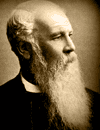
J.C. Ryle emphasizes the profound truth of John 3:16, illustrating that God's love extends to all humanity, not just the Jewish nation, and that the gift of His only begotten Son is a universal offer of salvation. He challenges the notion that God's love is limited to the elect, arguing instead that