
Vicarious substitution is a profound theological concept that underscores the sacrificial nature of Christ's atonement for humanity's sins. Central to this doctrine is the belief that Jesus, the sinless Lamb of God, took upon Himself the punishment that we rightfully deserve, as articulated in Isaiah 53:5, which states, "But he was pierced for our transgressions, he was crushed for our iniquities; the punishment that brought us peace was on him, and by his wounds we are healed." This substitutionary sacrifice is further affirmed in 2 Corinthians 5:21, where Paul writes, "God made him who had no sin to be sin for us, so that in him we might become the righteousness of God." The concept of vicarious substitution not only highlights the depth of God's love but also emphasizes the grace extended to believers, as seen in Romans 5:8, which declares, "But God demonstrates his own love for us in this: While we were still sinners, Christ died for us." Through this act, believers are offered reconciliation with God, a theme echoed in Colossians 1:20. As we reflect on the implications of vicarious substitution, we are reminded of the immense cost of our salvation and the call to live in response to such grace, as illustrated in Matthew 16:24, where Jesus invites us to take up our cross and follow Him.
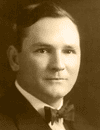
In this sermon, Dr. Bob Jones Sr. shares a story about a little orphan boy in a country school who willingly took the punishment of 10 lashes without his coat for another student. Dr. Jones uses this story to illustrate the concept of vicarious substitution, explaining that Jesus Christ took our pla