
 “I need men. Consecrated men, men willing to live a lonely life for Christ,
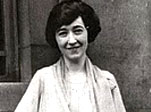
Isobel’s heart was moved as she listened to J.O. Fraser’s plea for workers to come and share the gospel with the Lisu people of China. She sat attentively as she learned of the Lisu who had not heard of the living God who loved them and Jesus who could save them from the judgment of their sin. In fact, the Lisu didn’t even have a word for forgiveness, mercy, repent, compassion, or justice in their language. On the other hand, there were hundreds of words to describe the most efficient way to skin a person alive. Living in fear of spirits, the Lisu were extremely superstitious, using mediums to contact the spirits and practicing witchcraft to appease them. Brokenhearted for these people she had never met, she told the Lord, “I’m not a man- but I’d go! Oh, I’d go!”
Only a few years prior, Isobel Miller (often called Belle) would never have dreamed of leaving the comforts of home to share Christ with those who had not heard. It was the Roaring Twenties, and Belle was enjoying every minute of it. A sweet and popular honor student at the University of British Colombia, she was making a name for herself both in the theater and through dance. Belle was born on December 17th, 1901 in Toronto Canada. Although both her parents were Christians, her dad even being a lay Presbyterian preacher, Belle was a self-declared agnostic after being patronized publicly by one of her professors for believing the creation story. After an emotional breakup with a young man whom she had once hoped to marry, Belle began to spiral into depression and recognize that the world could not bring her joy. One night, Belle contemplated suicide, but instead cried out to God to give her peace. It was through this that she began to turn back to the Christian faith and came to know Jesus as her Lord and mature in her faith.
Now, in 1924, her encounter with Fraser had left her unable to return to the ordinary. She explained to her parents her desire to reach the Lisu, only to have them regard this desire as fanatical, and even selfish. “Over my dead body!” cried her mother. Her mother, the president of the Women’s Missionary Society for many years, was not opposed to missionaries- just opposed to her daughter being a missionary. Her parents had done all they could to give their daughter the finest education and provide her with the greatest comforts, and yet now she was throwing it all away. Not only did they view this as ungrateful, but Belle was currently the only breadwinner for the family, her brother being unemployed and her dad having lost his life savings in a bad business venture. Unexpectedly Belle lost her mother during an operation, but learned that the night before her death; her mother had told a friend that Belle had “chosen the best way.”
Belle continued in obedience to what she knew God had called her. She packed her bags and headed to Moody Bible Institute in Chicago. While she was there, a young man named John Kuhn caught her attention. They were opposites to be certain. Belle was passionate and impulsive, and John was prudent and full of common sense. Yet they both had the same vision and heart for China. In 1926, John left for China with China Inland Mission (CIM), but they continued to write each other for 2 years while Belle stayed in Canada as God prepared her for the foreign field. In 1928, after CIM’s requested 2 years of new missionaries staying single, Belle headed to China to be married to John.
After arriving in China, John and Belle first settled down in Chengchiang for the first couple years of their marriage, although “settling” may not be the appropriate word. Belle probably would have described them as quite uncomfortable. The Lord taught Belle just what dying to herself looked like. Unaccustomed to the diet, the customs, the lack of personal space, and all the while adjusting to the life of a newlywed, Belle was faced with the cost of leaving the comforts of home. She was elated that she was able to share the gospel with the first visitors into her home, but sat horrified when one of the Chinese women blew her nose onto Belle’s nice quilt, while another allowed her child to spit up all over her nice rug. After choking down her frustration, she immediately realized that her valued belongs needed to go, or else she was tempted to value her possessions over the people themselves. Although constantly struggling to die to self, as Belle and John would travel in the villages and preach, she would watch the Chinese hearing the gospel for the first time and remember it was all worth it.
The Kuhn’s then moved to Tali, Yunnan from 1930-1932 and then to Yongping, Yunnan from 1932-1934 under the mentorship of J.O. Fraser. They continued to do itinerary work sharing the gospel as well as training new missionaries to go into unevangelized areas. In 1934, the Kuhn’s finally arrived in Lisuland; 10 years after Belle first had her heart set to go to the Lisu. They learned that during the rainy season, the Lisu villages practically came to a stand still. Belle took advantage of this time and set up the Rainy Season Bible School, teaching the gospel and the very basics of Christianity to the Lisu. As people began coming to know Christ, she trained them and sent them out to surrounding Lisu villages that had not yet heard the gospel. Thanks to the Rainy Season Bible School, the Lisu Christians were also missions minded crossing into other tribes with which they had once warred in order to share the gospel
Although there were certainly difficult times, Isobel saw incredible fruit amongst the Lisu people. In 1950, during the communist takeover of China, Belle and her family were forced to flee over the snowy mountainous pass into Burma. At the time of their escape, 16 years after the Kuhn’s began working among the Lisu, 3,400 of the 18,000 Lisu were believers and 7 other tribes had been evangelized directly by Lisu missionaries. Today, there are 200,000 Lisu Christians- part of the legacy left by Isobel and other missionaries laboring among the Lisu.
After leaving China at the age of 50, Isobel had a decision to make, whether or not to continue to work among the Lisu that were living in Northern Thailand. As she wrestled with the decision, she cried out “Lord, I’m tired! I’m 50. In the past 20 years I’ve seen wars, I’ve been separate for months and even years from my husband and children, I’ve been sick to the point of death. Going to Thailand would mean learning a new language and a new place and a new culture. I want to sit in a rocking chair on a porch somewhere and rest!”
She felt the Lord gently respond, “Belle, do you really choose ease?” That was enough to get Isobel back to the Lisu, where she labored the rest of her life.
Isobel’s life is a reminder that God has proven Himself sufficient for those who have gone before us in reaching the nations with the Gospel of Christ. Isobel was used by the Lord not because she was or flawless or better trained or less apt to selfishness, but because she considered Him worthy of her life and responded in precious obedience.
Isobel Kuhn: Canadian Girl who felt God’s call to Lisu people of China by Lois Hoadley Dick
Books
Autobiography Series
- By Searching: My Journey Through Doubt into Faith
- In the Arena
- Whom God Has Joined
Second-Mile People
Nests Above the Abyss
Ascent to the Tribes: Pioneering in North Thailand
 (From By Searching)
ON TO THE MISTY FLATS
To every man there openeth
A way, and ways, and a way.
And the high soul climbs the high way,
And the low soul gropes the low.
And in between on the misty flats
The rest drift to and fro.
But to every man there openeth
A high way and a low—
And every man decideth the way his soul shall go.
—JOHN OXENHAM
“Of course no one in this enlightened age believes any more in the myths of Genesis and—” But here Dr. Sedgewick paused in his lecture as if a second thought had occurred. With a twinkle in his eye, he said, “Well, maybe I had better test it out, before being so dogmatic.” Facing the large freshman class, who were hanging on his words, and pulling his face into gravity, he asked: “Is there anyone here who believes there is a Heaven and a Hell? Who believes that the story of Genesis is true? Please raise your hand.” He waited for a response.
Up went my hand as bravely as I could muster courage. I also looked around to see if I had a comrade in my stand. Only one other hand was up, in all that big group of perhaps a hundred students. Dr. Sedgewick smiled, then, as if sympathetic with our embarrassment, he conceded: “Oh, you just believe that because your papa and mama told you so.” He then proceeded with his lecture, assuming once and for all that no thinking human being believed the Bible any more.
Brought up in an earnest Presbyterian home (my grandfather was a Presbyterian minister and my father an ardent lay preacher) I had been carefully coached in the refutations of modernism before my parents had allowed me to enter the university. If it had been a case of arguing the claims of modernism versus fundamentalism, I do not think I would have been shattered in my faith. But there was no argument. There was just the pitying sneer, “Oh, you just believe that because your papa and your mama told you so,” and then the confident assumption that no persons nowadays who thought for themselves, who were scientific in their approach to life, believed that old story any more.
On the way home from class I faced the charge honestly. Why did I believe the Bible? The Genesis explanation of life’s origin? Why did I believe in Heaven and Hell?
It was because I had been taught it by my parents and church from the hour I could understand anything. Was that reason enough for accepting it? No, I agreed with Dr. Sedgewick that it was not a sufficient basis to build my life upon. We had experienced remarkable answers to prayer in our family life—didn’t that prove the existence of God? But my psychology course taught that mind had a powerful effect over matter. If I had not been so gullible, maybe I could have seen a natural explanation. Our twentieth century believed only when there was a test and a proof. We were scientific in our investigations; we did not swallow the superstitions of our ancestors just because they were handed to us.
Dr. Sedgewick, Professor of the English Department in our university, was an ardent follower of Matthew Arnold’s “sweetness and light” philosophy, and of Thomas Hardy’s materialism. Yet he was so apparently patient and kind toward us whom he felt were still bound by our parents’ old-fashioned thinking that he won our affection and respect.
At the end of my walk home, I came to the conclusion that I would henceforth accept no theories of life which I had not proved personally. And, quite ignorant of where that attitude would lead me, I had unconsciously stepped off the High Way where man walks with his face lifted Godward and the pure, piney scents of the Heights call him upward, on to The Misty Flats. The in-between level place of easy-going—nothing very good attempted, yet nothing bad either—where men walk in the mist, telling each other that no one can see these things clearly. The Misty Flats where the in-betweeners drift to and fro—life has no end but amusement and no purpose—where the herd drift with the strongest pull and there is no reason for opposing anything. Therefore they had a kind of peace and a mutual link which they call tolerance.
I did not know that I had stepped down to The Misty Flats. I was just conscious of a sudden pleasant freedom from old duties. If there was no God, why bother to go to church on Sunday, for instance? Why not use Sunday to catch up on sleep, so that one could dance half the night away several times during the week?
Again, if the Bible was but a record of myths and old-fashioned ideas, why read it every morning? That took time and it was much easier to sleep until the very last moment, getting up just in time for the first class at college. Prayer, too, became silly—talking to someone who maybe did not exist.
I would not call myself an atheist because, well, there were those childhood answers to prayer still to be accounted for. But I called myself an agnostic—I frankly did not know if there was a God or not. It was a popular thing to be on The Misty Flats: you had plenty of company. And one was respected as being modern and intelligent to question the old faiths. Life drifted along so pleasantly—for a while.
My home training still had an effect upon me. Jesus Christ, now seen blurred in the mists which denied His Godhead, is an acknowledged historical character. And His name was still an ointment poured forth to me. He was like a perfume which haunts and calls so that one stops, lifts one’s head and drinks it in wistfully. His name was the sweetest melody I knew and it never failed to stir my heart, even though I had ceased to seek Him. His purity and holiness made me hate besmirching things.
And all this because my father and my mother had taught me so.
So when I broke with the old religious habits and frankly went into the world, I was still choosey in what I did. I never smoked. The tainted breath and stained fingers or teeth of the smoker revolted me. I told myself I was too dainty for such doings.
Neither did I drink. My father, brokenhearted at my callous turning-of-the-back on all my home training, still warned me as a medical man what drink could do to a girl.
“Drink affects men and women biologically, and under its influence girls can be led into sin that they could never consent to when in possession of their senses. Dr. Hall and I have such come to us for consultation all the time. They never meant to, but there they are. Keep away from liquor and you can keep yourself pure, perhaps.” So I did not drink. Also I had signed the pledge when twelve years old, and a certain whimsical loyalty to my childhood self kept me from breaking it.
So amidst the gay group at the university I was considered a good girl, and even a Christian! But I myself knew that I wasn’t.
In my studies I took the honors course in English Language and Literature which brought me much under the influence of Dr. Sedgewick. But in my extracurricular activities I was mostly interested in the Players Club, the amateur theatrical club of the university. Apparently I had a gift for acting comedy parts, and in my freshman year I won life-membership in the Players Club, not usually attained by a first-year student. The staff patron of our theatricals was Professor H. G. C. Wood, also a member of the English Faculty. He was a believer in God and Christ, and not an atheist like Dr. Sedgewick, and his friendship helped to keep me from extremes. But the theater was his hobby and soon became mine. Urgently my mother pleaded with me to attend the Young Women’s Christian Association. I went several times, but was frankly bored, so dropped it. I loved the theater and I liked to dance and these activities occupied my spare time. In fact, our Varsity 1922 yearbook has, as comment opposite my picture: “And oh the tilt of her heels when she dances!” No shadow of the missionary there.
In my second year I was elected to be Secretary of the Student Council, at that time the highest position to which a woman student could be elected. I met the leading young people of the university and became secretly engaged to Ben, one of the star Rugby and basketball players.
Ben was a returned soldier from World War I, several years older than I, not handsome, but six feet two or three in height. He came of a good Baptist family and my mother encouraged our friendship. He even took me to his church on Sunday nights! It made a nice inexpensive date, for Ben did not have much money and when he asked me to marry him he said that our engagement must be kept secret lest his “old man” be angry with him for getting involved before he graduated. I insisted that my parents be told, but his never were. We went together for nearly two years, and my path was perceptibly downgrade.
CHAPTER TWO
SLIPPERY WAYS IN DARKNESS
Wherefore their way shall be unto them as slippery ways in the darkness: they shall be driven on, and fall therein: for I will bring evil upon them, even the year of their visitation, saith the Lord.
After the stretched muscles of climbing, to find oneself on the level is very relaxing and pleasant. Therefore The Misty Flats are attractive to foot, eye, and palate at the beginning. There is no hint that the pretty mist will gradually close in and bring darkness. There is no suggestion amid the gay chatter of the populous throng that there are slippery places, which are going to bring hurt. In the boasted freedom of drifting whither you will, there is certainly no sign that one is being driven on, as Jeremiah so shrewdly perceived was the reality. And above all, there is never a hint that the end of The Flats is the visitation of the Lord and the judgment of sin. Yet all that is the real truth.
In my senior year there came a day when my college chum, Cora, shook me to the foundations with a sentence or so. “Isobel,” she said, “I think I should tell you something, even though it may hurt. Everybody but you knows that Ben is not loyal to you. He is taking Reba out behind your back.”
I turned a stunned face upon her, and her eyes filled with tears of sympathy, but with true friendship she went on: “You remember when you were ill and could not go to his fraternity dance?”
“Yes,” I replied, “he took Reba in my place that night. He asked me if I would mind, and I said no.”
“Well, that was the beginning of it, I guess. They’ve been seen together a lot. People are talking and I can’t bear that you should not know. I don’t think he’s worth breaking your heart over, Isobel,” she said earnestly.
But it did break my heart. It was difficult to believe and yet I knew he had not been so attentive of late. My father had spoken to me about it. “You have let Ben get too sure of you, Baby,” he had said, using his tender pet name for me, the youngest in the family. “Show a man all the love you have after you are married, but keep it in reserve while you are just engaged. The elemental male likes to fight for a mate. What is the use of chasing a streetcar after you’ve caught it?”
So it was not all Ben’s fault. I had been inexperienced—I was still only in my teens. With the promise to be his wife I had truly given my heart to Ben and love struggled hard with “maybe if I …” and “perhaps I could still win him back.” But it was Ben himself who made it hopeless.
I met him one morning at the entrance of the university. No one else was around, so I charged him with taking Reba out behind my back. I wanted to hear from his own lips that it was true, for love rebelled at believing it. He drew himself up to the full stature of his six feet two inches, and I never forgot the curl of his lip as he said, “Isobel, you’re a softy. You don’t suppose, do you, that after we are married, I’m not going to take other women out sometimes?”
“Then we part,” I had whispered hoarsely, dazed as if stricken. I was on my way home from a class and have never forgotten the dull agony of that walk. I knew I could never marry a man with such standards. That was the trouble. They were just the standards of The Misty Flats. But I had known the Christ and I could not be satisfied with less than the ideals He had set before me.
So I found myself in the slippery places of darkness. Pride wounded me, love wounded me, and sleep departed from me. The English course I was taking entailed more work than a mere passing degree, and I needed rest during sleep hours, but could not sleep.
My mother was distressed that I should break with Ben and kept saying, “If you would only take my advice.” But I could not bear to discuss it with anyone. I discussed it with myself night and day. My father was my greatest comfort. He knew enough to be silent and just love me. He even sensed that I was not sleeping. One night when all the house had been asleep for hours and I was still tossing, I heard him come softly into my room. He knelt down beside my bed and prayed God to help me, but it only irritated me. “Thanks, Dad,” I said wearily. “I know you mean it well, but praying doesn’t go beyond the ceiling, you know.” I never forgot the groan with which he turned away from my agnosticism, and left the room.
The climax came just before Christmas. My birthday is December 17 and I was to be twenty years old, but I do not remember if it was before or after that date. The post office clock on Main Street had just struck two, and I was still tense and tossing. I was desperate. I knew I’d be ill in the morning if I did not get to sleep. Then came the Tempter.
“Of what use is life?” he whispered. “Ben is only an average fellow. Probably all men are just like him. You’ll never find anyone to love you like you want to be loved—your ideal is too high. And you’d never be happy with a lower ideal of marriage. Why go on with life? It has no purpose, only suffering. This would be a good time to slip out. There is that bottle in the bathroom marked Poison. A good long drink and your troubles are over.” A good idea. The only sensible solution. I jumped out of bed and started for the bathroom. Slippery ways in the darkness: they shall be driven on and fall therein.
My hand was on the door knob when a deep groan, twice repeated, broke the silence of the dark. It was my father, moaning in his sleep in the next room. I was not afraid, for I recognized Father’s tones, but I was startled into remembrance of him. I stood with my hand on the knob debating. If I committed suicide, Daddy would think I had gone to Hell. Of course, that would not make a place called Hell, but how terrible for Daddy to think so. He had been such a dear, kind father to me all my life. Dare I make him such a dastardly return? No, I couldn’t be so mean and selfish. In agony I turned and sat down on the edge of my bed and faced the darkest moment of my life. I didn’t want to live and I couldn’t die! Oh the black despair of The Misty Flats! How little did I know of the golden sunshine pouring on the High Way above them! What a lot of heartache I might have been saved if I had only been told that God had already laid His hand on one who was to be a dear husband to me with the same ideals and the same passion for God’s highest purposes! But it was necessary that first I drink to the dregs the emptiness of the promises held out by The Misty Flats: only then could I be freed from their lure and subtle call.
And now a strange thing happened. That day I had been studying Matthew Arnold’s essay on The Study of Poetry. (You remember, it was Sedgewick, a disciple of Arnold, who had first pushed me off the High Way?) In that essay he gives various quotations from the classics as touchstones of perfect poetry. One such was from Dante and ran: In la sua volontade ? nostra pace. From my knowledge of Latin I had guessed the meaning: In His will is our peace. Now that sentence wrote itself across the dark of my bedroom. Dante believed in God. What if there were a God, after all? If so, I certainly had not been in His will. Maybe that was why I had no peace? An idea struck me. No one was watching to see if I were a fool or not. Sitting there on my bed’s edge, I raised both hands heavenward. “God, if there be a God,” I whispered, for I was not going to believe in what did not exist just to get a mental opiate, “if You will prove to me that You are, and if You will give me peace, I will give You my whole life. I’ll do anything You ask me to do, go where You send me, obey You all my days.” Then I climbed into bed and pulled the blankets over me.
CHAPTER THREE
WHAT YOU SHOULD NOT IMITATE
The next thing I knew, it was morning and the golden sunshine of a December day in Vancouver was pouring into my bedroom. I lay there drowsily enjoying it when suddenly a thought startled me into full consciousness. I had been sleeping like a baby—how did it happen? Such deep relaxed slumber had not touched my pillow for many a long day. What had brought it? Thought traced itself back to the experience of the night before. I had made a bargain with God. I had asked Him for peace and—peace had come. Oh yes, answered Reason; but that was easily explainable apart from God. That was no proof that God existed. It was just the effect of mind over matter. I had committed my troubles to an imaginary being and that was why body and mind quietened down.
Restlessly I threw off the bedclothes and sat on the edge of my bed. I was not going to use religion as an opiate. I was going to be realistic or nothing—as a matter of fact, I believe I was born with “a flair for reality.” But as I pondered, the thought persisted: “You made a bargain last night. The Other Side kept His part. There was no stipulation as to how peace should come, and it came. Nobody knows about it and nobody will know, if this should prove to be foolishness. Why not continue your part of the agreement and see?”
But what was my part? To yield my whole life if He proved Himself. And in the meantime, why not try to seek Him?
Seek God? Where?
Can a man by searching find out God? Zophar had questioned Job, obviously not believing it possible. Job had tried to answer by pointing to God in His creative works. But the twentieth century had another theory for the origin of the earth.
Where does one go to search for God? Even as I asked myself that question, a picture from memory floated before me. It was at the Guelph conference of 1921 when the Student Christian Movement was formed. A young man was on his feet giving his testimony. “While I was interned in Germany as a prisoner of war,” he said, “I got hold of a Bible and started to read it. I found God through reading His Word.”
I had been a university delegate for the Y.W.C.A. to that convention, but had apparently been unaffected by it. I knew there was a conflict between the modernist students and the fundamentalists—this young ex-soldier was earnest for the old beliefs. I was still an agnostic and weary of religious arguments. I let them talk and did not let it enter my heart. But this young fellow was aglow with something real: he was the outstanding memory of that conference to me, yet I did not even know his name. Now in my own hour of need I could see him standing there, radiant, affirming he had found God. And he had found Him through the Christ of the New Testament.
Well, I had a Bible. There it was on my bookshelf, unused, a bit dusty, but beautiful and new—a gift from my father when I graduated from high school. I pulled it down and looked at it. Modernists said the Pentateuch was not written by Moses; this was questioned, that was questioned. Was there anything that wasn’t questioned? Yes—the historicity of Jesus Christ is beyond doubt. And the four Gospels are accepted as a more or less authentic record of His teachings, as authoritative as Plato’s were of Socrates, at least.
So I decided to search for God through Jesus Christ, to read the Gospels only, to underline everything and anything that Jesus said to do and try honestly to do them. Jesus prayed, so I would begin to try praying again—cautiously, of course, and not really assuming that it went any higher than the ceiling. With that decided, I arose and dressed for another day’s study at the University of British Columbia.
And now began a life at two levels: an outer level of study, worldly gaiety and pride, and an inner level of watching, seeking after God—if there was a God (always I added that).
God is not a puppet. Man may not pull strings and expect Him to perform—not even doctrinally correct strings, such as Balaam tried to pull. God is not man’s servant, that a puny atheist may shout a challenge and He is bound to respond. Neither is God a genie, that if man is lucky enough to find the right combination of words, He will suddenly pop out and reveal Himself. God is our Creator, all powerful and dwelling in light unapproachable. He demands reverence. But He is also willing to be Father to such as come to Him by His ordained road, Jesus Christ, and as a Father He tenderly stoops to the immaturity of the babe in Christ. This is the only explanation I have to offer for the following facts. God answered prayers which were unworthy even to have been brought before His presence. If I prayed those same prayers today He wouldnot answer them. He responded then, ignoring the selfish vanity of the request, simply because of the honest seeking at the base. He knew I meant it when I said I would give Him my whole life. The Father seeketh such to worship Him—in spirit and in truth.
For some three months after my “bargain” I experienced nothing convincing. I read the Gospels and prayed in private, but did not go to church or show any outward interest in religion. Then one day I was invited to a private dance at the home of a girl friend, Jill. Jill had moved away to a different part of town and probably did not know that I had broken with Ben, but as she did not inquire as to whether or not I wanted him to be my partner, I had no opportunity to tell her. She usually gave a dance once a season and invited Ben only because he went with me, her friend. She usually just invited him and left it to him to arrange for my escort to and from her house. So as I prepared to go, I wondered if he would be there.
But on my arrival he wasn’t there, and I prepared to enjoy the evening thoroughly, for it was a small home dance with just our crowd, and I loved my friends dearly. Jill’s new house was center-halled, so that for dancing we had three spaces—parlor, hall, and dining room. I was dancing with Les (Cora’s friend and long since her dear husband) when it happened. We had circled out into the hall when the door-bell rang. Jill opened the door and I beheld Ben, Reba with him, and he was ushering her into the house! I could hardly believe my eyes that he would have dared to do such a thing—it was like slapping my face publicly. And the dance was so small that there was no avoiding constant contact. I became completely unnerved. Trembling from head to foot, I began to walk all over Les’s feet. Long hours of study, late hours of dancing, unhappy broken sleep had wrecked my nerves. I was undone—there was simply no escape from the humiliating fact. Les’s look of respectful compassion did not help my chagrin. I could not fool Les about the cause of my agony and the knowledge was too much for my pride.
“Les, I don’t feel well—will you please excuse me?” I said, and, stopping at the foot of the hall staircase, I fled up to the bedroom assigned as our dressing room. Up and down the floor I paced in a rage at myself, trying to use pride to whip my trembling body into control. It was perfectly useless—I shook like an aspen leaf.
Suddenly I remembered I was trying to prove if there was a God. With almost a sneer at such a ridiculous thing, I nevertheless prayed, “O God, if You are, please give me p——” but I did not have time to finish the sentence. Something like an electric current struck me, shot me through and I tingled all over. It had come from above, and from outside myself. But it left me completely poised and quiet. Incredulous, I stretched out my hand—it was steady and firm. Without stopping to say “Thank You,” and marveling inwardly, I turned and ran down the stairs. That same dance number was still on and Les was still standing at the foot of the staircase where I had left him.
“I’m all right now, Les,” I said gaily. “Let’s finish.” Which we did. A wonderful exultation, a feeling as if I had new life pulsed through me and continued all evening. Ben asked for a dance and made no effort to conceal his admiration. “You are beautiful tonight,” he whispered, but I gave an evasive answer. Our ideals were too different: I must not let my affections get involved again.
The evening was a triumph of gratified pride and vanity for me. But when I was alone in my bedroom, emotional reaction set in. Ben was a superb dancer, and my longing to float through life in perfect rhythm together with him would not be challenged by common sense. Sleep again departed from me and I tossed in agony until morning.
But the one fact stood out. I had cried to God for help, my lips twisted in sardonic unbelief that He even existed, but He had answered swiftly. This was no instance of mind acting upon matter, for the mind had held no faith at all. But help had come from the outside entirely. I was now convinced that some Force outside me, intelligent, loving, and powerful, was Up There trying to get in touch with me. Never again did I pray if Thou art. And now I wanted to know—how much could I ask of Him? Did He always answer prayer in Jesus’ name? Morning and night I now prayed in faith. Those prayers were still all selfish and this is the part of my story where I do not want any young readers to try to imitate me.
Follow me in my pursuit of God—yes.
Like me, come to Him by way of the Christ of Calvary—yes.
Seek for the revelation of that Christ in the Bible—yes. But don’t imitate my flounderings. I was pig-headed now in the matter of refusing all human advice, and my own level of living was so low that God could not meet me on a higher one.
I wondered if God could answer seemingly impossible requests: for instance—would He get me invitations to certain balls and dances? It was our senior year and almost all our “gang” were paired off now, either engaged or going steady. There was no one within the circle of my close acquaintances who would be free to invite me unless I hinted—which I did not intend to do, ever. God had answered prayer wonderfully, causing my incredulity to marvel at His power to do it. I will tell of one instance.
A neighboring university had sent their football team to play ours and a thé dansant was to be given to the two teams after the match. It was purposely a small affair in honor of the teams, just the players and their girl friends and such team officers as the coach and manager. Now Ben was one of the star players and I wanted to go. He had barged in on my party, and now I wanted to go to this affair held in his honor to show that I was not dependent on him for a good time. Not only was I moved by a thoroughly low and fleshly reason, but also it was hopeless to expect an invitation to such an exclusive party. Could God do it? I challenged Him.
At last the day before the match arrived. No one would ask me now—it would be an insult for any man to ask a girl at such a late hour, sure proof that she was only second or third choice.
That last afternoon a fellow student and I had arranged a rehearsal of a theatrical scene in which he and I were to act alone. George was a good friend of mine and engaged to a girl called Martha. He also happened to be on the manager’s staff of the football team, but this I did not know then. He had come to my house for the rehearsal and after it was over and he reached for his hat to leave, he said, “Well, Isobel, see you at the thé dansant tomorrow afternoon after the match.” Then I saw he did not know I had broken with Ben.
“No, I don’t think you will, George,” I said slowly.
He whirled around and shot me a keen look. Then, gentleman that he was, he drew himself up and said with fine courtesy, “Isobel, last night Martha was called out of town unexpectedly. I thought I was going to have to ‘go stag’ to thé dansant. May I have the pleasure of your company? I’ll explain to Martha—I’m sure she won’t mind.”
It was just as simple as that. I was almost intoxicated with the wonder of it, and again the afternoon was a great triumph for me. I had more partners seeking me than there were dances, while Reba was more than once a wallflower. In fact, while dancing with me, Ben had to excuse himself to go and find her a partner!
Now, do I really believe that God was responsible for that? I am sure God gave it to me. Moreover, by piling on the triumphs He taught me a lesson I never forgot. I learned that pride and gratified vanity could never bring me peace or happiness. Underneath the gay triumphant surface I was miserable. My heart was often like lead even while my lips were chattering merry nonsense. This kind of life would never satisfy me. I grew more and more unhappy and disillusioned. And that was what God wanted. It was as if He said, “If this is what you think you want, dear, have some more!” And He stuffed the froth of life down me. Yet every time He got me an invitation when humanly speaking it seemed impossible, He proved to me again that there was nothing He could not do for me.
All during this time, my parents knew nothing of my inward seekings. They sensed a change was going on, but I still refused to go to church with them and usually spent Sunday trying to catch up on the sleep I had lost at dances during the week! But there may have been a softening visible, for Mother began again to try to help me.
“Isobel, I want you to come with me to hear Professor Ellis. The meeting is just a Bible class, not held in a church, but in a classroom of the Vancouver Bible School. Just to please your mother. Won’t you do a little thing like this to please me? I don’t want to go alone.”
And so I went.
I did not know that anyone else in that room knew me. In fact, I did not look at the audience, for I had ceased to be interested in human beings. But the speaker held my attention. Professor Ellis was a cultured, educated Christian gentleman. I liked his quiet, refined manner of speech. He was speaking that day on the Temptation of Christ, and as he went on to give his message, he also very frankly pointed out the liberal interpretation of that passage. Without any belligerent dogmatism, he courteously but deftly refuted their arguments. I saw clearly that here was a scholar who knew both sides of the argument. Here was a real gentleman who would never stoop to nasty remarks about an opponent. And, watching the quiet radiance of his face, I instinctively knew that here was a man who had personal experience with God. I decided that this was the preacher for me—I would come again.
Seated behind me was another Christian gentleman. White-headed, shy and reserved, he was known to me only as Mr. Wright, a friend of my father’s. I forget if it was that first time I went to Professor Ellis’ Bible class, or on a succeeding occasion, but at the close of the meeting he leaned forward and spoke to me.
“Isobel, I’m glad to see you here,” he said, his eyes flooded with tears. “I’ve been praying for you for some seven years.”
I was stunned. It was about seven years since I had decided to dance and go in for worldly things against my father’s pleadings. The yearning in Christ which lit up Mr. Wright’s face stirred me to the depths, for my soul still knew periods of agony. With eyes as flooded as his own, I tried to murmur “Thank you,” then escaped quickly from the building.
But every Sunday saw me back in that afternoon service, and weekly I was fed and nourished in the truth of God’s Word. Professor Ellis’ scholarship and his expository preaching combined with his gentle culture had won my full confidence and I was willing to learn from him.
And so, though my head was still befogged by the Mists of The Flats, my feet were once more planted on the High Way, prepared to climb, and my face steadfastly turned Godward.
THE QUESTION THAT PIERCED THE MIST
“Canst thou by searching find out God?"—Job 11:7
THE ANSWER
Ye shall seek me, and find me, when ye shall search for me with all your heart.—Jeremiah 29:13
Jesus said unto him, I am the way, the truth, and the life; no man cometh unto the Father, but by me.—John 14:6
Search the Scriptures … they are they which testify of me.—John 5:39
If any man will do his will, he shall know of the doctrine, whether it be of God.—John 7:17
It was the spring of 1928 when the China Director of the China Inland Mission, the Rev. George Gibb, paid a visit to Vancouver. I was called in to meet him and well remember the searching look of concern he gave me. “My dear girl,” he said, “you look worn out. Are you well enough to go to China?”
“Oh, yes. Physically I am sound. But I am very tired,” I admitted. Our home on the north side was so far away from the evening church appointments. Late at night the ferry did not run so frequently, and if I missed one there was a long wait before the next. Often it was midnight before I got to bed, and six o’clock was my rising hour if I was to have a quiet time, get the house chores done, and catch the nine o’clock ferry.
But I think most of it was emotional fatigue. Mentally I knew the way of victory. I had read of Hudson Taylor’s experience, The Exchanged Life, when he rolled all his burdens on the Lord. I had heard Keswick teaching expounded at The Firs and had seen it lived in lives there. But how to transmute it into experience was beyond me. I secretly worried about things. My father’s Micawber-like attitude toward business appalled me. Where would he end up? Now I knew what my mother’s secret trial had been and how much we all owed to her sound judgment and carefulness.
I worried about my own failure at the Corner Club. I did not have the gift of evangelism. Young lives were constantly being cleansed, rededicated and built up in Him, but I did not see that. I looked just for souls to take the initial step of salvation. Pentecostal girls were urging me to seek the baptism of the Spirit. One of them was a gifted evangelist, a golden-haired, angel-faced girl, and I fell into the snare of comparing myself with others. Peggy had something I didn’t. Was it really the speaking in tongues? Inwardly I fretted. But the Lord was carefully holding me. I asked Peggy and Dorothy—another girl who kept at me—to describe what happened when they were “filled with the Spirit.” Their most vivid descriptions were no more than what I myself had often experienced when alone with the Lord and the awareness of His presence would flood in. I had never spoken in tongues, but I seemed to have had everything else they claimed to have experienced. This kept me from going off into doctrinal extremes.
I always felt there was a peril in seeking just an experience from the Lord. The temptation is to think the experience has sanctified. It hasn’t. These uplifting times in His presence, provings of His faithful care, enrich us, add to our joy, but they do not sanctify us. They do not make us stronger Christians. They do not make us holier than our fellows, as I was to learn to my shame. But they do make us richer in our knowledge of Him, and they give us joy that addeth no sorrow to it.
The only way to be holy is daily to hand over to the Holy Spirit what Dr. Tozer calls “the hyphenated sins of the human spirit … self-righteousness, self-pity, self-confidence, self-admiration, self-love, and a host of others like them … which can be removed only in spiritual experience, never by mere instruction. As well try to instruct leprosy out of our system. There must be a work of God in destruction before we are free. We must invite the Cross to do its deadly work within us. We must bring our self sins to the Cross for judgment."5 The Holy Spirit will crucify these things for us, as we hand them over to Him, and then we must accept the suffering involved, rejoicing in the knowledge that His resurrection life will be the final outcome.
And so, with all my rich experience of answered prayers, I was still full of worry, self-pity, and many other ugly things, but I was not acutely conscious they were there.
Mr. Gibb was really perturbed. By now I wore an engagement ring, and John Kuhn was already in China and being used of the Lord there. If my health broke, would that bring John home? Mr. Gibb consulted Mr. Thomson, and they both ordered me to resign from the Corner Club and take six months of complete rest before sailing in October, 1928. Mr. Gibb intended to give instructions that I be put on Mission support in order to do this, but, most unusual for him, he must have forgotten. I waited and waited, but the Mission sent me nothing. And I felt I should not petition them for it. Hudson Taylor would have just prayed.
I forget how it happened, but Mr. and Mrs. Whipple heard of the order for me to rest and invited me to spend the five or six months at The Firs. I could help in cleaning cabins and getting the Conference grounds ready, but first I was to have a full month of nothing but rest—even breakfast in bed!
I had been able to save no money, for I had felt I should pay my father’s debts. It was clear to me that the next invention would never bring him an income, and I was right. So I landed at The Firs with about thirty-six dollars—all the money I had left.
No one can know what it meant to me to be taken in by dear cheery Mrs. Whipple, and be given the upstairs porch which they were fixing up as bedroom for their own daughter, Lois, when she should return from the Bible Institute of Los Angeles, where she was studying. Two sides of the room were without full walls and the scented, tall fir trees were its screen. Mrs. Whipple had procured some old cement sacks. These she had bleached, stenciling a pretty fleur-de-lis pattern on them, and hung them up in lieu of walls. When the opening of the conference would bring many people around, and the fir trees might not afford privacy enough, these curtains could be drawn. But when I arrived, the scented green needles were the wall, and I loved it. To wake up in the morning having slept to the full, no pressure of schedule upon me, to hear the birds caroling and the sun trying to peep at me through the green foliage was like living with God in Eden. I can never forget it.
I knew that the Whipples were “living by faith,” but had no idea that when they took me in that first night they were down to rock bottom financially. I felt I would like to give them my thirty-six dollars. Before going to bed, I handed the money to her, saying, “I want you to take this. It won’t pay for all I’ll eat these months, but I’d feel happier if I felt I’d given something.”
I remember Mrs. Whipple flushed a bit and tried to refuse, but I insisted, and then the matter left my mind. She told me years afterward that that was one of the hardest things she ever did—to take my money. But the milk bill was due in the morning and she had nothing else with which to meet it. And I myself would need milk. My money fed us until a gift of sixty dollars came in, and from then on there was no shortage. This is just a glimpse of how the Whipples lived: although the gifts had been few, they did not hesitate to invite me to live with them for six months. And I do not need to say how God blessed them.
They had returned from China to find that The Firs was the only home they had. With funds low and the need to make and furnish a bedroom for Lois—and me!—they were put on their mettle. From the attic of a relative they obtained some old furniture free, and this they sandpapered and repainted a pretty green for Lois’s bedroom. When the stenciled curtains were hung, it was as dainty a room as a girl could wish—and I had learned lots about how to convert old things into new!
The Conference that summer (1928) was the most blessed I had ever known. The special speaker was Dr. Arthur Harris of Wales, and the Spirit of the Lord was powerfully among us. For one thing, Mrs. Whipple had prayed that every young person attending the Conference should yield to the Lord before going home. One evening during the service she was impelled to go to the girls’ dormitory, and there she knelt by each bed, claiming for Christ the occupant of that bed. Needless to say, every evening there were decisions made. Toward the last evening there were a few who still hung back from full surrender, so the staff called us leaders of the young people to pray all during the evening service. I can never forget that prayer service. The Spirit of the Lord came down upon us as in apostolic times, and we all started to pray simultaneously out loud. As for myself, I was not even conscious of the others. So lifted up was I into the Lord’s presence and so burdened for the souls that were hanging back, that it was not until a break came that I suddenly came down to earth and realized that we had all been praying aloud together. From the upper room where we prayed, down through the treetops, we could see the open-air auditorium. As we prayed, one after another of the recalcitrant ones got up and went forward in surrender. The very last, a girl for whom I had held but little hope, has now been for decades a most faithful missionary on a foreign field. Very truly it was the work of the Spirit of God.
Conference over, I needed to go back to Vancouver and get my outfit ready for China. There were still no funds sent to me by the Mission, but a love-gift from my brother paid my fare home. (When Murray saw Dad’s invention was not likely to make him rich, he had set about getting a job.) But where would the next money come from? To add to the perplexity came a letter from Marjorie Harrison saying that she was traveling in our parts and would like to stop off and see us. When I answered with a cordial invitation, I did not have enough money to pay her carfare from the station to our home, let alone feed her.
Then I got a call from Mr. Thomson to come to his office, as there was some money waiting for me. At last! I said jubilantly to myself. Mr. Gibb has remembered his promise! But it was no such thing. It was much more wonderful than that. It was fifty dollars from my own dear John in China! I think it was the remainder of a bank account he had left over from his earnings in preparation for Bible school days. “I want to have a share in your outfit,” he wrote, “but it has no strings on it: you may use it for any need.” And the first bit of it fed Marjorie!
From then on I had no difficulty. The Corner Club girls gave me showers and a beautiful outfit, which included the money to buy a portable organ. That little organ went with us to the Salween mountains and brought much joy to Lisu as well as to us missionaries for many years.
I prayed much about my final message at the Corner Club. I did not know, though I shrewdly suspected it, that some of those dear girls were going to prove prayer-warriors for whom I would thank the Lord all my missionary days. It has been so now for twenty-eight years. God laid on my heart a message for myself as well as for them from Hebrews 6:1, Let us go on.
The search is not ended. We have only begun to explore our eternal, unfathomable God. “Let us leave behind the elementary teaching about Christ and go forward to adult understanding. Let us not lay over and over again the foundation truths … No, if God allows, let us go on,” paraphrases Phillips. And that was the burden of my message.
On October 11, 1928, I sailed for China. There was quite a large party of us, one being the little American girl who roomed next to me in Ransom Hall at Moody Bible Institute: Ella Dieken was engaged to Jack Graham, and we were to be roommates at the Language School in China. My father had permission to sail with me on our steamer as far as Victoria, so that the emotion of parting from him did not take place at the wharf in Vancouver. The ship was due to pull out about noon, and the Corner Club girls forsook their lunch and flocked down to the wharf. They made such a crowd that a stranger asked my brother, “Who is the girl who is getting this send-off?” Just an unknown missionary going out for the first time, was certainly not the answer expected. But God can give special things to His unknown children when He wants to.
At last a bugler climbed up to the highest bridge of the Empress of Russia and began to play Queen Liliuokalani’s beautiful farewell song, Aloha Oe. It is of course the sad parting of two lovers. It breathes passion, but no certitude of hope. It is earth doing its best to reach out for cheer, but failing mournfully. I am so glad that Christian words have been set to that music for such moments. For it is only Christians who dare to say, “We never part for the last time.” As the bugle notes poured forth on the noisy air of the wharf, there gradually grew a stillness over the crowd.
In these the closing days of time
What peace this glorious thought affords
That soon, O wondrous truth sublime,
He shall come, King of kings and Lord of lords.
He’s coming soon, He’s coming soon
With joy we’ll welcome His returning;
It may be morn, it may be night or noon
But oh, He’s coming soon.
And we, who living yet remain
Caught up shall meet our faithful Lord.
This hope we cherish not in vain
But we comfort one another with this word.
The light of heaven broke through the tears of earth on some faces, so I knew they had heard. They waved their hands in a signal of assent and then the Empress of Russiaturned her stately head slowly toward the Narrows, Puget Sound, the Pacific Ocean, and—China.
But there was one more step. At the city of Victoria, on Vancouver Island, my father said good-by and disembarked. After he had left, the purser brought me a telegram. It read simply, WE WILL GO ON—YOUR CORNER CLUB GIRLS.
Tears of gratitude rained in my heart. Twenty-eight years have passed—a good, long testing period. The Corner Club is still operating. Most of those girls have gone on with the Lord. There are people in more than one country of the world who rise up and call some of them blessed. One of them on the wharf that day had unconsciously been leaning on me rather than on the Lord Himself, so she sprawled spiritually when her human prop was removed. But on the whole they kept their promise.
And now, as reader and author part, I can find no better words to use than these same, “Let us go on.” Go on searching and exploring the greatness and the dearness of our God.
He has no favorites. He has said, “Ye shall find me when ye shall search for me with all your heart” (Jeremiah 29:13).
Notice that last phrase, for it is the only condition. There must be inner honesty and undivided loyalty—that is the only stipulation. “The man who trusts God, but with inward reservations, is like a wave of the sea, carried forward by the wind one moment and driven back the next. That sort of man cannot hope to receive anything from God, and the life of a man of divided loyalty will reveal instability at every turn” (James 1:6-8—Phillips thus paraphrases it).
But—“He is a rewarder of them that diligently seek him” (Hebrews 11:6).
Said Susanna Wesley, “He is so infinitely blessed, that every perception of His blissful presence imparts a gladness to the heart. Every degree of approach to Him is, in the same proportion, a degree of happiness.”
So—Let us go on—SEARCHING.