
Wurmbrand was born Sabina Oster on July 10, 1913 in Czernowitz, a city in the Bucovine region of the Austro-Hungarian Empire, which became part of Romania after WWI, and since WWII has been part of Ukraine. This area was an important educational and cultural hub for the Jewish faith. Sabina graduated from high school in Czernowitz, and then studied languages at the Sorbonne in Paris. While working in Bucharest, she married Richard Wurmbrand in 1936. During a vacation that year, both Richard and Sabina were converted to the Christian faith, joining the church of the Anglican Mission in Bucharest.
During the occupation of Romania in 1940-43, Sabina's parents, two sisters, and one brother were killed in Nazi concentration camps. From 1940 to 1945, she smuggled Jewish children out of ghettos, taught in bomb shelters, and was arrested several times for underground Christian activities during a state of war.Sabina and her husband were spared from execution through the intervention of the chief editor of Romania’s main newspaper and interest shown in their case by prominent religious leaders. During this time, Sabina was one of the founders of the Jewish-Christian Church in Bucharest.
At the end of the war, Sabina travelled regularly to Budapest, smuggling in goods and food, especially salt, that were needed by refugees living there. During her travels, she would actively speak to the Russian occupation forces about the Christian faith. In 1946, she organized a soup kitchen in Bucharest which served 1,000 people a day during a severe drought. During the summers of 1946 and 1947, she organized Christian camps for Romania’s religious leaders of all denominations. During these years she also conducted street meetings with gatherings of up to 5,000 people.
After Richard’s arrest by the Communist government in 1948, Sabina encouraged young ministers to continue underground Christian activity. She was arrested in 1951 and taken to a labor camp to build a river canal. She spent three years in prison, and was under house arrest for several years after release.
The Communist authorities promised to free her if she would divorce her husband and renounce her faith, which she refused to do. She and her family escaped Romania in 1966, traveling throughout Europe and America, speaking for Christian Mission to the Communist World, which became the Voice of the Martyrs in 1992.
Sabina actively spoke to churches, groups, and conferences for 32 years after the founding of the ministry, and accompanied her husband to testify at Congressional hearings on religious persecution. She wrote, “The Pastor’s Wife,” detailing her testimony which continues to be published in six languages.

Richard Wurmbrand Kidnapped
On February 29, 1948, the secret police arrested Richard while on his way to church and took him to their headquarters. He was locked in a solitary cell and assigned as 'Prisoner Number 1'. In 1950, his wife Sabina was also imprisoned. She was forced to serve as a labourer on the Danube Canal project, leaving their nine-year-old son Mihai alone and homeless. Following her release in 1953, the Romanian authorities informed her that Richard had died in prison. A doctor masquerading as a Communist Party member discovered Richard alive in prison. In a general amnesty, Richard was released in 1956 after serving eight-and-a-half years in prison. He was warned never to preach again. While in prison, he went through horrific tortures at the hands of the brutal secret police. Despite the treatments and the warnings he received from his persecutors, after his release Richard soon resumed his work with the 'underground' churches. He was re-arrested in 1959 through the conspiracy of an associate, and sentenced to 25 years. He was accused of preaching contrary to Communist doctrine. Due to increased political pressure from Western countries, Richard was granted another amnesty and released in 1964. In December 1965, the Norwegian Mission to the Jews and the Hebrew Christian Alliance paid $10,000 in ransom to the Communist government to allow the Wurmbrand family to leave Romania. Reluctant to leave Romania, other underground church leaders convinced him to leave and become a 'voice' for the underground church to the world. Richard, Sabina, and their son Mihai left Romania for Norway and then travelled on to England.The Birth of a Unique Ministry
Richard began his ministry of being a voice for persecuted Christians in England with Rev. Stuart Harris, where he also wrote his testimony of persecution, Tortured for Christ. Later Richard moved on to the United States, and in 1965 he appeared before a US Senate Internal Security Subcommittee, where he stripped to the waist and revealed eighteen deep torture wounds on his body. His story spread rapidly, leading to wider speaking engagements. In 1967, the Wurmbrands officially began a ministry committed to serving the persecuted church, called Jesus to the Communist World (later called Voice of the Martyrs). In the same year, Richard released his book, Tortured for Christ. In October, the first monthly issue of The Voice of the Martyrs newsletter was published in the USA. By the mid-1980s his work was established in 80 restricted nations with offices in 30 countries around the world. In 1990, after the fall of Nicolae Ceausescu in December 1989, Richard and Sabina returned to Romania after 25 years in exile, and were warmly received. A printing facility and bookstore were opened in Bucharest and the officials of the city offered storage below the palace of Ceausescu, the very site where Richard was held in solitary confinement. Richard retired from the day to day work of Voice of the Martyrs in 1992, but continued as a consultant and member of the Board of Directors, showing a keen interest in the work until his death. During his ministry, Richard wrote 18 books in English, others in Romanian, which have been translated into 38 languages. His most well known book is Tortured for Christ. He received numerous honours and citations for his work during his lifetime. Richard will be remembered with great affection as an outstanding man of God, passionate for the cause of Christ, powerful in evangelism, persevering in suffering, for the sake of Jesus whom he loved. Sabina, who passed away August 11, 2000, will be remembered as a woman of great integrity, mighty faith and serene godliness.Richard Wurmbrand in Australia
In August 1969, Richard Wurmbrand arrived in Sydney in response to an invitation issued by Ambassadors for Christ. For a month, he preached in meetings held all over Australia. Australian Christians warmly responded to his plea to 'remember the persecuted.' The meetings led to the founding of Voice of the Martyrs in Australia. The first Australian newsletter was published in November 1969. We praise God that VOM Australia has experienced constant growth from the beginning and is currently moving into ever enlarging projects to serve the persecuted church around the world.-Sabina wumbrand.
“I am Sergeant Harsh. Hard by name and hard by nature. Don’t you forget it.”
The female Soviet Guard introduced herself and barked out orders as other uniformed guards jostled the women prisoners about. The room was dark and overcrowded. Fear clung to the prisoners like the mold that threatened to overtake the damp concrete walls.
This was Jilava, the first of five Communist prison camps where Sabina Wurmbrand was held prisoner from 1950–1953.
------------------
Young Sabina was born in 1913 into an Orthodox Jewish home in Romania where to even mention the name of Christ was forbidden. As she matured into adulthood, Sabina "outgrew" her strict Jewish upbringing, considered herself a non-religious Jew, and chose to live a wild, immoral life through her teens and early twenties.
While visiting an uncle in Bucharest, Sabina met the tall, handsome Richard Wurmbrand and quickly fell in love with this Jewish young man. She impulsively moved to Bucharest in order to be near Richard, and the two were soon blissfully married on October 23, 1936. She hadn't believed her soon-to-be-husband when he warned her that she'd have no easy life with him, but she quickly discovered his prophetic words to be true.
Shortly after their wedding, Richard came down with tuberculosis, practically a death sentence in those days. It was during this severe illness that Richard began reading a New Testament that was given to him and came to see Christianity in a new light. It was not the repulsive, Jew-hating cult he had believed it to be.
As Richard's physical health strengthened, so did his understanding of the gospel. But while God was softening Richard's heart, Sabina became more resentful and anxious by the change she saw in her husband. On the day Richard went to be baptized, in desperation she determined she would kill herself.
No longer did she find pleasure in the wild parties and coarse lifestyle she had reveled in. She saw herself for who she truly was—a sinner in need of grace—and experienced firsthand the mercy and forgiveness of a loving Savior.
But God had other plans for Sabina. As the symbol for the washing away of sin was being administered to her husband, God began a cleansing work in Sabina's own heart. No longer did she find pleasure in the wild parties and coarse lifestyle she had reveled in. She saw herself for who she truly was—a sinner in need of grace—and experienced firsthand the mercy and forgiveness of a loving Savior.
This display of forgiveness Sabina would remember and cling closely to for the remainder of her earthly pilgrimage.
Life as a Prisoner
In 1945, Romanian Communists seized power, and with them a million Russian troops were "welcomed" into the country. Richard Wurmbrand had gained a reputation for ministering to his oppressed countrymen during World War II—Jews and Gentiles alike—and for his bold preaching of the gospel as an ordained minister in the Lutheran Church. Because of this, the Communists watched him closely, and in 1948 he was arrested by the Secret Police, leaving Sabina alone to care for their ten-year-old son, Mihai.
For Sabina, Richard's sudden disappearance marked the beginning of fourteen years of searching, praying, waiting, and hoping.
Only two years after his arrest, Sabina found herself imprisoned for her faith as well, flung into horrific living conditions under harsh, manual labor. The prison camps were filled beyond capacity with thousands of other women of all backgrounds
Only two years after his arrest, Sabina found herself imprisoned for her faith as well, flung into horrific living conditions under harsh, manual labor. The prison camps were filled beyond capacity with thousands of other women of all backgrounds—nuns and prostitutes, gypsies and political activists, persons of nobility and thieves—all sharing bunks and refuse buckets.
And then there was Sabina, the pastor's wife—the lone, faint glimmer of hope inside those dark, dank cell walls. Though her body was held captive, her soul was still free, and it was clear to prisoners and guards alike that Sabina had something they did not. Her unexplainable peace and ability to extend love and forgiveness to her captors and cellmates baffled them.
Sabina used every opportunity to tell others about Christ, even at the risk of punishment and torture. She was indeed courageous and hopeful despite what she suffered. Still, her resilient faith did not exempt her from occasional bouts of discouragement or doubts.
Though she learned that Mihai was being cared for by a close friend, Richard did not fare so well. It was eight-and-a-half years before he was released in a general amnesty—three years after Sabina was set free—but was arrested a second time three years later to endure another six years of brutal treatment in underground prison cells or solitary confinement.
On more than one occasion, Sabina was tempted to give up hope on Richard altogether, to divorce him or consider him dead and move on with life, as many other prisoner's wives did. But God kept her safe and protected Sabina's heart as well as her marriage.
How grateful she was that she did not cave when, after seven long years with no word of Richard's whereabouts, she received a postcard in his handwriting which began with this line: "Time and distance quench a small love, but make a great love grow stronger."
How grateful she was that she did not cave when, after seven long years with no word of Richard's whereabouts, she received a postcard in his handwriting which began with this line: "Time and distance quench a small love, but make a great love grow stronger."
After her husband was released for the second and final time, having endured fourteen years of extreme torture at the hands of brutal secret police, Sabina and her now grown son were joined by Richard in their work with the Underground Church.
These were intense times as the church met in secret in various locations. "We lived dangerously. And were never bored," Sabina writes in her autobiography, The Pastor's Wife.Every detail was well thought-out in advance: the place, the hour, the location, the password—everything. Even with these precautions, they were often caught by the secret police or betrayed by informers from within their own body. Those in attendance knew it was possible they'd never return home. For that reason, the ministers would preach as if it was their last sermon . . . because it well might be.
As friends and neighbors were whisked away by the police, Sabina discovered she was harboring a root of bitterness in her heart against the informers. It was hard for her to understand why those from within would turn in their own brothers.
After lying awake one night thinking about it, Sabina's eyes rested on a portrait of Christ hanging on the cross. She was reminded of one of Christ's last words before His death: "Father, forgive them, for they know not what they do." And then, "I thirst." It was then she realized the anger in her heart, and something within her changed that day. "How they thirsted, the betrayers, for forgiveness! Which I would not give them. Which in my bitterness I withheld." She resolved to show them love while expecting nothing in return.
A Voice for the Underground Church
In December of 1965, two Jewish Christian missions paid the $10,000 ransom to the Communist government that allowed the Wurmbrand family to escape Romania. Their journey west eventually led them to U.S. soil, away from the tyrannical rule and oppression of Communism.
But they did not forget the plight of their people. Out of this concern for persecuted believers, the Wurmbrands began a ministry now known as The Voice of the Martyrs, dedicated to raising awareness and serving the underground church.
During her time in prison, on nights when sleep evaded her, Sabina would pray for her fellow prisoners, for the millions of others suffering in the Communist world, and even for Christians in the West who were sleeping peacefully in their own warm, comfy beds. She could only hope that they in turn remembered to pray for suffering sisters like herself.
Her story should be an example to us all. It should cause us to pause and remember the persecuted believers in the world who at this very moment are sharing in Christ's sufferings.
Her story should be an example to us all. It should cause us to pause and remember the persecuted believers in the world who at this very moment are sharing in Christ's sufferings.
"In prison," Richard relayed, "I saw men with fifty-pound chains at their feet, praying for America. But in America you seldom hear in a church a prayer for those in chains in Communist prisons."
What do we have to say for ourselves today? Are we living blindly to what's happening to our brothers and sisters around the world?
Not unlike other believers throughout history, Sabina's life was marked with intense suffering. She traversed valleys of deep pain and sailed through rough waters of fear and sorrow. But she is remembered and honored for her faithfulness to Jesus and the forgiveness she showed others. For even amidst the years of unsurmountable hardship, her heart continually reflected the love and compassion of her Savior.
When the Communists came to power in Romania, they put in prison many hundreds, and afterwards thousands, of women. To describe [to] you how it was would not be possible. There are no human words to describe what it means to be in a Communist prison being a woman. The shame that we endured, the hardship, the hunger – often women would arise during the night crying, ‘I’m hungry, I’m hungry.’ It would not help, but the hunger was such that we could not bear it, and women could not sleep because of the hunger.
When the Communists came to power in Romania, they put in prison many hundreds, and afterwards thousands, of women. To describe [to] you how it was would not be possible.
Now, there we were Christians and many higher rank women from the high society, political prisoners. One of our prisoners told us one day. (We were coming back from the field work where we worked the whole day during summer and winter. And some of the prisoners weeping, crying said, ‘We are like animals, they made from us just…we are like beasts.’) And one of the ladies told us,
‘I was in another prison together with ten other ladies, professors and wives of the leading political personalities of our country. All together we tried to find something to do during the day. Because we had nothing, nothing. If somebody can imagine what it means. We could not wash ourselves. We could not comb ourselves. We did not have anything to do. The whole day we sat there without anything to do – no book, no paper no pencil, anything. Only with our thoughts about our children somewhere on the street, about our husbands which we could not know what they were doing and if they were still alive. We tried to remember the books which we have read. We tried to speak about literature, about politics. But all was so sad, and all was so void. It was like death.’
. . . at a certain moment she, the girl, began to sing. She was a Christian and sang a Christian hymn. At once the whole atmosphere changed.
One day the door opened, a girl, perhaps of sixteen, was pushed in – a new prisoner. She was a gypsy girl. (We have many gypsies in Romania, and they are very despised, perhaps the most despised in the country.) All the ladies, high rank ladies, did not look very much to her but at a certain moment she, the girl, began to sing. She was a Christian and sang a Christian hymn. At once the whole atmosphere changed. And when the girl afterwards sang a song, the 104th [Psalm], it starts with, ‘Bless my soul, God…’, all the other prisoners listened but this lady took the words in her heart and became a Christian.
She said, ‘At once I felt that God can be mine, and I His. And as we were so poor, at once I became rich. God and His whole universe came in my heart. My mind already had what to sing. I was the richest there. I could see heaven. I could see a Saviour praying for me. Being enriched so, I could enrich all the others. Nobody can make out of us animals and beasts. There is a Saviour who can make from us children of God, giving us the best He has and making us the richest.’
The Christians – I speak about the ladies now – Christian women had to cut a certain amount of trees. If not, in the evening they were punished – not [allowed] to have the little bit of soup.
I don’t know if there is somebody here who has ever been hungry? I mean hungry, not having anything to eat. In communist prisons Christians are so hungry, [over] years and years, that during the night we could not sleep. We would awake and we would cry, ‘I’m hungry, I’m hungry.’
One day, one of our sisters working there – Lidia was her name – worked hard and made the amount needed. But we worked together with the non-Christians and with the thieves, and with the robbers. They did not work the whole day. And while Lidia our sister worked so hard, the thieves stole the work done by Lidia. And in the evening, when she was brought back to the prison cell, she didn’t have the [right] amount of work done, so she was punished – not [allowed] to have her little bit of soup.
Hungry, weeping, Lidia went out from the prison cell in the yard of the prison, praying, weeping. And while she walked around, at once she heard somebody, ‘Hey, hey. Do you have a mother?’ Awakening, like from a dream, Lidia looked back. ‘Hey, hey. Do you have a mother who prays for you?’ [It was] a communist guard with a revolver in his hand. And Lidia answered him, ‘Yes, I have an old mother who remains behind. She surely prays for me. But why do you ask me?’
‘Since half an hour,’ said the guard, ‘I am running after you with my revolver to shoot you because you are where you are not allowed to be. But my arm which was all right the whole day – I cannot move it. It is surely your mother who prays for you. And now, run back immediately, because if they find us here, they will shoot us both. We are not allowed to be here.’
Still weeping, but now tears of thankfulness for her God, Lidia ran back to the prison cell, arrives safely, goes to bed and sleeps as if she would have had the best of dinners.
And early in the morning, when the thousands of prisoners are gathered to be brought to the field to work, among the many guards with their revolvers is also the guard whom she met last evening. He was not allowed to speak with her, but he showed her his arm. His arm was all right.
It is God himself who had fought for his child, showing to the Christians, and even to the communists – they who say they have prevailed – showing how God Himself will prevail for eternity.
Let not men prevail against God. We have seen in communist prisons the love of our Saviour. We have seen in communist prisons signs, miracles, wonders. And we have learned to know that forever Jesus is Lord and He alone will prevail.
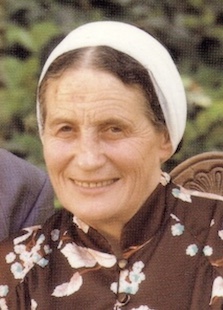
‘Once, one Sunday morning, my husband was stolen from the street – kidnapped. We went around asking, ‘Where is he?’ Nowhere was he to be discovered. We went to the police, to the prisons, everywhere, nobody could answer. He [simply] disappeared. Our Swedish ambassador went to the minister and asked … the Communist minister, ‘I heard that Wurmbrand is in prison.’ She laughed and said, ‘How could you dare to say such things? We, the Communists, we don’t arrest pastors. He is free somewhere. He fled to Denmark and is there.’ And so, we couldn’t discover him. All was taken from him. As I heard afterwards, even his name, so that nobody could discover him.
Then, ten of us, ten Christians, began to fast and to pray. And after one week a young lady came to our home and said, ‘Immediately come with me.’
Then, ten of us, ten Christians, began to fast and to pray. And after one week a young lady came to our home and said, ‘Immediately come with me.’ In going round to ask at the police stations and prisons about the pastor Wurmbrand, at a certain moment she looked and through a window in the cellar, there was Pastor Wurmbrand.
I went immediately [and] I saw him. And we could tell everyone, I could tell the ambassador that we have seen [him] and his life was spared. They could not kill him because it was seen and heard and known that he is in prison.
Now whosoever comes from our country knows that such things don’t arise – that you could see a prisoner from the yard through the window. It was a miracle of God. God has made this to spare his life and He [gave] us this sign [so] that we could glorify Him. We called Him in the day of trouble, and He has answered.
Even if I would have a thousand tongues, I could not tell you all the wonders that God has made for us, answering every time when we called Him in the day of trouble.
And now, I would have many, many things to tell you. Even if I would have a thousand tongues, I could not tell you all the wonders that God has made for us, answering every time when we called Him in the day of trouble. And giving us every time strength to glorify Him, even being there in the depths of trouble.
My time passes very quickly and so I will tell you only that afterwards years passed, and [there] was again a great trouble. Everywhere in the country it was heard that my husband died in prison. And not only that it was heard there but men came to announce to me officially that, ‘Wurmbrand already died. And you don’t need to pray anymore for him – he is no more there. He died.’ I [even] received letters trying to comfort me. And again, I was in great trouble. And I called upon the Lord.
The door opened. Richard came in, spoke to me, and I knew he is alive. It was a present from God.
And one day, I was in my small room. The door opened. Richard came in, spoke to me, and I knew he is alive. It was a present from God. That I may know that He answers the prayers. I knew he is alive and could go on. ‘Call upon me in the day of trouble and I will deliver you.’
And now today, I must tell you that, in the moment when after many years Richard came home – God had brought him home. And I, coming home from town, just wished to embrace him. He told me, ‘No, don’t embrace me. I will tell you first two things: don’t think that I came from [the] sadness of the prison to the joy of my home. I come from the joy of having been with my Lord in prison to the joy of being with Him together in my home with my dear ones.’ And I could understand. And then he said, ‘Don’t think that I come from foreigners to [my own]. I am coming from [my own] in prison to my dear ones at home. And now, if you wish, you can embrace me.’ You can imagine how it was.
Today, what could I say? There is a word in the psalm, ‘Praise the Lord for He is good, and His mercy endures forever.’