

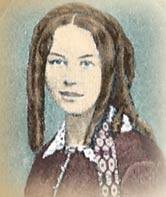
 THE position of the wife of a great man and particularly of a great minister, is not only one of rare difficulty but calls for an exercise of unselfishness and self-effacement which is quite contrary to the natural instincts of human nature. The lady who would be a true helpmeet to the popular preacher and God-ordained pastor must to a very large extent sink her own individuality and claims and be. come absorbed in those of her husband. She must be prepared to part often with the one she loves best on earth, in order that he may go to, fulfill his solemn engagements untrammeled by domestic repinings; she must render every assistance in her power and yet not expect: to reap the praise from men, which is rightly her due; she must initiate and carry through new plans of Christian effort and be satisfied that they shall be regarded as nothing more than a legitimate part of her husband’s ministry; and she must take upon her shoulders a load of responsibility, which the ordinary wife knows nothing of and which amid such a multitude of duties might well overwhelm a strong and vigorous man. If it be true in at general sense, that “Whoso findeth a wife findeth a good thing and obtaineth favor of the Lord,” how much more must it be the case with the minister who is encouraged ‘and helped by his partner in life. The members of the Christian churches little know what they owe to the wives of their pastors and when, by way of faint praise, they oftentimes declare that the lady of the manse has “done what she could,” the expression usually implies a qualification that the work might have been greater or better. How many of those who thus look with a more or less supercilious eye upon the work of the minister’s wife do a tithe of the good in the world which can be placed to her credit?No grander example of the possibilities which the position of a preacher’s wife affords, could be offered to her sisters of the manse or to the world at large than Mrs. C. H. Spurgeon, whose death on October 22nd, 1903, has left the Church poorer than it yet realizes. Called to a position of rarer difficulty at an early age, her husband already raised on dazzling heights of popularity, which few could have endured without being’ lifted up with pride, it was an ordeal for the retiring girl to be thus suddenly thrust into prominence. Then when the storms of abuse’, and slander broke on her loved one’s head, she might well have been crushed and broken, but she bore up and by her words of comfort, her strong affection and her piety 4 and faith, helped him to weather the gale. In every branch of his work she threw her heart and soul, she stinted herself to render financial assistance to the various causes, and to the smallest detail acted with her husband as a faithful steward of the God in whom she. trusted. Never did woman fulfill the marriage vow more faithfully. In sickness and in health, through good report and evil, she was ever his support and it would be difficult to find anywhere another woman, who in spite of adverse circumstances and conditions, ill-health and infirmity, did such monumental work for God and man as Susannah Spurgeon. Her life was one long self-sacrifice. She need not have expended the strength she so much required for herself; no one would have blamed the invalid for seeking comfort in rest, but what she did, she did with a will and as “unto the Lord.” Her life is a brilliant example of what can be done by a weak woman who devotes herself to the service: of the Master and not only as the wife of Charles Haddon Spurgeon will Mrs. Spurgeon live green in the memory of all true Christians, but as herself, as the woman who found solace in suffering by ministering to the needs of others, she will stand out through all time.
Books by and about Susannah Spurgeon A Cluster of Camphire: Words of Cheer and Comfort to Sick and Sorrowful Souls Free Grace and Dying Love - Morning Devotions The Life of Susannah Spurgeon by Charles Ray - Click here to read this book from this website. A Basket of Summer Fruit by Susannah Spurgeon - Also from this website.
I wrote this ten years ago, on my return from Mentone, that beautiful village on the sea-coast; when with one hand the Lord had smitten me well-near to death, while with the other hand He had poured into my wounded heart the oil and wine of His choicest consolation. It was a wonderful time to my soul, and He helped me to sing aloud of His faithfulness, and to bless His Name—though He had taken from me my husband—the joy and crown of my earthly life.
Because of this, because He had glorified Himself in my sorrow, and out of the inmost recesses of my heart had drawn forth this canticle of grief, the words went straight to other lonely hearts, and rested there like “the dew of Hermon.” For a long time, I received constant testimony to the fact that, in a very remarkable way, God was using the experience He had given me, as a balm and cordial to heal and soothe others of His bereaved children; and none but myself can tell how precious was this knowledge to my aching heart. It seemed indeed worthwhile suffering and sorrowing, if God’s love and pity turned it all into a sweet symphony of praise to Him, and enabled stricken ones to honor Him by a response of sweet submission and perfect truth.
So, to the glory of my dear Lord, whose grace was sufficient for me in my darkest and most distressful days, I have had my “Song of Sighs” reproduced; and my one earnest desire is that, as the Lord then gave it the approval of His blessing, so now he will not withhold the grace which alone call make it His voice of comfort to those who mourn.
How shall I sing the Lord’s song in a strange land?
For I am brought into a strange, weary land of loneliness and sorrow. I am a captive to grief, and the light of my life has been suddenly quenched in darkness.
Yet there is a song to be sung.
Mercy has outrun misery. Divine love has pierced the gloom of an unspeakable sorrow with a ray of celestial glory.
The anguished cry of a stricken heart has been hushed by the sweet compassion of a comforting God! “Praise the Lord! Praise the Lord, O my soul!”
It is the Lord’s song.
“He Himself has done it!” “The Lord gave—and the Lord has taken away; blessed be the Name of the Lord.” Is our dear Master to hear only sobs and sighs, and see only tears and sorrow, when He asks for His own beloved ones back again, that they may be with Him, and behold His glory? Nay, truly. For all His will is love.
The harp may often hang on the willows, and some of its choicest strings may be snapped forever on earth; but faith’s hand must reach it down, and love’s skillful fingers will soon find some tender chords of thankfulness in which to repeat His praise.
He will help me to sing it.
All the weeks and months since the pearly gates opened that my beloved husband might pass into the excellent glory, there has been, (for his sake,) deep down in my heart, a low undertone of joy in God, like the singing of the pebbles on a beach when the tide comes rolling in.
I thank God for this. And now that the deep waters are somewhat assuaging, this hidden music ought to be more distinct and appreciable.
I have traveled far now on life’s journey; and, having climbed one of the few remaining hills between earth and Heaven, I stand awhile on this vantage-ground, and look back across the country through which the Lord has led me.
A well-defined pathway is visible, but it appears devious and wandering; sometimes skirting a mountain-top, whence one could catch glimpses of “the land that is very far off”; and, further on, descending into a valley shadowed by clouds and darkness. At one time, it runs along amidst steep places, and overhanging rocks; at another time, it winds across an open plain, brilliant with the sunshine of goodness and mercy, and fanned by breezes which are wafted from the fields of Heaven.
There are flowers of joy and love growing all along the way, even in the dark places; and “trees which the Lord has planted,” give shade and shelter from too great heat.
I can see two pilgrims treading this highway of life together, hand in hand—heart linked to heart. True, they have had rivers to ford, and mountains to cross, and fierce enemies to fight, and many dangers to go through; but their Guide was watchful, their Deliverer unfailing, and of them it might truly be said, “In all their suffering he also suffered, and he personally rescued them. In his love and mercy he redeemed them. He lifted them up and carried them through all the years.”
Mostly, they went on their way singing; and for one of them, at least, there was no joy greater than to tell others of the grace and glory of the blessed King to whose land He was hastening. And when he thus spoke, the power of the Lord was seen, and the angels rejoiced over repenting sinners.
But, at last, they came to a place on the road where two ways met; and here, amidst the terrors of a storm such as they had never before encountered, they parted company—the one being caught up to the invisible glory—the other, battered and bruised by the awful tempest, henceforth toiling along the road—alone.
But the “goodness and mercy” which, for so many years, had followed the two travelers, did not leave the solitary one; rather did the tenderness of the Lord “lead on softly,” and choose green pastures for the tired feet, and still waters for the solace and refreshment of His trembling child. He gave, moreover, into her hands a solemn charge—to help fellow-pilgrims along the road, filling her life with blessed interest, and healing her own deep sorrow by giving her power to relieve and comfort others.
“With Christ—which is far better!” Philippians 1:23.
Ever since the solemn midnight hour when God took to Himself my most precious treasure, “the desire of my eyes,” my loving and dearly-beloved husband—the above inspired words have been a wellspring of solace and comfort to my desolate heart. In the first anguish of my grief, I wrote them on the “farewell” card, and the palm-branches, which waved over his dead body in token of everlasting victory, bore their grand message of consolation to the thousands of weeping mourners.
Now, as the days go by, and the sense of loss deepens, and is still more acutely realized, the blessed fact set forth by these words comes again with Divine power of healing to my sorrowing soul. It is because it is far better for him to be with Christ—that I can patiently and even cheerfully endure my lonely life. I can sometimes dwell with such joy on the thought of his eternal glory “with Christ,” that I forget to sorrow over my own great and unspeakable loss.
A dear friend wrote thus to me, the other day—“Oh, when I think of him, as able to praise his Savior, and preach without fatigue or pain—no longer limping, or leaning on his staff—with no cough, no faintness—no swollen fingers or ankles—away from the fogs and mists; where no heresies distress his heart; when I think of him thus, my heart fairly leaps for joy!”
Yes, faith can truly exult in our beloved’s glory.
After his translation, I had time and opportunity further to realize the consolation enfolded in my text, and to prove the comforting power of the assurance that, even though my precious husband had bidden adieu to the best that earth could give, his being “with Christ” was “far better.”
In a lovely garden, I often wandered alone, where, but a few weeks previously, his sweet presence had heightened every charm, and doubled every delight. There, amid the olive-groves, and rose-covered terraces, the dear Master taught me His estimate of true affection by recalling to my mind His own words to His disciples, “If you loved Me, you would rejoice—because I go to the Father;” and thus He made me understand that the thought of my darling’s everlasting bliss, must overcome and banish my own selfish grief and sorrow.
So, day after day, I roamed amid a profusion of nature’s beauty, breathing the fragrance of her choicest flowers; with the deep blue sky above me, and the still deeper blue of the Mediterranean Sea, spread out like a sapphire lake below me; with the most charming view of mountains, valleys, and seashore, bathed in sunshine, and the distant towns on the coast glittering like golden cities in the clear light, and only the cry of a sea-bird, or the dash of the wavelets on the shore, to mark the rhythm of the ceaseless harmonies of earth, and sea, and sky. Yet, even here, and missing so sorely his tender interest and participation in all my joy, I was enabled to remember that this was but mere earthly beauty—all fleeting and perishable; and that, to be in the Glory-land, where “everlasting spring abides,” and to be “with Christ,” was “far better.”
Sometimes, my thoughts would recall those glorious drives up the mountains, which we had so lately enjoyed together; when every turn in the road revealed some new beauty of prospect, and a perfect climax of delight was reached when, after long, steady climbing, the horses drew the carriage triumphantly into the “place” of the quaint mountain village or town where we were bound. Here, some eight or nine hundred feet above the level of the sea, the houses were crowded together among the rocks like swallows’ nests, and the view before us was enchanting beyond description; and my beloved would, with childlike eagerness, turn to me, and say, “There, wifey, isn’t that worth coming all the way to see?” Yes, truly; and if there had been nothing else to see than his exultant happiness at my long-desired presence with him, this would have well repaid any effort of love on my part.
But, good and precious as all that was—and, oh! how sweet is the memory now!—my heart understands that it was only a poor earthly joy—fading and shadowy; and again I have to say, “He is with Christ, which is far better!”
Mr. Hanbury’s “marble halls” were full of all art-treasures and riches collected from many lands. Everything that the most perfect taste could desire was there in lavish abundance, and the rooms were filled with all the choice and precious things that earth and wealth could furnish. I made discoveries, every day, of something more rare and costly, or more beautiful than I had seen before; and my first impulse was to go and tell my husband about it, or bring him to share my pleasure and admiration.
But, alas! he was gone, and my heart would bleed afresh, and my grief awaken to a terrible intensity, until, in soft accents within my soul, the blessed Spirit would whisper, “He is with Christ—which is far better!”
Down by the sea-shore, with the clear blue waters kissing the shingle at my feet, and making even the stones to sing a constant song of joy, I used to sit and think of my beloved’s eternal bliss, until I could almost join in the universal melody around me, though the tears were blinding my eyes, and my heart ached with an unspeakable grief. I could not see to the other side of the bright Mediterranean waters—the light was too dazzling, and my vision was bounded; but I knew that, beyond the horizon, there lay a beautiful summer-land, where the rigors of winter are unknown, and the icy winds of the North never blow.
Even so, I could not, with my bodily eyes, see to the other shore of that separating sea which my precious husband had so lately crossed; but faith knew that the Celestial City was there, and that he was even then walking the golden streets, rejoicing in the fullness of joy at God’s right hand! Better, ay, far better, to be with Christ—than to be with me! With me remained tears, and grief, and pain, and sin; but there, God Himself had wiped all his tears away; and neither sorrow, nor sin, nor evil of any kind, could ever again hurt his gentle spirit, or vex his loving heart!
Many such ponderings were in my heart during those sad and sacred days; but the conclusion to them all was this—that there was no earthly bliss, no ravishing prospect, no precious ties of wedded love, no “best” that this world or its relationships could give, which was not silenced, and surpassed, and beyond measure outweighed—by the blessed fact that to be “with Christ was far better!”
“Make Your way straight before my face.” Psalm 5:8
Dear Father, this cry is going up to You this morning, from many a tried and perplexed soul, who is fearing to “wander in the wilderness, in a pathless wasteland.” Will You graciously bend down Your ear, and listen to their prayer, and grant the desired direction and guidance?
“Make Your way straight.” Dear Lord, it is not that Your ways are ever crooked or deviating, but that my eyes are bent on seeing pleasant little bypaths, where the road is not so rough, or the walking so toilsome–as on the King’s highway! My way looks so enticing, so easy, so agreeable to the flesh. Your way means self-denial, taking up the cross, and the relinquishment of much that my carnal heart desires.
Now, dear Lord, hear my cry, “Make Your way straight before my face!” Compel me, by the power of Your love and Your example–to go in the narrow road! “Hedge up my way with thorns”–rather than that I should take a step out of the way which You have laid down for me.
What if, sometimes, there are mists and fogs so thick that I cannot see the path? ‘Tis enough that You hold my hand, and guide me in the darkness; for walking with You in the gloom–is far sweeter and safer than walking alone in the sunlight!
Dear Lord, give me grace to trust You wholly, whatever may befall; yielding myself up to Your leading, and leaning hard on You when “dangers are in the path.” Your way for me has been marked out from all eternity, and it leads directly to Yourself and home! Help me to keep my eyes fixed on the joy that is set before me, and deliver me from the very faintest desire to turn aside, and linger in the flowery meadows which have so often lured the feet of poor pilgrims into danger and distress!
Father, You have said, “My ways are not your ways, neither are My thoughts your thoughts.” True, dear Lord; but then You can uplift my thoughts to Yours, and exalt my ways until they reach the mountain-top of obedience to Your blessed will. Work this miracle for me this day, O Lord; use that sweet compulsion which will delight my heart, while it directs my steps! Make me to run in the way of Your commandments, and I shall run gladly, with the blessed certainty that I shall reach the goal at last! Have You not given me a monitor within, which strikes a gentle warning note, when my feet turn but an instant from the straight way?
But, best of all, dearest Lord, may You Yourself come with me along life’s road, today and every day! Let the abiding of my soul in You be so real and constant, so true and tender–that I may always be aware of Your sweet presence, and never take a single step, apart from Your supporting and delivering hand!
Thou Knowest. Come my soul, here is a test as to your spiritual condition! Will you apply it? Will you be weighed in the balance of the sanctuary, and see whether or not you are found wanting? Does your Lord’s intimate knowledge of your every thought, and desire, and action, oppress and disconcert you, or are you willing and glad to live under such close inspection, and even to covet the glances of that eye which searches you through and through?
‘My Downsitting and mine uprising.’ Lord, do you love me so much as to watch tenderly over me in such small matters? How the thought comforts me! We do not care about the everyday life of strangers: but when we love anyone dearly, we take great interest in all that concerns them; and even so, my God, this searching, knowing, understanding, compassing, besetting, laying of your hand upon me, are all most precious tokens to me of your indescribable love.
How watchful and careful should this knowledge make me! ‘My downsitting and mine uprising.’ My home life! My daily duties, both of work and of leisure! My going out and my coming in, my conduct and bearing under all circumstances! How these are all gathered into the compass of those five words! Lord, help me to walk worthy of you, unto all pleasing!
‘Thou understandest my thought afar off.’ What infinite knowledge! Well may the psalmist say, ‘It is too wonderful for me; it is high, I cannot attain unto it’!
Before I think, God knows my thought! O my soul, are not your thoughts the source of most of your grievous perplexities and sorrows? They are often so unruly and rebellious, sometimes unholy and profane, that all your efforts to bring them into captivity to the law of Christ are unavailing! Then, see where your help lies.
The God who can understand your thoughts ‘afar off’ has the power to restrain them; no, more than that; before they reach you , while they are yet distant and unexpressed, he will purify and cleanse them, so that they shall enter your heart as angel whispers, and pass your lips only as words of love and blessing.
Dear Master, I make your servant David’s prayer my very own and say, ‘Search me, O God, and know my heart; try me and know my thoughts; and see if there be any wicked way in me, and lead me in the way everlasting.’
"My times are in Your hand!" Psalm 31:15
Why then, need I worry or tremble? That great, loving, powerful hand keeps all the events of my life sealed and secure within its almighty clasp! And only He, my Maker and my Master, can permit them to be revealed to me as His will for me. What a compassionate, gracious arrangement! How eminently fitted to fulfill that sweet promise of His Word, "You will keep him in perfect peace, whose mind is stayed on You, because he trusts in You!" If we fully believed this, we would be absolutely devoid of the worry which corrodes and chafes the daily life of so many professing Christians.
"My times." Not one or two important epochs of my history only — but everything that concerns me
"My times." Not one or two important epochs of my history only — but everything that concerns me:
joys that I had not expected,
sorrows that must have crushed me, if they could have been anticipated,
sufferings which might have terrified me by their grimness, had I looked upon them,
surprises which infinite love had prepared for me,
services of which I could not have imagined myself capable
— all these lay in that mighty hand — as the purposes of God's eternal will for me.
But, as they have developed gradually and silently, how great has been the love which appeared enwrapping and enfolding each one!
Has not the grief been measured — while the gladness has far more abounded?
Have not the comforts and consolations — exceeded the crosses and complaints?
Have not all things been so arranged, and ordered, and undertaken, and worked out on our behalf — that we can but marvel at the goodness and wisdom of God, in meting out from that dear hand of His — all the "times" that have passed over us?
You agree with me in all this, do you not, dear reader? Then, I beg you, apply it to your present circumstances, however dark or difficult they may be. They have come directly from your Father's hand to you, and they are His dear will for you!
So far had I written when, on suddenly, God sent to me a "time" of such severe and prolonged pain, that my pen fell from my fingers, my words and counsels turned their faces inwards, and became a crowd of witnesses — rather than a band of exhorters. I hope they have seen some quiet submission to the will of God, some patience, some restful faith in every detail of God's dealing with me; but, alas! it is easier to know what to do than to do it, and far less courageous to point out the foe's hiding-places — than to stand the fire of his artillery. I have been brought very low. The gnawing, tearing teeth of pain have fastened themselves upon me, and night and day I have been held fast in their terrible grip.
"Why does my Lord thus deal with His child?" I asked. I sought to know what lesson He would teach me by this physical suffering . . .
which lays me aside from all my beloved work,
which feeds me with "the bread of tears,"
and gives me "tears to drink in great measure."
But no direct answer came to my question, and again and again the lesson was "returned" as yet imperfectly learned. Sometimes, all connected thought vanished, and a bewilderment of sorrow took possession of me; yet not one moment did the great Physician leave me; I was in distress — but never in doubt. Day after day, and night after night, the pain continued; but, often, in my weakness, I remembered what I had been trying to write of before the trial came, and I would whisper, "My times are in Your Hand! My times are in Your hand! This is Your doing, O Lord, so it must be a right 'time', however sad it may seem to me!"
One day, the post brought a strange, round parcel, which was carried to my bed-side. "Please open it," I said to my friend. This was more easily said than done, the wrappings were so voluminous. At last, a lengthy scroll, beautifully illuminated, was drawn out; and as it was unrolled, it was seen to bear the simple but significant Words — "God Never Makes a Mistake!"
At last, a lengthy scroll, beautifully illuminated, was drawn out; and as it was unrolled, it was seen to bear the simple but significant Words — "God Never Makes a Mistake!"
It was as if some sweet far-off echo of God's love had suddenly embodied itself before me. My soul leaped forward to embrace the blessed truth, and found solace and strengthening, as from the hands of a ministering angel. How it soothed and comforted me!
By how small a thing, sometimes, does God send uplifting to His children, when He has cast them down! By how gentle a remedy can "He give His beloved sleep!" Now, no weakness, or ignorance, or helplessness, or suffering, can prevent me from rejoicing in the fact that "my times" are in the "hand" of a God who never makes a mistake!
“For this is commendable, if because of conscience toward God one endures grief, suffering wrongfully.” (1 Peter 2:19)
“The LORD is good, A stronghold in the day of trouble; And He knows those who trust in Him.” (Nahum 1:7)
“You shall hide them in the secret place of Your presence From the plots of man; You shall keep them secretly in a pavilion From the strife of tongues.” (Psalm 31:20)
Susannah was born in London, England in 1832. Her parents were committed believers and raised her in a godly and disciplined home. Susannah attended New Park Street Chapel, where she described the pastor as "a quaint and rugged preacher, but one well versed in the blessed art of bringing souls to Christ." It was under such weekly instruction that Susannah grew into a young woman of tremendous virtue and integrity.
And it was during the preaching of God's Word one Sunday that a teenaged Susannah became aware of her own need for a personal faith in the Lord. "From that service," she later remarked, "I date the dawning of the true light in my soul. The Lord said to me, through his servant, 'Give me thy heart,' and constrained by His love, that night witnessed my solemn resolution of entire surrender to Himself." It was this spirit of surrender that would characterize Susannah's entire life going forward.
In 1853, when Susannah was twenty-one years old, she first met Charles. At the time of their meeting, Charles was a simple country preacher and not yet well known. Susannah admitted that at first glance she thought her future husband to be awkward, with "long, badly-trimmed hair." And yet slowly, the two began to form a friendship marked by long and intense spiritual discussion.
Though Susannah considered herself to be less spiritually mature than Charles, she possessed tremendous spiritual discernment and her insightful nature became a refuge for his thoughts. After Charles finally proposed in 1854, Susannah remarked, "If I had know then how good he was and how great he would become, I should have been overwhelmed, not so much with the happiness of being his, as with the responsibility which such a position would entail." But God who sees all had slowly been working His grace into Susannah's life and heart, preparing her for a life of quiet service alongside one of history's best-known men.
It didn't take long for Charles to become the greatest preacher in the England of his time, due to a manner of preaching that was heartfelt, dynamic, and widely-appealing. He was sought after constantly and spent Sundays preaching multiple times and his weekdays both writing and preparing sermons. In the midst of such busyness, it would be natural for a newlywed wife to become angry at her husband's distracted state. In fact, Susannah wrote of one such instance when she confided her loneliness and anger to her mother.
"She wisely reasoned," said Susannah, "that my chosen husband was no ordinary man, that his whole life was absolutely dedicated to God and his service, and that I must never, never hinder him by trying to put myself first in his heart."
And so Susannah heeded her mother's advice and began to invest her time in ministering alongside her husband. While Charles spent hours in his office writing and days and nights preaching, Susannah made it her goal to tend to their two young sons and to the needy in her community. Susannah's particular passion became a project named the Book Fund, which provided written resources for pastors who could not otherwise afford them. After all, Susannah reasoned, "What must their ministries become if their minds are starved?"
During the years of her devoted ministry, Susannah sent books and rich theological resources to over 25,000 pastors that enabled the seed of the gospel to be sown with greater richness all over the world.
Though Susannah's health was poor for most of her life, it was in her later years that illness steadily plagued her body, leading to daily discomfort. And though many would allow themselves rest and space in which to recuperate, she continued her Book Fund work with even greater resolve. Her husband praised her with these words: "Let every believer accept this as the inference of experience: that for most human maladies, the best relief and antidote will be found in self-sacrificing work for Jesus Christ."
And until the end of her life, Susannah Spurgeon worked tirelessly in the furtherance of the gospel. Even after Charles passed away in 1892, she remained committed to kingdom work, spending more than a dozen years of widowhood in faithful service. In 1903, she weakened greatly and passed away peacefully, exclaiming upon her deathbed, "Blessed Jesus! Blessed Jesus! I can see the King in His glory!" And I imagine that she was received by her Savior with a, "Well done, good and faithful servant. Enter your rest."
How does Susannah's example of a life of quiet service encourage you? Are there any areas where God is calling you to sacrifice your own wants and desires and put Him first instead?