
Jeremiah 23:6
Jeremiah 23:6 in Multiple Translations
In His days Judah will be saved, and Israel will dwell securely. And this is His name by which He will be called: The LORD Our Righteousness.
In his days Judah shall be saved, and Israel shall dwell safely: and this is his name whereby he shall be called, THE LORD OUR RIGHTEOUSNESS.
In his days Judah shall be saved, and Israel shall dwell safely; and this is his name whereby he shall be called: Jehovah our righteousness.
In his days Judah will have salvation and Israel will be living without fear: and this is the name by which he will be named, The Lord is our righteousness.
When he is king, Judah will be saved, and Israel will live in safety. This is the name he will be called: The Lord Who Makes Us Right.
In his dayes Iudah shalbe saued, and Israel shall dwell safely, and this is the Name wherby they shall call him, The Lord our righteousnesse.
In his days is Judah saved, and Israel dwelleth confidently, And this his name that Jehovah proclaimeth him, 'Our Righteousness.'
In his days Judah will be saved, and Israel will dwell safely. This is his name by which he will be called: The LORD our righteousness.
In his days Judah shall be saved, and Israel shall dwell in safety: and this is his name by which he shall be called, JEHOVAH OUR RIGHTEOUSNESS.
In those days shall Juda be saved, and Israel shall dwell confidently: and this is the name that they shall call him: the Lord our just one.
At that time, all the Israeli people [DOU] will be saved from their enemies, and they will be safe. And his name will be ‘Yahweh, the one who vindicates/defends us.’ ”
Berean Standard Amplified — Jeremiah 23:6
BSA
Word Study
Hover over any word to see its amplified meaning. Click a word to explore its full definition and translation comparisons.
Amplified text is generated using scripting to tie together English translations for comparison. Always refer to the core BSB translation and original Hebrew/Greek text for accuracy. Anomalies may occur.
Jeremiah 23:6 Interlinear (Deep Study)
BIB
HEB
בְּ/יָמָי/ו֙
תִּוָּשַׁ֣ע
יְהוּדָ֔ה
וְ/יִשְׂרָאֵ֖ל
יִשְׁכֹּ֣ן
לָ/בֶ֑טַח
וְ/זֶה
שְּׁמ֥/וֹ
אֲֽשֶׁר
יִקְרְא֖/וֹ
יְהוָ֥ה
צִדְקֵֽ/נוּ
בְּ/יָמָי/ו֙
yôwm
H3117
day
Prep | N-mp | Suff
תִּוָּשַׁ֣ע
yâshaʻ
H3467
to save
V-Niphal-Imperf-3fs
יְהוּדָ֔ה
Yᵉhûwdâh
H3063
Judah
N-proper
וְ/יִשְׂרָאֵ֖ל
Yisrâʼêl
H3478
Israel
Conj | N-proper
יִשְׁכֹּ֣ן
shâkan
H7931
to dwell
V-Qal-Imperf-3ms
לָ/בֶ֑טַח
beṭach
H983
security
Prep | N-ms
וְ/זֶה
zeh
H2088
this
Conj | Pron
שְּׁמ֥/וֹ
shêm
H8034
name
N-ms | Suff
אֲֽשֶׁר
ʼăsher
H834
which
Rel
יִקְרְא֖/וֹ
qârâʼ
H7121
to call
V-Qal-Imperf-3ms | Suff
יְהוָ֥ה
Yᵉhôvâh
H3068
The Lord
N-proper
צִדְקֵֽ/נוּ
tsedeq
H6664
Righteousness
N-ms | Suff
Hebrew Word Study
Select any word above to explore its original meaning, root, and usage across Scripture.
Use ← → arrow keys to navigate between words.
Hebrew Word Reference — Jeremiah 23:6
בְּ/יָמָי/ו֙
yôwm
H3117
"day"
Prep | N-mp | Suff
The Hebrew word 'yom' refers to a day, which can be a literal 24-hour period or a figurative space of time. It is used in the Bible to describe a wide range of time periods, from a single day to a year or a lifetime. The word 'yom' is used in many different contexts throughout the Bible.
Definition: : day/when/time/period 1) day, time, year 1a) day (as opposed to night) 1b) day (24 hour period) 1b1) as defined by evening and morning in Genesis 1 1b2) as a division of time 1b2a) a working day, a day's journey 1c) days, lifetime (pl.) 1d) time, period (general) 1e) year 1f) temporal references 1f1) today 1f2) yesterday 1f3) tomorrow
Usage: Occurs in 1930 OT verses. KJV: age, [phrase] always, [phrase] chronicals, continually(-ance), daily, ((birth-), each, to) day, (now a, two) days (agone), [phrase] elder, [idiom] end, [phrase] evening, [phrase] (for) ever(-lasting, -more), [idiom] full, life, as (so) long as (... live), (even) now, [phrase] old, [phrase] outlived, [phrase] perpetually, presently, [phrase] remaineth, [idiom] required, season, [idiom] since, space, then, (process of) time, [phrase] as at other times, [phrase] in trouble, weather, (as) when, (a, the, within a) while (that), [idiom] whole ([phrase] age), (full) year(-ly), [phrase] younger. See also: Genesis 1:5; Genesis 33:13; Exodus 23:15.
תִּוָּשַׁ֣ע
yâshaʻ
H3467
"to save"
V-Niphal-Imperf-3fs
Means to save or be delivered, used in the Bible to describe being freed from danger or trouble, like in battle or from moral struggles, as seen in the Psalms and Proverbs.
Definition: 1) to save, be saved, be delivered 1a) (Niphal) 1a1) to be liberated, be saved, be delivered 1a2) to be saved (in battle), be victorious 1b) (Hiphil) 1b1) to save, deliver 1b2) to save from moral troubles 1b3) to give victory to
Usage: Occurs in 198 OT verses. KJV: [idiom] at all, avenging, defend, deliver(-er), help, preserve, rescue, be safe, bring (having) salvation, save(-iour), get victory. See also: Exodus 2:17; Psalms 55:17; Psalms 3:8.
יְהוּדָ֔ה
Yᵉhûwdâh
H3063
"Judah"
N-proper
Judah is the name of the tribe descended from Judah, the son of Jacob. It is also the name of the region where the tribe lived. The name means 'praised' and is first mentioned in Genesis.
Definition: § Judah = "praised" the tribe descended from Judah the son of Jacob
Usage: Occurs in 754 OT verses. KJV: Judah. See also: Genesis 29:35; 1 Samuel 23:3; 2 Kings 14:13.
וְ/יִשְׂרָאֵ֖ל
Yisrâʼêl
H3478
"Israel"
Conj | N-proper
Israel is the symbolic name of Jacob, also referring to his descendants. Jacob, son of Isaac and Rebekah, had 12 sons who became the tribes of Israel, as told in Genesis 25:26. His story is crucial to the Bible's narrative.
Definition: A man living at the time of the Patriarchs, first mentioned at Gen.25.26; son of: Isaac (H3327) and Rebekah (H7259); brother of: Esau (H6215); married to Rachel (H7354), Leah (H3812), Zilpah (H2153) and Bilhah (H1090A); father of: Reuben (H7205), Simeon (H8095), Levi (H3878), Judah (H3063), Dan (H1835H), Naphtali (H5321), Gad (H1410), Asher (H0836), Issachar (H3485), Zebulun (H2074), Dinah (H1783), Joseph (H3130) and Benjamin (H1144); also called Jacob frequently § Israel = "God prevails" 1) the second name for Jacob given to him by God after his wrestling with the angel at Peniel 2) the name of the descendants and the nation of the descendants of Jacob 2a) the name of the nation until the death of Solomon and the split 2b) the name used and given to the northern kingdom consisting of the 10 tribes under Jeroboam; the southern kingdom was known as Judah 2c) the name of the nation after the return from exile
Usage: Occurs in 2231 OT verses. KJV: Israel. See also: Genesis 32:29; Exodus 13:18; Exodus 40:38.
יִשְׁכֹּ֣ן
shâkan
H7931
"to dwell"
V-Qal-Imperf-3ms
This Hebrew word means to live or stay in a place, like when God dwells among his people. It appears in books like Exodus and Psalms, describing God's presence. It's about making a home or resting place.
Definition: 1) to settle down, abide, dwell, tabernacle, reside 1a) (Qal) 1a1) to settle down to abide 1a2) to abide, dwell, reside 1b) (Piel) 1b1) to make settle down, establish 1b2) to make or cause to dwell 1c) (Hiphil) 1c1) to lay, place, set, establish, settle, fix 1c2) to cause to dwell or abide Aramaic equivalent: she.khan (שְׁכֵן "to dwell" H7932)
Usage: Occurs in 123 OT verses. KJV: abide, continue, (cause to, make to) dwell(-er), have habitation, inhabit, lay, place, (cause to) remain, rest, set (up). See also: Genesis 3:24; Psalms 55:7; Psalms 7:6.
לָ/בֶ֑טַח
beṭach
H983
"security"
Prep | N-ms
Security refers to a feeling of safety or refuge, like a place where one can feel protected, as the Bible describes God as a rock or fortress, providing assurance and hope to those who trust in Him.
Definition: 1) security, safety adv 2) securely
Usage: Occurs in 41 OT verses. KJV: assurance, boldly, (without) care(-less), confidence, hope, safe(-ly, -ty), secure, surely. See also: Genesis 34:25; Isaiah 14:30; Psalms 4:9.
וְ/זֶה
zeh
H2088
"this"
Conj | Pron
This word is a pronoun meaning this or that, used to point out a specific person or thing. It appears in many contexts, including Genesis and Psalms, to indicate something specific. The KJV translates it as he, here, or it.
Definition: 1) this, this one, here, which, this...that, the one...the other, another, such 1a) (alone) 1a1) this one 1a2) this...that, the one...the other, another 1b) (appos to subst) 1b1) this 1c) (as predicate) 1c1) this, such 1d) (enclitically) 1d1) then 1d2) who, whom 1d3) how now, what now 1d4) what now 1d5) wherefore now 1d6) behold here 1d7) just now 1d8) now, now already 1e) (poetry) 1e1) wherein, which, those who 1f) (with prefixes) 1f1) in this (place) here, then 1f2) on these conditions, herewith, thus provided, by, through this, for this cause, in this matter 1f3) thus and thus 1f4) as follows, things such as these, accordingly, to that effect, in like manner, thus and thus 1f5) from here, hence, on one side...on the other side 1f6) on this account 1f7) in spite of this, which, whence, how
Usage: Occurs in 1061 OT verses. KJV: he, [idiom] hence, [idiom] here, it(-self), [idiom] now, [idiom] of him, the one...the other, [idiom] than the other, ([idiom] out of) the (self) same, such (a one) that, these, this (hath, man), on this side...on that side, [idiom] thus, very, which. Compare H2063 (זֹאת), H2090 (זֹה), H2097 (זוֹ), H2098 (זוּ). See also: Genesis 5:1; Exodus 10:17; Numbers 14:16.
שְּׁמ֥/וֹ
shêm
H8034
"name"
N-ms | Suff
In the Bible, a name represents a person's identity, honor, and character, like God's name symbolizing His power and authority. It appears in Genesis and other books, often referring to God's name or a person's reputation. This concept is central to understanding biblical identity.
Definition: 1) name 1a) name 1b) reputation, fame, glory 1c) the Name (as designation of God) 1d) memorial, monument Aramaic equivalent: shum (שֻׁם "name" H8036)
Usage: Occurs in 771 OT verses. KJV: [phrase] base, (in-) fame(-ous), named(-d), renown, report. See also: Genesis 2:11; Exodus 3:15; Deuteronomy 16:6.
אֲֽשֶׁר
ʼăsher
H834
"which"
Rel
This Hebrew word is a conjunction that connects ideas and events in the Bible, like in the book of Genesis, where it's used to describe the relationship between God and His creation.
Definition: A: 1) (relative part.) 1a) which, who 1b) that which 2) (conj) 2a) that (in obj clause) 2b) when 2c) since 2d) as 2e) conditional if B: Beth+ 1) in (that) which 2) (adv) 2a) where 3) (conj) 3a) in that, inasmuch as 3b) on account of C: Mem+ 1) from (or than) that which 2) from (the place) where 3) from (the fact) that, since D: Kaph+ 1) (conj.), according as, as, when 1a) according to that which, according as, as 1b) with a causal force: in so far as, since 1c) with a temporal force: when
Usage: Occurs in 4440 OT verses. KJV: [idiom] after, [idiom] alike, as (soon as), because, [idiom] every, for, [phrase] forasmuch, [phrase] from whence, [phrase] how(-soever), [idiom] if, (so) that ((thing) which, wherein), [idiom] though, [phrase] until, [phrase] whatsoever, when, where ([phrase] -as, -in, -of, -on, -soever, -with), which, whilst, [phrase] whither(-soever), who(-m, -soever, -se). As it is indeclinable, it is often accompanied by the personal pronoun expletively, used to show the connection. See also: Genesis 1:7; Genesis 20:9; Genesis 31:16.
יִקְרְא֖/וֹ
qârâʼ
H7121
"to call"
V-Qal-Imperf-3ms | Suff
This Hebrew word means to call out to someone or something, often by name. It's used in many situations, like calling for help or reading aloud. In Genesis, God calls out to Adam in the Garden.
Definition: : call_to/invite/entreat 1) to call, call out, recite, read, cry out, proclaim 1a) (Qal) 1a1) to call, cry, utter a loud sound 1a2) to call unto, cry (for help), call (with name of God) 1a3) to proclaim 1a4) to read aloud, read (to oneself), read 1a5) to summon, invite, call for, call and commission, appoint, call and endow 1a6) to call, name, give name to, call by 1b) (Niphal) 1b1) to call oneself 1b2) to be called, be proclaimed, be read aloud, be summoned, be named 1c) (Pual) to be called, be named, be called out, be chosen
Usage: Occurs in 689 OT verses. KJV: bewray (self), that are bidden, call (for, forth, self, upon), cry (unto), (be) famous, guest, invite, mention, (give) name, preach, (make) proclaim(-ation), pronounce, publish, read, renowned, say. See also: Genesis 1:5; Genesis 49:1; Judges 1:26.
יְהוָ֥ה
Yᵉhôvâh
H3068
"The Lord"
N-proper
Yehovah is another name for God, often translated as 'the Lord'. It is a national name for God in the Jewish faith. This name is used throughout the Old Testament.
Definition: Another name of ye.ru.sha.laim (יְרוּשָׁלִַ֫ם, יְרוּשְׁלֵם "Jerusalem" H3389)
Usage: Occurs in 5522 OT verses. KJV: Jehovah, the Lord. Compare H3050 (יָהּ), H3069 (יְהֹוִה). See also: Genesis 2:4; Genesis 24:42; Exodus 8:8.
צִדְקֵֽ/נוּ
tsedeq
H6664
"Righteousness"
N-ms | Suff
Represents the idea of righteousness or justice, often referring to God's character or the standard for human behavior. It is closely tied to the concept of morality and what is right. The word is used to describe the ideal for human conduct and society.
Definition: This name means justice, righteousness Another name of ye.ho.vah (יהוה "LORD" H3068G)
Usage: Occurs in 112 OT verses. KJV: [idiom] even, ([idiom] that which is altogether) just(-ice), (un-)right(-eous) (cause, -ly, -ness). See also: Leviticus 19:15; Psalms 119:138; Psalms 4:2.
Study Notes — Jeremiah 23:6
Show Verse Quote Highlights
- Context
- Cross References
- Jeremiah 23:6 Summary
- Frequently Asked Questions
- Reflection Questions
- Gill's Exposition on Jeremiah 23:6
- Jamieson-Fausset-Brown on Jeremiah 23:6
- Matthew Poole's Commentary on Jeremiah 23:6
- Trapp's Commentary on Jeremiah 23:6
- Ellicott's Commentary on Jeremiah 23:6
- Adam Clarke's Commentary on Jeremiah 23:6
- Cambridge Bible on Jeremiah 23:6
- Barnes' Notes on Jeremiah 23:6
- Whedon's Commentary on Jeremiah 23:6
- Sermons on Jeremiah 23:6
Context — David’s Righteous Branch
4I will raise up shepherds over them who will tend them, and they will no longer be afraid or dismayed, nor will any go missing, declares the LORD.
5Behold, the days are coming, declares the LORD, when I will raise up for David a righteous Branch, and He will reign wisely as King and will administer justice and righteousness in the land.
6In His days Judah will be saved, and Israel will dwell securely. And this is His name by which He will be called: The LORD Our Righteousness.
7So behold, the days are coming, declares the LORD, when they will no longer say, ‘As surely as the LORD lives, who brought the Israelites up out of the land of Egypt.’ 8Instead they will say, ‘As surely as the LORD lives, who brought and led the descendants of the house of Israel up out of the land of the north and all the other lands to which He had banished them.’ Then they will dwell once more in their own land.”Cross References
| Reference | Text (BSB) | |
|---|---|---|
| 1 | 1 Corinthians 1:30 | It is because of Him that you are in Christ Jesus, who has become for us wisdom from God: our righteousness, holiness, and redemption. |
| 2 | Jeremiah 33:16 | In those days Judah will be saved, and Jerusalem will dwell securely, and this is the name by which it will be called: The LORD Our Righteousness. |
| 3 | Philippians 3:9 | and be found in Him, not having my own righteousness from the law, but that which is through faith in Christ, the righteousness from God on the basis of faith. |
| 4 | Matthew 1:21–23 | She will give birth to a Son, and you are to give Him the name Jesus, because He will save His people from their sins.” All this took place to fulfill what the Lord had said through the prophet: “Behold, the virgin will be with child and will give birth to a son, and they will call Him Immanuel” (which means, “God with us” ). |
| 5 | Romans 11:26–27 | And so all Israel will be saved, as it is written: “The Deliverer will come from Zion; He will remove godlessness from Jacob. And this is My covenant with them when I take away their sins.” |
| 6 | Jeremiah 32:37 | I will surely gather My people from all the lands to which I have banished them in My furious anger and great wrath, and I will return them to this place and make them dwell in safety. |
| 7 | Isaiah 7:14 | Therefore the Lord Himself will give you a sign: Behold, the virgin will be with child and will give birth to a son, and will call Him Immanuel. |
| 8 | Deuteronomy 33:28–29 | So Israel dwells securely; the fountain of Jacob lives untroubled in a land of grain and new wine, where even the heavens drip with dew. Blessed are you, O Israel! Who is like you, a people saved by the LORD? He is the shield that protects you, the sword in which you boast. Your enemies will cower before you, and you shall trample their high places.” |
| 9 | Daniel 9:24 | Seventy weeks are decreed for your people and your holy city to stop their transgression, to put an end to sin, to make atonement for iniquity, to bring in everlasting righteousness, to seal up vision and prophecy, and to anoint the Most Holy Place. |
| 10 | Psalms 130:7–8 | O Israel, put your hope in the LORD, for with the LORD is loving devotion, and with Him is redemption in abundance. And He will redeem Israel from all iniquity. |
Jeremiah 23:6 Summary
This verse is talking about a time when Jesus will be King and will make everything right. He will save the people of Judah and Israel will be safe and secure. Jesus will be called 'The LORD Our Righteousness' because He is the one who makes us right with God. This is a promise that God will fulfill when Jesus comes back to earth, as written in Revelation 20:1-6, and it gives us hope for a future time of peace and prosperity, as seen in Isaiah 2:1-4.
Frequently Asked Questions
Who is the righteous Branch mentioned in Jeremiah 23:5-6?
The righteous Branch is a reference to Jesus Christ, the Messiah, who will reign wisely as King and administer justice and righteousness in the land, as seen in Jeremiah 23:5 and also in Isaiah 11:1-5.
What does it mean that Jesus will be called 'The LORD Our Righteousness'?
This name signifies that Jesus is our source of righteousness, and through faith in Him, we are made righteous in God's sight, as written in 2 Corinthians 5:21 and Romans 3:21-22.
How will Judah be saved and Israel dwell securely in Jesus' days?
Judah will be saved and Israel will dwell securely because Jesus will bring peace, justice, and righteousness to the land, as promised in Isaiah 9:6-7 and Ezekiel 34:25-31.
Is this verse talking about a future time or has it already been fulfilled?
While some aspects of this verse have been fulfilled in part, the full realization of Judah's salvation and Israel's security will occur when Jesus returns to establish His kingdom, as described in Revelation 20:1-6 and Isaiah 2:1-4.
Reflection Questions
- What does it mean to you that Jesus is called 'The LORD Our Righteousness', and how does this impact your daily life?
- How can you trust in Jesus to bring peace and security to your own life, just as He promises to do for Judah and Israel?
- What are some ways you can reflect the righteousness of Jesus in your relationships and community?
- How can you pray for the fulfillment of God's promises to Judah and Israel, and for the establishment of Jesus' kingdom on earth?
Gill's Exposition on Jeremiah 23:6
In his days Judah shall be saved,.... In the days of the Messiah, the righteous Branch, and reigning prosperous King, not only the people of the Jews, God's elect among them, but all that truly
Jamieson-Fausset-Brown on Jeremiah 23:6
In his days Judah shall be saved, and Israel shall dwell safely: and this is his name whereby he shall be called, THE LORD OUR . In his days Judah shall be saved, and Israel shall dwell safely - (cf.
Matthew Poole's Commentary on Jeremiah 23:6
During the reign and kingdom of the Messias (whose kingdom is an everlasting kingdom) the people of God, typified by Judah and Israel, the true Israel of God, those that are Jews indeed, shall be saved with a spiritual salvation; for he was therefore called Jesus, because he was to save his people from their sins, , and God will be a special protection to them. The name wherewith this Branch shall be called shall be, The Lord our Righteousness. Some have applied this to the people, as if the people should be so called, or should say, The Lord hath dealt graciously with us; or, In the Lord we have righteousness. But this will appear but the new invention of some who either cannot or will not understand how Christ should be his people’ s righteousness, those who consider not that it is the Branch which was before spoken of, and that the word people is not to be found going before; there is indeed a mention of Judah and Israel, but surely they were not to be other men’ s righteousness, and if that had been the prophet’ s meaning, he would not have said, The Lord our, but the Lord their righteousness. Nor is the only place where Christ is called our righteouness, . This place is an eminent proof of the Godhead of Christ, he is here called Jehovah; and what is proper to God alone, viz. to justify, is here applied to Christ. The prophet saith Christ shall be so called, that is, by his people, who should believe in him and trust in him alone for that righteousness wherein they should at the last day stand before God: thus he was to bring in everlasting righteousness, . He, who knew no sin, was made sin (that is, a sacrifice for sin) for us, that we might be-made the righteousness of God in him.
Trapp's Commentary on Jeremiah 23:6
Jeremiah 23:6 In his days Judah shall be saved, and Israel shall dwell safely: and this [is] his name whereby he shall be called, THE LORD OUR .Ver. 6. This is the name whereby he shall be called, The Lord our Righteousness.] Jehovah Tsidkenu. This is a most mellifluous and sweet name of our Lord Jesus Christ, importing his Godhead, as the righteous Branch of David did his manhood; and besides assuring us that as he hath for us fulfilled all righteousness, so he is by God made unto us righteousness, and that we are become the righteousness of God in him. This one name of Christ is a strong tower; it is such as will answer all our doubts and objections, were they never so many, had we but skill to spell all the letters in it. Cyprian was wont to comfort his friends thus, Venit Antichristus, sed superveniet Christus; Antichrist will come, but then Christ will be at the heels of him. We may well comfort ourselves against all evils and enemies with this consideration, Christ is "Jehovah our righteousness." God hath "laid help on one that is mighty," and he came to "bring in everlasting righteousness." Why then should we "fear in the days of evil, when the iniquities of our heels shall compass us about." Domine Satan, saith Luther somewhere, nihil me movent minae terrores tui; est enim unus qui vocatur Iehovah iustitia nostra, in quem credo: Is legem abrogavit, peccatum damnavit, mortem abolevit, infernum destruxit, estque O Satan, Satan tuus - that is, You, Sir Satan, your menaces and terrors trouble me not. For why? There is one whose name is called the Lord our righteousness, on whom I believe. He it is who hath abrogated the law, condemned, sin, abolished death, destroyed hell, and is a Satan to thee, O Satan. Surely this brave saying of Luther may well be reckoned among such of his sentences as a man would fetch, rather than be without them, upon his knees from Rome or Jerusalem.
Vocat Scriptura nomen Messiae Iehova Tsidkenu, quia erit Mediator Deus, per cuius manus consecuturi sumus iustitiam a Deo ipso, inquit Rabbinus quidam in lib. Ikharim. Luth., tom. iv. fol. 55 A.
Ellicott's Commentary on Jeremiah 23:6
(6) Judah shall be saved, and Israel shall dwell safely.—The true King shall reign over a re-united people. The Ten Tribes of the Northern Kingdom, as well as the two of the Southern, should find in Him deliverance and peace. Whereby he shall be called.—Literally, whereby one shall call him, the indefinite, almost impersonal active having the force of the English passive. The Lord our Righteousness.—It is significant that in Jeremiah 33:16 the same name is given to Jerusalem. There it is clearly not, in logical language, the predicate of the city, but that which she takes as her watchword, and blazons, as it were, on her banner; and we cannot consistently press more than that meaning here. So in Ezekiel 48:35 the new name of Jerusalem is “Jehovah-shammah” (= the Lord is there). So in Exodus 17:15 Moses calls the altar which he builds “Jehovah-nissi” (= the Lord is my banner). The interpretation which sees in the words (1) the identification of the Messianic King with Jehovah, the Eternal, and (2) the doctrine of imputed righteousness, must accordingly be regarded as one of the applications of the words rather than their direct meaning. That meaning would seem to be that the King, the righteous Branch, will look to Jehovah as giving and working righteousness. Some commentators, indeed, refer the pronoun “he” to Israel, and not to the righteous Branch.
We cannot forget that, at the very time when Jeremiah uttered this prophecy, a king was on the throne whose name (Zedekiah = righteous is Jehovah) implied the same thought. His reign had been a miserable failure, and the prophet looks forward to a time when the ideal, which was then far off, should at last be realised. If with many critics we refer the prediction to the reign of Jehoiakim (see Note on Jeremiah 23:1), we might almost see in Mattaniah’s adoption of the new name a boast that he was about to fulfil it. The Christ, we may say, answered to the name, not as being Himself one with Jehovah, though He was that, but as doing the Father’s will, and so fulfilling all righteousness (comp. Matthew 3:15).
Adam Clarke's Commentary on Jeremiah 23:6
Verse 6. In his days Judah shall be saved] The real Jew is not one who has his circumcision in the flesh, but in the spirit. The real Israel are true believers in Christ Jesus; and the genuine Jerusalem is the Church of the first-born, and made free, with all her children, from the bondage of sin, Satan, death, and hell. All these exist only in the days of the Messiah. All that went before were the types or significators of these glorious Gospel excellencies. And this is his name whereby he shall be called, THE LORD OUR RIGHTEOUSNESS.] I shall give the Hebrew text of this important passage: וזה שמו אשר יקראו יהוה צדקנו vezeh shemo asher yikreo Yehovah tsidkenu, which the Septuagint translate as follows, ΚαιτουτοτοονομααυτονὁκαλεσειαυτονΚυριος, Ιωσεδεκ, "And this is his name which the Lord shall call him Josedek." Dahler translates the text thus: - Et voici le nom dont on l'appellera: L'Eternel, Auteur de notre felicite. "And this is the name by which he shall be called; The Lord, the Author of our happiness." Dr. Blayney seems to follow the Septuagint; he translates thus, "And this is the name by which Jehovah shall call him, OUR RIGHTEOUSNESS." In my old MS. Bible, the first English translation ever made, it is thus: - And this is the name that thei schul clepen him: oure rigtwise Lord. Coverdale's, the first complete English translation of the Scriptures ever printed, (1535,) has given it thus: - And this is the name that they shall call him: even the Lorde oure rightuous Maker.
Matthews (1549) and Becke (1549) follow Coverdale literally; but our present translation of the clause is borrowed from Cardmarden, (Rouen, 1566,) "Even the Lord our righteousness." Dr. Blayney thus accounts for his translation: - "Literally, according to the Hebrew idiom, - 'And this is his name by which Jehovah shall call, Our Righteousness;' a phrase exactly the same as, 'And Jehovah shall call him so;' which implies that God would make him such as he called him, that is, our Righteousness, or the author and means of our salvation and acceptance. So that by the same metonymy Christ is said to 'have been made of God unto us wisdom, and righteousness and sanctification, and redemption,' 1 Corinthians 1:30. "I doubt not that some persons will be offended with me for depriving them, by this translation, of a favourite argument for proving the Divinity of our Saviour from the Old Testament. But I cannot help it; I have done it with no ill design, but purely because I think, and am morally sure, that the text, as it stands, will not properly admit of any other construction.
Cambridge Bible on Jeremiah 23:6
6. Israel shall dwell safely] Cp. Deuteronomy 33:28. The Northern Tribes as well as Judah shall be restored, and form one kingdom. he shall be called] The Messiah’s work shall be indicated by the name that He is to bear. The Lord is our righteousness] as indicating the ideal righteousness which is then to characterize the nation. Cp. Isaiah 1:26; Isaiah 60:21; Isaiah 61:3. Of that righteousness Jehovah is to be the source. Cp. Ezekiel 48:35 “The Lord is there,” mg.
Jehovah-shammah. Cp. also Jeremiah 33:16, where the same name is given to Jerusalem. The A.V. (“The Lord our righteousness”) survives in R.V. mg. but, as we see must be the case from the passage last referred to, the prophet is not identifying the Messiah with Jehovah.
Barnes' Notes on Jeremiah 23:6
This is his name whereby he shall be called - From remote antiquity the person here spoken of has been understood to be “the righteous germ,” and this alone is in accordance with the grammar and the sense.
Whedon's Commentary on Jeremiah 23:6
6. Judah… Israel — The prophet writes as though Israel had not been destroyed; and this was true in a sense deeper and more spiritual than that in which she had been destroyed.
Sermons on Jeremiah 23:6
| Sermon | Description | |
|---|---|---|

|
I Will Not Be a Velvet-Mouthed Preacher! by John Piper | This sermon delves into the life of George Whitefield, a prominent preacher of the 18th century, highlighting his fervent evangelistic efforts, doctrinal faithfulness, and blind sp |

|
Ger-02 Israel's Coming Calamity by Art Katz | In this sermon, the speaker discusses the concept of Jacob's trouble, a time of great tribulation that will affect all nations. The speaker emphasizes that no nation will be exempt |

|
The Name of Jehovah by Chuck Smith | This sermon focuses on the significance of the name Jehovah as a strong tower where the righteous can find safety and refuge. It delves into various compound names of Jehovah found |

|
The Name of the Lord by Brian Brodersen | This sermon delves into the progressive revelation of God's name throughout the Old Testament, culminating in the person of Jesus Christ. Each revelation of God's name signifies a |
|
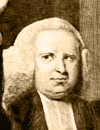
The Lord Our Righteousness. (Jer. 23:6) by George Whitefield | George Whitefield preaches passionately about the importance of Christ being our righteousness, emphasizing the natural tendency towards self-righteousness and the need for the rig |

|
On Holy Ground by Andrew Bonar | Andrew Bonar emphasizes the transformative understanding of God's holiness in relation to salvation, illustrating that it is through God's holiness that we are granted access to he |

|
1 Corinthians I. 30 by John Owen | John Owen expounds on 1 Corinthians 1:30, emphasizing that Christ is made righteousness for us by God's sovereign grace, which excludes any basis for personal boasting. He argues a |