
To redeem the time is to buy up the opportunities God gives and use them for Him, because the days are evil and time is short, uncertain and never comes back. The preachers quoted here explain Paul's words, the value of time, the account we must give, idleness and trifling, time for God, and hope for those who have wasted years.
To redeem the time is to buy up the opportunities God gives and use them for Him, instead of letting them run to waste. Paul writes, "Pay careful attention, then, to how you walk, not as unwise but as wise," (Ephesians 5:15) and goes on, "redeeming the time, because the days are evil." (Ephesians 5:16). Charles Hodge summed up the passage in one line: "Christians therefore should be wise, making the most of every occasion for good, in the midst of the evils by which they are surrounded, vs. 13-16."1
What the word means
Paul uses a word from the market. To redeem is to buy, or to buy back. Albert Barnes wrote of the phrase, "Here it means, to rescue or recover our time from waste; to improve it for great and important purposes."2
The word Paul uses for time is not the word for the clock. Alexander Maclaren wrote, "One of them, the more common, simply implies the succession of moments or periods; the other, which is employed here, means rather a definite portion of time to which some definite work or occurrence belongs."3 He added, "It is translated sometimes season , sometimes opportunity ."4 Hodge came to the same view: "That kairos properly and commonly means opportunity, or suitable time, is a strong reason for preferring the former of the two interpretations mentioned."5
So the command is about seizing the season God gives while it is there. Maclaren did not press the picture of a purchase too far. He wrote, "We have to confine ourselves to the simple thought that there is a need for making the opportunity which is given truly our own; and that that can only be done by giving something in exchange for it."6 He went on, "That is to say, to begin with, life gives us opportunities and no more."7
Walk carefully, as the wise
The command to redeem the time comes inside a call to careful walking. The wise and the unwise both have time. The difference is in how they walk. Paul adds, "Therefore do not be foolish, but understand what the Lord's will is." (Ephesians 5:17).
Maclaren said that the first step is to ask what life is for. He wrote, "If we could only get into this, as our habitual temper and disposition, asking ourselves what life is for, then we should have conquered nine-tenths of our temptations, and all but secured that we shall aim at the purpose which thus clearly and constantly shines before us."8 He also wrote, "Time is the lackey of eternity, and the chamberlain that opens the gates of the Kingdom of God."9 A careful walk has limits, and Maclaren saw this as a mercy: "The narrow way that leads to life is the way of peace, just because it is a way of restrictions."10
Because the days are evil
Paul gives a reason. The days are evil. John Calvin wrote, "Such corruption having infected the age, the devil appears to have obtained tyrannical sway; so that time cannot be dedicated to God without being in some way redeemed."11 Barnes wrote, "The sentiment is, that we ought to be solicitous to improve our time to some useful purpose, because there are, in an evil world, so many temptations to waste it."12
Evil days are not a reason to give up. Hodge wrote, "Because sin abounds is a good reason why Christians should seize upon every opportunity to do good; and also why they should make the most of time."13
Time is precious
Jonathan Edwards preached a whole sermon on the preciousness of time. He began with a simple rule: "Things are precious in proportion to their importance, or to the degree wherein they concern our welfare."14 He saw how little men act on it. "There is nothing more precious, and yet nothing of which men are more prodigal."14 Charles Spurgeon said that only God can change a careless heart in this. "The Holy Ghost can give the man that is prone to idleness such an intense apprehension of the value of time that he shall be more industrious than the naturally active man."15
Time is short
Scripture says plainly that our time is short. Moses wrote of our years, "for they quickly pass, and we fly away." (Psalm 90:10). Paul wrote, "What I am saying, brothers, is that the time is short." (1 Corinthians 7:29).
Edwards said, "Time is so short, and the work which we have to do in it is so great, that we have none of it to spare."14 Spurgeon said of the way years seem to shorten, "A period of time which seems immense to the child, and tolerably long to a young man, becomes short to a man of middle life, and to the aged man appears to be as nothing at all."16 In the same place he said, "Let us live, while we live, brethren, to the utmost power and capacity of our manhood, for we are of few days."17 In another sermon he said, "We must take care how we live, for this is the only lifetime we shall have in which to settle the life that lasts for ever."15
Time is uncertain
We do not know how much time is left. James writes, "You do not even know what will happen tomorrow! What is your life? You are a mist that appears for a little while and then vanishes." (James 4:14). Solomon says, "Do not boast about tomorrow, for you do not know what a day may bring." (Proverbs 27:1).
Edwards wrote, "We know that it is very short, but we know not how short."14 He added, "We are every day uncertain whether that day will not be the last, or whether we are to have the whole day."14 This is why delay is folly. Edwards said, "If you delay and put off its improvement, still more time will be lost; and it will be an evidence that you are not sensible of its preciousness."14
Time once gone does not come back
Money can be lost and made again. Time cannot. Edwards said, "When once that is gone, it is gone forever; no pains, no cost will recover it."14 He described how each moment comes to us: "Every part of it is successively offered to us, that we may choose whether we will make it our own, or not."14
Maclaren wrote, "The moment that is past had in it wonderful possibilities for us."18 Edwards noted that the dying often see this most clearly. He said, "It is not because they are deceived, that they think time to be of such value, but because their eyes are opened."14
Teach us to number our days
Moses prayed, "So teach us to number our days, that we may present a heart of wisdom." (Psalm 90:12). To number our days is not only to count them. J.R. Miller wrote, "But mere adding of days is not the numbering that was in the thought of the Psalmist."19 He also wrote, "But merely to have to rub it off at the setting of the sun, leaving in it nothing but a story of idleness, uselessness, selfishness, and lost opportunities, is a sad numbering!"20 He added, "There is another way of getting a heart of wisdom, from the passing days."21
The present moment
The time to be redeemed is always today. Hebrews says, "But exhort one another daily, as long as it is called today, so that none of you may be hardened by sin's deceitfulness." (Hebrews 3:13). Paul says, "Behold, now is the time of favor; now is the day of salvation!" (2 Corinthians 6:2).
Maclaren wrote of the way we look at the present, "To-day is always commonplace; it is yesterday that is beautiful, and to-morrow that is full of possibilities, to the vulgar mind."22 He also wrote, "We admit the meaning of life taken altogether, but it is very hard to break up that recognition into fragments, and to feel the worth of these fleeting moments which, just because they are here, seem to be of small account."23 And he said what each day is for: "To-day is given us mainly that we may learn to know God better, and to love Him more, and to serve Him more joyfully."24 He warned, "But if we go about them without thinking of God or the highest ends which life is meant to serve, then we shall certainly lose the highest ends, and an opportunity will go past us unimproved."25
John Wesley put it plainly. "Buy up every opportunity of growing in grace, or of doing good."26 Samuel Davies said, "There is not one moment of time in which a Christian may lawfully and safely be slothful and negligent."27
Work while it is day
Jesus Himself lived under this rule. He said, "While it is daytime, we must do the works of Him who sent Me. Night is coming, when no one can work." (John 9:4). Maclaren wrote of those words, "Jesus Christ said, 'I must work the work of Him that sent Me while it is day; the night cometh.' How much more ought you and I to say so?"28 He said what the day is given for: "Sorrow and sin are God's call to every one of His sons and daughters to set themselves to cast them out of His fair creation; and 'the day' is the opportunity for doing that."29
A.W. Tozer said in a sermon on Paul's one aim, "There are a thousand things that you may do, but you have time for only one."30 He also said, "Now, every Christian should learn what is important, because you'll have invitations to give your time and strength to a bewildering multitude of activities."30
We must give account
Time is lent, not given outright. Paul says, "So then, each of us will give an account of himself to God." (Romans 14:12). In the parable of the talents, "After a long time the master of those servants returned to settle accounts with them." (Matthew 25:19).
Edwards said, "Our day was appointed for some work; therefore he will, at the day's end, call us to an account."14 He explained, "We are God's servants; as a servant is accountable to his master, how he spends his time when he is sent forth to work, so are we accountable to God."14 Thomas Watson wrote of the idle person, "An idle person can give no account of his time."31
Idleness and trifling
The sluggard in Proverbs loses his life a little at a time. "A little sleep, a little slumber, a little folding of the hands to rest," (Proverbs 6:10). "and poverty will come upon you like a robber, and need like a bandit." (Proverbs 6:11). Edwards listed among the ways men waste time those who spend it in strife: "Some spend much of their precious time in detraction and backbiting; in talking against others; in contention, not only quarreling themselves, but fomenting and stirring up strife and contention."14
J.C. Ryle warned parents, "An idle mind is like an open door, and if Satan does not enter in himself by it, it is certain he will throw in something to raise bad thoughts in our souls."32 Barnes wrote, "There are things enough to be done to occupy it all, and no one need have it hang heavy on his hands."33 Wesley described the believer who has learned the value of time: "All idle talk, all trifling discourse, you abhorred; you hated as well as feared it; being deeply sensible of the value of time, of every precious, fleeting moment."34 Richard Baxter wrote, "The children of that kingdom should never have time for trifles, especially when they are employed in the affairs of the kingdom; and this employment is one of the saints' chief preservatives from temptations."35
Time for God
The best part of redeemed time is the part given to God Himself. Jesus rose early to pray. "Early in the morning, while it was still dark, Jesus got up and slipped out to a solitary place to pray." (Mark 1:35). Charles Bridges wrote, "It is not, that such men are busy, and have no time for prayer; but that they are worldly, and have no heart to pray."36 He went on, "The consecrated heart will always find time for secret duties, and will rather, as David, redeem it from sleep, than lose it from prayer."37
Richard Sibbes wrote, "We should always be fit for communion with God, and be heavenly-minded in earthly business, and be willing to be taken off from it to redeem time for better things."38 David Wilkerson said, "The truth is, it is impossible to waste time when you are in prayer, seeking God."39
Spurgeon saw value even in the small gaps of a day. He wrote, "The odds and ends of time are precious: little spaces of time, like the intervals between dinner and class, or when waiting at a railway station, are, like the dust of the diamond, all precious."40
Wisdom toward outsiders
Paul uses the same words in another letter, in a different setting. "Act wisely toward outsiders, redeeming the time." (Colossians 4:5). He goes on, "Let your speech always be gracious, seasoned with salt, so that you may know how to answer everyone." (Colossians 4:6).
John Chrysostom said, "Then because he had alarmed them, see how again he encourages them; Redeeming, he says, the time: that is, the present time is short."41 Calvin read the verse as a warning about the dangers of company with unbelievers: "To the same effect, also, is what follows, redeeming the time, that is, because intercourse with them is dangerous."42 Of the next verse he wrote, "He requires suavity of speech, such as may allure the hearers by its profitableness, for he does not merely condemn communications that are openly wicked or impious, but also such as are worthless and idle."43
Doing good while we can
Redeemed time is spent for others as well as for ourselves. Paul writes, "Therefore, as we have opportunity, let us do good to everyone, and especially to the family of faith." (Galatians 6:10). Barnes wrote, "There is time enough wasted by each sinner to secure the salvation of the soul; time enough wasted to do all that is needful to be done to spread religion around the world, and to save the race."44
Lost time and a fresh start
Many look back on wasted years. Peter writes that the believer "does not live out his remaining time on earth for human passions, but for the will of God." (1 Peter 4:2). He adds, "For you have spent enough time in the past" (1 Peter 4:3).
Edwards knew that this can lead to despair. He said, "Sometimes such considerations as these have another effect, viz. to discourage persons, and to make them think, that seeing they have lost so much time, it is not worth their while to attempt to do anything now."14 He answered, "But what madness is it for persons to give way to discouragement, so as to neglect their work, because their time is short!"14 He also said, "All that we can do, is to improve the little that remains."14
Stephen Charnock wrote of those converted late, "Such will endeavour to redeem the time, because their former days have been so evil, and recover those advantages of service which they lost by a course of sin."45
The end of it all
Redeeming the time is not a scheme of busy self-improvement. It is the fruit of knowing what life is for. Maclaren wrote, "Let us begin to live; for only he who lives to God really lives."46 Paul's call stands: "redeeming the time, because the days are evil." (Ephesians 5:16).
- Charles Hodge, A Commentary on the Epistle to the Ephesians, "CHAPTER V: SPECIFIC EXHORTATIONS, VS. 3-20.--RELATIVE DUTIES OF...".
- Albert Barnes , Barnes New Testament Notes, "EPHESIANS - Chapter 5 - Verse 16".
- Alexander Maclaren, Expositions Of Holy Scripture Ephesians Peter, "Redeeming the time".
- Alexander Maclaren, Expositions Of Holy Scripture Ephesians Peter, "Redeeming the time".
- Charles Hodge, A Commentary on the Epistle to the Ephesians, "CHAPTER V: SPECIFIC EXHORTATIONS, VS. 3-20.--RELATIVE DUTIES OF...".
- Alexander Maclaren, Expositions Of Holy Scripture Ephesians Peter, "Redeeming the time".
- Alexander Maclaren, Expositions Of Holy Scripture Ephesians Peter, "Redeeming the time".
- Alexander Maclaren, Expositions Of Holy Scripture Ephesians Peter, "Redeeming the time".
- Alexander Maclaren, Expositions Of Holy Scripture Ephesians Peter, "Redeeming the time".
- Alexander Maclaren, Expositions Of Holy Scripture Ephesians Peter, "Redeeming the time".
- John Calvin, Commentary On Galatians And Ephesians, "Ephesians 5:15-20".
- Albert Barnes , Barnes New Testament Notes, "EPHESIANS - Chapter 5 - Verse 16".
- Charles Hodge, A Commentary on the Epistle to the Ephesians, "CHAPTER V: SPECIFIC EXHORTATIONS, VS. 3-20.--RELATIVE DUTIES OF...".
- Jonathan Edwards, "The Preciousness of Time and the Importance of Redeeming It" (sermon).
- C.H. Spurgeon, "The Battle of Life" (sermon).
- C.H. Spurgeon, Able To The Uttermost, "From Gloom To Glory".
- C.H. Spurgeon, Able To The Uttermost, "From Gloom To Glory".
- Alexander Maclaren, Expositions Of Holy Scripture Ephesians Peter, "Redeeming the time".
- J.R. Miller, Devotional Hours with the Bible, "Volume 3".
- J.R. Miller, Devotional Hours with the Bible, "Volume 3".
- J.R. Miller, Devotional Hours with the Bible, "Volume 3".
- Alexander Maclaren, Expositions Of Holy Scripture Ephesians Peter, "Redeeming the time".
- Alexander Maclaren, Expositions Of Holy Scripture Ephesians Peter, "Redeeming the time".
- Alexander Maclaren, Expositions Of Holy Scripture Ephesians Peter, "Redeeming the time".
- Alexander Maclaren, Expositions Of Holy Scripture Ephesians Peter, "Redeeming the time".
- John Wesley, "Satan's Devices" (sermon).
- Samuel Davies, Choice Sermons, "A New Year's Gift!".
- Alexander Maclaren, Expositions Of Holy Scripture I, "One metaphor and two meanings".
- Alexander Maclaren, Expositions Of Holy Scripture I, "One metaphor and two meanings".
- A.W. Tozer, "'This One Thing I Do'" (sermon).
- Thomas Watson, The Ten Commandments, "The Fourth Commandment".
- John C. Ryle, Tracts of J.C. Ryle, "Duties of Parents".
- Albert Barnes , Barnes New Testament Notes, "EPHESIANS - Chapter 5 - Verse 16".
- John Wesley, "Law Established Through Faith, 1" (sermon).
- Richard Baxter, The Saints Everlasting Rest, "Chapter xi. the importance of leading a heavenly life upon earth".
- Charles Bridges, Exposition of Psalm 119, "a Verses 126 - 149".
- Charles Bridges, Exposition of Psalm 119, "a Verses 126 - 149".
- Richard Sibbes, Sermons of Richard Sibbes, "Means to Make Grace Victorius".
- David Wilkerson, "Satanic Interruptions!" (sermon).
- C.H. Spurgeon, What the Stones Say, "Precious Stones--Diamonds".
- St. John Chrysostom, "Colossians 4:5, 6" (sermon).
- John Calvin, Commentary On Philippians Colossians And Thessalonians, "Colossians 4:5-9".
- John Calvin, Commentary On Philippians Colossians And Thessalonians, "Colossians 4:5-9".
- Albert Barnes , Barnes New Testament Notes, "EPHESIANS - Chapter 5 - Verse 16".
- Stephen Charnock, Writings of Stephen Charnock, "The Fruits of Converting Grace in the Salvation of Sinners".
- Alexander Maclaren, Expositions Of Holy Scripture Ephesians Peter, "Redeeming the time".
In their own words
Each line below is quoted exactly from a sermon on this site. Follow the link to hear or read it where it was said.
Things are precious in proportion to their importance, or to the degree wherein they concern our welfare.
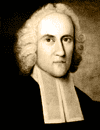 Jonathan Edwards
in The Preciousness of Time and the Importance of Redeeming It
Read in context
There is nothing more precious, and yet nothing of which men are more prodigal.
Jonathan Edwards
in The Preciousness of Time and the Importance of Redeeming It
Read in context
Time is so short, and the work which we have to do in it is so great, that we have none of it to spare.
Jonathan Edwards
in The Preciousness of Time and the Importance of Redeeming It
Read in context
We know that it is very short, but we know not how short.
Jonathan Edwards
in The Preciousness of Time and the Importance of Redeeming It
Read in context
We are every day uncertain whether that day will not be the last, or whether we are to have the whole day.
Jonathan Edwards
in The Preciousness of Time and the Importance of Redeeming It
Read in context
If you delay and put off its improvement, still more time will be lost; and it will be an evidence that you are not sensible of its preciousness.
Jonathan Edwards
in The Preciousness of Time and the Importance of Redeeming It
Read in context
When once that is gone, it is gone forever; no pains, no cost will recover it.
Jonathan Edwards
in The Preciousness of Time and the Importance of Redeeming It
Read in context
Every part of it is successively offered to us, that we may choose whether we will make it our own, or not.
Jonathan Edwards
in The Preciousness of Time and the Importance of Redeeming It
Read in context
It is not because they are deceived, that they think time to be of such value, but because their eyes are opened.
Jonathan Edwards
in The Preciousness of Time and the Importance of Redeeming It
Read in context
Our day was appointed for some work; therefore he will, at the day's end, call us to an account.
Jonathan Edwards
in The Preciousness of Time and the Importance of Redeeming It
Read in context
We are God's servants; as a servant is accountable to his master, how he spends his time when he is sent forth to work, so are we accountable to God.
Jonathan Edwards
in The Preciousness of Time and the Importance of Redeeming It
Read in context
Some spend much of their precious time in detraction and backbiting; in talking against others; in contention, not only quarreling themselves, but fomenting and stirring up strife and contention.
Jonathan Edwards
in The Preciousness of Time and the Importance of Redeeming It
Read in context
Sometimes such considerations as these have another effect, viz. to discourage persons, and to make them think, that seeing they have lost so much time, it is not worth their while to attempt to do anything now.
Jonathan Edwards
in The Preciousness of Time and the Importance of Redeeming It
Read in context
But what madness is it for persons to give way to discouragement, so as to neglect their work, because their time is short!
Jonathan Edwards
in The Preciousness of Time and the Importance of Redeeming It
Read in context
All that we can do, is to improve the little that remains.
Jonathan Edwards
in The Preciousness of Time and the Importance of Redeeming It
Read in context
The Holy Ghost can give the man that is prone to idleness such an intense apprehension of the value of time that he shall be more industrious than the naturally active man.
 C.H. Spurgeon
in The Battle of Life
Read in context
We must take care how we live, for this is the only lifetime we shall have in which to settle the life that lasts for ever.
C.H. Spurgeon
in The Battle of Life
Read in context
Buy up every opportunity of growing in grace, or of doing good.
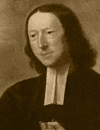 John Wesley
in Satan's Devices
Read in context
There are a thousand things that you may do, but you have time for only one.
 A.W. Tozer
in 'This One Thing I Do'
Read in context
Now, every Christian should learn what is important, because you'll have invitations to give your time and strength to a bewildering multitude of activities.
A.W. Tozer
in 'This One Thing I Do'
Read in context
All idle talk, all trifling discourse, you abhorred; you hated as well as feared it; being deeply sensible of the value of time, of every precious, fleeting moment.
John Wesley
in Law Established Through Faith, 1
Read in context
The truth is, it is impossible to waste time when you are in prayer, seeking God.
 David Wilkerson
in Satanic Interruptions!
Read in context
Then because he had alarmed them, see how again he encourages them; Redeeming, he says, the time: that is, the present time is short.
 St. John Chrysostom
in Colossians 4:5, 6
Read in context
What Scripture says
- Ephesians 5:15 Pay careful attention, then, to how you walk, not as unwise but as wise
- Ephesians 5:16 redeeming the time, because the days are evil
- Ephesians 5:17 understand what the Lord's will is
- Colossians 4:5 Act wisely toward outsiders, redeeming the time
- Psalm 90:12 So teach us to number our days, that we may present a heart of wisdom
- 1 Corinthians 7:29 the time is short
- James 4:14 You are a mist that appears for a little while and then vanishes
- John 9:4 While it is daytime, we must do the works of Him who sent Me
- Galatians 6:10 as we have opportunity, let us do good to everyone
- Romans 14:12 each of us will give an account of himself to God
- 2 Corinthians 6:2 now is the time of favor; now is the day of salvation
How this page is made: the quotes are taken word for word from sermons on SermonIndex and checked against them by program before the page is published. The transcripts of audio and video sermons are machine-made, so follow the link to hear the words as they were spoken. The answer above the quotes is an overview with its sources listed; it is not a statement of doctrine by SermonIndex.