
A peacemaker is someone who, being at peace with God, loves peace and works for it, keeping it where it is and restoring it where it is broken, without buying it at the cost of truth or holiness. The preachers quoted here explain the seventh beatitude, Christ the great Peacemaker, a peaceable spirit, the tongue, peace among believers and at home, the wisdom from above, the cost and the promise.
A peacemaker is someone who, being at peace with God, loves peace and works for it: he keeps peace where it is, seeks to restore it where it has been broken, and does not buy it at the cost of truth or holiness. Jesus said, "Blessed are the peacemakers, for they will be called sons of God." (Matthew 5:9). J.R. Miller wrote, "God is a peacemaker, and we become His children just in the measure in which we are peacemakers."1
The seventh beatitude
The peacemakers come near the end of the Beatitudes, after the poor in spirit, the meek, the merciful and the pure in heart. Thomas Watson wrote, "The name of peace is sweet, and the work of peace is a blessed work."2 Charles Spurgeon said, "He who would have perfect blessedness, so far as it can be enjoyed on earth, must labor to attain to this seventh benediction and become a peacemaker."3
Alexander Maclaren saw the place of the beatitude as part of its meaning. He wrote, "His peacemakers are created by having passed through all the previous experiences which the preceding verses bring out."4 He went on, "Brethren, the peacemaker who is worthy of the name must have gone through these deep spiritual experiences."5
Peace with God comes first
No one can give what he does not have. Paul writes, "Therefore, since we have been justified through faith, we have peace with God through our Lord Jesus Christ," (Romans 5:1). Maclaren wrote, "No man can bring to others that which he does not possess."6 He also wrote, "So the first thing to be done to make men at peace with one another and with themselves is to rectify their relation to God, and bring peace there."7
William Arnot wrote, "The greatest peace is, peace with the Greatest; the greatest peace is, peace with God."8 Adolph Saphir wrote, "We must have peace within first, if we are to be the sons of peace, the peacemakers."9 Andrew Miller wrote of the peacemaker, "He must be right with God Himself, and breathe the sweet peace of communion with Him."10 Maclaren put the order plainly: "He must give us peace with God, with ourselves, with men, with circumstances, before we can go forth effectually to bring peace to others."11
Christ the great Peacemaker
Every Christian peacemaker follows the One who made peace at the cross. Isaiah calls Him the "Prince of Peace." (Isaiah 9:6). Paul writes, "For He Himself is our peace, who has made the two one and has torn down the dividing wall of hostility" (Ephesians 2:14). God was pleased through Christ to reconcile all things to Himself, "by making peace through the blood of His cross." (Colossians 1:20).
Arnot wrote, "The Mediator, who makes this peace, is the greatest Peacemaker."12 Watson wrote, "He died not only to make peace between God and man, but between man and man."13 He added, "Christ suffered on the cross that he might cement Christians together with his blood."14 F.B. Meyer wrote, "Our one message to man is: God is at peace with you, be at peace with Him."15
A peaceable spirit
The work of peace begins in the heart. Watson wrote, "For before men can make peace among others, they must be of peaceable spirits themselves."16 He also wrote, "God is not in the rough fiery spirit but in the peaceable spirit."17
Wilhelmus à Brakel wrote, "A peacemaker, living in the enjoyment of peace with God, has a heart free from strife, which, relative to his neighbor, is content and at peace."18 He showed that heart and conduct must go together: "To strive for a peaceable relationship with our neighbor without a peaceable heart is but the fruit of nature or hypocrisy."19 And again, "To imagine that we have a peaceable heart and yet not to strive for a peaceable relationship is but a deceiving of self."20 Andrew Miller wrote, "The pure heart is a peaceful heart, loves peace, and earnestly desires the peace and happiness of others."21
As far as it depends on you
Paul does not promise that every quarrel can be ended. He says, "If it is possible on your part, live at peace with everyone." (Romans 12:18). The Christian is answerable for his own part. Miller wrote, "If there must be quarreling, it should not be the fault of the Christian."1 He went on, "He must do all in his power to get along with his neighbor without strife."1
Spurgeon said that the peacemaker gives way where he can, and even when he must defend himself "even then he is ready for every compromise, willing to give way at any time and at any season."3 Meyer wrote of our adversaries, "Never lose your peace with such, but see if there is anything you can do, consistently with the claims of honor and justice, even though at heavy cost to yourself, to remove the cause of trouble."22 Brakel wrote, "It is thus that we shall be able to tolerate those who are not peaceable, and compel them to be peaceable by way of a steadfast manifestation of our love for peace."23
Making peace between others
The peacemaker does more than keep out of quarrels. He works to end them. Watson wrote, "All good Christians ought to be peacemakers; they should not only be peaceable themselves, but make others to be at peace."24
John Wesley said of peacemakers, "They use all innocent arts, and employ all their strength, all the talents which God has given them, as well to preserve peace where it is, as to restore it where it is not."25 Miller wrote, "In a narrower sense, a peacemaker is one who seeks to cure dissensions, to bring together those who are in any way estranged, to remove misunderstandings, and to promote peaceable relations among men."1 He also wrote, "A true peacemaker, going about thus, trying to draw people ever closer together and to heal all threatened contentions and quarrels, is doing a divine work of love in the world."1
A.W. Tozer wrote, "The ability to settle quarrels between members of God's household is a heavenly gift and one that should be assiduously cultivated."26 He added, "The discerning soul who can reconcile separated friends by prayer and appeal to the Scriptures is worth his weight in diamonds."27
The tongue that kindles and the tongue that heals
Many quarrels begin with talk. "Without wood, a fire goes out; without gossip, a conflict ceases." (Proverbs 26:20). "A perverse man spreads dissension, and a gossip divides close friends." (Proverbs 16:28). Maclaren wrote, "There is a malicious love of it in us all; and ill-natured gossip has a great deal to do in bringing it about."28 He went on, "But it takes something more to put the fire out than it did to light it, and there is no nobler office for Christians than to seek to damp down all these devil's flames of envy and jealousy and mutual animosity."29
Watson warned against listening as well as speaking: "As it is a sin to be a talebearer, so it is a folly to be a tale-believer."30 Beverly Carradine wrote, "Third, the peacemaker is seen in the person who is careful not to repeat disagreeable things, where their narration could do no possible good."31 The gentle word has its own power. "A gentle answer turns away wrath, but a harsh word stirs up anger." (Proverbs 15:1).
Not peace at any price
Scripture joins peace to holiness. "Pursue peace with everyone, as well as holiness, without which no one will see the Lord." (Hebrews 12:14). James says that the wisdom from above is "first of all pure, then peace-loving" (James 3:17). Purity comes first. G. Campbell Morgan wrote, "God's order is the order of peace, but it is always peace based upon purity, for the wisdom that is from above is first pure and then peaceable."32
Watson wrote, "We must not purchase peace with the loss of holiness."33 He also wrote, "We must not so seek the flower of peace as to lose the pearl of truth."34 J.C. Ryle wrote, "They are apt to forget that peace procured at the expense of truth is not worth having."35 In another place he wrote, "Unity and peace are very delightful; but they are bought too dear if they are bought at the expense of truth."36
Tozer drew the line sharply. He wrote, "The blessing of God is promised to the peacemaker, but the religious negotiator had better watch his step."37 He added, "That is one thing, but the effort to achieve unity at the expense of truth and righteousness is another."38 Brakel wrote, "However pleasant and desirable peace may be, we must nevertheless be on our guard that we do not pursue and maintain it at the expense of truth and godliness."39
Two errors
Arnot saw that a man can fail on either side. He wrote, "In point of fact, and among men, faithfulness does sometimes disturb peace; and peace is sometimes obtained at the expense of faithfulness."40 He went on, "One man has so much salt in himself that he cannot maintain peace with his neighbours; another man is so soft and peaceable towards all that he manifests scarcely any of the faithfulness which is indicated by the salt."41 Thomas Manton wrote, "Peace without righteousness is but a sordid compliance; righteousness without peace is but a rough austerity."42
Watson showed how a believer can be at peace with a man and still oppose his sin. He wrote, "Though we are to be at peace with their persons, yet we are to have war with their sins."43 He explained, "We are to have peace with their persons as they are made in God's image, but to have war with their sins as they have made themselves in the devil's image."44
Peace among believers
Strife among Christians is a special grief. "Behold, how good and pleasant it is when brothers live together in harmony!" (Psalm 133:1). Paul urged two women in Philippi, "I urge Euodia and Syntyche to agree with each other in the Lord." (Philippians 4:2). Watson wrote, "It is unseemly to see Christ's doves fighting; to see his lily become a bramble."45
Spurgeon said that the peacemaker who belongs to a church "here, as a peacemaker, he is as an angel of God."3 Andrew Miller wrote, "He who sows discord from whatever motive, in place of keeping and making peace, has missed his way as a child of God."46 He also wrote, "A little prudence, a little patience and waiting on God may go far to silence the strife of tongues, to calm the ruffled temper, to remove opposition, and to win hearts for Christ."47
The peace of believers is also a witness to the world. Watson wrote, "Not only gifts and miracles and preaching may persuade men to embrace the truth of the gospel, but peace and unity among the professors of it."48
Peace at home
The first place to make peace is often the nearest. Watson wrote, "It is not fairness of rooms makes a house pleasant, but peaceableness of dispositions."49 Miller wrote, "Christians should make their homes, homes of peace, in which no angry word shall ever be heard."1
The wisdom from above
James joins peacemaking to wisdom. "But the wisdom from above is first of all pure, then peace-loving, gentle, accommodating, full of mercy and good fruit, impartial, and sincere." (James 3:17). "Peacemakers who sow in peace reap the fruit of righteousness." (James 3:18). Manton wrote, "True wisdom is peaceable, and void of strifes and contentions."50 He also wrote, "Holiness is a Christian's ornament, and peaceableness is the ornament of holiness."51 And of the next verse, "It is the duty of God's children to sow the fruit of righteousness in peace."52
Alfred Plummer wrote of James 3:18, "In either case it is the peacemakers who sow the seed whose fruit is righteousness, and the peacemakers who reap this fruit."53 He added, "The whole process begins, progresses, and ends in peace."54
What it costs
The peacemaker often pays a price. Meyer wrote, "If there is strife between ourselves and others, as we were once at war with God, it may be needful for us, at a great cost of tears and anguish, to remove from between them and us the obstacles to peace."55 He also wrote, "There is plenty of work for the sons of peace to do everywhere, and often their hearts fail and are discouraged."56
Faithfulness sometimes brings trouble that is not the peacemaker's fault. Andrew Miller wrote, "True, a Christian may be the occasion of much dispeace in certain circles through his faithfulness to Christ; but that is quite a different thing."57 The next beatitude says, "Blessed are those who are persecuted because of righteousness, for theirs is the kingdom of heaven." (Matthew 5:10).
Called sons of God
The promise is that peacemakers "will be called sons of God." (Matthew 5:9). Spurgeon said, "This he is by adoption and grace—but peacemaking is a sweet evidence of the work of the peaceful Spirit within."3 He went on, "As the child of God, moreover, he has a likeness to his Father who is in Heaven."3
Jesus uses the same words of those who love their enemies: "that you may be sons of your Father in heaven." (Matthew 5:45). Andrew Miller wrote, "The moral resemblance is manifest, and their sonship is declared."58 Maclaren wrote of what it means to be owned as God's children, "Well, it means a great deal which has yet to be disclosed, but it means this, too, that the whisper of the Voice which owns us for children will be heard by ourselves."59
Watson put the other side bluntly. "If peacemakers are the children of God, then peace-breakers are the children of the devil."60
The blessing of the peacemaker
The peacemaker is blessed in his own soul. Scripture says, "but the counselors of peace have joy." (Proverbs 12:20). Watson wrote, "The peacemaker shall have peace with God, peace in his own bosom, and that is the sweetest music which is made in a man's own breast."61 Spurgeon said, "And while he is blessed of God, the blessedness is diffused through his own soul."3
No work of peace is wasted. Meyer wrote, "No such effort is ever lost, no such word ever falls to the ground, no endeavor to make peace leaves the peacemaker poorer."62
A work for every believer
Peacemaking is not a gift for a few. Paul says, "So then, let us pursue what leads to peace and to mutual edification." (Romans 14:19). Wesley said of the peacemaker that he does not stand idle: "The peace-maker cannot: He is ever labouring therein, and, as an instrument in God's hand, preparing the ground for his Master's use, or sowing the seed of the kingdom, or watering what is already sown, if haply God may give the increase."25
Every believer who has peace with God is called to carry it to others, in the home, in the church and in the world.
- J.R. Miller, "Garden of the Heart - Part 3" (sermon).
- Thomas Watson, The Beatitudes: An Exposition of Matthew 5:1-12, "Concerning peaceableness".
- C.H. Spurgeon, "The Peacemaker" (sermon).
- Alexander Maclaren, Expositions Of Holy Scripture A, "The seventh beatitude".
- Alexander Maclaren, Expositions Of Holy Scripture A, "The seventh beatitude".
- Alexander Maclaren, Expositions Of Holy Scripture A, "The seventh beatitude".
- Alexander Maclaren, Expositions Of Holy Scripture A, "The seventh beatitude".
- William Arnot, Writings of William Arnot, "True, yet tender - tender, yet true".
- Adolph Saphir, The Epistle to the Hebrews - Vol 1-2, "Heb_12:14-18".
- Andrew Miller, Writings of Andrew Miller, "The seventh beatitude".
- Alexander Maclaren, Expositions Of Holy Scripture A, "The seventh beatitude".
- William Arnot, Writings of William Arnot, "True, yet tender - tender, yet true".
- Thomas Watson, The Beatitudes: An Exposition of Matthew 5:1-12, "Concerning peaceableness".
- Thomas Watson, The Beatitudes: An Exposition of Matthew 5:1-12, "Concerning peaceableness".
- F.B. Meyer, Writings of F B Meyer - Volume 1, "Swords Into Pruning-Hooks".
- Thomas Watson, The Beatitudes: An Exposition of Matthew 5:1-12, "Concerning peaceableness".
- Thomas Watson, The Beatitudes: An Exposition of Matthew 5:1-12, "Concerning peaceableness".
- Brakel Wilhelmus A, Christian Reasonable Service, "Chapter 85: Peaceableness".
- Brakel Wilhelmus A, Christian Reasonable Service, "Chapter 85: Peaceableness".
- Brakel Wilhelmus A, Christian Reasonable Service, "Chapter 85: Peaceableness".
- Andrew Miller, Writings of Andrew Miller, "The seventh beatitude".
- F.B. Meyer, Writings of F B Meyer - Volume 1, "Swords Into Pruning-Hooks".
- Brakel Wilhelmus A, Christian Reasonable Service, "Chapter 85: Peaceableness".
- Thomas Watson, The Beatitudes: An Exposition of Matthew 5:1-12, "Concerning peaceableness".
- John Wesley, "Sermon on the Mount, 3" (sermon).
- A.W. Tozer, Man - The Dwelling Place of God, "Some Things Are Not Negotiable".
- A.W. Tozer, Man - The Dwelling Place of God, "Some Things Are Not Negotiable".
- Alexander Maclaren, Expositions Of Holy Scripture A, "The seventh beatitude".
- Alexander Maclaren, Expositions Of Holy Scripture A, "The seventh beatitude".
- Thomas Watson, The Beatitudes: An Exposition of Matthew 5:1-12, "Concerning peaceableness".
- Beverly Carradine, Writings of Beverly Carradine - Volume 1, "The Peacemaker".
- G. Campbell Morgan, Writings of G Campbell Morgan - Volume 1, "The pergamum letter".
- Thomas Watson, The Beatitudes: An Exposition of Matthew 5:1-12, "Concerning peaceableness".
- Thomas Watson, The Beatitudes: An Exposition of Matthew 5:1-12, "Concerning peaceableness".
- John C. Ryle, Tracts of J.C. Ryle, "Hold Fast".
- John C. Ryle, Tracts of J.C. Ryle, "Seven Bishops".
- A.W. Tozer, Man - The Dwelling Place of God, "Some Things Are Not Negotiable".
- A.W. Tozer, Man - The Dwelling Place of God, "Some Things Are Not Negotiable".
- Brakel Wilhelmus A, Christian Reasonable Service, "Chapter 85: Peaceableness".
- William Arnot, Writings of William Arnot, "True, yet tender - tender, yet true".
- William Arnot, Writings of William Arnot, "True, yet tender - tender, yet true".
- Thomas Manton, The Complete Works of Thomas Manton, D.D. Vol. IV, "CHAPTER III: VER. 1. My brethren, be not many masters, knowing that...".
- Thomas Watson, The Beatitudes: An Exposition of Matthew 5:1-12, "Concerning peaceableness".
- Thomas Watson, The Beatitudes: An Exposition of Matthew 5:1-12, "Concerning peaceableness".
- Thomas Watson, The Beatitudes: An Exposition of Matthew 5:1-12, "Concerning peaceableness".
- Andrew Miller, Writings of Andrew Miller, "The seventh beatitude".
- Andrew Miller, Writings of Andrew Miller, "The seventh beatitude".
- Thomas Watson, The Beatitudes: An Exposition of Matthew 5:1-12, "Concerning peaceableness".
- Thomas Watson, The Beatitudes: An Exposition of Matthew 5:1-12, "Concerning peaceableness".
- Thomas Manton, The Complete Works of Thomas Manton, D.D. Vol. IV, "CHAPTER III: VER. 1. My brethren, be not many masters, knowing that...".
- Thomas Manton, The Complete Works of Thomas Manton, D.D. Vol. IV, "CHAPTER III: VER. 1. My brethren, be not many masters, knowing that...".
- Thomas Manton, The Complete Works of Thomas Manton, D.D. Vol. IV, "CHAPTER III: VER. 1. My brethren, be not many masters, knowing that...".
- Alfred Plummer, The Expositor's Bible: The General Epistles of St. James and St., "Chapter xvii: the wisdom that is from above".
- Alfred Plummer, The Expositor's Bible: The General Epistles of St. James and St., "Chapter xvii: the wisdom that is from above".
- F.B. Meyer, Writings of F B Meyer - Volume 1, "Swords Into Pruning-Hooks".
- F.B. Meyer, Writings of F B Meyer - Volume 1, "Swords Into Pruning-Hooks".
- Andrew Miller, Writings of Andrew Miller, "The seventh beatitude".
- Andrew Miller, Writings of Andrew Miller, "The seventh beatitude".
- Alexander Maclaren, Expositions Of Holy Scripture A, "The seventh beatitude".
- Thomas Watson, The Beatitudes: An Exposition of Matthew 5:1-12, "Concerning peaceableness".
- Thomas Watson, The Beatitudes: An Exposition of Matthew 5:1-12, "Concerning peaceableness".
- F.B. Meyer, Writings of F B Meyer - Volume 1, "Swords Into Pruning-Hooks".
In their own words
Each line below is quoted exactly from a sermon on this site. Follow the link to hear or read it where it was said.
God is a peacemaker, and we become His children just in the measure in which we are peacemakers.
 J.R. Miller
in Garden of the Heart - Part 3
Read in context
If there must be quarreling, it should not be the fault of the Christian.
J.R. Miller
in Garden of the Heart - Part 3
Read in context
He must do all in his power to get along with his neighbor without strife.
J.R. Miller
in Garden of the Heart - Part 3
Read in context
In a narrower sense, a peacemaker is one who seeks to cure dissensions, to bring together those who are in any way estranged, to remove misunderstandings, and to promote peaceable relations among men.
J.R. Miller
in Garden of the Heart - Part 3
Read in context
A true peacemaker, going about thus, trying to draw people ever closer together and to heal all threatened contentions and quarrels, is doing a divine work of love in the world.
J.R. Miller
in Garden of the Heart - Part 3
Read in context
Christians should make their homes, homes of peace, in which no angry word shall ever be heard.
J.R. Miller
in Garden of the Heart - Part 3
Read in context
He who would have perfect blessedness, so far as it can be enjoyed on earth, must labor to attain to this seventh benediction and become a peacemaker.
 C.H. Spurgeon
in The Peacemaker
Read in context
This he is by adoption and grace—but peacemaking is a sweet evidence of the work of the peaceful Spirit within.
C.H. Spurgeon
in The Peacemaker
Read in context
As the child of God, moreover, he has a likeness to his Father who is in Heaven.
C.H. Spurgeon
in The Peacemaker
Read in context
And while he is blessed of God, the blessedness is diffused through his own soul.
C.H. Spurgeon
in The Peacemaker
Read in context
They use all innocent arts, and employ all their strength, all the talents which God has given them, as well to preserve peace where it is, as to restore it where it is not.
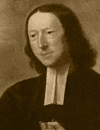 John Wesley
in Sermon on the Mount, 3
Read in context
The peace-maker cannot: He is ever labouring therein, and, as an instrument in God's hand, preparing the ground for his Master's use, or sowing the seed of the kingdom, or watering what is already sown, if haply God may give the increase.
John Wesley
in Sermon on the Mount, 3
Read in context
What Scripture says
- Matthew 5:9 Blessed are the peacemakers, for they will be called sons of God
- Romans 12:18 If it is possible on your part, live at peace with everyone
- James 3:17 the wisdom from above is first of all pure, then peace-loving
- James 3:18 Peacemakers who sow in peace reap the fruit of righteousness
- Romans 5:1 we have peace with God through our Lord Jesus Christ
- Ephesians 2:14 He Himself is our peace
- Colossians 1:20 making peace through the blood of His cross
- Hebrews 12:14 Pursue peace with everyone, as well as holiness
- Proverbs 26:20 without gossip, a conflict ceases
- Romans 14:19 let us pursue what leads to peace and to mutual edification
- Matthew 5:45 that you may be sons of your Father in heaven
How this page is made: the quotes are taken word for word from sermons on SermonIndex and checked against them by program before the page is published. The transcripts of audio and video sermons are machine-made, so follow the link to hear the words as they were spoken. The answer above the quotes is an overview with its sources listed; it is not a statement of doctrine by SermonIndex.