
The preachers quoted here read the tabernacle as Hebrews does: a copy and shadow of heavenly things. It shows a holy God dwelling among His people, approached only by sacrifice, cleansing and a priest, with the way into His presence closed by a veil until Christ entered heaven itself by His own blood and opened it.
The tabernacle teaches that a holy God chose to live among His people, and that sinners can come near Him only in the way He provides. God said to Moses, "And they are to make a sanctuary for Me, so that I may dwell among them." (Exodus 25:8). The New Testament calls the tabernacle a copy and shadow of heavenly things, and it finds the substance in Jesus Christ and His one sacrifice. Adolph Saphir wrote, "The tabernacle is one of the most important and instructive types."1 Henry W. Soltau wrote that the Hebrew word translated tabernacle "means a dwelling-place, and is exclusively confined to the thought of this structure being God's dwelling-place."2
God came to dwell with His people
Israel had been brought out of Egypt. At Sinai God gave the law, and then He gave directions for a tent in which He would live among the tribes. He said, "Then I will dwell among the Israelites and be their God." (Exodus 29:45). He gave the reason for the exodus itself: "And they will know that I am the LORD their God, who brought them out of the land of Egypt so that I might dwell among them. I am the LORD their God." (Exodus 29:46). G.A. Chadwick wrote, "The first direction given to Moses on the mountain is to prepare for the making of a tabernacle wherein God may dwell with man."3 He added, "This is the first announcement of a fixed abiding presence of God in the midst of men, and it is therefore the precursor of much."4 Soltau wrote, "The tabernacle formed a dwelling-place for God in the midst of His people."5 Dirk H. Dolman wrote, "Not only should God's presence go with them, but He actually promised to dwell amongst them."6 Saphir wrote, "God, the King, has His palace in the midst of His people."7 Patrick Fairbairn wrote, "The groundwork of this new form of religion stood in the erection of the tabernacle, which God chose for His peculiar dwelling-place, and through which He meant to keep up a close and lively intercourse with His people."8 Horatius Bonar said, "The whole story of Israel is the exhibition of God's desire to dwell with men--and man's refusal to allow God to dwell with Him."9
Made according to the pattern
Moses did not design the tabernacle. God said, "You must make the tabernacle and design all its furnishings according to the pattern I show you." (Exodus 25:9). He said it again: "See to it that you make everything according to the pattern shown you on the mountain." (Exodus 25:40). When the work was done, Scripture records, "Moses did everything just as the LORD had commanded him." (Exodus 40:16). Dolman wrote, "The tabernacle was designed by God Himself, and Moses had to make it according to the pattern he saw in the mount."10 Charles Spurgeon said, "Every tache and every loop, every board and every fillet, everything was marked down in the divine plan, and Moses must build everything according to the pattern which he had seen in the Mount."11 Edward Dennett wrote of the boards, "And remark that, once again, Moses is admonished to do everything according to the pattern he had been shown in the mount."12 J.R. Miller drew a lesson for worship: "We must worship God, not according to our own ideas of propriety and taste—but according to the Divine directions."13 Zac Poonen wrote, "God gave Moses specific instructions about the sizes of the different parts of the tabernacle and the materials to be used for each."14 He warned, "Those who do not realize this will always add their human ideas to God's commandments."14 God decides how He is to be approached. Man does not.
Built from willing gifts
The materials came from the people. God told Moses to receive an offering "from every man whose heart compels him." (Exodus 25:2). The people answered. "And everyone whose heart stirred him and whose spirit prompted him came and brought an offering to the LORD for the work on the Tent of Meeting, for all its services, and for the holy garments." (Exodus 35:21). They gave until they had to be told to stop, "since what they already had was more than enough to perform all the work." (Exodus 36:7). Dennett wrote, "Hence it was only of willing hearts that the offerings were to be taken."15 He added, "God first produced the willingness, and then ascribed to them the offering they rendered."16 Chadwick wrote of the offering, "For this he must invite offerings of various kinds, metals and gems, skins and fabrics, oil and spices; and the humblest man whose heart is willing may contribute toward an abode for Him Whom the heaven of heavens cannot contain."17 Bakht Singh said, "It is the secret of the willing heart that gives its best to God."18
A copy and shadow
Hebrews tells us how to read the tabernacle. Of the priests it says, "The place where they serve is a copy and shadow of what is in heaven." (Hebrews 8:5). Of the whole arrangement it says, "It is an illustration for the present time, because the gifts and sacrifices being offered were unable to cleanse the conscience of the worshiper." (Hebrews 9:9). And of the law, "For the law is only a shadow of the good things to come, not the realities themselves. It can never, by the same sacrifices offered year after year, make perfect those who draw near to worship." (Hebrews 10:1). F.B. Meyer wrote, "And it was because the children of Israel were in so childish a condition that God enshrined his deep and holy thoughts in outward forms and material shadows."19 Saphir gave the tabernacle more than one meaning. He wrote, "In the first place, the tabernacle is a type, a visible illustration, of that heavenly place in which God has His dwelling."20 He went on, "In the second place, the tabernacle is a type of Jesus Christ, who is the meeting-place between God and man."21 Saphir wrote of the gospel age, "How much more glorious is the new dispensation, where all is substance, and not shadow; heavenly and eternal, and not earthly and temporal!"22
Not every detail has a stated meaning in Scripture. The preachers quoted below often go further than Hebrews does, and they do not always agree. Fairbairn cautioned, "The view of what are distinctively called the typical writers, errs primarily and fundamentally in considering the tabernacle as too exclusively typical, in seeking for the adumbration of Christ and His salvation as the only reason of the things belonging to it."23 Soltau, after one of his own lists of the names of Jesus, wrote, "It must not be supposed that the above glorious list of names and titles of Jesus is given as a definite interpretation of the type."24 What Hebrews itself says is the safest guide. The rest is given here as each preacher's reading.
One entrance
The court had one gate, the tent one door, and the inner room one veil. Soltau wrote, "The Israelite, who came to the brazen altar with his sacrifice or gifts, must first pass through the gate of the court."25 He wrote of the high priest, "The high priest, who alone had access into the holiest, passed through the vail, a third hanging of the same kind; and realized the thrice repeated truth of the only way to God."26 Poonen wrote of the single entrance, "This indicates that there is only one way to God and into the church - through Christ alone."14 Dennett wrote of the veil, "The second is, that just as the veil was the only way into the most holy place, so Christ is the only way to God."27 Jesus said, "No one comes to the Father except through Me." (John 14:6).
The altar came first
Inside the gate stood the altar of burnt offering. "He placed the altar of burnt offering near the entrance to the tabernacle, the Tent of Meeting, and offered on it the burnt offering and the grain offering, just as the LORD had commanded him." (Exodus 40:29). No one went further without sacrifice. God had said, "For the life of the flesh is in the blood, and I have given it to you to make atonement for your souls upon the altar; for it is the blood that makes atonement for the soul." (Leviticus 17:11). Hebrews sums it up: "According to the law, in fact, nearly everything must be purified with blood, and without the shedding of blood there is no forgiveness." (Hebrews 9:22). Dennett wrote of the meaning of the altar, "The brazen altar tells therefore of Christ, of that one sacrifice of Christ when He through the eternal Spirit offered Himself without spot to God."28 John Telford Armet wrote, "The brazen altar is a symbol of that cross, and this must be the meeting place for the sinner and God."29 Louis T. Talbot wrote, "Aaron could see the mercy seat only after he had offered the sacrifice upon the brazen altar, even as our holy God can let us approach His Presence only upon the basis of the blood of our Lord Jesus Christ."30 Alexander Maclaren wrote, "A Christianity which does not start from the altar of burnt offering will never get far into the holy place, nor ever reach that innermost shrine where the soul lives and adores, silent before the manifest God between the cherubim."31
The laver
Between the altar and the tent stood a basin of bronze filled with water. The priests washed there. "Whenever they enter the Tent of Meeting or approach the altar to minister by presenting an offering made by fire to the LORD, they must wash with water so that they will not die." (Exodus 30:20). Maclaren wrote, "The laver, or basin, was intended for the priests' use, in washing hands and feet before ministering at the altar or entering the tabernacle."32 A.J. Pollack wrote, "The washing of hands and feet in the Brazen Laver sets forth that for the defilement, which is contracted in passing through this evil world, cleansing is necessary."33 Dolman wrote, "The laver is for God's children, not for the unconverted."34 Talbot wrote, "The altar of burnt offering is another picture of Christ, the Lamb of God; the laver, of Christ, our Cleanser from the daily defilement of sin."35 Habershon's book links the laver with the night when Jesus washed the feet of His disciples: "The interpretation of the scene in the thirteenth of John is evidently the explanation of the laver; and from our Lord's comment on His own act of washing the disciples' feet, we see that both were types of His provision for maintaining the communion of His people."36 The one who has been forgiven at the altar still needs daily cleansing if he is to serve.
The lampstand, the table and the incense
The first room, the Holy Place, held three things. There was a lampstand of gold with seven lamps. God commanded pure oil "to keep the lamps burning continually." (Exodus 27:20). Talbot wrote, "The golden candlestick was kept burning with the only light the Holy Place had."37 Dolman wrote, "The golden candlestick was the only light in the sanctuary; no other light was allowed."38 Pollack read the seven lamps this way: "The Candlestick had seven stems, setting forth the many-sided activities of the Holy Spirit in His testimony to Christ."39 Samuel Ridout wrote, "The candlestick, thus, speaks of Christ risen and glorified."40 Exodus and Hebrews give no meaning for the lampstand. Here the preachers give their own readings, and they differ.
There was a table. "And place the Bread of the Presence on the table before Me at all times." (Exodus 25:30). Chadwick wrote of the table and the lampstand together, "On the other side the consecration both of secular and sacred life is typified by the table with bread and wine, and by the golden candlestick."41
There was a golden altar for incense, set before the veil. "And Aaron is to burn fragrant incense on it every morning when he tends the lamps." (Exodus 30:7). Scripture itself joins incense with prayer. "May my prayer be set before You like incense, my uplifted hands like the evening offering." (Psalm 141:2). John saw it in heaven: "And the smoke of the incense, together with the prayers of the saints, rose up before God from the hand of the angel." (Revelation 8:4). Spurgeon said, "We know that this Altar of Incense meant prayer because the Jews, themselves, so interpreted it."42 Bakht Singh said, "From Revelation 8:2-3 also, we see that incense is a symbol of the prayers of the saints."18 Maclaren wrote, "The Altar of Incense in the middle symbolised the thought that the priestly life, which was the life of the nation, and is the life of the Christian both individually and collectively, is to be centrally and essentially a life of prayer."43 Soltau wrote, "The intercession of Christ also covers over all defects of our worship and prayers, like the incense which was added to the prayers of all saints upon the golden altar before the throne, and the smoke of which mingling with the prayers of the saints ascended up before God."44 Miller wrote, "Christ in heaven offers our prayers before God, purifying them and adding to them the incense of His own sacrifice, and then presenting them, sweetened by His own intercession."45 Spurgeon said, "There was no coming within the veil without passing by the incense altar, even as there is no access to God but by the all-powerful mediation of the Lord Jesus Christ!"42 He said of the lampstand beside it, "And, as the candlestick stood side by side with it, and represented the light of the Spirit of Truth, so must true prayer and true knowledge never be separated."42
The veil
A veil hung between the two rooms. "So the veil will separate the Holy Place from the Most Holy Place." (Exodus 26:33). Hebrews says, "But only the high priest entered the second room, and then only once a year, and never without blood, which he offered for himself and for the sins the people had committed in ignorance." (Hebrews 9:7). Then it gives the meaning: "By this arrangement the Holy Spirit was showing that the way into the Most Holy Place had not yet been disclosed as long as the first tabernacle was still standing." (Hebrews 9:8). Horatius Bonar wrote, "The third veil hung before the holy of holies: hiding, as it were, God from man and man from God, and intimating that the day of full meeting and fellowship had not yet come."46 Meyer wrote that the veil, "passed only once a year by the high-priest, carrying blood, reminded the worshipers that the way into the holiest was not yet perfect."47 Robert Murray M'Cheyne said, "We are here told that the Spirit signifies by means of these ordinances, that the way into the holiest of all was not yet manifest."48 God was near, and the veil showed that the way to Him was not yet open.
The ark and the mercy seat
Behind the veil stood the ark, a chest overlaid with gold, holding the tablets of the law. On it lay a cover of pure gold called the mercy seat. God said, "And I will meet with you there above the mercy seat, between the two cherubim that are over the ark of the Testimony" (Exodus 25:22). Spurgeon said, "This ark was the object of great reverence and very fitly so, because it symbolized God's Presence, the Presence of Jehovah, the living God, in the midst of His people."49 He also said, "The Ark of the Covenant was made according to the pattern which Moses saw in the holy Mountain and above its Mercy Seat was the place where God dwelt and communed with His people."50 Dennett wrote, "There only in all the earth, in the holy of holies, was His glory manifested — in the bright cloud, the Shekinah, which was the symbol of His presence."51
Once a year the high priest sprinkled blood there. Andrew Bonar wrote of the mercy seat, "This name is given to that part of the ark, in the holy of holies, whereon the blood used to be sprinkled on the day of atonement."52 He wrote of the sinner who comes to it, "No holiness is laid down on that blood, for it is from all sin that the blood cleanses."52 Miller wrote, "There is access for us to the mercy seat—but only through Christ."53 Spurgeon said, "Our Lord Jesus, by His coming, has put out of His people's thoughts the material ark of the covenant because its meaning is fulfilled in Him!"49 Paul writes of Christ, "God presented Him as the atoning sacrifice through faith in His blood" (Romans 3:25).
The glory filled it
When all was finished, God came. "Then the cloud covered the Tent of Meeting, and the glory of the LORD filled the tabernacle." (Exodus 40:34). Even Moses could not go in. "Moses was unable to enter the Tent of Meeting because the cloud had settled on it, and the glory of the LORD filled the tabernacle." (Exodus 40:35). A.B. Simpson wrote, "As he fulfilled these commands the glory of the Lord descended and filled the tabernacle until there was no room for Moses."54 Poonen wrote, "It is only as we follow God's pattern exactly that His glory can fill a local church."14 The tabernacle was made with gold, silver and fine linen. Its glory was the presence of God.
The Word became flesh
John uses the language of the tabernacle for the coming of Christ. "The Word became flesh and made His dwelling among us. We have seen His glory, the glory of the one and only Son from the Father, full of grace and truth." (John 1:14). Horatius Bonar said that the words mean "tabernacled or pitched His tent among us."9 Spurgeon said, "God is in Christ Jesus; Christ Jesus is God; and in His blessed person God dwells in the midst of us as in a tent; for such is the force of the original in our text."55 He said, "There is fullness of grace in the fact of the Word made flesh tabernacling among us."55 In another sermon he said, "The Tabernacle was the type of our Lord Jesus Christ, for God dwells among men in Christ."56 M'Cheyne said, "And just as the tabernacle was the meeting place with God, so Christ is the meeting place between a sinner and God."57 Ridout wrote, "The tabernacle too was a type of Him who has tabernacled among us, and, by His work, has introduced us into the house."58
Christ and the true tabernacle
Hebrews says that the earthly tent pointed to a greater one. "But when Christ came as high priest of the good things that have come, He went through the greater and more perfect tabernacle that is not made by hands and is not a part of this creation." (Hebrews 9:11). It goes on: "He did not enter by the blood of goats and calves, but He entered the Most Holy Place once for all by His own blood, thus securing eternal redemption." (Hebrews 9:12). And again, "For Christ did not enter a man-made copy of the true sanctuary, but He entered heaven itself, now to appear on our behalf in the presence of God." (Hebrews 9:24). Soltau wrote, "Heaven itself is the place where Christ appears in the presence of God for us."59 Chadwick wrote of the use Hebrews makes of the command given to Moses about the pattern, "For it urges this admonition as a proof that the old dispensation was a shadow of ours, in which Christ enters into heaven itself, and our consciences are cleansed from dead works to serve the living God."60 Spurgeon said, "Holy places made with hands are now abolished; they were once the figures of the true, but now that the substance has come, the type is done away with."61 The high priest of Israel went in every year with blood that was not his own. Christ went in once, with His own blood, and He remains there for His people.
The veil torn
When Jesus died, "the veil of the temple was torn in two from top to bottom." (Matthew 27:51). Meyer wrote, "It is a rent veil now, and the way into the holiest lies open."62 Miller wrote, "It was as he was dying, that the veil of the temple was rent in twain from top to bottom--a miracle-parable signifying that the way to God was now open to every weary one who would come."63 A.W. Tozer wrote, "It was this last veil which was rent when our Lord gave up the ghost on Calvary, and the sacred writer explains that this rending of the veil opened the way for every worshipper in the world to come by the new and living way straight into the divine presence."64 Horatius Bonar set the veil and its rending side by side: "The first made it death to cross the threshold of that inner shrine, where the symbol of the glory dwelt; the second made it life to go into the very presence of God, and provided the new and living way."65 T. Austin-Sparks said, "Just as the veil of the temple was rent from top to bottom when Jesus died, so the way is opened into the Most Holy for us now."66
So Hebrews draws its conclusion. Believers have "confidence to enter the Most Holy Place by the blood of Jesus" (Hebrews 10:19). They enter "by the new and living way opened for us through the curtain of His body" (Hebrews 10:20). The call follows: "let us draw near with a sincere heart in full assurance of faith, having our hearts sprinkled to cleanse us from a guilty conscience and our bodies washed with pure water." (Hebrews 10:22). Spurgeon said, "Sin is so completely lifted from us by the vicarious sacrifice of Christ, that we have boldness to enter where Jehovah Himself dwells."67 He added a warning: "My brothers, there is no way into the holiest, even though the veil be rent, without blood."67 Tozer wrote, "God wills that we should push on into His presence and live our whole life there."68
God's dwelling now
God still dwells among His people, but no longer in a tent. Paul asks the church at Corinth, "Do you not know that you yourselves are God's temple, and that God's Spirit dwells in you?" (1 Corinthians 3:16). He writes to the Ephesians, "And in Him you too are being built together into a dwelling place for God in His Spirit." (Ephesians 2:22). Dennett wrote, "The church is now the house of God — the habitation of God through the Spirit."69 Spurgeon said, "The saints are built together as a spiritual house, a habitation of God through the Spirit."70 Sparks said, "It is a spiritual sanctuary, a habitation of God through the Spirit."71 Poonen wrote, "There are many things about the tabernacle that give us an understanding about God's dwelling with man and also about the church - God's ultimate dwelling place."14
The tabernacle of God with men
The end of the Bible returns to the promise of Exodus. John heard a voice from the throne saying that "the dwelling place of God is with man, and He will dwell with them." (Revelation 21:3). Horatius Bonar said of God's purpose to dwell with men that "it had only been postponed, not abandoned--postponed in order to be carried out more fully and more gloriously than it could have been before."9 Pollack wrote, "God will yet rest in the complacency of His love, dwelling among His people, in a scene where there will be no tears, pain, sorrow or death."72 Tozer wrote of the whole lesson, "The interior journey of the soul from the wilds of sin into the enjoyed presence of God is beautifully illustrated in the Old Testament tabernacle."73 What began with a tent in the wilderness ends with God and His people together for ever.
- Adolph Saphir, The Epistle to the Hebrews - Vol 1-2, "Heb_8:1-2".
- Henry W. Soltau, The Tabernacle, The Priesthood and The Offerings, "The Curtains of the Tabernacle".
- G. A. Chadwick, The Expositor's Bible: The Book of Exodus, "Chapter xxv: the shrine and its furniture".
- G. A. Chadwick, The Expositor's Bible: The Book of Exodus, "Chapter xxv: the shrine and its furniture".
- Henry W. Soltau, The Tabernacle, The Priesthood and The Offerings, "The Curtains of Goats' Hair".
- Dirk H. Dolman, Simple Talks On The Tabernacle, "Hangings Of Fine Twined Linen".
- Adolph Saphir, The Epistle to the Hebrews - Vol 1-2, "Heb_8:1-2".
- Patrick Fairbairn, Writings of Patrick Fairbairn, "Chapter Third".
- Horatius Bonar, "Rev. 21:3. God's Tabernacle on Earth" (sermon).
- Dirk H. Dolman, Simple Talks On The Tabernacle, "Gold-Gilded Boards On Silver Sockets".
- C.H. Spurgeon, "Importance of Small Things in Religion" (sermon).
- Edward Dennett, Writings of Edward Dennett - Volume 1, "The framework of the tabernacle".
- J.R. Miller, Devotional Hours with the Bible, "Volume 2".
- Zac Poonen, "The Meaning of the Tabernacle" (sermon).
- Edward Dennett, Writings of Edward Dennett - Volume 1, "The tabernacle".
- Edward Dennett, Writings of Edward Dennett - Volume 1, "The tabernacle".
- G. A. Chadwick, The Expositor's Bible: The Book of Exodus, "Chapter xxv: the shrine and its furniture".
- Bakht Singh, "(Pdf Book) God's Dwelling Place" (sermon).
- F.B. Meyer, The Way Into the Holiest, "Xx. the heavenly things themselves".
- Adolph Saphir, The Epistle to the Hebrews - Vol 1-2, "Heb_8:1-2".
- Adolph Saphir, The Epistle to the Hebrews - Vol 1-2, "Heb_8:1-2".
- Adolph Saphir, The Epistle to the Hebrews - Vol 1-2, "Heb_8:1-2".
- Patrick Fairbairn, Writings of Patrick Fairbairn, "Chapter Third".
- Henry W. Soltau, The Tabernacle, The Priesthood and The Offerings, "The Curtains of Goats' Hair".
- Henry W. Soltau, The Tabernacle, The Priesthood and The Offerings, "The Gate of the Court".
- Henry W. Soltau, The Tabernacle, The Priesthood and The Offerings, "The Gate of the Court".
- Edward Dennett, Writings of Edward Dennett - Volume 1, "The beautiful veil, etc".
- Edward Dennett, Writings of Edward Dennett - Volume 1, "The brazen altar".
- John Telford Armet, Notes on the Tabernacle, "The Brazen Altar – The Altar of Burnt Offering".
- Louis T. Talbot, Christ in the Tabernacle, "Chapter eleven ark of the covenant and . . ".
- Alexander Maclaren, Expositions Of Holy Scripture K, "The copies of things in the heavens".
- Alexander Maclaren, Expositions Of Holy Scripture K, "The copies of things in the heavens".
- A.J. Pollack, Writings of A J Pollack, "S. The Tabernacle's Typical Teaching".
- Dirk H. Dolman, Simple Talks On The Tabernacle, "The Laver Of Brass And The Looking-Glass".
- Louis T. Talbot, Christ in the Tabernacle, "Chapter one "an earthly sanctuary" . . ".
- Habershon, Study of the Types, "God's Sevenfold Provision For Cleansing".
- Louis T. Talbot, Christ in the Tabernacle, "Chapter one "an earthly sanctuary" . . ".
- Dirk H. Dolman, Simple Talks On The Tabernacle, "The Lamb Is The Light Thereof".
- A.J. Pollack, Writings of A J Pollack, "S. The Tabernacle's Typical Teaching".
- Samuel Ridout, Writings of Samuel Ridout - Volume 1, "Lecture 8 The Priest and His Sacrifice".
- G. A. Chadwick, The Expositor's Bible: The Book of Exodus, "Chapter xxv: the shrine and its furniture".
- C.H. Spurgeon, "Incense and Light" (sermon).
- Alexander Maclaren, Expositions Of Holy Scripture K, "The bread of the presence".
- Henry W. Soltau, The Tabernacle, The Priesthood and The Offerings, "Sprinkling the Incense Alter".
- J.R. Miller, Devotional Hours with the Bible, "Volume 2".
- Horatius Bonar, The Rent Veil, "Chapter 3: The Symbolic Veil".
- F.B. Meyer, The Way Into the Holiest, "Xx. the heavenly things themselves".
- Robert Murray M'Cheyne, "The Service of the Tabernacle" (sermon).
- C.H. Spurgeon, "The Ark of the Covenant" (sermon).
- C.H. Spurgeon, "Our Sanctuary" (sermon).
- Edward Dennett, Writings of Edward Dennett - Volume 1, "The continual burnt-offering".
- Andrew Bonar, "The Mercy Seat" (sermon).
- J.R. Miller, Devotional Hours with the Bible, "Volume 2".
- A.B. Simpson, "And the Glory of the Lord Filled the Tabernacle" (sermon).
- C.H. Spurgeon, "The True Tabernacle, and Its Glory of Grace and Peace" (sermon).
- C.H. Spurgeon, "Silver Sockets—Redemption the Foundation!" (sermon).
- Robert Murray M'Cheyne, "The Word Made Flesh" (sermon).
- Samuel Ridout, Writings of Samuel Ridout - Volume 1, "Christ, the Centre and Theme of all Scripture".
- Henry W. Soltau, The Tabernacle, The Priesthood and The Offerings, "The Loops and Taches".
- G. A. Chadwick, The Expositor's Bible: The Book of Exodus, "Chapter xxv: the shrine and its furniture".
- C.H. Spurgeon, Spurgeons Sermons Volume 17 1871, "Praises and Vows Accepted in Zion".
- F.B. Meyer, The Way Into the Holiest, "Xx. the heavenly things themselves".
- J.R. Miller, "The Golden Gate of Prayer" (sermon).
- A.W. Tozer, The Pursuit of God, "Removing the Veil".
- Horatius Bonar, The Rent Veil, "Chapter 6: The Removal of the First Sacrifice and the Establishment...".
- T. Austin-Sparks, "'neither... nor... but...'" (sermon).
- C.H. Spurgeon, "The Rent Veil" (sermon).
- A.W. Tozer, The Pursuit of God, "Removing the Veil".
- Edward Dennett, Writings of Edward Dennett - Volume 1, "Devotedness and obedience".
- C.H. Spurgeon, "Holiness, The Law of God's House" (sermon).
- T. Austin-Sparks, "The New Age of the Holy Spirit" (sermon).
- A.J. Pollack, Writings of A J Pollack, "S. The Tabernacle's Typical Teaching".
- A.W. Tozer, The Pursuit of God, "Removing the Veil".
In their own words
Each line below is quoted exactly from a sermon on this site. Follow the link to hear or read it where it was said.
The whole story of Israel is the exhibition of God's desire to dwell with men--and man's refusal to allow God to dwell with Him.
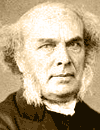 Horatius Bonar
in Rev. 21:3. God's Tabernacle on Earth
Read in context
Every tache and every loop, every board and every fillet, everything was marked down in the divine plan, and Moses must build everything according to the pattern which he had seen in the Mount.
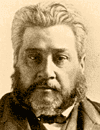 C.H. Spurgeon
in Importance of Small Things in Religion
Read in context
God gave Moses specific instructions about the sizes of the different parts of the tabernacle and the materials to be used for each.
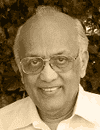 Zac Poonen
in The Meaning of the Tabernacle
Read in context
Those who do not realize this will always add their human ideas to God's commandments.
Zac Poonen
in The Meaning of the Tabernacle
Read in context
This indicates that there is only one way to God and into the church - through Christ alone.
Zac Poonen
in The Meaning of the Tabernacle
Read in context
It is only as we follow God's pattern exactly that His glory can fill a local church.
Zac Poonen
in The Meaning of the Tabernacle
Read in context
There are many things about the tabernacle that give us an understanding about God's dwelling with man and also about the church - God's ultimate dwelling place.
Zac Poonen
in The Meaning of the Tabernacle
Read in context
It is the secret of the willing heart that gives its best to God.
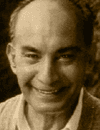 Bakht Singh
in (Pdf Book) God's Dwelling Place
Read in context
From Revelation 8:2-3 also, we see that incense is a symbol of the prayers of the saints.
Bakht Singh
in (Pdf Book) God's Dwelling Place
Read in context
We know that this Altar of Incense meant prayer because the Jews, themselves, so interpreted it.
C.H. Spurgeon
in Incense and Light
Read in context
There was no coming within the veil without passing by the incense altar, even as there is no access to God but by the all-powerful mediation of the Lord Jesus Christ!
C.H. Spurgeon
in Incense and Light
Read in context
And, as the candlestick stood side by side with it, and represented the light of the Spirit of Truth, so must true prayer and true knowledge never be separated.
C.H. Spurgeon
in Incense and Light
Read in context
We are here told that the Spirit signifies by means of these ordinances, that the way into the holiest of all was not yet manifest.
 Robert Murray M'Cheyne
in The Service of the Tabernacle
Read in context
This ark was the object of great reverence and very fitly so, because it symbolized God's Presence, the Presence of Jehovah, the living God, in the midst of His people.
C.H. Spurgeon
in The Ark of the Covenant
Read in context
Our Lord Jesus, by His coming, has put out of His people's thoughts the material ark of the covenant because its meaning is fulfilled in Him!
C.H. Spurgeon
in The Ark of the Covenant
Read in context
The Ark of the Covenant was made according to the pattern which Moses saw in the holy Mountain and above its Mercy Seat was the place where God dwelt and communed with His people.
C.H. Spurgeon
in Our Sanctuary
Read in context
This name is given to that part of the ark, in the holy of holies, whereon the blood used to be sprinkled on the day of atonement.
 Andrew Bonar
in The Mercy Seat
Read in context
No holiness is laid down on that blood, for it is from all sin that the blood cleanses.
Andrew Bonar
in The Mercy Seat
Read in context
As he fulfilled these commands the glory of the Lord descended and filled the tabernacle until there was no room for Moses.
 A.B. Simpson
in And the Glory of the Lord Filled the Tabernacle
Read in context
God is in Christ Jesus; Christ Jesus is God; and in His blessed person God dwells in the midst of us as in a tent; for such is the force of the original in our text.
C.H. Spurgeon
in The True Tabernacle, and Its Glory of Grace and Peace
Read in context
There is fullness of grace in the fact of the Word made flesh tabernacling among us.
C.H. Spurgeon
in The True Tabernacle, and Its Glory of Grace and Peace
Read in context
The Tabernacle was the type of our Lord Jesus Christ, for God dwells among men in Christ.
C.H. Spurgeon
in Silver Sockets—Redemption the Foundation!
Read in context
And just as the tabernacle was the meeting place with God, so Christ is the meeting place between a sinner and God.
Robert Murray M'Cheyne
in The Word Made Flesh
Read in context
It was as he was dying, that the veil of the temple was rent in twain from top to bottom--a miracle-parable signifying that the way to God was now open to every weary one who would come.
 J.R. Miller
in The Golden Gate of Prayer
Read in context
Just as the veil of the temple was rent from top to bottom when Jesus died, so the way is opened into the Most Holy for us now.
 T. Austin-Sparks
in 'neither... nor... but...'
Read in context
Sin is so completely lifted from us by the vicarious sacrifice of Christ, that we have boldness to enter where Jehovah Himself dwells.
C.H. Spurgeon
in The Rent Veil
Read in context
My brothers, there is no way into the holiest, even though the veil be rent, without blood.
C.H. Spurgeon
in The Rent Veil
Read in context
The saints are built together as a spiritual house, a habitation of God through the Spirit.
C.H. Spurgeon
in Holiness, The Law of God's House
Read in context
It is a spiritual sanctuary, a habitation of God through the Spirit.
T. Austin-Sparks
in The New Age of the Holy Spirit
Read in context
What Scripture says
- Exodus 25:8 a sanctuary, so that God may dwell among them
- Exodus 25:40 everything made according to the pattern shown on the mountain
- Exodus 25:22 God meets with His people above the mercy seat
- Exodus 40:34 the glory of the LORD filled the tabernacle
- Leviticus 17:11 the blood makes atonement upon the altar
- Hebrews 8:5 a copy and shadow of what is in heaven
- Hebrews 9:8 the way into the Most Holy Place was not yet disclosed
- Hebrews 9:12 Christ entered once for all by His own blood
- Hebrews 9:24 Christ entered heaven itself to appear for us before God
- Hebrews 10:19 confidence to enter the Most Holy Place by the blood of Jesus
- John 1:14 the Word became flesh and made His dwelling among us
- Revelation 21:3 the dwelling place of God is with man
How this page is made: the quotes are taken word for word from sermons on SermonIndex and checked against them by program before the page is published. The transcripts of audio and video sermons are machine-made, so follow the link to hear the words as they were spoken. The answer above the quotes is an overview with its sources listed; it is not a statement of doctrine by SermonIndex.