
Imputed righteousness is the righteousness of God in Christ credited to the one who believes, as Abraham's faith was credited to him as righteousness. The preachers quoted here explain what crediting means, how our sin was laid on Christ, the picture of the robe, how this differs from the holiness the Spirit works in us, and the charge that it makes men careless. They differ on whether Christ's obedience to the law is itself imputed, and both sides are given.
Imputed righteousness means that God credits to the account of the one who believes a righteousness that is not his own: the righteousness of God in Christ. The sinner does not earn it or grow into it. It is counted to him. Paul speaks of "the blessedness of the man to whom God credits righteousness apart from works" (Romans 4:6). J.C. Ryle wrote, "The true Christian is counted righteous for the sake of a Divine Saviour, Jesus Christ, the Son of God."1
The word Paul uses
The older English Bibles say imputed. The BSB says credited and counted. The idea is the same: something is set down to a person's account. Moses wrote of Abraham, "Abram believed the LORD, and it was credited to him as righteousness." (Genesis 15:6). Paul quotes it: "Abraham believed God, and it was credited to him as righteousness." (Romans 4:3). Then he explains it by the language of wages and gifts. "Now the wages of the worker are not credited as a gift, but as an obligation." (Romans 4:4).
Thomas Brooks wrote of the Hebrew word, "It is taken by a borrowed speech from merchants' reckonings and accounts, who have their debt-books, wherein they set down how their reckonings stand in the particulars they deal in."2 A.A. Hodge wrote, "The phrases to impute, reckon, count sin or righteousness are absolutely consistent only with a forensic interpretation."3 The question is not first what a man is in himself, but how he stands in the reckoning of God the Judge.
Credited as a gift, not paid as wages
A wage is owed. A gift is not. Paul sets the two against each other and puts righteousness on the side of the gift. "However, to the one who does not work, but believes in Him who justifies the wicked, his faith is credited as righteousness." (Romans 4:5). God does not justify the godly for their godliness. He justifies the wicked who believe.
John Bunyan wrote, "The cause of imputation is God's grace and love, not the sinner's works of righteousness."4 W.H. Griffith Thomas wrote, "It is absolutely impossible for anything human to form the foundation of acceptance with God, for our obedience to law could not bring this about."5 John Wesley said, "We must cast away all confidence in our own righteousness, or we cannot have a true confidence in his."6 He went on, "Till we are delivered from trusting in anything that we do, we cannot throughly trust in what he has done and suffered."6
Apart from works
Paul calls David as a second witness. David speaks "of the blessedness of the man to whom God credits righteousness apart from works" (Romans 4:6) and Paul quotes the psalm: "Blessed is he whose transgressions are forgiven, whose sins are covered." (Psalm 32:1). "Blessed is the man whose iniquity the LORD does not count against him" (Psalm 32:2). Two things are counted here. Sin is not counted against the man, and righteousness is counted to him.
Charles Spurgeon said, "The gratification of creature passions and earthly desires is illusive—a shadow and a fiction; but the blessedness of the justified, the blessedness of the man to whom God imputeth righteousness is substantial and true."7 A.W. Pink wrote that justification is more than pardon: "A criminal may be pardoned, but only a righteous person can truly be justified."8
Written for us too
Abraham is not a special case. Paul says the words were written "not only for Abraham," (Romans 4:23). "but also for us, to whom righteousness will be credited—for us who believe in Him who raised Jesus our Lord from the dead." (Romans 4:24). He then names the ground: "He was delivered over to death for our trespasses and was raised to life for our justification." (Romans 4:25).
Several preachers quoted here say that faith receives this righteousness and is not itself the thing received. Wesley said, "The righteousness of Christ is the whole and sole foundation of all our hope."6 He added, "God gives this faith; in that moment we are accepted of God; and yet, not for the sake of that faith, but of what Christ has done and suffered for us."6 Griffith Thomas wrote, "Faith is therefore the acknowledgment of our own inability and the admission of our need of another's ability."5 He wrote, "Faith is nothing apart from its object, and is only valuable as it leads us to Him who has wrought a perfect righteousness, and as it enables us to appropriate Him as the Lord our righteousness."5 Spurgeon said, "We are made righteous only by an act of faith in the work of Jesus Christ."9
Our sin laid on Christ
The other side of the exchange is the cross. Isaiah wrote, "We all like sheep have gone astray, each one has turned to his own way; and the LORD has laid upon Him the iniquity of us all." (Isaiah 53:6). Paul says, "God made Him who knew no sin to be sin on our behalf, so that in Him we might become the righteousness of God." (2 Corinthians 5:21). Christ had no sin of His own. Our sin was counted to Him, and He bore it. Peter writes, "He Himself bore our sins in His body on the tree, so that we might die to sin and live to righteousness." (1 Peter 2:24).
Ryle wrote of this exchange, "Christ's righteousness is placed upon him, and his sins are placed upon Christ."1 He went on, "Christ has been reckoned a sinner for his sake, and now he is reckoned innocent for Christ's sake."1 Brooks wrote, "Christ's righteousness is imputed to us in that way wherein our sin was imputed to him."10 Pink wrote, "Christ could not have suffered in the stead of the guilty unless their guilt had been first transferred to Him."11 Hugh Martin wrote, "Sin imputed to a holy one must produce effects directly the reverse of righteousness imputed to a sinner."12
Paris Reidhead said that when a sinner turns to Christ, "all of the record of your guilt is laid on Jesus Christ and the righteousness, the spotless perfection, the infinite holiness of Jesus Christ is credited to your account."13
The Lord Our Righteousness
Jeremiah foretold a King from David's line. "I will raise up for David a righteous Branch" (Jeremiah 23:5). "And this is His name by which He will be called: The LORD Our Righteousness." (Jeremiah 23:6). Paul says the same of Christ: "It is because of Him that you are in Christ Jesus, who has become for us wisdom from God: our righteousness, holiness, and redemption." (1 Corinthians 1:30).
George Whitefield said to believers, "The Lord, the Lord Christ, the everlasting God, is your righteousness."14 Preaching on 1 Corinthians 1:30, he said, "We must first, therefore, look for a righteousness without us, even the righteousness of our Lord Jesus Christ: for this reason the apostle mentions it, and puts it before sanctification, in the words of the text."15
Spurgeon said, "He who believes in Jesus, has Jesus Christ to be his own Christ, and the righteousness of Christ belongs to that believer, and is his."16 He did not mean that God pretends. He said, "He reckons us to be righteous in Christ, and he does not reckon wrongly; the imputation is not a legal fiction or a charitable error."16 He said again, "Depend upon it, God's imputation is not like human imputation, which makes a thing to be what it is not: we are in Christ made actually righteous, because we are one with him."16
Found in Him
Paul had a fine record by the standards of men, and he let it go. "I count all things as loss compared to the surpassing excellence of knowing Christ Jesus my Lord" (Philippians 3:8). He wanted to "be found in Him, not having my own righteousness from the law, but that which is through faith in Christ, the righteousness from God on the basis of faith." (Philippians 3:9). The righteousness he wanted was not from the law and not from himself. It was from God.
Isaiah's verdict on our own best is plain: "all our righteous acts are like filthy rags" (Isaiah 64:6). Pink said, "We have to be stripped of the filthy rags of our self-righteousness before we are ready for the garments of salvation."17 Spurgeon said, "Believe me, God will not let his people wear a rag of their own spinning; they must be clothed with Christ's righteousness from head to foot."18 He said to his students, "No man will ever put on the robe of Christ's righteousness till he is stripped of his fig leaves, nor will he wash in the fount of mercy till he perceives his filthiness."19
The robe of righteousness
Scripture often pictures this righteousness as clothing. Isaiah wrote, "I will rejoice greatly in the LORD, my soul will exult in my God; for He has clothed me with garments of salvation and wrapped me in a robe of righteousness, as a bridegroom wears a priestly headdress, as a bride adorns herself with her jewels." (Isaiah 61:10). The prodigal son came home in rags, and his father said, "Quick! Bring the best robe and put it on him." (Luke 15:22).
Ryle wrote of the justified man, "He is clothed in a robe of perfect righteousness, and may sit down by the side of angels without feeling ashamed."1 Spurgeon said, "It is compared to wrought gold; then I am, if I wear it, dignified and beautiful, and worthy to sit at the wedding feast of the King of kings."20 Brooks wrote, "The robe of righteousness which we have gotten by Christ, the second Adam, is far more glorious than that which we were deprived of by the first Adam."21 F.W. Krummacher wrote, "The mantle which our Saviour has left to every one of his followers is the robe of his own righteousness, a festal robe indeed!"22 Spurgeon said of the garments of salvation, "Every child of God should be clothed with the garments of salvation: his Saviour has prepared them for this end, and let him wrap them about him and be glad, for these garments make him beautiful in the sight of God."23
The king in the parable found a guest without the wedding garment and asked him "how did you get in here without wedding clothes?" (Matthew 22:12). Preachers have read this garment in more than one way. Stephen Charnock wrote, "Christ's righteousness only is our wedding-garment, our graces are but as the fringes of it."24 Spurgeon said that the garment includes both the righteousness counted to us and the holiness worked in us: "But we might with equal truth say that the wedding dress is a holy character, the imparted righteousness which the Holy Spirit works in us, and which is equally necessary as a proof of grace."25
Joshua's filthy clothes
Zechariah saw the high priest on trial. "Then the angel showed me Joshua the high priest standing before the angel of the LORD, with Satan standing at his right hand to accuse him." (Zechariah 3:1). "Now Joshua was dressed in filthy garments as he stood before the angel." (Zechariah 3:3). The Lord did not deny the filth. He removed it. The angel said, "Take off his filthy clothes!" (Zechariah 3:4) and to Joshua, "See, I have removed your iniquity, and I will clothe you with splendid robes." (Zechariah 3:4).
Alexander Maclaren wrote, "The accusations are dismissed, their bringer rebuked, and in token of acquittal, the filthy garments which the accused had worn are changed for the full festal attire of the high priest."26 He wrote, "The sentence is followed by the exchange of the filthy garments symbolical of sin, for the full array of the high priest."27 Spurgeon said, "There is something that a man can sleep on and wake on, can live on and die on, in the firm conviction that he is received by God as though the deeds of Christ were his deeds, and the righteousness of Christ his righteousness."20
Two men and two results
Paul sets Adam beside Christ. "So then, just as one trespass brought condemnation for all men, so also one act of righteousness brought justification and life for all men." (Romans 5:18). "For just as through the disobedience of the one man the many were made sinners, so also through the obedience of the one man the many will be made righteous." (Romans 5:19). One act of disobedience brought condemnation on many. One act of righteousness brings justification and life to many. Paul also calls this righteousness a gift: "those who receive an abundance of grace and of the gift of righteousness" (Romans 5:17).
Spurgeon read Romans 5 as a pattern of imputation, in the fall as in the rising. He said, "The angels fell personally and individually, and they never rise, but we fell in another, and we have therefore the power given by divine grace to rise in another."20 He said, "The root of the fall is found in the federal relationship of Adam to his seed; thus we fell by imputation."20 That is his reading of the passage.
Credited and worked in: not the same thing
Imputed righteousness is not the same as the holiness the Spirit works in the believer. One is counted to him. The other is worked in him. Both are the gift of God, and Scripture keeps them together without mixing them.
William Gurnall wrote, "The imputed righteousness, is that which is wrought by Christ for the believer; the imparted, that which is wrought by Christ in the believer."28 Pink wrote of sanctification and justification, in that order: "The one is gradual and progressive, the other is instantaneous and immutable."8 He went on, "The one admits of degrees, and is never perfect in this life; the other is complete and admits of no addition."8 Griffith Thomas wrote, "The two are inseparable in fact, but they are distinguishable in thought, and must certainly be kept quite clear of each other if we desire peace and blessing."5
Spurgeon said, "You are not so sanctified to-night as you will be in the glory land, but you are as righteous as you can be even there."16 Ryle wrote, "We must be careful to distinguish between justification and sanctification."1 He added, "We must beware that we do not make a Christ of holiness."1 Brooks wrote, "It is not safe to pore more upon inherent righteousness than upon imputed righteousness."29
The one never comes without the other. Wesley said, "That is, I believe God implants righteousness in every one to whom he has imputed it."6 Spurgeon said, "No one ever had the imputed righteousness of Christ without receiving at the same time a measure of the righteousness wrought in us by the Holy Spirit."30 Handley Moule wrote, "He who is our justifying and imputed Righteousness is also, by His Spirit, our sanctifying and inherent Life; and it is faith, mere and simple faith, submissive trust, that receives and feeds on Him as such."31 Hugh Binning said, "The most part of those that profess the gospel are of two sorts; they do either divide holiness from imputed righteousness, or Christ's righteousness from holiness."32
Does it make men careless?
The oldest objection is that if righteousness is counted and not earned, men will sin freely. Paul raised it himself. "What then shall we say? Shall we continue in sin so that grace may increase?" (Romans 6:1). "Certainly not! How can we who died to sin live in it any longer?" (Romans 6:2).
Whitefield said, "It is true, this, as well as every other doctrine of grace, may be abused."14 He went on, "The only question should be, Whether or not this doctrine of an imputed righteousness, does in itself cut off the occasion of good works, or lean to licentiousness?"14 He said in another sermon, "The world says, because we preach faith we deny good works; this is the usual objection against the doctrine of imputed righteousness, but it is a slander, an impudent slander."33 Spurgeon said, "There is no doctrine of the grace of God so gracious that graceless men may not turn it into licentiousness."34 Hodge wrote, "It is evident that the doctrines of satisfaction by Christ, and of justification by the imputation of his righteousness, as held by the Lutheran and Reformed Churches, have nothing in common with Antinomianism."35
The preachers answer that the faith which receives this righteousness is a living faith. Spurgeon said, "That faith, if true, always produces holiness of life, but our being righteous before God is not because of our holiness in life in any degree or respect, but simply because of our faith in the divine promise."9 Ryle wrote, "Beyond doubt, repentance, holiness, love, humility, prayerfulness, will always be seen in the justified man."1 He went on, "Nothing joins a man to Christ, nothing justifies, but simple faith."1 He also wrote, "Exalting man's goodness and merits never makes men so holy as exalting Christ."1 Krummacher wrote, "The faith of the heart in his imputed righteousness is the only true spring and principle of all Christian virtue."36
Preachers who differ on the details give the same warning. Wesley said, "O warn them that if they remain unrighteous, the righteousness of Christ will profit them nothing!"6 Adam Clarke wrote, "A righteousness imputed, and not possessed and practised, will not avail where God judgeth according to every man's work."37 Grace teaches the opposite of carelessness: "For the grace of God has appeared, bringing salvation to everyone." (Titus 2:11). "It instructs us to renounce ungodliness and worldly passions, and to live sensible, upright, and godly lives in the present age," (Titus 2:12).
Peace with God
Righteousness counted to us brings peace that does not rise and fall with our feelings. "Therefore, since we have been justified through faith, we have peace with God through our Lord Jesus Christ," (Romans 5:1). Ryle wrote, "No peace shall prove solid, substantial, and unbroken, but the peace which is built on justification."1 Spurgeon said, "We are endowed with a righteousness, not of our own performing, but of his imputing."38
Where preachers differ
All the preachers quoted on this page hold that the believer is accepted by God for Christ's sake, by faith, and not for his own works. They differ on what exactly is credited.
Many hold that Christ's whole obedience is counted to the believer: His death, which bore the penalty, and His life, which kept the law. Spurgeon said, "As the merit of his blood takes away our sin, so the merit of his obedience is imputed to us for righteousness."20 Whitefield said, "Christ not only died, but lived, not only suffered, but obeyed for, or instead of, poor sinners."14 Brooks wrote, "The sinner himself being altogether unable to fulfil the law, that he may stand righteous before the great and glorious God, Christ's fulfilling of it must necessarily be imputed to him in order to righteousness."39 Pink wrote, "Christ's obedience is legally transferred to him so that he is now rightly and justly regarded as righteous by the Divine Law."11
John Wesley needs to be read with care. In a letter to James Hervey in 1756, answering Hervey's book, he urged him not to dispute for the phrase the imputed righteousness of Christ. He said the phrase is not scriptural and not necessary, and that it had done immense hurt by making men satisfied without holiness. In the same letter he wrote, "But if it be, there is no manner of need to make the imputation of His active righteousness a separate and labored head of discourse."40 Yet in his sermon The Lord Our Righteousness he affirmed the doctrine as he defined it. He said, "I always did, and do still continually affirm, that the righteousness of Christ is imputed to every believer."6 He did not separate Christ's life from His death: "But as the active and passive righteousness of Christ were never, in fact, separated from each other, so we never need separate them at all, either in speaking or even in thinking."6 He said, "We no more deny the phrase than the thing; but we are unwilling to obtrude it on other men."6 In the same sermon he said that faith is imputed for righteousness to every believer, and explained that he meant by this only that we are justified by faith and not by works, for the sake of what Christ has done and suffered.
Others did not accept that Christ's keeping of the law is counted to us. Clarke wrote of Romans 4, "It is repeatedly said that faith is imputed for righteousness; but in no place here that Christ's obedience to the moral law is imputed to any man."41 He wrote, "Jesus, therefore, died for man; and it is through his blood, the merit of his passion and death, that we have redemption; and not by his obedience to the moral law in our stead: our salvation was obtained at a much higher price."42 He wrote, "This doctrine of the imputed righteousness of Christ is capable of great abuse."43 Richard Watson wrote, "The first objection to this opinion is, that it is nowhere stated in Scripture that Christ's personal righteousness is imputed to us."44
Charles Finney rejected imputation as commonly taught. He held that justification is a pardon on the ground of Christ's atonement. He said, "Under the gospel, sinners are not justified by having the obedience of Jesus Christ set down to their account, as if He had obeyed the law for them, or in their stead."45 He said, "It is not required that the obedience of another should be imputed to us."46 He said, "Gospel justification is pardon and acceptance, as if he was righteous, but on other grounds than his own obedience."47 He also said, "Faith is accounted for just what it is, and not for something else that it is not."48
Those who hold to imputation answer that faith does not justify as a work. Spurgeon said, "Faith cannot be its own righteousness, for it is of the very nature of faith to look out of self to Christ."9 Those on the other side say Paul's words, that faith is credited as righteousness, mean what they say. This page does not decide between them. Both sides hold that a man is accepted only for Christ's sake, and both warn against claiming His righteousness while living in sin.
Boasting excluded
When righteousness is credited as a gift, there is nothing left to boast of. Paul ends his words on Christ our righteousness with this: "Let him who boasts boast in the Lord." (1 Corinthians 1:31). Bunyan wrote, "Righteousness by imputation must be first, to cut off boasting from the heart, conceit, and lips of men."49
- J.C. Ryle, "Justified!" (sermon).
- Thomas Brooks, Writings of Thomas Brooks, "Volume 5".
- A.A. Hodge, Writings of A A Hodge, "Justification".
- John Bunyan, The Pharisee And Publican, "The pharisee and the publican".
- W.H. Griffith Thomas, "Justification" (sermon).
- John Wesley, "The Lord Our Righteousness" (sermon).
- C.H. Spurgeon, The Present Truth, "A Present Pardon".
- A.W. Pink, "The Doctrine of Justification 2. Its Meaning" (sermon).
- C.H. Spurgeon, "Justification by Faith—Illustrated by Abram's Righteousness" (sermon).
- Thomas Brooks, Writings of Thomas Brooks, "Volume 5".
- A.W. Pink, "The Doctrine of Justification 5. Its Nature" (sermon).
- Hugh Martin, The Shadow of Calvary, "Part 1 - Gethesemane the Incidents".
- Paris Reidhead, "Rediscovering the Majesty of God" (sermon).
- George Whitefield, "The Lord Our Righteousness. (Jer. 23:6)" (sermon).
- George Whitefield, "Christ, the Believer's Wisdom, Righteousness, Sanctification, and Redemption. (1 Cor. 1:30)" (sermon).
- C.H. Spurgeon, "The Fourfold Treasure" (sermon).
- A.W. Pink, "The Word of Salvation" (sermon).
- Charles Haddon Spurgeon, Spurgeon's Sermons Volume 62: 1916, "Coming to Christ".
- Charles H. Spurgeon, Lectures to my students by charles spurgeon (4 Volumes), "Vol 03 - LECTURE 10 - ON CONVERSION AS OUR AIM".
- C.H. Spurgeon, "Jehovah Tsidkenu The Lord Our Righteousness" (sermon).
- Thomas Brooks, Writings of Thomas Brooks, "Volume 5".
- F.W. Krummacher, Writings of F W Krummacher - Volume 1, "The Legacy".
- C.H. Spurgeon, The Mourner's Comforter, "Chapter Six: The Garment of Praise".
- Stephen Charnock, Writings of Stephen Charnock, "A discourse of self-examination".
- C.H. Spurgeon, Spurgeons Sermons Volume 17 1871, "The Wedding Garment".
- Alexander Maclaren, Expositions Of Holy Scripture A, "A vision of judgement and cleansing".
- Alexander Maclaren, Expositions Of Holy Scripture A, "A vision of judgement and cleansing".
- William Gurnall, "The Christian in Complete Armour - Part 9" (sermon).
- Thomas Brooks, Writings of Thomas Brooks, "Volume 3".
- C.H. Spurgeon, Spurgeons Sermons Volume 17 1871, "The Wedding Garment".
- Handley C.G. Moule, Thoughts on the Spiritual Life, "Chapter 1: Work and Faith".
- Hugh Binning, The Works Of The Rev Hugh Binning, "Sermon VI. |Who walk not after the flesh, but after the Spirit.|".
- George Whitefield, "The Good Shepherd [A Farewell Sermon] (John 10:27-28)" (sermon).
- C.H. Spurgeon, Messages to the Multitudes, "The Dying Thief In A New Light".
- A.A. Hodge, Writings of A A Hodge, "The Atonement:its Nature, Necessity, Perfection, and Extent".
- F.W. Krummacher, Writings of F W Krummacher - Volume 1, "The Journey to Ekron".
- Adam Clarke, Writings of Adam Clarke, "Justification".
- C.H. Spurgeon, The Present Truth, "A Distinct Message".
- Thomas Brooks, Writings of Thomas Brooks, "Volume 5".
- John Wesley, The Letters of John Wesley.
- Adam Clarke, Writings of Adam Clarke, "Justification".
- Adam Clarke, Writings of Adam Clarke, "Justification".
- Adam Clarke, Writings of Adam Clarke, "Justification".
- Richard Watson, Theological Institutes, "CHAPTER 23 Benefits Derived To Man From The Atonement - Justification".
- Charles Finney, Writings of Charles Finney - Volume 1, "Justification by faith".
- Charles Finney, Writings of Charles Finney - Volume 1, "Justification by faith".
- Charles Finney, Writings of Charles Finney - Volume 1, "Justification by faith".
- Charles Finney, Writings of Charles Finney - Volume 1, "Justification by faith".
- John Bunyan, The Pharisee And Publican, "The pharisee and the publican".
In their own words
Each line below is quoted exactly from a sermon on this site. Follow the link to hear or read it where it was said.
The true Christian is counted righteous for the sake of a Divine Saviour, Jesus Christ, the Son of God.
 J.C. Ryle
in Justified!
Read in context
Christ's righteousness is placed upon him, and his sins are placed upon Christ.
J.C. Ryle
in Justified!
Read in context
Christ has been reckoned a sinner for his sake, and now he is reckoned innocent for Christ's sake.
J.C. Ryle
in Justified!
Read in context
He is clothed in a robe of perfect righteousness, and may sit down by the side of angels without feeling ashamed.
J.C. Ryle
in Justified!
Read in context
We must be careful to distinguish between justification and sanctification.
J.C. Ryle
in Justified!
Read in context
We must beware that we do not make a Christ of holiness.
J.C. Ryle
in Justified!
Read in context
Beyond doubt, repentance, holiness, love, humility, prayerfulness, will always be seen in the justified man.
J.C. Ryle
in Justified!
Read in context
Nothing joins a man to Christ, nothing justifies, but simple faith.
J.C. Ryle
in Justified!
Read in context
Exalting man's goodness and merits never makes men so holy as exalting Christ.
J.C. Ryle
in Justified!
Read in context
No peace shall prove solid, substantial, and unbroken, but the peace which is built on justification.
J.C. Ryle
in Justified!
Read in context
It is absolutely impossible for anything human to form the foundation of acceptance with God, for our obedience to law could not bring this about.
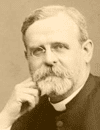 W.H. Griffith Thomas
in Justification
Read in context
Faith is therefore the acknowledgment of our own inability and the admission of our need of another's ability.
W.H. Griffith Thomas
in Justification
Read in context
Faith is nothing apart from its object, and is only valuable as it leads us to Him who has wrought a perfect righteousness, and as it enables us to appropriate Him as the Lord our righteousness.
W.H. Griffith Thomas
in Justification
Read in context
The two are inseparable in fact, but they are distinguishable in thought, and must certainly be kept quite clear of each other if we desire peace and blessing.
W.H. Griffith Thomas
in Justification
Read in context
We must cast away all confidence in our own righteousness, or we cannot have a true confidence in his.
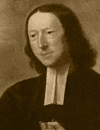 John Wesley
in The Lord Our Righteousness
Read in context
Till we are delivered from trusting in anything that we do, we cannot throughly trust in what he has done and suffered.
John Wesley
in The Lord Our Righteousness
Read in context
The righteousness of Christ is the whole and sole foundation of all our hope.
John Wesley
in The Lord Our Righteousness
Read in context
God gives this faith; in that moment we are accepted of God; and yet, not for the sake of that faith, but of what Christ has done and suffered for us.
John Wesley
in The Lord Our Righteousness
Read in context
That is, I believe God implants righteousness in every one to whom he has imputed it.
John Wesley
in The Lord Our Righteousness
Read in context
O warn them that if they remain unrighteous, the righteousness of Christ will profit them nothing!
John Wesley
in The Lord Our Righteousness
Read in context
I always did, and do still continually affirm, that the righteousness of Christ is imputed to every believer.
John Wesley
in The Lord Our Righteousness
Read in context
But as the active and passive righteousness of Christ were never, in fact, separated from each other, so we never need separate them at all, either in speaking or even in thinking.
John Wesley
in The Lord Our Righteousness
Read in context
We no more deny the phrase than the thing; but we are unwilling to obtrude it on other men.
John Wesley
in The Lord Our Righteousness
Read in context
A criminal may be pardoned, but only a righteous person can truly be justified.
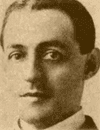 A.W. Pink
in The Doctrine of Justification 2. Its Meaning
Read in context
The one is gradual and progressive, the other is instantaneous and immutable.
A.W. Pink
in The Doctrine of Justification 2. Its Meaning
Read in context
The one admits of degrees, and is never perfect in this life; the other is complete and admits of no addition.
A.W. Pink
in The Doctrine of Justification 2. Its Meaning
Read in context
We are made righteous only by an act of faith in the work of Jesus Christ.
 C.H. Spurgeon
in Justification by Faith—Illustrated by Abram’s Righteousness
Read in context
That faith, if true, always produces holiness of life, but our being righteous before God is not because of our holiness in life in any degree or respect, but simply because of our faith in the divine promise.
C.H. Spurgeon
in Justification by Faith—Illustrated by Abram’s Righteousness
Read in context
Faith cannot be its own righteousness, for it is of the very nature of faith to look out of self to Christ.
C.H. Spurgeon
in Justification by Faith—Illustrated by Abram’s Righteousness
Read in context
Christ could not have suffered in the stead of the guilty unless their guilt had been first transferred to Him.
A.W. Pink
in The Doctrine of Justification 5. Its Nature
Read in context
Christ's obedience is legally transferred to him so that he is now rightly and justly regarded as righteous by the Divine Law.
A.W. Pink
in The Doctrine of Justification 5. Its Nature
Read in context
The Lord, the Lord Christ, the everlasting God, is your righteousness.
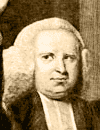 George Whitefield
in The Lord Our Righteousness. (Jer. 23:6)
Read in context
It is true, this, as well as every other doctrine of grace, may be abused.
George Whitefield
in The Lord Our Righteousness. (Jer. 23:6)
Read in context
The only question should be, Whether or not this doctrine of an imputed righteousness, does in itself cut off the occasion of good works, or lean to licentiousness?
George Whitefield
in The Lord Our Righteousness. (Jer. 23:6)
Read in context
Christ not only died, but lived, not only suffered, but obeyed for, or instead of, poor sinners.
George Whitefield
in The Lord Our Righteousness. (Jer. 23:6)
Read in context
We must first, therefore, look for a righteousness without us, even the righteousness of our Lord Jesus Christ: for this reason the apostle mentions it, and puts it before sanctification, in the words of the text.
George Whitefield
in Christ, the Believer's Wisdom, Righteousness, Sanctification, and Redemption. (1 Cor. 1:30)
Read in context
He who believes in Jesus, has Jesus Christ to be his own Christ, and the righteousness of Christ belongs to that believer, and is his.
C.H. Spurgeon
in The Fourfold Treasure
Read in context
He reckons us to be righteous in Christ, and he does not reckon wrongly; the imputation is not a legal fiction or a charitable error.
C.H. Spurgeon
in The Fourfold Treasure
Read in context
Depend upon it, God's imputation is not like human imputation, which makes a thing to be what it is not: we are in Christ made actually righteous, because we are one with him.
C.H. Spurgeon
in The Fourfold Treasure
Read in context
You are not so sanctified to-night as you will be in the glory land, but you are as righteous as you can be even there.
C.H. Spurgeon
in The Fourfold Treasure
Read in context
We have to be stripped of the filthy rags of our self-righteousness before we are ready for the garments of salvation.
A.W. Pink
in The Word of Salvation
Read in context
It is compared to wrought gold; then I am, if I wear it, dignified and beautiful, and worthy to sit at the wedding feast of the King of kings.
C.H. Spurgeon
in Jehovah Tsidkenu The Lord Our Righteousness
Read in context
There is something that a man can sleep on and wake on, can live on and die on, in the firm conviction that he is received by God as though the deeds of Christ were his deeds, and the righteousness of Christ his righteousness.
C.H. Spurgeon
in Jehovah Tsidkenu The Lord Our Righteousness
Read in context
The angels fell personally and individually, and they never rise, but we fell in another, and we have therefore the power given by divine grace to rise in another.
C.H. Spurgeon
in Jehovah Tsidkenu The Lord Our Righteousness
Read in context
The root of the fall is found in the federal relationship of Adam to his seed; thus we fell by imputation.
C.H. Spurgeon
in Jehovah Tsidkenu The Lord Our Righteousness
Read in context
As the merit of his blood takes away our sin, so the merit of his obedience is imputed to us for righteousness.
C.H. Spurgeon
in Jehovah Tsidkenu The Lord Our Righteousness
Read in context
The imputed righteousness, is that which is wrought by Christ for the believer; the imparted, that which is wrought by Christ in the believer.
 William Gurnall
in The Christian in Complete Armour - Part 9
Read in context
The world says, because we preach faith we deny good works; this is the usual objection against the doctrine of imputed righteousness, but it is a slander, an impudent slander.
George Whitefield
in The Good Shepherd [A Farewell Sermon] (John 10:27-28)
Read in context
What Scripture says
- Romans 4:5 his faith is credited as righteousness
- Romans 4:6 God credits righteousness apart from works
- Genesis 15:6 Abram believed the LORD, and it was credited to him as righteousness
- Romans 4:24 written also for us, to whom righteousness will be credited
- 2 Corinthians 5:21 made sin on our behalf, so that in Him we might become the righteousness of God
- Philippians 3:9 not having my own righteousness from the law
- Jeremiah 23:6 The LORD Our Righteousness
- 1 Corinthians 1:30 Christ has become for us our righteousness
- Isaiah 61:10 wrapped me in a robe of righteousness
- Zechariah 3:4 I have removed your iniquity
- Romans 5:19 through the obedience of the one man the many will be made righteous
How this page is made: the quotes are taken word for word from sermons on SermonIndex and checked against them by program before the page is published. The transcripts of audio and video sermons are machine-made, so follow the link to hear the words as they were spoken. The answer above the quotes is an overview with its sources listed; it is not a statement of doctrine by SermonIndex.