
The preachers quoted here say the church is not a building, a denomination or an organization but a people: the body through which Christ expresses himself, God's family and dwelling place, and the bride Christ is preparing. They say each local church is the whole church in miniature, and that belonging to Christ carries the responsibility of belonging to his people.
In the New Testament the church is never a building or an institution. It is a people: those whom God has called out of the world to belong to his Son. Jesus spoke of it as his own: "on this rock I will build My church, and the gates of Hades will not prevail against it" (Matthew 16:18).
The meaning of the word
The word translated "church" is ekklesia, an assembly of people called out.1 C. I. Scofield noted, "The word means, in itself, no more than a called out assembly."2 Marvin Cowan says it "refers to a called-out people or a congregation", and that it is used both of all Christians and of local assemblies of believers.3 So the New Testament speaks of the whole church, "which is His body" (Ephesians 1:22-23), and of particular churches such as "the church of God in Corinth" (1 Corinthians 1:2).
God's eternal purpose
The church was not an afterthought. Paul says God's purpose was "that now, through the church, the manifold wisdom of God should be made known to the rulers and authorities in the heavenly realms, according to the eternal purpose that He accomplished in Christ Jesus our Lord" (Ephesians 3:10-11). Stephen Kaung dwelt on Paul's burden for believers, "that they may know what the church is in God's eternal purpose."4 Alan Redpath traced its history in a sentence: "It was conceived in the mind of God from all eternity but at the cross it was purchased by the Lord Jesus Christ and it was born on the day of Pentecost."5
Built on Christ
Christ is the builder and the foundation. "For no one can lay a foundation other than the one already laid, which is Jesus Christ" (1 Corinthians 3:11). Believers are "built on the foundation of the apostles and prophets, with Christ Jesus Himself as the cornerstone" (Ephesians 2:20). He is also its head: "He is the head of the body, the church" (Colossians 1:18). No pastor, council or denomination holds that place. And the church was bought at a price. Paul calls it "the church of God, which He purchased with His own blood" (Acts 20:28).
The body of Christ
Paul's most frequent picture is a body. "For in one Spirit we were all baptized into one body, whether Jews or Greeks, slave or free" (1 Corinthians 12:13). "Now you are the body of Christ, and each of you is a member of it" (12:27). William MacDonald drew out the meaning: "Thus the body of Christ is the unit through which the Lord chooses to express Himself to the world today."6 Stephen Kaung put it in a phrase: "The church is the corporate expression of Christ."4 Stuart Briscoe insisted on the same starting point: "The biblical concept of the Church is simply the body of Christ."7
A body has many members and each is needed. Paul says the eye cannot tell the hand that it has no need of it (1 Corinthians 12:21). "In Christ we who are many are one body, and each member belongs to one another" (Romans 12:5). A Christian is therefore not an isolated disciple but a member who needs the others and is needed by them.
A living organism
For this reason the church is more than an organization. MacDonald wrote, "It has often been said that the Church is not an organization but an organism."6 An organization can be formed by human planning; a body lives by the life of its head. That is why no one enters the church merely by joining something. Redpath said, "Once a man is a child of God through the new birth, once he has been born from above he is a member of the invisible church and with that privilege goes the responsibility of uniting with a local church."5 Order, leadership and discipline have their place in the New Testament, but they serve the life and cannot replace it.
The household of God
"Therefore you are no longer strangers and foreigners, but fellow citizens with the saints and members of God's household" (Ephesians 2:19). The church is a family. Kaung said, "you not only are born to God, you are born to the family of God."4 Redpath warned against Christians who keep apart from it: "They are spiritual isolationists and they fail to accept their family responsibilities."5 The mark of this family is love: "By this everyone will know that you are My disciples, if you love one another" (John 13:35).
The temple of God
God once dwelt among Israel in a tabernacle and a temple; now he dwells in his people. "In Him the whole building is fitted together and grows into a holy temple in the Lord. And in Him you too are being built together into a dwelling place for God in His Spirit" (Ephesians 2:21-22). Peter writes, "you also, like living stones, are being built into a spiritual house to be a holy priesthood" (1 Peter 2:5). Kaung explained how the stones are shaped: "The church is built with living stones such as we are through the dealing of the Holy Spirit, the discipline of the Holy Spirit."4 MacDonald connected the temple with worship: the word, he wrote, "reminds us that the only true worship God gets on earth today is from those who are members of the Church."6
The bride of Christ
"Christ loved the church and gave Himself up for her to sanctify her, cleansing her by the washing with water through the word, and to present her to Himself as a glorious church, without stain or wrinkle or any such blemish, but holy and blameless" (Ephesians 5:25-27). A. W. Tozer began his account of the church here: "First, let me say that the church is the bride of Christ."8 MacDonald observed, "This view of the Church gives prominence to the idea of affection."6 The picture looks forward: "For the marriage of the Lamb has come, and His bride has made herself ready" (Revelation 19:7). The church on earth is still being cleansed. It is not yet what it will be.
One new man
In the church the deepest human division was removed. Christ "has made the two one and has torn down the dividing wall of hostility", in order "to create in Himself one new man out of the two" (Ephesians 2:14-15). MacDonald wrote that the difference between Jew and Gentile "has been abolished in the Church, and God makes of these two peoples one new man."6 The same holds for every other barrier: "There is neither Jew nor Greek, slave nor free, male nor female, for you are all one in Christ Jesus" (Galatians 3:28).
The pillar of the truth
Paul calls the church "the church of the living God, the pillar and foundation of the truth" (1 Timothy 3:15). MacDonald explained the picture: "In addition to being a support for a building, a pillar was often used in early days for posting public notices."6 The church is to hold the truth up and to make it known. It is not free to reshape the gospel.
What the church does
The first church shows the pattern. "They devoted themselves to the apostles' teaching and to the fellowship, to the breaking of bread and to prayer" (Acts 2:42). Believers are told, "Let us not neglect meeting together, as some have made a habit, but let us encourage one another" (Hebrews 10:25). And the church is sent: "go and make disciples of all nations, baptizing them in the name of the Father, and of the Son, and of the Holy Spirit" (Matthew 28:19). Redpath spelled out what loyalty to a local church involves: "attendance and participation in the devotional and missionary and evangelistic work of a local fellowship, as well as sacrificial giving to maintain its testimony."5
Peter gathers its calling into one sentence: "you are a chosen people, a royal priesthood, a holy nation, a people for God's own possession, to proclaim the virtues of Him who called you out of darkness into His marvelous light" (1 Peter 2:9).
The local church
The one church appears in local churches. Tozer said, "Any local church is what the whole church is, only it's that in miniature, it's that in a smaller degree."8 Christ promised his presence to the smallest gathering: "For where two or three gather together in My name, there am I with them" (Matthew 18:20). He gave leaders "to equip the saints for works of ministry and to build up the body of Christ" (Ephesians 4:12), and elders are told, "Be shepherds of God's flock that is among you ... not lording it over those entrusted to you, but being examples to the flock" (1 Peter 5:2-3).
The Reformers, asked how a true church may be recognised, gave a common answer. The Augsburg Confession says, "The Church is the congregation of saints, in which the Gospel is rightly taught and the Sacraments are rightly administered."9 Calvin wrote, "Wherever we see the word of God sincerely preached and heard, wherever we see the sacraments administered according to the institution of Christ, there we cannot have any doubt that the Church of God has some existence".10
The church and the denominations
Cowan states plainly, "The church is not some religious denomination."3 Briscoe warned against confusing "the local organisations, with all their faults and all their failings, and what the biblical concept of the Church is."7 Redpath lamented that the church is "so tragically divided over secondary issues."5 Scripture's own statement is, "There is one body and one Spirit ... one Lord, one faith, one baptism" (Ephesians 4:4-5). At the same time these preachers do not treat local membership as optional. The believer who belongs to Christ belongs to his people.
When did the church begin?
Preachers differ here. Many hold that the church, as the body of Christ, began at Pentecost. MacDonald wrote, "We believe it is not only possible to show that the Church began in the new dispensation, but, more specifically, that it was brought into being on the day of Pentecost."6 Scofield argued that the use of the word gives no warrant "for making the assembly of Israel in the wilderness identical with, or a part of, the New Testament ecclesia".2 Others, especially in the Reformed tradition, see one people of God in both Testaments. They point to Stephen's words about Moses "in the assembly in the wilderness" (Acts 7:38), and to Paul's teaching that Gentiles are now "fellow heirs, fellow members of the body, and fellow partakers of the promise in Christ Jesus" (Ephesians 3:6). Both agree that at Pentecost the Spirit was given in a new way, and that from that day the church stood before the world.
The church's hope
Christ's promise stands: the gates of Hades will not prevail. The church's future is not institutional success but the marriage of the Lamb. John saw "the holy city, the new Jerusalem, coming down out of heaven from God, prepared as a bride adorned for her husband" (Revelation 21:2). Until then the church is being built, cleansed and kept by the One who loved her and gave himself for her.
The church, then, is the people God has called out through the gospel: the body of which Christ is head, the family of which God is Father, the temple in which the Spirit dwells, and the bride for whom Christ is coming.
- Strong's Greek 1577, ekklēsía: "a calling out, i.e. (concretely) a popular meeting, especially a religious congregation (Jewish synagogue, or...".
- C.I. Scofield, "The Church and the Churches" (sermon).
- Marvin Cowan, "The Church" (sermon).
- Stephen Kaung, "What Is the Church?" (sermon).
- Alan Redpath, "What Is the Church" (sermon).
- William MacDonald, "The Church Which Is His Body" (sermon).
- Stuart Briscoe, "The Church Is Beautiful" (sermon).
- A.W. Tozer, "(Reformation Within Protestantism): Return to a Biblical Church" (sermon).
- Philip Melanchthon, BOC Augsburg Confession, "Articles I - XX".
- John Calvin, The Institutes Of The Christian Religion, "Chapter 1. of the true church. duty of cultivating unity with her, as...".
In their own words
Each line below is quoted exactly from a sermon on this site. Follow the link to hear or read it where it was said.
The Church is not something conceived by man.
 Stephen Kaung
in The Birth and Construction of the Church
Listen at 5:50
The church is a place where fellowship with Christ is real.
 Denny Kenaston
in How to Build a Church
Listen at 34:02
The church is a missionary society, and every Christian is a missionary.
 Paris Reidhead
in Family Business
Listen at 1:47
The church is a challenge to the world because its members challenge the motivating forces that seem to control the thinking and the actions of the world in which we live.
 Doc Greenway
in I Will Build My Church
Listen at 2:24
The church is not a group of people gathered together to quote praise and worship.
 Paul Ravenhill
in God's Purpose in the Church
Listen at 11:20
The church is not about serving the preacher.
 Anton Bosch
in Why Go to Church? 2
Listen at 5:31
The church is the corporate expression of Christ.
Stephen Kaung
in What Is the Church?
Listen at 17:08
Thus the body of Christ is the unit through which the Lord chooses to express Himself to the world today.
 William MacDonald
in The Church Which Is His Body
Read in context
The biblical concept of the Church is simply the body of Christ.
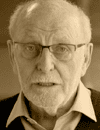 Stuart Briscoe
in The Church Is Beautiful
Listen at 2:40
Any local church is what the whole church is, only it's that in miniature, it's that in a smaller degree.
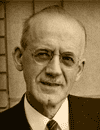 A.W. Tozer
in (Reformation Within Protestantism): Return to a Biblical Church
Listen at 15:04
It was conceived in the mind of God from all eternity but at the cross it was purchased by the Lord Jesus Christ and it was born on the day of Pentecost.
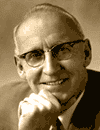 Alan Redpath
in What Is the Church
Listen at 7:36
The church is not some religious denomination.
 Marvin Cowan
in The Church
Read in context
What Scripture says
- Matthew 16:18 on this rock I will build My church, and the gates of Hades will not prevail against it
- Ephesians 1:22-23 head over everything for the church, which is His body
- 1 Corinthians 12:27 Now you are the body of Christ, and each of you is a member of it
- Ephesians 2:19-22 members of God's household ... a dwelling place for God in His Spirit
- Ephesians 5:25-27 Christ loved the church and gave Himself up for her
- 1 Timothy 3:15 the church of the living God, the pillar and foundation of the truth
- Acts 2:42 the apostles' teaching, the fellowship, the breaking of bread and prayer
How this page is made: the quotes are taken word for word from sermons on SermonIndex and checked against them by program before the page is published. The transcripts of audio and video sermons are machine-made, so follow the link to hear the words as they were spoken. The answer above the quotes is an overview with its sources listed; it is not a statement of doctrine by SermonIndex.