
Church discipline is the correction a church gives to a member who persists in open sin: private reproof, then witnesses, then the church, and in the last resort removal from fellowship. The preachers quoted here follow Matthew 18 and 1 Corinthians 5. They say its aim is to restore the offender and keep the church pure, that it must be done in grief and gentleness, and that the penitent is to be forgiven and received.
Church discipline is the care a church takes to correct a member who persists in open sin. It begins with a private word, goes on to plainer warning if he will not listen, and in the last resort removes him from the fellowship, always in the hope of bringing him back. The Lord Jesus gave the rule: "If your brother sins against you, go and confront him privately. If he listens to you, you have won your brother over." (Matthew 18:15). Harry Ironside wrote, "Church discipline should always have in view the restoration of the sinner."1
What the word means
Discipline in this sense is the church's watch over the lives of its own members. E.M. Bounds wrote, "This matter of church discipline is an important one in the Scriptures."2 He went on, "The need of watchfulness over the lives of its members belongs to the church of God."2 He added, "The church is an organization for mutual help, and it is charged with the watch care of all of its members."2 Edward Payson said, "The second duty incumbent on churches, considered as such, consists in faithfully maintaining the discipline of Christ in his house."3 G. Campbell Morgan wrote, "The church is to be so constituted, a fellowship of souls in Christ, that the wrong doing of one is felt by, and affects the whole; and the purity of the entire Church must be maintained, even at the cost of the excommunication of a brother who persists in wrong doing."4
It is distinct from the discipline God Himself brings on His children, of which Hebrews says, "the Lord disciplines the one He loves" (Hebrews 12:6). That subject has its own page, linked below. It is also distinct from any punishment by the state. Richard Watson wrote, "The true excommunication of the Christian Church is therefore a merciful and considerate separation of an incorrigible offender from the body of Christians, without any infliction of civil pains or penalties."5
The first step is private
The Lord's rule begins with two people alone. The one who has been wronged is to go to the other privately. The Lord said elsewhere, "If your brother sins, rebuke him; and if he repents, forgive him." (Luke 17:3). The aim is stated in the rule itself: to win the brother. J.C. Ryle wrote, "Let us notice in the first place how admirable are the rules laid down by our Lord for the healing of differences among brethren."6 Charles Spurgeon wrote, "Here is a case of personal offence: we are to endeavour to make peace with our brother who has trespassed against us."7 Zac Poonen wrote of this first step, "That is always our aim: To win the brother"8.
The law of Moses had already forbidden the silence that lets a brother go on in sin: "You must not harbor hatred against your brother in your heart. Directly rebuke your neighbor, so that you will not incur guilt on account of him." (Leviticus 19:17). The Lord's own word is that if he listens, the brother is won.
Then one or two others
If the private word fails, the Lord says, "take one or two others along" (Matthew 18:16). Spurgeon wrote, "Possibly the offender may notice what is said by the other brethren, although he may be prejudiced against you; or he may attach weight to united expostulation which he might not feel if the complaint came from one only."9 Poonen wrote, "If he does not listen, we must try to win him again, this time with one or two more brothers."8 The circle is still kept small. The matter is not made public while there is hope of settling it quietly.
Then the church
The third step is this: "If he refuses to listen to them, tell it to the church. And if he refuses to listen even to the church, regard him as you would a pagan or a tax collector." (Matthew 18:17). Morgan wrote, "It is impossible to tell to the whole catholic Church anything between your brother and yourself; but it can be told and it ought to be told to the local church if that brother is refusing to listen."10 Spurgeon wrote, "Should this last attempt fail, if he neglect to hear the church, he must be left as incorrigible."11 He explained what follows: "The brother is left to himself: he is regarded as being like the rest of the unbelieving world."12 He did not understand this as hatred: "He is one who needs converting, like the Gentiles outside; but towards even a heathen man and a publican we have kindly feelings; for we seek their salvation, and we seek that of the excommunicated brother in the same way."13 Poonen wrote, "And if he does not listen even to the church, then he must be put out of fellowship, so that he can see his own need and repent, and so that others are not defiled by his spirit."8
Jonathan Edwards described how those who have been put out are to be treated. He said that God's people are "to withdraw from them as to that common society which is proper to subsist among Christians."14 He explained, "All manner and all degrees of society are not forbidden; but all unnecessary society, or such as is wont to be among those who delight in the company of each other."14 He said the church must still care for them: "They are to have a greater concern for their welfare still, than if they never had been brethren, and therefore ought to take more pains, by admonitions and otherwise, to reclaim and save them, than they are obliged to take towards those who have been always heathens."14
The Lord then adds a solemn word. "Truly I tell you, whatever you bind on earth will be bound in heaven, and whatever you loose on earth will be loosed in heaven." (Matthew 18:18). And He promises His presence: "For where two or three gather together in My name, there am I with them." (Matthew 18:20). Spurgeon said, "The meetings of God's servants for the necessary discipline of the Church are not trifling meetings, but there is a Divine Power in them, since what they do is done in the name of Jesus Christ their Lord."15 Edwards said of the church's sentence, "When it is regularly and duly inflicted, it is to be looked upon as done by Christ himself."14
The case at Corinth
Paul had to apply this to a church that had done nothing. He wrote, "It is actually reported that there is sexual immorality among you, and of a kind that is intolerable even among pagans: A man has his father's wife." (1 Corinthians 5:1). He rebuked them: "And you are proud! Shouldn't you rather have been stricken with grief and have removed from your fellowship the man who did this?" (1 Corinthians 5:2). He told them what to do when they met in the name of the Lord Jesus: "hand this man over to Satan for the destruction of the flesh, so that his spirit may be saved on the Day of the Lord." (1 Corinthians 5:5). He closed the chapter with a command from the law: "Expel the wicked man from among you." (1 Corinthians 5:13).
Bounds wrote, "The church at Corinth had a notorious case of fornication where a man had married his step-mother, and this church had been careless about this iniquity."2 Thomas Manton wrote of the Corinthians, "Till they mourned, they neglected the discipline of the church, and let incest go without censure."16 George Whitefield said, "The Corinthians, being obedient to the Apostle, as dear children, no sooner received this reproof, but they submitted to it, and cast the offending party out of the church."17 Edwards preached on this chapter and said, "It is evident, that the apostle here and in the context, intends that we should exclude out of our company all those who are visibly wicked men."14
Those inside, not those outside
Paul is careful to say whom he means. He is not telling Christians to avoid the immoral people of the world, for "In that case you would have to leave this world." (1 Corinthians 5:10). He means one who bears the name of a brother. "But now I am writing you not to associate with anyone who claims to be a brother but is sexually immoral or greedy, an idolater or a verbal abuser, a drunkard or a swindler. With such a man do not even eat." (1 Corinthians 5:11). He asks, "What business of mine is it to judge those outside the church? Are you not to judge those inside?" (1 Corinthians 5:12).
Nor is discipline meant for every failing. Edwards said of those who are to be put out, "They are those members of the church who are now become visibly wicked; for the very name and nature of the visible church show, that it is a society of visible saints, or visibly holy persons."14 He drew a line: "The common failures of humanity, and the daily short-comings of the best of men, do not ordinarily obstruct the charity of their brethren."14 He concluded, "Therefore all those who commit any gross sin, as they obstruct the charity of their brethren, are proper subjects of discipline."14 The sins Paul lists are open and serious, and the person in view will not give them up.
A little leaven
Paul gives a reason that concerns the whole church. "Your boasting is not good. Do you not know that a little leaven works through the whole batch of dough?" (1 Corinthians 5:6). He commands, "Get rid of the old leaven, that you may be a new unleavened batch, as you really are." (1 Corinthians 5:7). Spurgeon said, "The toleration of sin in the Church soon leads to the excusing of it, and that to the free indulgence of it, and to the bringing in of other sins yet more foul."18 He said, "The Church, therefore, is to be purged of practical and doctrinal evil as diligently as possible."18 Ironside wrote of the sin at Corinth, "The infection was spreading through the church, like leaven in a lump of dough."1
A church shares in the sin it allows. Payson said, "Churches become partakers of the sins of an individual member, when these sins are occasioned by a general neglect of brotherly watchfulness and reproof, and when they are tolerated by the church in consequence of a neglect of church discipline."19 He added, "When this is the case the sins of an individual become the sins of a whole church."19 He pointed to the letters of the risen Lord to the seven churches: "He commends the Ephesian church because they could not bear them that were evil, while he severely reproves and threatens other churches for tolerating among them those things which he abhorred."19 To Ephesus the Lord says, "I know that you cannot tolerate those who are evil" (Revelation 2:2). To Thyatira He says, "But I have this against you: You tolerate that woman Jezebel, who calls herself a prophetess." (Revelation 2:20).
It is for the good of the one disciplined
Paul's purpose for the man at Corinth was "that his spirit may be saved on the Day of the Lord." (1 Corinthians 5:5). He said of two others that he had handed them over to Satan "to be taught not to blaspheme." (1 Timothy 1:20). He described his own authority as given "for building you up, not for tearing you down." (2 Corinthians 13:10).
Spurgeon said, "The object of Church discipline should always be the good of the person who has to endure it."20 Ironside wrote, "It is not simply a question of keeping the good name of the church free from reproach, or of maintaining the honor of the Lord; the real object is the recovery of the one who has gone astray."1 Edwards said, "Excommunication itself is to be performed as an act of benevolence."14 He went on, "We should seek their good by it; and it is to be used as a means of their eternal salvation."14 He said, "Even excommunication is instituted for this very end, the destruction of the flesh, and the salvation of the spirit."14 Watson wrote, "For it is to be observed, that this part of discipline is an ordinance of Christ, not only for the maintenance of the character of his Churches, and the preservation of their influence in the world; but for the spiritual benefit of the offenders themselves."21 Edwards gave love as the motive: "Surely, if we love our brethren, it will grieve us to see them wandering from the path of truth and duty; and in proportion as our compassion is moved, shall we be disposed to use all proper means to reclaim and bring them back to the right way."14
It is for the church and for those who look on
Discipline also guards others. Paul told Timothy, "But those who persist in sin should be rebuked in front of everyone, so that the others will stand in fear of sin." (1 Timothy 5:20). Edwards said, "So the infliction of proper censure tends to restrain others, not only from the same wickedness, but from sin in general."14 Robert Dabney wrote, "As the invisible church is truly holy, the visible will seek, by a scriptural discipline, to be as holy as its outward nature permits."22 Ryle wrote, "A perfect communion can never be attained in this world, but purity should be the mark at which we aim."23 Richard Baxter wrote, "Discipline is not a needless thing to the Church: if you will not make a difference between the precious and the vile, by discipline, people will do it by separation."24 Bounds wrote, "It is not the mere presence of disorderly persons in a church which merits the displeasure of God."2 He saw a link between discipline and prayer: "A church which tolerates evildoers in its communion, will cease to pray, will cease to pray with agreement, and will cease to be a church gathered together in prayer in Christ's name."2
The spirit in which it is done
Paul writes, "Brothers, if someone is caught in a trespass, you who are spiritual should restore him with a spirit of gentleness. But watch yourself, or you also may be tempted." (Galatians 6:1). Thomas Watson wrote, "So if a brother is overtaken with a fault, we must not come to him in a fury of passion—but with a spirit of meekness labor to restore him."25 Whitefield said, "Every offending brother, therefore, claims our pity rather than our resentment; and each member should strive to be the most forward, as well as most gentle, in restoring him to his former state."26 John Wesley wrote in a letter, "You that are spiritual, labor to restore them that are fallen, in the spirit of meekness; and your labor shall not be in vain."27 Vance Havner wrote of discipline in the New Testament churches, "To be sure, it was to be done in love and tenderness, and the brother overtaken in a fault was to be restored by the spiritual ones, and Paul was quick to recommend the restoration of the Corinthian brother."28
It is done with grief. Paul asked the Corinthians, "Shouldn't you rather have been stricken with grief" (1 Corinthians 5:2). Spurgeon said to his own congregation, "It is sorrow enough to bury our friends, but it is a still greater sorrow to have to excommunicate them from fellowship or to censure them for misdeeds."29 He wrote of the Lord's rule in Matthew 18, "At any rate, from the first personal visit of the injured brother down to the last act of disownment, nothing has been done vindictively, but all has been affectionately carried out, with the view of setting the brother right."30 Baxter wrote, "There must be a prudent mixture of severity and mildness both in our preaching and discipline; each must be predominant, according to the quality or character of the person, or matter, that we have in hand."31
Scripture also names steps that stop short of putting out, and they are to be taken in the same spirit. Paul told the Thessalonians, "admonish the unruly" (1 Thessalonians 5:14). He wrote of the brother who would not work, "Take note of anyone who does not obey the instructions we have given in this letter. Do not associate with him, so that he may be ashamed." (2 Thessalonians 3:14). He added at once, "Yet do not regard him as an enemy, but warn him as a brother." (2 Thessalonians 3:15). He told Titus, "Reject a divisive man after a first and second admonition" (Titus 3:10). And he told the Romans to watch for those who cause divisions: "Turn away from them." (Romans 16:17).
It must begin with the one who corrects. The Lord said, "First take the beam out of your own eye, and then you will see clearly to remove the speck from your brother's eye." (Matthew 7:5). Poonen wrote, "It is when we treat sin and worldliness lightly in our own lives that we become tolerant of it in the lives of others in the church as well."32 A.W. Pink wrote, "Church government and discipline are indeed necessary and scriptural, yet not a lordly authority but a rule of holiness and love, wherein a spirit of mutual forbearance obtains."33
Who carries it out
Scripture gives several statements. The Lord says, "tell it to the church." (Matthew 18:17). Paul tells the Corinthians to act when "you are assembled in the name of our Lord Jesus" (1 Corinthians 5:4) and later speaks of the "punishment imposed on him by the majority" (2 Corinthians 2:6). He also gives charges to Timothy and Titus as individuals, and tells the Ephesian elders, "Keep watch over yourselves and the entire flock of which the Holy Spirit has made you overseers." (Acts 20:28). Hebrews says of leaders, "they watch over your souls as those who must give an account." (Hebrews 13:17).
Churches order this differently. Some place the judgment with the elders, some with the whole congregation, some with bishops or wider councils. This page does not decide between them. What is common ground is that the authority is Christ's and that discipline is an act of the church, not of a private person. Peter's word to elders applies under every form: "not lording it over those entrusted to you, but being examples to the flock." (1 Peter 5:3). Pink wrote, "Government and discipline must be maintained in the state, the church, and the home; yet governors are to act in the fear of God, and instead of domineering over their subjects, seek their good and serve their interests."34
Restoring the one who repents
Discipline has done its work when the person repents. Paul wrote to Corinth about a man they had punished. He said the punishment was enough, and went on, "So instead, you ought to forgive and comfort him, so that he will not be overwhelmed by excessive sorrow." (2 Corinthians 2:7). "Therefore I urge you to reaffirm your love for him." (2 Corinthians 2:8). He gave a reason: "in order that Satan should not outwit us. For we are not unaware of his schemes." (2 Corinthians 2:11). Several of the preachers quoted here take this to be the man of the first letter. Thomas Brooks wrote, "The Corinthians did eye more the incestuous person's sin than his sorrow, which was like to have drowned him in sorrow."35
Baxter wrote, "As we must not teach an offender to make light of discipline by too much facility, so neither must we discourage him by too much severity."31 He wrote, "Nevertheless, we must pray for the repentance and restoration even of the excommunicated; and if God shall give them repentance, we must gladly receive them again into the communion of the church."31 Spurgeon said, "When repentance is expressed, when the backslider is restored, when the Church has reason to believe that the work of the Spirit is truly in the heart of the offender, then the bond is loosed on earth and it is also loosed in Heaven."15 A.A. Hodge wrote, "As to public scandals, the Church is bound to forgive them when the Lord has done so."36 David Wilkerson wrote, "We must restore every fallen brother and sister in Christ, if they repent and are willing to change their ways."37 James ends his letter with the same hope for one who wanders from the truth: "Whoever turns a sinner from the error of his way will save his soul from death and cover over a multitude of sins." (James 5:20).
When it is neglected
The preachers quoted here lament its neglect. Baxter wrote of ministers, himself among them, "Lastly, We are sadly negligent in performing acknowledged duties; for example, church discipline."38 He wrote, "Many of us, who would be ashamed to omit preaching or praying half so much, have little considered what we are doing, while living in the willful neglect of this duty, and other parts of discipline, so long as we have done."31 Payson said, "A church which neglects this duty, which spares known offenders through fear of temporal inconvenience or loss, cannot be said to walk in the fear of God."3 Bounds wrote, "Let it be noted with emphasis that a church which is careless of discipline will be careless in praying."2 He gave one cause: "The purity of the church is put in the background in the craze to secure numbers, and to pad the church rolls and make large figures in statistical columns."2 Ironside asked, "Is it not sadly true that in many places discipline in the house of God is practically unknown?"1 He wrote, "The church of God is largely afraid to exercise discipline today, but where discipline is carried out in obedience to the Word of God, the church is kept in a condition where God can work."39 Richard Watson wrote, "This then is the moral discipline which is imperative upon the Church of Christ, and its government is criminally defective whenever it is not enforced."40
When it is misused
Discipline can also be done wrongly. John writes of Diotrephes, "he refuses to welcome the brothers and forbids those who want to do so, even putting them out of the church." (3 John 1:10). Paul guards against hasty charges: "Do not entertain an accusation against an elder, except on the testimony of two or three witnesses." (1 Timothy 5:19). Ironside wrote, "It is a very easy thing to find an assembly or church moved by prejudice or stirred by false accusations ignorantly excommunicating the wrong party and then just as ignorantly insisting that its action be recognized by all."41 Spurgeon warned against putting a name off the roll and doing no more. He said of those who backslide, "There is a tendency to cut such off from the Church-book and then leave them."42
Discipline does not reach everything. Spurgeon said, "We exercise Church discipline as best we can, but, for all that, there is a seed of mischief which does not develop into open and overt sin which we cannot remove by discipline, for we are forbidden to root up the tares lest we root up the wheat with them."43 The Lord Himself will make the final separation. Until then the church is to deal faithfully with open sin, gently with the person, and to receive him gladly when he returns.
- Harry Ironside, "Repentance Not to Be Repented Of" (sermon).
- E.M. Bounds, "Concerted Prayer" (sermon).
- Edward Payson, "The Churches Increased" (sermon).
- G. Campbell Morgan, Writings of G Campbell Morgan - Volume 1, "The Church Evangelistic".
- Richard Watson, Theological Institutes, "CHAPTER 1 The Christian Church".
- J.C. Ryle, Expository Thoughts On Matthew, "Matthew 18:15-20".
- C.H. Spurgeon, Gospel of the Kingdom, "Matthew 18:15-35".
- Zac Poonen, "Preserving the Church From Satan's Agents" (sermon).
- C.H. Spurgeon, Gospel of the Kingdom, "Matthew 18:15-35".
- G. Campbell Morgan, Writings of G Campbell Morgan - Volume 1, "The Church Evangelistic".
- C.H. Spurgeon, Gospel of the Kingdom, "Matthew 18:15-35".
- C.H. Spurgeon, Gospel of the Kingdom, "Matthew 18:15-35".
- C.H. Spurgeon, Gospel of the Kingdom, "Matthew 18:15-35".
- Jonathan Edwards, "The Nature and End of Excommunication" (sermon).
- C.H. Spurgeon, "The Lord with Two or Three" (sermon).
- Thomas Manton, The Complete Works of Thomas Manton, D.D. Vol. VIII, "Sermon cli".
- George Whitefield, "Satan's Devices. (1 Cor. 2:11)" (sermon).
- C.H. Spurgeon, "Purging Out the Leaven" (sermon).
- Edward Payson, "Participation in Other Men's Sins" (sermon).
- C.H. Spurgeon, "Serving The Lord" (sermon).
- Richard Watson, Theological Institutes, "CHAPTER 1 The Christian Church".
- Robert L. Dabney, Writings of Robert L Dabney, "S. What is Christian Union?".
- J.C. Ryle, Expository Thoughts On Matthew, "Matthew 18:15-20".
- Richard Baxter, Writings of Richard Baxter, "Application contd".
- Thomas Watson, The Beatitudes, ""Blessed are the meek,".
- George Whitefield, "The Necessity and Benefits of Religious Society" (sermon).
- John Wesley, The Letters of John Wesley.
- Vance Havner, "Missing Notes in the Modern Church" (sermon).
- C.H. Spurgeon, "Moving" (sermon).
- C.H. Spurgeon, Gospel of the Kingdom, "Matthew 18:15-35".
- Richard Baxter, "The Reformed Pastor - the Oversight of the Flock" (sermon).
- Zac Poonen, "(The Lord and His Church) 6. the Worldly Church" (sermon).
- A.W. Pink, "PRACTICAL CHRISTIANITY Part 3: Authority in Christian Practice Chapter 11 PRIVATE JUDGMENT" (sermon).
- A.W. Pink, "THE LIFE OF FAITH Chapter 9 Christian Submission" (sermon).
- Thomas Brooks, Writings of Thomas Brooks, "Volume 1".
- A.A. Hodge, Writings of A A Hodge, "Of Repentance Unto Life".
- David Wilkerson, A Large Collection of Sermons By Pastor David Wilkerson - Volume 1, "PRE-012-09. Adultery, Wife Swapping, Cheating and Divorce".
- Richard Baxter, Writings of Richard Baxter, "Application contd".
- Harry A. Ironside, Writings of Harry A Ironside - Volume 1, "Maintaining Holiness".
- Richard Watson, Theological Institutes, "CHAPTER 1 The Christian Church".
- Harry A. Ironside, Writings of Harry A Ironside - Volume 1, "Further Developements".
- Charles Haddon Spurgeon, Spurgeon's Sermons Volume 08: 1862, "Christian Sympathy".
- C.H. Spurgeon, "The Leading of the Spirit, The Secret Token of the Sons of God" (sermon).
In their own words
Each line below is quoted exactly from a sermon on this site. Follow the link to hear or read it where it was said.
Church discipline should always have in view the restoration of the sinner.
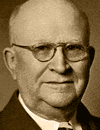 Harry Ironside
in Repentance Not to Be Repented Of
Read in context
The infection was spreading through the church, like leaven in a lump of dough.
Harry Ironside
in Repentance Not to Be Repented Of
Read in context
It is not simply a question of keeping the good name of the church free from reproach, or of maintaining the honor of the Lord; the real object is the recovery of the one who has gone astray.
Harry Ironside
in Repentance Not to Be Repented Of
Read in context
Is it not sadly true that in many places discipline in the house of God is practically unknown?
Harry Ironside
in Repentance Not to Be Repented Of
Read in context
This matter of church discipline is an important one in the Scriptures.
 E.M. Bounds
in Concerted Prayer
Read in context
The need of watchfulness over the lives of its members belongs to the church of God.
E.M. Bounds
in Concerted Prayer
Read in context
The church is an organization for mutual help, and it is charged with the watch care of all of its members.
E.M. Bounds
in Concerted Prayer
Read in context
The church at Corinth had a notorious case of fornication where a man had married his step-mother, and this church had been careless about this iniquity.
E.M. Bounds
in Concerted Prayer
Read in context
It is not the mere presence of disorderly persons in a church which merits the displeasure of God.
E.M. Bounds
in Concerted Prayer
Read in context
A church which tolerates evildoers in its communion, will cease to pray, will cease to pray with agreement, and will cease to be a church gathered together in prayer in Christ's name.
E.M. Bounds
in Concerted Prayer
Read in context
Let it be noted with emphasis that a church which is careless of discipline will be careless in praying.
E.M. Bounds
in Concerted Prayer
Read in context
The purity of the church is put in the background in the craze to secure numbers, and to pad the church rolls and make large figures in statistical columns.
E.M. Bounds
in Concerted Prayer
Read in context
The second duty incumbent on churches, considered as such, consists in faithfully maintaining the discipline of Christ in his house.
 Edward Payson
in The Churches Increased.
Read in context
A church which neglects this duty, which spares known offenders through fear of temporal inconvenience or loss, cannot be said to walk in the fear of God.
Edward Payson
in The Churches Increased.
Read in context
If he does not listen, we must try to win him again, this time with one or two more brothers.
 Zac Poonen
in Preserving the Church From Satan's Agents
Read in context
And if he does not listen even to the church, then he must be put out of fellowship, so that he can see his own need and repent, and so that others are not defiled by his spirit.
Zac Poonen
in Preserving the Church From Satan's Agents
Read in context
All manner and all degrees of society are not forbidden; but all unnecessary society, or such as is wont to be among those who delight in the company of each other.
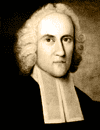 Jonathan Edwards
in The Nature and End of Excommunication
Read in context
They are to have a greater concern for their welfare still, than if they never had been brethren, and therefore ought to take more pains, by admonitions and otherwise, to reclaim and save them, than they are obliged to take towards those who have been always heathens.
Jonathan Edwards
in The Nature and End of Excommunication
Read in context
When it is regularly and duly inflicted, it is to be looked upon as done by Christ himself.
Jonathan Edwards
in The Nature and End of Excommunication
Read in context
It is evident, that the apostle here and in the context, intends that we should exclude out of our company all those who are visibly wicked men.
Jonathan Edwards
in The Nature and End of Excommunication
Read in context
They are those members of the church who are now become visibly wicked; for the very name and nature of the visible church show, that it is a society of visible saints, or visibly holy persons.
Jonathan Edwards
in The Nature and End of Excommunication
Read in context
The common failures of humanity, and the daily short-comings of the best of men, do not ordinarily obstruct the charity of their brethren.
Jonathan Edwards
in The Nature and End of Excommunication
Read in context
Therefore all those who commit any gross sin, as they obstruct the charity of their brethren, are proper subjects of discipline.
Jonathan Edwards
in The Nature and End of Excommunication
Read in context
Excommunication itself is to be performed as an act of benevolence.
Jonathan Edwards
in The Nature and End of Excommunication
Read in context
We should seek their good by it; and it is to be used as a means of their eternal salvation.
Jonathan Edwards
in The Nature and End of Excommunication
Read in context
Even excommunication is instituted for this very end, the destruction of the flesh, and the salvation of the spirit.
Jonathan Edwards
in The Nature and End of Excommunication
Read in context
Surely, if we love our brethren, it will grieve us to see them wandering from the path of truth and duty; and in proportion as our compassion is moved, shall we be disposed to use all proper means to reclaim and bring them back to the right way.
Jonathan Edwards
in The Nature and End of Excommunication
Read in context
So the infliction of proper censure tends to restrain others, not only from the same wickedness, but from sin in general.
Jonathan Edwards
in The Nature and End of Excommunication
Read in context
The meetings of God's servants for the necessary discipline of the Church are not trifling meetings, but there is a Divine Power in them, since what they do is done in the name of Jesus Christ their Lord.
 C.H. Spurgeon
in The Lord with Two or Three
Read in context
When repentance is expressed, when the backslider is restored, when the Church has reason to believe that the work of the Spirit is truly in the heart of the offender, then the bond is loosed on earth and it is also loosed in Heaven.
C.H. Spurgeon
in The Lord with Two or Three
Read in context
The Corinthians, being obedient to the Apostle, as dear children, no sooner received this reproof, but they submitted to it, and cast the offending party out of the church.
 George Whitefield
in Satan's Devices. (1 Cor. 2:11)
Read in context
The toleration of sin in the Church soon leads to the excusing of it, and that to the free indulgence of it, and to the bringing in of other sins yet more foul.
C.H. Spurgeon
in Purging Out the Leaven
Read in context
The Church, therefore, is to be purged of practical and doctrinal evil as diligently as possible.
C.H. Spurgeon
in Purging Out the Leaven
Read in context
Churches become partakers of the sins of an individual member, when these sins are occasioned by a general neglect of brotherly watchfulness and reproof, and when they are tolerated by the church in consequence of a neglect of church discipline.
Edward Payson
in Participation in Other Men's Sins.
Read in context
When this is the case the sins of an individual become the sins of a whole church.
Edward Payson
in Participation in Other Men's Sins.
Read in context
He commends the Ephesian church because they could not bear them that were evil, while he severely reproves and threatens other churches for tolerating among them those things which he abhorred.
Edward Payson
in Participation in Other Men's Sins.
Read in context
The object of Church discipline should always be the good of the person who has to endure it.
C.H. Spurgeon
in Serving The Lord
Read in context
Every offending brother, therefore, claims our pity rather than our resentment; and each member should strive to be the most forward, as well as most gentle, in restoring him to his former state.
George Whitefield
in The Necessity and Benefits of Religious Society
Read in context
To be sure, it was to be done in love and tenderness, and the brother overtaken in a fault was to be restored by the spiritual ones, and Paul was quick to recommend the restoration of the Corinthian brother.
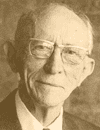 Vance Havner
in Missing Notes in the Modern Church
Read in context
It is sorrow enough to bury our friends, but it is a still greater sorrow to have to excommunicate them from fellowship or to censure them for misdeeds.
C.H. Spurgeon
in Moving
Read in context
There must be a prudent mixture of severity and mildness both in our preaching and discipline; each must be predominant, according to the quality or character of the person, or matter, that we have in hand.
 Richard Baxter
in The Reformed Pastor - the Oversight of the Flock
Read in context
As we must not teach an offender to make light of discipline by too much facility, so neither must we discourage him by too much severity.
Richard Baxter
in The Reformed Pastor - the Oversight of the Flock
Read in context
Nevertheless, we must pray for the repentance and restoration even of the excommunicated; and if God shall give them repentance, we must gladly receive them again into the communion of the church.
Richard Baxter
in The Reformed Pastor - the Oversight of the Flock
Read in context
Many of us, who would be ashamed to omit preaching or praying half so much, have little considered what we are doing, while living in the willful neglect of this duty, and other parts of discipline, so long as we have done.
Richard Baxter
in The Reformed Pastor - the Oversight of the Flock
Read in context
It is when we treat sin and worldliness lightly in our own lives that we become tolerant of it in the lives of others in the church as well.
Zac Poonen
in (The Lord and His Church) 6. the Worldly Church
Read in context
Church government and discipline are indeed necessary and scriptural, yet not a lordly authority but a rule of holiness and love, wherein a spirit of mutual forbearance obtains.
 A.W. Pink
in PRACTICAL CHRISTIANITY Part 3: Authority in Christian Practice Chapter 11 PRIVATE JUDGMENT
Read in context
Government and discipline must be maintained in the state, the church, and the home; yet governors are to act in the fear of God, and instead of domineering over their subjects, seek their good and serve their interests.
A.W. Pink
in THE LIFE OF FAITH Chapter 9 Christian Submission
Read in context
We exercise Church discipline as best we can, but, for all that, there is a seed of mischief which does not develop into open and overt sin which we cannot remove by discipline, for we are forbidden to root up the tares lest we root up the wheat with them.
C.H. Spurgeon
in The Leading of the Spirit, The Secret Token of the Sons of God
Read in context
What Scripture says
- Matthew 18:15 go and confront him privately
- Matthew 18:17 tell it to the church
- Matthew 18:18 bound on earth, bound in heaven
- 1 Corinthians 5:5 that his spirit may be saved
- 1 Corinthians 5:6 a little leaven works through the whole batch
- 1 Corinthians 5:12 judge those inside, not those outside
- Galatians 6:1 restore him with a spirit of gentleness
- 2 Corinthians 2:7 forgive and comfort him
- 2 Thessalonians 3:15 warn him as a brother
- Titus 3:10 a first and second admonition
- 1 Timothy 5:20 rebuked so that the others will fear sin
How this page is made: the quotes are taken word for word from sermons on SermonIndex and checked against them by program before the page is published. The transcripts of audio and video sermons are machine-made, so follow the link to hear the words as they were spoken. The answer above the quotes is an overview with its sources listed; it is not a statement of doctrine by SermonIndex.