
When We Are Ready
The sermon emphasizes the importance of waiting on God's timing and being prepared for His answers to our prayers.
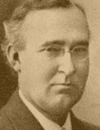
Charles E. Cowman preaches on the importance of waiting for God's timing, emphasizing that while we wait on God, He is also waiting for us to be ready. There is a misconception that fulfilling conditions will immediately lead to answered prayers, but God's timing and purposes work in conjunction with our obedience. Just like a seed planted in the ground, our petitions require unseen forces to bring about the true fruition of God's answers.
Text
"Blessed are all they that wait for him" (Isa 30:18).
We hear a great deal about waiting on God. There is, however, another side. When we wait on God, He is waiting till we are ready; when we wait for God, we are waiting till He is ready.
There are some people who say, and many more who believe, that as soon as we meet all the conditions, God will answer our prayers. They say that God lives in an eternal now; with Him there is no past nor future; and that if we could fulfill all that He requires in the way of obedience to His will, immediately our needs would be supplied, our desires fulfilled, our prayers answered.
There is much truth in this belief, and yet it expresses only one side of the truth. While God lives in an eternal now, yet He works out His purposes in time. A petition presented before God is like a seed dropped in the ground. Forces above and beyond our control must work upon it, till the true fruition of the answer is given.--The Still Small Voice
I longed to walk along an easy road,
And leave behind the dull routine of home,
Thinking in other fields to serve my God;
But Jesus said, "My time has not yet come."
I longed to sow the seed in other soil,
To be unfettered in the work, and free,
To join with other laborers in their toil;
But Jesus said, "'Tis not My choice for thee."
I longed to leave the desert, and be led
To work where souls were sunk in sin and shame,
That I might win them; but the Master said,
"I have not called thee, publish here My name."
I longed to fight the battles of my King,
Lift high His standards in the thickest strife;
But my great Captain bade me wait and sing
Songs of His conquests in my quiet life.
I longed to leave the uncongenial sphere,
Where all alone I seemed to stand and wait,
To feel I had some human helper near,
But Jesus bade me guard one lonely gate.
I longed to leave the round of daily toil,
Where no one seemed to understand or care;
But Jesus said, "I choose for thee this soil,
That thou might'st raise for Me some blossoms rare."
And now I have no longing but to do
At home, or else afar, His blessed will,
To work amid the many or the few;
Thus, "choosing not to choose," my heart is still.
--Selected
"And Patience was willing to wait."--Pilgrim's Progress
Sermon Outline
- I points: - Understanding the concept of waiting on God - 'The dual nature of waiting: our readiness and God''s timing'
- II points: - The misconception of immediate answers to prayer - God's eternal perspective versus our temporal experience
- III points: - The analogy of prayer as a seed - The necessary conditions for spiritual growth and fruition
- IV points: - Personal reflections on longing and divine timing - The importance of obedience in our waiting
- V points: - The role of patience in the Christian life - Finding peace in God's chosen path
Key Quotes
“Blessed are all they that wait for him.” — Charles E. Cowman
“A petition presented before God is like a seed dropped in the ground.” — Charles E. Cowman
“And Patience was willing to wait.” — Charles E. Cowman
Application Points
- Practice patience by trusting in God's timing for your prayers.
- Reflect on your readiness and willingness to obey God's will in your life.
- Embrace the journey of waiting as an opportunity for spiritual growth.