
Only One Life
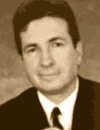
E.A. Johnston shares how a transformative encounter with Dr. Stephen Olford’s preaching inspired him to move from serving God on the sidelines to fully committing his life to Christ's frontline mission.
In this heartfelt testimony, E.A. Johnston recounts his journey from a comfortable Christian life on the sidelines to a bold, frontline commitment to Christ. Inspired by the preaching of Dr. Stephen Olford and the powerful poem by C.T. Studd, Johnston shares how he was challenged to risk everything for the gospel. This sermon encourages believers to evaluate their own commitment and to live a life that truly counts for eternity.
Full Transcript
I had gotten saved at an early age while I was still a young teenager. I was growing up in a troubled home. My parents fought all the time, and the house we were living in was haunted.
A pastor who lived across the alley from us took an interest in this awkward teenager who was growing up in a troubled home, and this man began to pray for me. This man got a burden for my soul. This man wouldn't let me go to hell.
He reached out to me, first as a friend, then he reached out to me with the gospel of Jesus Christ, and he led me to the Lord. He gave me my first Bible, gave me my first job in his Bible bookstore, and when I shared with my parents about my new spiritual change and becoming a Christian from knowing this man, they cussed him out and forbade me from ever going back to his church again. Well, we finally moved away, and I went back into the world where I served God the best I could from the sidelines.
When I was 16 years old, I took my earnings from a summer job, and I rented a bus bench for advertising, and I paid $30 a month to have a Bible verse painted on the bus bench so that when people drove home from work, they would be reminded about God and the gospel. And at Easter time, I would take palm fronds and a razor blade and cut out a handmade cross which I would mail to friends and relatives, anything I could do to remind others about God and Jesus. And when I became an adult, I taught a Sunday school class in a big Baptist church, and I did that for 15 years.
I even held discipleship groups in my home where I trained other men to be more like Jesus. And at church, I was a senior trainer in Evangelism Explosion as a witness to my community for the gospel. In short, I did what I could for God from the sidelines, and I probably did more than most others I knew.
I was volunteering to do something whenever I had some free time. But like I said, it was from the sidelines. I wasn't in the game where I was risking injury.
I wasn't on any front line of a battlefield where I was risking my skin. I was doing what most Christian businessmen do. They do what they can by giving money to Christian causes, volunteering for causes at church, and serving their community in the name of Christ by working a mission to the homeless or occasionally visiting a jail with the gospel, but doing it with my leisure time when I could, like any other dedicated Christian.
And I did it from the sidelines. I probably would have finished my life that way, serving God in the best way I could when I could. That is, until for some odd reason, I signed up for a week of Bible Institutes in expository preaching.
They were for ministers, pastors, and evangelists to sharpen their ministry and be more effective preachers of the gospel. I was neither a minister or a pastor. I was just a businessman who was a Christian.
But nevertheless, I signed up for that preaching institute, which was taught by an elderly man in his 80s. Well, little did I know at the time that this British preacher, Dr. Stephen F. Olford, was a household word internationally among ministers. He was known as a minister to ministers.
In fact, Billy Graham in his biography mentioned Stephen Olford as having a profound influence upon his life and ministry. Well, I drove to that Bible Institute in my new black Mercedes, wearing my Brooks Brothers suit and my Gucci shoes and a Rolex watch. I had all the success of the world.
And I looked so out of place in that little room full of pastors. But they didn't run me out. They let me stay.
And I stayed. And I listened. And I paid attention to the teaching and hung on every word of the preaching.
And by midweek, my entire life was turned upside down for God and the gospel under the powerful spirit-anointed preaching of Dr. Olford. Dr. Olford related two things that week that resonated with my soul and challenged me. One was a story.
The other was a poem. But the story he told was about his childhood in Africa, where he grew up as the son of missionaries. They lived in a little hut deep in the African bush among fierce natives who carried spears and had paint on their skin.
And there was a danger of lions all around them. He said he could hear the lions roar at night from the front porch of their little hut. Dr. Olford told of the time when he was 16 years old and it was Christmas.
He wanted to do something special for his parents. So he got up early one morning before dawn to go out and bag a goose for Christmas dinner. Quietly, Stephen Olford left the little home in the darkness of night, slowly making his way through the front yard.
He shut the gate behind him, but it made a squeak. Out into the bush he went with an empty sack on his shoulder and a rifle in his hand. He was heading for a local pond where he knew geese would be.
It was dark, and as he neared the pond, he accidentally stepped into a bog of mire. It was quicksand. Down he sank, struggling.
He just went down further, holding the rifle above his head with one hand and frantically trying to find a tree branch or anything with his other hand to lay hold of to not sink any deeper in the mire, but to no use. Down he went, and he was close to death. Suddenly, the form of a man broke on the horizon as the sun came up.
It was the native servant of his father's home. The African had been awakened by the squeak of the gate when Stephen had left, and he had been following him in the distance. There, this man stood, dressed in his colorful robe of silk from his native tribe.
Quickly, the African unfolded his robe until he was naked, and he stretched that long fabric over to a desperate Stephen Oldford, whom, upon grabbing that robe, was dragged up and out to safety. And Dr. Oldford related to us in that room that day that the native's actions were like that of his savior, Jesus Christ, who left the comforts of heaven and unfolded his robe of righteousness by his death on the cross for sinners like me. Well, that story brought me back to when I was a teenage boy just saved by Jesus, and all those emotions welled back up inside of me.
Then Dr. Oldford quoted Galatians 2.20, which is his life verse. I am crucified with Christ. Nevertheless I live.
Yet not I, but Christ liveth in me. In the life which I now live in the flesh, I live by the faith of the Son of God, who loved me and gave himself for me. Then Stephen Oldford ended the session by quoting a poem by C.T. Studd with a little story.
He told us that as a young adult, he had no intention of ever becoming a minister. He wanted to be an engineer. He had raced motorcycles and had won races, and he'd even designed a new motorcycle engine, and that was his life goal until he had a motorcycle accident and lay in the hospital with double pneumonia sitting in, and the outlook was not good from the doctors.
That's when he received a letter from his missionary father, who with the letter inscribed the following poem by C.T. Studd. Only one life, which will soon be past. Only what's done for Christ will last.
Dr. Oldford said that when he read that poem sent by his father, he fell out of bed with his face on the floor and pledged to God right there and then that if God would heal him and spare his life, he would dedicate the rest of his life to serving Christ and the gospel. Well, when I heard that story, God spoke to my heart, and right then and there, I promised God I would stop serving him on the sidelines if he would be pleased to put me on the front line of the battlefield, and that night later in prayer in my room, I wrote out my own little poem and inscribed it on the fly leaf of my Bible. I will read it to you now, friends.
It's from Matthew 16 25. For whosoever will save his life shall lose it, and whosoever will lose his life for my sake shall find it, and here is my little poem, and that day I stepped out for God and risked it all for him, I wrote. What is my life that I should keep it selfishly for me? I choose to lose it so completely and have it found in thee.
That was the start, friends, of the biggest adventure of my life, and God has been faithful to that promise and those words, and I can honestly say I wouldn't trade my life in Christ for the entire world. Only one life will soon be passed. Only what's done for Christ will last.
Sermon Outline
-
I. Early Salvation and Sideline Service
- Saved as a teenager in a troubled home
- Served God through volunteering and Sunday school
- Lived a comfortable Christian life without risk
-
II. Encounter with Dr. Stephen Olford
- Attended expository preaching institute unexpectedly
- Inspired by Olford’s story of rescue in Africa
- Moved by Olford’s life verse Galatians 2:20
-
III. The Poem and the Call to Commitment
- Learned the poem ‘Only One Life’ by C.T. Studd
- Olford’s story of dedicating life after healing
- Personal decision to leave sidelines and serve fully
-
IV. Stepping Out in Faith
- Wrote a personal poem inspired by Matthew 16:25
- Committed to risking all for Christ
- Began the greatest adventure of life in Christ
Key Quotes
“Only one life, which will soon be past. Only what's done for Christ will last.” — E.A. Johnston
“I will read it to you now, friends. It's from Matthew 16:25: For whosoever will save his life shall lose it, and whosoever will lose his life for my sake shall find it.” — E.A. Johnston
“That was the start, friends, of the biggest adventure of my life, and God has been faithful to that promise and those words.” — E.A. Johnston
Application Points
- Evaluate whether you are serving God from the sidelines or fully engaged on the frontline.
- Be willing to risk personal comfort and security to advance the gospel.
- Remember that only what is done for Christ will have eternal significance.