
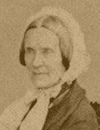
Luke 2:36-40. Anna the Prophetess.
Favell Lee Mortimer's sermon on Anna the Prophetess highlights her dedication to prayer, service, and recognition of Jesus as the Savior.
Favell Lee Mortimer preaches about Anna, an aged prophetess who lived a holy life dedicated to serving God through fasting, prayers, and good works. Anna's constant habit of prayer and devotion serves as an example for believers to pray without ceasing and continue in prayer. She recognized the infant Savior, Jesus, as her Lord and fervently thanked God for sending Him into the world, sharing the good news with others who looked for redemption. As we reflect on the holy child Jesus who grew in spirit, wisdom, and favor with God, we are reminded of the importance of maintaining a strong affection towards our Heavenly Father and growing in wisdom and grace.
Text
We have read of Simeon's blessing the infant Savior--and we now hear of another witness, even Anna, an aged prophetess.
Anna, it appears, had led a very holy life. We do not know her exact age; but if she had been a widow eighty-four years, and if she had been married for seven years, she must have been at this time above a hundred years old, even supposing that she had married at a very early period of life. It is said that "she departed not from the temple." By this, we understand that she lived so near the temple, as to enable her to attend all its services. When, at nine in the morning, the lamb was offered on the altar, Anna was there; and again at three, when the evening lamb was sacrificed, Anna was not absent. She delighted in the psalms continually sung in the holy courts; she listened to the daily blessings of the priest. There are now many aged Christians, who, like Anna, dwell near some house of God, and delight in attending the services; and, even when their power of hearing has failed, they yet take pleasure in joining in the prayers of God's assembled believers. How sweet for them to think that they will soon ascend, where "Congregations never break up, and sabbaths never end."
We hear also that Anna "served God with fastings and prayers." She not only fasted and prayed, but she served God when she fasted and prayed. She might have fasted and prayed, and not have served God; because she might have done these things in a self-righteous spirit, as some of the Jews did, whom God reproves in Isaiah 58, because they fasted and prayed, and yet were living in their sins.
It is said that Anna fasted and prayed "night and day"--no doubt she was occupied also in many good works, yet she lived in a constant habit of prayer. We are encouraged to pray without ceasing, and to continue in prayer--and this is what Anna did.
In one of Paul's Epistles we read a description of such a widow as God approves, and we find that such a widow both prays constantly, and does all kinds of good works. It is written in 1 Tim. 5:5, "She who is a widow indeed, and desolate, trusts in God, and continues in supplications and prayers night and day." It is also written that a widow should be "well reported of for good works--if she has brought up children, if she has lodged strangers, if she has washed the believers' feet, if she has relieved the afflicted, if she has diligently followed every good work." From these we see that a person may at once pray constantly and do good works also.
We are not told whether Anna came in by the Spirit, as Simeon did, or whether she had been called by some person, or whether she came in accidentally; but we are told that when she did come in, she knew the infant Savior as her Lord. "She gave thanks."
With what fervor Anna must have thanked the Lord! None could sincerely thank God for Christ in an indifferent, cold manner. Could we thank a person for saving our lives in the same manner as we thanked him for doing us any trifling service! Surely, if we thank our deliverer at all, we must thank him warmly. Have we ever given our warm thanks to God for sending Jesus into the world? If we have only thanked him coldly, we have insulted him by our thanks.
Anna not only thanked God, she also spoke of Jesus to "all who looked for redemption in Jerusalem." It is evident that there was a little company of people there who were looking for redemption from sin through the promised Savior.
How much refreshed Joseph and Mary must have been by the prayers and exhortations of Simeon and Anna! It is said by Luke, that they returned to their own city Nazareth; but we find from Matthew's history, that they did not return immediately; they went first to Bethlehem, afterwards into Egypt, and at length settled in Nazareth.
And now we turn from the aged believers to the holy child. There is but little said of him, but that little shows how holy a child he was. He "grew and became strong in spirit." Not only his limbs increased in strength, but his affection towards his Father became strong. It is a great mystery how this could be, for he was God; but we know that he had not only a human body, but also a human soul; and it was this soul that became strong. It is also written that he was "filled with wisdom"--his human mind received more and more knowledge by degrees, like the mind of another child. "The grace of God was upon him;" that is, the "favor" of God was upon him. God looked upon his human nature with favor, for as the Son of God, he was always infinitely beloved by the Father.
How different was he from other children, who generally grow more wayward and willful as they grow older! Even if good impressions are made on their minds at six or seven years old, how often do they wear off when they become twelve or fourteen! their hearts seem to grow harder, and to love worldly things more. Was not this the case with some of us! Do we not often look back with sorrow upon the days of our childhood? Have we not reason to say with David, "Remember not the sins of my youth, nor my transgressions?" Perhaps some are now removed from us, whom we pierced by our heedless or perverse conduct. What would we give to recall the time and to act differently! but we can only express our penitence to God, and plead for his pardon.
Sermon Outline
-
I
- Introduction to Anna the Prophetess
- Anna's holy life and dedication to the temple
- Comparison to aged Christians today
-
II
- Anna's service through fasting and prayer
- The importance of serving God with sincerity
- Biblical references to widows and good works
-
III
- Anna's recognition of the infant Savior
- The significance of her thanks to God
- Encouragement to express warm gratitude
-
IV
- Anna's proclamation of Jesus to others
- Impact on Joseph and Mary
- The response of the community looking for redemption
-
V
- Transition to the holy child Jesus
- Jesus' growth in spirit and wisdom
- Contrast with the typical growth of children
Key Quotes
“She departed not from the temple.” — Favell Lee Mortimer
“She served God with fastings and prayers.” — Favell Lee Mortimer
“Have we ever given our warm thanks to God for sending Jesus into the world?” — Favell Lee Mortimer
Application Points
- Dedicate time for prayer and service in your daily life.
- Express sincere gratitude to God for His blessings.
- Share the message of redemption with those around you.