
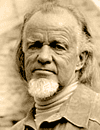
The Dissatisfaction of Francis Schaeffer (Part 2-Agents for Fundamentalism)
Francis Schaeffer's journey from fundamentalist separatism to a deeper understanding of the importance of love and the unity of truth.
Francis Schaeffer's journey with his wife, Edith, began with a commitment to defending Christian orthodoxy amidst the fundamentalist-modernist conflict of the 1920s. Despite their different upbringings, they united in their passion for the inerrancy of Scripture and the importance of theological truth. Through theological disagreements, missionary work in Europe, and encounters with influential figures like Karl Barth, Schaeffer's convictions on the unity of truth and the necessity of demonstrating love alongside orthodox belief were solidified. He emphasized the vital connection between correct doctrine and a vibrant, loving Christian community, challenging churches to embody both truth and beauty in their relationships.
Text
The Schaeffers' story properly begins with the fundamentalist-modernist conflict of the 1920s. Edith and Francis first caught each other's eye when they both stood up to defend Christian orthodoxy at a church youth meeting. She was the daughter of missionaries to China and grew up with table talk about the evils of theological modernism. In high school she listened to J. Gresham Machen on the radio, debated evolution with her science teachers, and searched out liberalism in theology books. Francis, in contrast, was raised in a nonreligious home. His teenage conversion led him to a more devotional style of fundamentalism, his reading interests running to inspirational books like Geraldine Guinness (Mrs. Howard) Taylor's Borden of Yale 1909.
Early in their relationship, Edith schooled Francis in the particulars and personalities of the northern Presbyterian arguments. When considering where to receive his pastoral training, Francis was put off by the prickly militancy of students at Machen's Westminster Seminary. He leaned toward attending the irenic Biblical Seminary of New York, but Edith, a steadfast Machen partisan, persuaded him to enroll at Westminster. There Francis learned from Machen the doctrine of inerrancy and from Cornelius Van Til the presuppositional apologetics of Dutch theologian-statesman Abraham Kuyper.
He also learned the art of 1930s Presbyterian polemics. Before Francis had finished his degree, Machen was dead and Westminster's people were at each other's throats. So in 1937 Francis and Edith helped set up Faith Seminary as an alternative. The split was a bitter one, giving birth to personal animosities that lasted for years. In the short term, it made of Francis a sharp-tongued partisan for separatist fundamentalism. But in later years, wounds inflicted and received spurred him to serious reflection about how to handle theological disagreement in a spirit of genuine Christian love.
After nine years of pastoring Bible Presbyterian churches and youth work, the Independent Board for Foreign Missions sent Francis on a three-month trip to Europe to build networks among "Bible-believing" churches, pastors, and institutions. Between appointments, he spent his time in art galleries. Then, in 1948, the board sent the Schaeffers to Europe as long-term missionaries.
The Schaeffers located in Switzerland, where they took up the tasks of spreading their Children for Christ program throughout Europe and organizing an international arm of the separatist fundamentalist movement. On the side, they entertained groups of schoolgirls on ski holidays, hosting evening religious discussions by the fire in their chalet. They kept a relentless schedule, most days working until well past midnight.
A year later, Francis met a Dutch student of art history, Hans Rookmaaker, who shared Schaeffer's commitment to Kuyperian thought. Together they discussed how art could be a window into the general philosophy of society. This became a trademark both of Rookmaaker's career as an art historian and of Francis's portrait of the decline of Western society. In later years, Francis gave Rookmaaker international exposure, and Rookmaaker in turn inspired and assisted a number of young evangelical artists such as Theodore Prescott and art historians such as Mary Leigh Morbey and E. John Walford of Redeemer and Wheaton colleges, respectively.
Schaeffer's separatist preaching frequently decried the weaknesses of Karl Barth's theology:
Neo-orthodoxy gave no new answer.
What existential philosophy had already said
in secular language, it now said
in theological language.
In 1950 Schaeffer visited the renowned theologian at his home in Switzerland. There he asked Barth, "Did God create the world?" Barth answered, "God created the world in the first century a.d." Francis gestured out the window to the forested hillside and asked,
"This world?"
Barth replied, "This world does not matter."
This was a signal moment for Schaeffer, confirming that modern thought presumed that religious truth and material truth consisted of two separate realities. He spent the rest of his life dissenting from this view, insisting that "Christianity speaks of true truth." His commitment to the unity of truth reinforced his lifetime insistence that the Bible was inerrant in all respects. He refused to countenance the idea that the Bibles history and science might be less true, or even differently true, than the Bible's theology.
Though certain that Barth was wrong, Schaeffer harbored growing doubts about whether or not he himself was right. He could no longer avoid the fact that his party of fundamentalist separatists displayed little Christian love, and that his own spiritual life had become dry and joyless. In 1951 and 1952 he struggled through a lengthy spiritual crisis, questioning his beliefs. Edith was frightened, prayed a lot, and tried to keep from intervening. In the end, he found a new assurance that his doctrine was correct and that the "real battle for men is in the world of ideas," but also a new conviction that orthodox belief must travel hand in hand with demonstrative love.
The local church or Christian group should be right,
but it should also be beautiful.
The local group should be the example
of the supernatural, of the substantially
healed relationship in this present life
between men and men. . . .
How many orthodox local churches
are dead at this point, with so little sign
of love and communication:
orthodox, but dead and ugly!
If there is no reality on the local level,
we deny what we say we believe.
Sermon Outline
- The Schaeffers' Story
- Francis's Early Years as a Pastor
- Francis's Spiritual Crisis and New Convictions
- Francis's Later Years and Legacy
- Spreading the Children for Christ program and organizing the separatist fundamentalist movement
- Meeting Hans Rookmaaker and discussing art and philosophy
Key Quotes
“Christianity speaks of true truth.” — Francis Schaeffer
“The local group should be the example of the supernatural, of the substantially healed relationship in this present life between men and men.” — Francis Schaeffer
“If there is no reality on the local level, we deny what we say we believe.” — Francis Schaeffer
Application Points
- We must ensure that our theology is accompanied by demonstrative love and a beautiful, supernatural, and healed relationship between men and men.
- We must not deny the reality of our local church or Christian group, lest we contradict what we say we believe.
- Our spiritual lives must be nourished by a deep understanding of the importance of love and the unity of truth.