
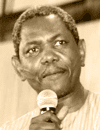
Contending For The Faith In -Politics & Governace
Gbile Akanni emphasizes the critical role of the church and clergy in equipping believers to faithfully engage and contend for the Christian faith within the realms of politics and governance.
In this teaching sermon, Gbile Akanni addresses the vital intersection of faith, politics, and governance, urging the church and clergy to take seriously their role in shaping society through political engagement. He highlights the need for proper theological education and character formation to equip believers to contend effectively for the Christian faith in public affairs. Drawing from biblical examples and practical insights, Akanni calls for a unified church that actively participates in governance to influence the nation for God's glory.
Full Transcript
Living Seed Media brings to you God's Word, which is his comprehensive equipment for changing lives. May the Lord impact your heart as you encounter his Word. For further enquiry or counsel, contact Peace House, PO Box 971, Boko, Benue State, Nigeria.
Telephone numbers 0703 03636 59 0703 76811 98 Email address lsmedia at livingseed.org Or visit our website at www.livingseed.org Let us sit back and listen as the servant of God brings forth the Word of Life. I would like to start with a biblical passage. Judges chapter 9, verses 1 to 3. Judges chapter 9, verses 1 to 3, and verses 9 to 16.
Judges chapter 9, verses 1 to 3, and then 9 to 16. Abimelech, son of Jeroboam, went to his mother's brothers in Shechem and said to them, and to all his mother's clan, ask all the citizens of Shechem, which is better for you? To have all 70 of Jeroboam's sons rule over you, or just one man? Remember, I am your flesh and blood. When the brothers repeated all this to the citizens of Shechem, they were inclined to follow Abimelech, for they said, he is related to us.
When Jotham was told about this, he climbed up on the top of Mount Gerizim and shouted to them, listen to me citizens of Shechem, so that God may listen to you. One day the trees went out to anoint a king for themselves. They said to the olive tree, be our king.
But the olive tree answered, should I give up my oil, by which both gods and humans are honored, to hold sway over trees? Next, the tree said to the fig tree, come and be our king. But the fig tree replied, should I give up my fruit, so good and sweet, to hold sway over the trees? Then the tree said to the vine, come and be our king. But the vine answered, should I give up my vine, which cheers both gods and humans, to hold sway over the trees? Finally, all the trees said to the thorn bush, come and be our king.
The thorn bush said to the trees, if you really want to anoint me king over you, come and take refuge in my shed. But if not, let fire come out of the thorn bush and consume the citizens of Lebanon, contending for the faith, contending for the faith. Brothers and sisters, there are three things that Christians should not joke with.
There are three things that Christians should not joke with. One, the faith. Two, politics.
And three, governance. Why? Both three are very critical for life. Politics provides us with the best system of governance.
And the right or the wrong people to govern us. Governance, on the other hand, orders rightly or wrongly the life and affairs of people of a given land, like Nigeria, depending on whom. On whom.
Occupy the seat of governance. As I have said in several places, because politics and governance affect every social setting, whether that be church, whether that be business, whether that be schools, it affects every section of society. This is because the laws of the land are not made in churches, nor in mosques.
They are made in the political arena, and they are implemented on the seat of authority, of governance. They are made in the legislations of local, state, and national assemblies, and implemented by the executive arm of governments, who are equally elected. And it affects Christians, affects non-believers, affects your church buildings, affects every place, whether you like it or not, whether those people who are sitting on those seats are older than you, or they are younger than you, whether they are educated or they are not educated, whether they are religious or they are not religious.
It affects everybody, old and young, educated and uneducated, rich and poor. It doesn't matter whether those people who are making those laws and those who are implementing it are educated or they are not educated. Whether you like it or not, whether you are spiritual or you are not spiritual, it affects you.
Because no other person orders the life of a society except those people. And if that is true, then the church must take it serious. The church must take politics and governance a serious business, because it will affect your church.
We are seated here. If they like and they hear what we are saying, they can come and disclose us here. Say you are upsetting the system and there is nothing you will do about it.
If that is so, then no matter how religious you are, you ought to pay attention to governance and to politics. That's faith, politics, governance. When rightly held and rightly protected, affect positively the lives of every person in a given society.
It is in this light that the clergy retreat of this year takes seriously this topic. The clergy contending for the faith in governance and politics. This is because we have come to realize in this clergy retreat for some time now, that the clergy by his or her training is strategically placed by God to shape the nation, shape the church for good.
When the clergy rightly contends for the faith, they will rightly groom the adherents in the faith, faithfully and with all commitment. The adherents on the other hand, having been groomed both in the faith, I mean in the faith, in politics, in governance by the clergy, they will rightly contend for the faith where they are working. This is what Ephesians chapter 4 verse 12 following says.
That the job of the clergy is not to go everywhere contending for the faith. His job is to groom the members. Because the clergy is not everywhere.
You have a congregation, you are not everywhere, but your congregation are everywhere. Some of them are in the market, some of them are on the farm, some of them are in the offices in the civil service, some of them are in the army, some of them are everywhere, but you are only one. And Ephesians is telling us that.
Your job is to groom your members. And it is the job of the members to go out and empower and implement what you have teached them. So these two people, these two groups of people are critical for the church.
If the clergy is not well groomed, disaster for the church. If the contenders, the politicians are not well groomed in the church, disaster for the church. And for society.
For us to be able to contend for the faith in politics and governance. There is great need for understanding the concepts of politics, of the faith, of politics, of governance, and of contending. This is what we have been using right since yesterday, contending.
What do we mean? The faith, what do we mean? Politics, what do we mean? Governance, what do we mean? We need to know what we are saying. Sometimes you use words. Words have different meaning in different contexts.
So we want to look at the concepts. Preparing the clergy to contend for the faith. Preparing and equipping contenders for the faith in politics and governance.
The necessity of repentance, spirituality, and character formation and unity of the church in contending for the faith. The necessity of repentance, the necessity of spiritual and character formation and unity of the church in contending. The church doesn't have this problem.
Then, Jesus as model in contending and raising contenders for the faith. Then we look at strategies for effective contending for the faith in politics and governance. Lastly, we shall look at the church mobilizing her various groups in the church for effective participation in politics and governance.
What about the words? Let's turn to the words. First, the words. What do we mean by contending? It is important we understand these words.
Because sometimes we who are teachers and preachers, like the clergy, take for granted the words we use every day. But when called upon to explain, we find it difficult. We get hooked up.
Beyond understanding definitions, we need to understand the concept of faith, concept of politics, concept of governance, and how they interact within the Nigerian setting. Contending. To contend is to argue, to assert, to maintain, to vie, strive, or fight.
The word that first fits our context is to maintain. Meaning, to uphold, to hold on to, to keep, to affirm, and not destroy, or neglect, or deny the faith in politics. What's your time? Thus, the clergy is called to maintain or uphold the faith as contained in the word of God.
And he is to pass it on to all believers under his care, so that they too can go wherever they find themselves. To uphold, to defend, to protect, to keep the faith, and let the flag fly. When the word takes up the article, the, the, faith, as in our topic, and also as in Jude, and some other passages of scripture, it has to do with the Christian doctrine, the Christian teaching, that has been passed down to us.
So, the faith, according to Hebrews 11.1, is the assurance of what we hope for, and the certainty about what we do not see. The Interpreter's Dictionary says, faith is man's awareness of God, and also a continuing attitude of personal trust in God. It is man's acceptance of God, and response to God's offer of himself.
It is man's receiving of God's gift, as for example, in our topic, and in the letter of Jude. According to Ambrose Gheers, in his Devil's Dictionary, politics is a strife of interest, masquerading as contests of principles, the conduct of public affairs for private advantage. Based on his, this kind of definition of politics, and it's practical demonstration of it in Nigerian politics.
Some Christians therefore say, politics is dirty, and therefore Christians should not dare go into it. And what you see in politics in Nigeria is based on this definition, that politics is striving to get what you want for yourself. And no wonder Christians have taken this definition so well.
And that is why when you want to sit two Christians together, one to give to the other, none of them will say yes. Because their definition is, I am trying to get what I want for myself, why should I give it over to another person? Politics is understood by them as a strife of interests, of personal interests. And it is understood as a contest of principles, which means they have left the real meaning of politics.
Because they do not know that the word politics is not an English word. The word politics is not an English word. It is not even a translation of the Greek word.
It is a transliteration of the Greek word. Which means the Englishman hasn't got a word for politics. Which means he cannot translate it into his language.
Because he has simply just transliterated the Greek word, politike. That already tells you there is a problem. And no wonder we mess up politics.
For the Greek politician called Aristotle, politics is the science of man's welfare or happiness as a whole. The science of man's welfare or happiness as a whole. In his book, politics, he goes on to say that it is the working out of how this happiness should be secured.
For the good of a given people through whatever form of government and social institutions. Deem appropriate. That's politics.
It's not the struggle to get half your interest achieved. It is not about amassing wealth and power to oneself. At the detriment of the majority.
Governance, on the other hand, is the way or the how. A government carries out its function or executes its God-given authority in a particular nation or state. We see Jethro advise Joseph and he tells us, no, this is not how to govern, Moses.
The way you are governing, you will burden yourself and burden the people. Which means politics is not for burdening people. To lay heavy word on people.
And therefore go at it this way. So that you can lighten the burden for people. You can lighten the burden for yourself.
Having understood the concept, preparing the clergy to contend for the faith. You are aware we have a mixed bag of clergy contending for the faith. And it was this awareness that led us to have the Theological Educators Congress.
To address the issue of clergy. Because it's very critical. Professor Dacus, when I was talking to him, he said, there are three groups of teachers.
Those who are competent but have no values. Those who are not competent but have values. And those who are competent and also have values.
And he says, the first two, we don't need them in our teaching career. Because they will mess us and bring us problems. But we know also there is a fourth group.
They have no competence, they have no values. And in our seminaries, those of you who have taught in seminaries. And those of you who have received the products from seminaries.
You know that there are three groups of people. Mixed bag clergy. And if we are to address this situation, we need to prepare our clergy.
So that they know the faith in the first place. And then know politics and know governance. So that as they go back into the field, they will be able to groom those in politics.
Those in governance. Because they know. And they will be able to groom other people too in other areas.
But so far now, our training as we noted in the theological educators realm. We are far from achieving that. And if we are far from achieving that.
And our clergy are the people who will address the issue of contending for the faith. Then we must go back on that table to look at how we groom our clergy. So that we can prepare them well.
Right now, we have not prepared them to face the world. Because of this mixed bag of clergy. The educational system is collapsing.
Nigeria itself is collapsing. And so is the church also collapsing. Because the church is also supposed to be the ones contending for the faith in politics and governance.
And the reason for this mixed bag is not far fetched. Our seminaries are not well equipped. Our seminaries are not having the right lecturers.
Our seminaries are not well cared for by our churches. They are not even funded by our churches. Maybe the ones I don't know in the south.
But I know the ones in Tekan churches are not funded by the churches. They are left to the brain of the provost. To struggle to find ways of maintaining the seminary and developing the seminaries.
And you cannot get the best out of such a system. Their salaries also are not catered for in some churches. Some of the libraries are nowhere.
And therefore you have people who have graduates teaching people who are being trained. You can't get the best out of that. That has to be addressed by the churches.
If we are going to get people who will train people to contend for the faith in the churches. Then they must be well groomed. They must know the faith.
They must know the world they are going into. They must know politics. They must know business.
They must know governance. So that when they get back they train people in every field. Because they are the ones, the members are the ones that will go into every field.
Then our clergy, they are preparing and equipping contenders for the faith in politics and governance. Right now, we are blaming our Christian politicians for nothing. It's not their fault.
Why are we blaming them? Which church did send people to politics? Can any church leader say here that in our churches these are the number of politicians we sent? To the House of Assembly? To the Senate? These are the governors we sponsored. Can any church rise up to say these are the people we sent? And we groomed them. Can any church say that? If no church can say that, then we cannot expect them to perform the way we would want them to perform.
Then we cannot expect them to contend for the faith. If you did not send them, then they went on their own. They went with their own agenda.
Not with the agenda of the church. Why are you demanding this from them? Apart from that was, after they go on their own, then the church followed them with requests. For this church building, for this project, for this program.
But you didn't send them. And you make it worse by going with requests. And requests.
And requests. That shows you are not thinking as a clergy. And even if you did send them, you did not send them so that they can go and get money.
And give to you in church. You send them to contend for the faith. You are supposed to pay them.
Because they are helping the church to contend for the faith. In their fields. Your agenda for sending them was not for money.
After all, you did not send them. Why are you after them for money? Something is wrong here. With the church.
So most of today's Christians who go into politics and governance know very little about their faith. Which they profess. They know very little about politics and governance.
Those of them who know the faith do not know of politics and governance before going into it. They want empty handed. And then they encounter the intrigues of politics.
And they are confused. And you are not able to help them in that confusion. We are talking and Billy mentioned William Wilberforce.
I'm writing a book on value based politics. And William Wilberforce is one of the characters in that book. And William Wilberforce would have given up if not for John Newton.
Who was a reverend. It was because of John Newton that Wilberforce went into politics. And it was because of John Wilton Newton who sustained him in politics.
In spite of the struggle he went through in politics. He hated it. But somebody kept him there because he was sent there with an agenda about the slave trade.
And he won. Beers upon beers that were thrown off in the parliament. But at last he won.
A few days after it was accepted by parliament. The abolition of the slave trade. He died.
Brothers and sisters. Don't expect anything from somebody whom you have not invested much on. The necessity of repentance, spirituality and character formation.
And unity of the church in contending for the faith. Yes, Billy mentioned the issue of character. And he's going to talk about the issue of character.
Repentance, character, formation, spiritual formation. Unity of the church is very necessary to contend for the faith. You are divided.
Muslims know you are divided. You come and talk here about unity. And they know you are not united back there in your church with the other churches.
They will deal with you. They say we are dealing with you. Not him.
Not him. Not him. But with this man.
Not you. And so you keep quiet. And they will do that.
Pick you one after the other. Pick you one after the other. Unity is critical.
If you are not contending for the faith, then churches must unite. And when we are talking of unity, we are not talking of uniformity. Because uniformity is not biblical.
We are talking of unity in diversity. There is beauty in various colors. But there is no beauty in one color.
We must understand our diversity. The diversity is created by God. God does not create uniformity.
He creates diversity. I am different from you. You are different from me.
He is different. She is different from you. Even your wife and husband.
You are different. When we say you are one, we are not saying that you talk the same. You think the same.
We are talking of something else when we say you are one. You are different. She is a talkative.
And that's why you married her. Because you are not a talkative. She is light in complexion.
You are dark. That's why you married her. That's the difference.
There is difference. Your palm design is different from your wife's palm design. So God creates diversity.
He allows diversity. And we must exploit that diversity for our good. And we must truly repent.
We should not make repentance a ceremony. Many of the gatherings in prayer, interdenominational, is much more a ceremony. Because after that gathering, we each go back to our cocoon and behave the way we behave.
And look at each other differently. And we must take the model of Jesus. Our Lord Jesus.
The church should take its model from Jesus. He did only three years. But he managed, he groomed, he guided.
The church, the first church of just 120 people, his character, his lifestyle, they copied. The temptation of Jesus showed them a lot of things about Jesus. His value system, they copied.
His understanding of God the Father, they got it. And therefore his first sermon took three chapters, says Matthew. Chapter 5, right to 7. That was his first sermon.
And in those sermons, a value set for his disciples to pick up and live and survive. And then he gave them strategy to survive. He told them, I am not sending you in a very nice place.
I'm sending you among wolves. And when he was dying, he was about to go, he asked his father, I'm not asking that you take them out of the world. I want them to stay in the world.
In the midst of wolves. So this crying about Muslim, crying about this, is no news. It's no news.
Go back to your old testament. It's no news. Go back to the new testament.
It's no news. Go back after the new testament. It's no news.
What we must learn is learn from Jesus and the grooming he did for these 12 disciples. And the church has survived in the midst of wolves for 2000 years. And the church has survived in Nigeria for 200 years.
Our fathers who were not well educated like you and I, contend for the faith. And handed out the church to us. Neat and clean.
And we are educated. Professors, doctors, masters, bachelor of divinity, and all what. And the church is going to be annihilated at our time.
Are we not ashamed? So we need to follow the model of Jesus. It means we have run away from the model that Jesus set. We need therefore to have strategies for effective contending for the faith.
In politics. Do we have a strategy? In the next 5 years, do we know what the church will be? In the next 10 years, do we have a strategy as a church, as a Nigerian church? If you don't, why are we crying? You have no vision. You have no mission.
You have no strategy to survive. How can you survive? Any people who have no vision. The Bible says what? Perish.
So if you don't have a vision as a Nigerian church, you know your destiny already. Perish. You already know.
The Bible says it. You have the Bible in your hand. And that's where Nigeria is going.
And it's getting worse and worse. For 18 years consecutively, there has been crisis. And Christians are the most hit.
So it's not getting better. So instead of sitting and crying and weeping, we should go back to the drawing board and have strategy. How to survive.
Thank God for what we had in the morning. We must have strategy. Or else we perish.
You don't need a prophet to tell you that in the next 5, 10 years to come, there's no church. Except a church without truth. If there will be.
You don't need a prophet to tell you. Unless we address the issue. Of values.
Of unity. Of strategy. We have to mobilize.
We have to mobilize the various groups in our churches. And use them. They are only there as cosmetics.
The youth. The Mutamata Youth Fellowship. The choir.
Mobilize them to contend for the faith. Wherever they find themselves. Are we doing it? We only have the choir to sing for us on Sunday.
We only have the youth to beat the drum for us. So that we can keep them in church. Brothers and sisters.
The Lord has already given us strategy. To survive. It's left to the Nigerian church.
To sit down and follow the model Jesus has set for us. And draw up the one that will help us. As a church.
One single church. And it will be implemented by every denomination. The same values.
Across denominations. God help us. Praise the Lord.
Shall we pray? Let's talk to God. In Jesus name. Our Father and our God.
We thank you for this gathering. We thank you for this hour. Lord we pray that you continue to teach us in Jesus name.
As we are going for the other program Lord. Lord we pray that you lead us aright in Jesus name. Thank you because you are the Lord.
We commit our Father. By your side of your holy hands Lord we pray. That you continue.
To bless him in Jesus name. We shall continue to worship you. For in Jesus name we pray.
Thank you Lord.
Sermon Outline
-
I
- The importance of faith, politics, and governance in Christian life
- How politics and governance affect every social setting
- The church's responsibility to take politics and governance seriously
-
II
- Understanding key concepts: faith, politics, governance, and contending
- The true meaning of politics from a biblical and philosophical perspective
- Governance as the execution of authority for the welfare of the people
-
III
- Preparing and equipping the clergy to contend for the faith
- The mixed quality of clergy and the need for better theological education
- The role of the church in sending and supporting Christian politicians
-
IV
- The necessity of repentance, spiritual and character formation, and unity
- Jesus as the model for contending and raising contenders for the faith
- Strategies for effective Christian participation in politics and governance
Key Quotes
“There are three things that Christians should not joke with: the faith, politics, and governance.” — Gbile Akanni
“The clergy is called to maintain or uphold the faith as contained in the word of God and to pass it on to all believers under his care.” — Gbile Akanni
“Don't expect anything from somebody whom you have not invested much on.” — Gbile Akanni
Application Points
- Churches should invest in training and supporting clergy to understand and engage in politics and governance.
- Believers must uphold and defend their faith actively in all areas of society, including political spheres.
- The church should send and empower members to participate in governance with a clear Christian agenda.