
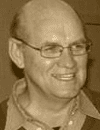
Prayer Summit - Discovery Baptist Church - Session 1
Gerhard DuToit passionately teaches that true spiritual power and intimacy with God come through prayer, brokenness, and waiting on God's timing.
In this teaching session at the Prayer Summit of Discovery Baptist Church, Gerhard DuToit shares from his rich experience as a global Bible teacher about the transformative power of prayer. He emphasizes the importance of intimacy with God, brokenness, and waiting on the Lord as essential elements for spiritual growth and effective ministry. Drawing on personal stories and the example of Andrew Murray, DuToit challenges believers to pursue a deeper relationship with God that demands total surrender and supernatural living.
Full Transcript
I just want to say that it's a wonderful privilege for Janice and myself to be able to spend this day with you. I'm from Africa and we don't talk about the Sunday morning service, we speak about an event, because most of the times the African people walk five or sometimes seven miles to come to church, and so they don't just want to come for a service. But it's a wonderful blessing and a privilege for us and to meet some people here that we have known through the years.
You know Chris and his family, I saw them, he said 20 years ago, it could be 25 years ago, you need to ask him after the service, where has he been the last 20 years not being in touch with me. But when I got to know him, I always felt in my heart that God has got a special plan with this young man's life. And I carried this through the years, not on a consistent basis, but you know if we walk with God, he reminds us to pray for one another.
And I can honestly say that through the years it happened that there were times that I was wondering about them, because we used to have a Christian conference center out in British Columbia across the border, and the church that Chris and his family was part of those days, and I see some of those people also here this morning, they would come and we would have weekends of prayer. It's a wonderful thing, brother and sister, when we begin to understand that God is not interested in churches full of people, but is passionate about churches that will be full of people that will be full of God. Because we cannot take people further spiritually than we are ourselves.
We can only impart to people what we possess. And when Jesus looked at his disciples and he said, as my Father has sent me, so do I want to send you. Which means that he's got no other hands than our hands, and he's got no other feet than our feet, no other lips than our lips, and he wants us to live a Christian life that demands a supernatural explanation.
Janice and myself, by the grace of God, the last 40 years I've been able to teach in Bible colleges and sometimes seminaries in as many as 40 countries. And I've always said to my students that it will cost you more to miss the will of God for your life than it will cost you to find it. Because we have only one life to live.
And one of my great heroes when it comes to the Christian life and ministry is a man with the name of Dr. Andrew Murray. Any of you heard that name? If you haven't heard of it, there's something not right with you, you know. No, you say, how dare you say that? But Andrew Murray used to say when people asked him and said, so what will it cost to be intoxicated with the majesty and the supremacy and the beauty of the life of Jesus Christ? And Dr. Andrew Murray would say, well, it's going to cost you absolutely everything.
Andrew Murray was the man, he's 84 years old. God used him in the revival in Southern Africa where I'm from. And he was 84 years old when he crossed a street in Cape Town in South Africa called Adelaide Street with his walking stick.
And he stopped in the middle of the street and stood there for about five or ten minutes. And there was a man who was a Christian, saw this elderly man crossing the street and said to himself, I wonder if this is Andrew Murray from Wellington. And then when Andrew Murray stopped in the middle of the street and just stood there with his walking cane as it were.
And this man was just fascinated and gripped by something about the life of Andrew Murray. Didn't know him at all or so, but then after five or ten minutes when Dr. Andrew Murray began to continue to walk, this man was so captured by this that he followed him probably almost unconsciously, but followed him. And then when he came close to Dr. Andrew Murray, Andrew Murray became conscious that there was someone following him.
And he turned around and he looked at this man and he said to him, is there anything that I can help you with? And this man, you know, probably being embarrassed to a degree, turned to Andrew Murray and he said to him, I've been watching you. And he said, you crossed that road and then you stopped and you stood there and you were standing there for five or ten minutes, just like that. And he said, why were you doing that? The godly Andrew Murray turned to him and he said to him, as I crossed that road, there was a moment when I lost contact with God.
And he said, I stopped because I want that contact with God to be restored again. And you and I sit here this morning in the United States of America. Dear me, we don't know how united it is anymore, do we? And God is looking at our lives and challenging us.
You see, this is not just another church. This is a church that wants to touch this community in our relationships with God. And I remember 20 years ago and whatever, when I look at Chris and his family, and I say to God in my heart, probably those days, you need to call this young man.
And you need to give him a call. And you need to give him a wife that wants to walk with you. And then you need to give him a ministry.
I said to him last night, well, if we're back in five years, if you allow us to come back, we've got five children now and probably in five years it's going to be another five. I mean, who knows? But what a privilege to be here. And so let me explain to you, you know, because we are involved in prayer summits, brother and sister, if we can't get through to God in prayer, how are we going to get through to the lives of people? Someone once said that he that often speaks to God about people will often speak to people about God.
And that the secret of intimacy with God in prayer, the secret is praying in the place of secret. And I was exposed. In fact, I was saved at the end of my first year in a seminary in Southern Africa.
My background is in the Dutch Reformed Church in Southern Africa. And you say, so what are those people up to? Oh man, they are a funny group of people. You say, why do you say that? Because my mother and father were God-fearing religious people, but we didn't know Christ.
I mean, we were in church every Sunday, and we were in a cattle ranch close to the border of Mozambique, and Sundays were terrible days. We used to say our dogs wouldn't even bark on a Sunday afternoon. I mean, you talk about being religious.
And I went, found myself going to study theology, and at the end of my first year a student, a roommate challenged me on a Sunday night, and he said, Gerard, if you die tonight, where will you spend eternity? And I was quite astonished, you know, and I turned to him, I said, you know, I am a Christian, and I was brought up in the church. I mean, born in the church, baptized in the church, and all of that. And I said, I haven't done harm to the lives of people.
And he said, well, you know, the Bible says you need to be born again. And I said, well, I believe in that. I mean, I was a student, a passionate student, and preached many Sundays amongst the colored people in Southern Africa.
And I said to him, well, there's nothing wrong with me. And he just challenged me, and I said, you know, I'm sure I'm fine. And he said, but you need to be born again.
And I said, so what do you mean? And he said, because I said, I'm fine. He said, no, no, no, no. He said, if you were born in McDonald's, it didn't make you a hamburger.
Well, did that ever get your attention, doesn't it? Not just that, but the hamburger, because I was a student, you know. And, ah, brother and sister, I went alone that night with God. At three o'clock in the morning, God revealed to me my last condition.
It's a terrible thing to miss heaven by 18 inches, you know. And right in that seminary on my face before God, you say, what kind of a seminary was it? Well, it could have been a cemetery for all you know. And on my face before God, I could say, God, I'm lost.
I'm missing heaven by 18 inches. And I remember lying on my face before God with all my religion broken and asking to come into my life and save me. Now, I didn't have a Damascus Road experience.
I wish I had. Although sometimes people like that struggle, you know. And I remember I went back to my room after asking God to come into my life.
And that same student, when we got up that Monday morning, I said to him, I trusted Christ to save me. And he said to me, you know, I can't tell you that you are born again. I don't know about you, you know, but we are in no position to lead people to Christ and then turn to them and say, now you are born again.
That's a sovereign work of the Holy Spirit. And he said to me, I can't tell you that you are born again, but he said, you need the witness of the Holy Spirit of God. And I'll never forget that Monday morning, standing in our lecture room, we were singing a hymn.
And one of our professors gave us this hymn to sing. And as we were singing that hymn, you see what happened? The Spirit of God witnessed of my spirit that I was born of the Spirit of God. Oh, what a glorious day.
You know, it's so great. You say, oh man, this is highly unscriptural. But let me give you a piece of my mind that I can't afford to lose.
It was so great. There are times that I say to God, I wish I could be born over again. I mean, I hope you're so glad that you know Christ.
And so you say, what happened? Well, I tell you what happened. I went back to my mother and father in the cattle ranch of 9,000 hectares in the African bushel in the border of the land of Mozambique. And Mama and Papa didn't know Christ.
We read and pray together. We sing in the evenings in our family prayers and everything, but they didn't know Christ. And there I came back into the farmhouse and I couldn't preach to them.
My brother and sister, I just had to live, you know. And I'll never forget this. I was home for about a week and came back from the town.
And as I came back from the town, walk into the old farmhouse, mother was in the kitchen and she just said, son. And I said, what is it, mother? And her little cottage 50 yards from our farmhouse. And she said, there's a black African minister there in your cottage and he wants to see you.
And I said, what does he want? He said, I don't know. And I walk into my little cottage and this African man, short little man sat there. You know, dynamite comes in small packets.
Did you know that? And he sat there and I shook hands with him and I said to him, what's your name? He said, Petros Malipa. And I said, he said, you're a pastor. He said, yes, I am.
I said, we're going to discuss theology. He said, no, no, no. And I said, what are we going to do? You need to get this.
You know what he said? We're going to be involved in knee-ology. Have you ever heard that? Before I could say a word, my brother and sister, he fell on his knees in the floor of my little study, in my cottage. And he climbed underneath the burden of God in prayer.
The Hebrew word Masah is the word for burden. It's based on the revelation. And he climbed underneath the burden of God in prayer and he systematically began to dissect the burden of God in prayer.
Have you heard of George Muller of Bristol? The man who had 85,000 answers to prayer? You know, the longest he prayed for someone was 63 years. You say, when did the person come to Christ? Three weeks after George Muller died. And so we climb underneath this burden of God and you say, what is it? In the adult Sunday school class this morning and maybe a little bit this evening, we're going to explore some of these concepts of intimacy.
You see, we know so much about the scriptures, but the scriptures know so little about us, you know. And this concept of the burden of God, you say, what does it do? It brings brokenness. A lifestyle where we are saying nothing in our hands, we bring simply to the cross, we think.
And when the burden of God brings brokenness, my brother and sister, in our Christian lives, you say, what's the consequences? The brokenness brings cleansing. You see, there's no purity, no power without purity. And the Holy Spirit is a Holy Spirit.
And so what happens to us? The Spirit of God brings a brokenness. Ah, God comes and he breaks our hearts for the things that break his heart. I listened to last Sunday's sermon, a message here.
We are out there in God forsaken Canada living in the boonies of Boggoland, you know. You don't want to know that country because first of all, you get stuck in the snow and if you come to fish with your boat, it's going to take you a whole week to dig a hole in the ice to put your boat in. That's the country.
I listened to last Sunday morning and as Pastor Chris was going, reading, I asked him last and I said, did you read every one of that 176 verses of Psalm 150? And he said, yes. And I said, will the people be back tomorrow morning? Oh, well, it seems that you're back, you know. And I said, well, maybe you should preach tomorrow morning.
Why don't you preach in Psalm 151 out of the second book of Maccabees, you know? I said, no, no, no, I'm not going to do that. But you know, as I listened to it, God broke my heart. And so the burden of God brings us brokenness.
Oh, the prophet said, my eyes has affected my heart. Observation affects intercession. And you know what this man did? He climbed underneath his burden of God.
It brought brokenness. Brokenness brings cleansing and purifying us. And then what happens? Ah, brother and sister, the Holy Spirit.
And we're going to look at the Holy Spirit in a moment. The Holy Spirit, instead of being resident in our lives, He wants to become president. It's not what we have of the Holy Spirit.
It's what the Holy Spirit have of us, you know. And that's what happened. And so, you say, what happened? Peter Osmalipa, this little African pastor, fell on his knees on the floor of my study.
And for an hour and a half, he climbed underneath his burden of God and he prayed in the African dialect of Northern Situ that I was familiar with to a degree. And as he was climbing over the burden of God, he reminded God of his character, who he is. There is nothing that he cannot do through Christ in the center of his will in the place of prayer.
And he reminded God of his nature and how he worked. And he prayed. And he began to pray.
Now, I sat and I didn't sit long. I got on my knees eventually. Not long after he began to pray.
Because, you say, why? My brother and sister, the presence of God came and filled that little cottage of mine. My students always say to me, so how do you define the presence of God? You know what I say to them? I don't know necessarily how to define the presence of God, but I always know when it's not there. I mean, I could be a fool, but I'm not stupid, you know.
And he prayed. And as he prayed, God filled that little cottage of mine. And I wept like a child.
And he prayed for an hour and a half. And can I be honest with you? It felt like five minutes. And after he prayed, I said to him, Petros, talk to me.
I have no questions about theology, because now I was confronted with the fiasco of theology, the God. And he just turned to me and he said to me, he called me Umphondisi. And he said, Umphondisi, he said, there is a mountain on your little, we call it Kopis, a little mountain on your farm.
And he said, there are six of us and we spend days and nights in prayer and fasting. And I still remember, and you know, I was so dumb. I said, what is fasting? And I still remember he said, fasting is praying without words.
And I said, so how do you do it? And he said, sometimes we go for 40 days and sometimes for 21 days and sometimes for 14 days and sometimes for seven days. And I said, what do you do? He said, we are waiting upon God. You see, I didn't know that the 11 Hebrew words in the Old Testament that speaks about prayer, I didn't know that the essence of the meaning of those words has got to do with waiting, waiting.
And he said, we wait upon God. He walked out of my cottage and didn't know if I would see him again. And it was a Friday night, pitch dark night in Africa.
You can't see your hand in front of your face in Africa on a night like that. And I was sitting in my little cottage and there was this knock on my window of my cottage. And I thought, who is this? And I opened the curtains and you know what? I couldn't see his face.
He said, why not? I mean, he's as black as Africa, beautiful black. But I heard a voice and the voice said, we are going to the mountain to pray. And I was allowed to come with him.
And as we walked, I thought, how do you spend the night in prayer? You see, I live in Canada. If you want to spend the night in prayer, most of the people bring their sleeping bags, you know. How do you spend the night in prayer? And as he walked in front of me, I was lost and he was in front of me.
I grabbed his arm in the darkness of the night. And I said to him, Peter Ousmanipa, I said, how do you spend the night in prayer? And he turned to me. I couldn't see his eyes.
I mean, I didn't want to see them. It would have pierced my heart. And he turned around and he just looked at me and he said, Oomphendisi, you've got a very big problem.
And I said, what is it? Oh, he said, you are in a hurry and God is not. And he said, you're going to learn what it means to wait. I'm really looking forward to this evening.
And our adults in this school class, when we plow into this concept of prayer, I thought you needed to know where our hearts are coming from. Let's pray and then we turn to the Scriptures. Our heavenly Father, we are so thankful this morning.
We are so thankful that we are serving a God who answers prayer. Father, we are so thankful that you do not answer prayer just necessarily because we are praying. But Father God, you answer prayer because you are a covenant-keeping God.
And you have said to us in your Word, we have not because we ask not. And often when we ask, we ask outside of the will of God. And you cannot answer those kind of intimacies with yourself.
You said to us, ask and it shall be given unto you. And seek and you shall find. And knock and it shall be opened.
And thank you for the beauty of the Greek language which says, continue to ask, continue to seek, and continue to knock. And you said unto us, we have not because we ask not. And then you said this is the confidence that we have that if we ask anything according to your will, that you are in the process of listening to us.
And if we know that you are listening to us, then we will receive those things that we ask of you. Father, thank you that your Word heartily speaks about the fact that you don't answer prayer. But if you don't answer prayer, you said to us, if I regard iniquity in my heart, the Lord will not answer.
But most of the times, if we are in the center of your will, and we walked in your will, do you become a prayer answering God? I thank you for the privilege of being here today. Lord, we are in a month of prayer. We want our fathers to become men, saturated and intoxicated with the consciousness of the supremacy of the life of Jesus.
We want our families to walk with God. You've given us children, Father God. Thank you that you've given us children.
And all for us, it sounds this morning that you gave us our children, not to populate hell, but you gave us children so that they will be able to walk with you. Bless your word in these final few moments when we ponder upon this and the beauty of Scripture. We pray with the old Puritans who used to pray that we do not just want to be informed by Scripture, but oh God, we want to be inflamed.
Thank you for it in Jesus' name. Amen. I want you to open your Bible, if you will, at Acts chapter 1. And you're going to need to forgive me because time is running out here, but in these two morning services or sessions, we're not going to look necessarily at the same thing in the second service as the first, but we will stick to this one passage.
Because of the sake of our time, I will read the whole passage in the second service. But let me just quote to you the key verse that I want us to focus on. You remember what happened when Luke wrote the Acts of the Apostles.
And in the first chapter, if you turn to that chapter, in the eighth verse, you will find this amazing statement that came from Jesus. And this is what he said. He said, you shall receive power when the Holy Spirit will come upon you.
And he said that you shall become witnesses in Jerusalem, and in Judea, and in Samaria, and unto the uttermost parts of the world. Now, brethren and sisters, you probably know this better than me. The Acts of the Apostles can also be referred to as the Acts of the Holy Spirit.
It's an incredible, strong, dispensational New Testament book. And you say, why would you say that? For instance, if we would have had all the four Gospels, there's 7,957 verses in the New Testament. But if we would have had the four Gospels, and we would have the epistles of the apostle Paul, and the general epistles, and the rest of the New Testament, and we didn't have the Acts of the Apostles, there would have been 31 years of history that we wouldn't know a thing about as it relates to the New Testament.
And it's a book with incredible value, doctrinal value. Every sermon that was preached in the Acts of the Apostles was saturated to the supremacy of the life of Christ. One of the great themes in the Acts of the Apostles was the work and the ministry of the Holy Spirit, and the greatness of the life and the ministry of Christ, of course, which was saturated in that.
And if we study the Acts of the Apostles, you will discover that in the Acts of the Apostles, that verse that I quote to you, opens unto us all those incredible chapters. Because what happened, Jesus turned to his disciples, and he said to them, at the end of the Gospel of Luke, he said to them, I want you to tarry in Jerusalem until you will be endued with power from on high. And then on Acts chapter 1, he said that he's going to send the Holy Spirit to come to us.
Now, when he said you will become witnesses, he explained to us, and this is the beauty of New Testament books, you know. For instance, oh, dear me, I'm trying to memorize the epistle to the Ephesians at the moment. 155 verses.
You say, how are you doing doing that? I'm not doing well. You say, why are you not doing well? I'm not memorizing Ephesians. Ephesians is memorizing me.
Oh, dear me, when the Word of God began to walk through every avenue of our Christian lives, it just tears us apart, doesn't it? And here comes the Acts of the Apostles, and Jesus said you shall become witnesses, and he explained how it's going to happen. And Jerusalem, first seven chapters. Judea, Samaria, chapter 8 to 12.
Uttermost parts of the world, chapter 13 to 28. And isn't this fascinating, how the Christian life works? I always say to my students, you know how it works? It's kind of like this. God brings us to a place where he draws a circle around our lives, because our relationship cannot go further with other people than with ourselves.
And he draws a circle around ourselves, and he said, I want to pour out my spirit, and this is what I want to do. And then with my relationship with my family, my wife, and my children, and then my fellowship, and then the society in which we live. Now, isn't this fascinating, that Jesus did not say, he said, when the Holy Spirit will come, you need to wait for the promise, and you will become witnesses in Jerusalem.
My brother and my sister, Jerusalem was the most difficult place that you could think of. I was asked to do a series of lectures on Old Testament theology of prayer in Jerusalem about eight years ago, and you know the Orthodox Jews were so upset that we were doing it in Jerusalem that they vandalized, they actually vandalized the place. And so Christ turned to them and he said, I want you to become witnesses in Jerusalem.
Can I ask you a question this morning? And I'm talking to myself, you know. How is it going in our Jerusalem? Is there an unresolved issue? My brother, can I ask you this morning, are you praying with your wife and your children? You know, we are an organization that trusts God for what we are doing. And I say to our donors, we don't have many, we've got about 17 of them, and I'm not after what they support the organization with.
No, no, no, no. I'm after their relationships with God. And we've asked every one of our donors this year, they said, we want you to pray with your wife.
I work under a man in Africa, you know, he was an evangelist and a missionary. Do you know that for 45 years until he died, 45 years, there was not one night that he did not pray with his wife. So we're talking about Jerusalem, our own relationship with God.
And my brother and my sister, and I just want to be transparent with you, if it doesn't work in my own life, how can I anticipate it to work out there with my children, my family, and people that I know? So that's what Jesus said. And then he went further and he said, it's not just going to be in Jerusalem, but it's going to be Judea and Samaria, and then to the uttermost. And do you know that in 31 years of history, the then known world as we knew it was evangelized for the Lord Jesus.
Now, how did this happen? Here was the heart of it. Listen to this. Jesus said, you shall receive power when the Holy Spirit will come upon you.
I wonder if I would be allowed to ask you, when you and I think about the Holy Spirit of God, and I almost feel inadequate because I look here at people that has been probably walking with God for many, many years. Who knows? But I want to ask you a question. If you and I think about the Holy Spirit, my brother and my sister, how do we see the Holy Spirit of God? Is the Holy Spirit an influence in our lives? That's how I find people seeing it.
Is the Holy Spirit an experience? Which, of course, is part of that. Is the Holy Spirit some presence in our relationship with God? Or would you allow me to suggest to you that when we speak about the Holy Spirit, my brother and sister, the Holy Spirit are none of those things. In fact, in John 14-16, when Jesus spoke about the Holy Spirit in His private ministry, every time when He referred to the Holy Spirit, you know what He did? He spoke about the Holy Spirit as a person.
The Holy Spirit is not a thing. The Holy Spirit is not a manifestation. The Holy Spirit is a person.
The Holy Spirit never, ever speaks of Himself. You say, what is He doing? He's bringing us back to the life of Christ. Didn't Jesus say, when my Spirit comes, my Spirit will be with you and my Spirit will be in you? Didn't Jesus say, when my Spirit comes, my Spirit will testify of me? Didn't Jesus say, my Spirit will become your teacher? Didn't He say He will convict the world of sin and of righteousness and of judgment? He's a person.
He's subject to God the Father and God the Son. But He's a person. So you say, what do you mean when you speak of personality? It means the Holy Spirit has a will.
You remember the Apostle Paul? When they wanted to go into a certain area, the Bible said, the Spirit of God, and I love this word in the old translation, it said, the Spirit of God, suffer them not. You know, the Greek text is beautiful. There's an implication that said, oh, they were hindered by the depth of the Spirit of God.
So the Spirit of God has got a will. The Holy Spirit has got a mind. You remember that? The mind.
What is the mind of the Spirit? Here comes the Apostle Paul, and I love this in Romans 12, when he said, I beseech you therefore, brethren, by the mercies of God, that you present your bodies as a living sacrifice, holy and acceptable unto God. He said, this is your reasonable service. Why did He say that? Because for 11 chapters He was building up to this concept of being totally sold out to God.
And then Paul said, and be not conformed to this world, but He said, be transformed by the renewing of your mind, so that you may prove what is that good and that acceptable will of God. It speaks about the mind of the Spirit. I wonder if I can ask you this morning, you know, when it comes to the Scriptures, in fact, if I would be allowed to say this, I said to Chris when we talked about this day, and I said, you know, I've been collecting books on prayer for 40 years.
And I said, I've got some extras. And I said, would you allow me to bring some classics on prayer? And then we're going to put them out tonight here on the table somewhere for you to help yourself. And when I got all together, I got about 150 classics on prayer.
And we don't, we want, if you are here, because 75% of your growth as a Christian is determined by what you read. God never bypassed the mind, you know. So tonight we're going to make them available and say, grab a book, but you're going to need to read it.
Because if you don't read it, when I come back next time in five years, I'm going to ask you, ah, you say you wouldn't even remember that, would you? You're absolutely right. Aren't we desperate, needy for God. Some of us don't even have four brain cells left to remind us that we're still human, you know.
Ah, he's got a mind. And I always say to my students, listen, if there is no hunger, there is probably no life. We don't know one another this morning.
And I'm standing here in fear and tremble because I said to myself five o'clock this morning, if you're going to be too transparent with these people, none of them are going to come back tonight. Don't you do that to me, please. The Señor.
He's got a mind. He's got a will. He has emotions.
Chris read about Romans chapter 8. The Spirit of God grown. It's an incredible word in Greek language. And I've got part of a Scottish accent because I spent eight years in Scotland and I love that word.
The Spirit of God. Now let me close because my time is gone. Have any of you seen one of these clocks at the dollar store? They only work certain Sundays.
They got to work because I want to come back one day. So let's close this thing and we're going to look at it at the next service we may. Jesus said, you shall receive power.
So you see it's personal. Oh, it's penetrating. Penetrating.
You see, my brother and my sister, the question that we need to ask ourselves this morning afresh, and I love these questions that's burning my heart, you know, the question we need to ask ourselves afresh, my life as a father, is it on the altar for God? You say, what are you speaking about? It's my life and its relationships. It's my body and its instincts. It's my mind and its thoughts.
It's my heart and its affections. And so when the Spirit of God comes and put these claims upon our lives, you know what he said? It's like what C.T. Stubb, the great missionary to Africa, said when they asked him and said he came back from China and he was so sick, you know, they called him a museum of diseases. And then God called him to go to Africa and no doctor would give him permission to go to Africa as a missionary.
And then one day they went to him and said, why is it you want to go to Africa? And C.T. Stubb, the great missionary, stood up and he said, if Jesus Christ is the Son of God, and he gave himself for me, then there is no sacrifice too great for me to give. And the challenge he said, but why do you really want to go to Africa? And I love this, you know what he said? He said, I want to see God walking around in black bodies. Oh, I love it.
Can I ask you this morning, my brother, those of us who are younger and our children, is your life on the altar for God? You can't change the lives of your children. It's only God, the Holy Spirit. Do you know what I find in Bible colleges? These young people are sinned by their parents and they want their parents that the Bible college will do for their children and what they don't do in their houses.
That's my struggle with Christian schools, to be honest with you. We have a solemn responsibility. And so what does it mean? It means absolute surrender of every aspect of our lives to God.
We have one daughter and, oh dear, you know, she's a she's an amazing, precious girl, blonde and lover and married to her husband. And she's doing a Bible study this morning in the church on Ephesians to the people there. And she, you know, grabbed my books in my library, steal my books and then take a long time to bring them back, you know.
And so she grabbed what I have. And so she's, you know, studying Dr. Martyn Lloyd-Jones. And I said to her last week, I said, Monica, you don't realize Martyn Lloyd-Jones spent eight years preaching on Ephesians and 14 years on Romans.
And he started in Ephesians. I was lecturing in Scotland those days. He started in Ephesians and he began to preach out of Ephesians.
And young people got married and went to the mission field and came back with children. And he was in chapter one, verse three. I mean, that's the way to go, you know.
But, you know, when that little girl was born in our house, we came home in a basket. She was in the basket case, but we brought her back home in a basket and we knelt at their bed. We got on our knees before God.
We said, God, the way we're going to live in the next 18 years will determine what she's going to do with her life. And we prayed and God gave us promises. And when she was three and a half years old, I had the privilege of leading her to Christ.
And I was teaching in Eastern Europe and she came out of Bible college. And I phoned her one day and I said, okay, can we talk over the weekend? And she said, Papa, no. And I said, why not? He said, I'm spending the weekend in prayer and fasting.
And I said, that's wonderful. So tell me why. And he said, because I want to walk closer to Jesus.
It's great when we have children that creates in us a sensation of desperation in our walks of God. Let's close in prayer. Our God and our Father, Your Word is so amazing.
And it's so deep and it's so precious. And I was reminded that Jesus said, you shall receive power. And I was reminded of the depth of that word in the Greek texts, the dunamis of God.
And I pray that as we explore it in this other morning service later on, that somehow we would understand the depth of what the indwelling life of Christ is all about in our walks with You. Thank you for this incredible privilege to be around Your Word in a day like this. In Jesus' name, Amen.
Sermon Outline
-
I. The Privilege and Calling of Prayer
- God desires churches filled with His presence, not just people
- We can only impart what we possess spiritually
- Jesus sends us as His hands and feet
-
II. The Cost of Intimacy with Christ
- Andrew Murray’s example of total surrender
- The necessity of losing contact with God to regain it
- The challenge of living a supernatural Christian life
-
III. The Burden of God and Brokenness
- Prayer brings brokenness and cleansing
- Brokenness leads to purity and power through the Holy Spirit
- The Holy Spirit desires to be president, not just resident
-
IV. Waiting on God in Prayer
- Waiting is essential in prayer and spiritual growth
- Fasting as praying without words and waiting on God
- Learning patience because God is not in a hurry
Key Quotes
“God is not interested in churches full of people, but is passionate about churches that will be full of people that will be full of God.” — Gerhard DuToit
“It's a terrible thing to miss heaven by 18 inches.” — Gerhard DuToit
“You are in a hurry and God is not.” — Gerhard DuToit
Application Points
- Commit to cultivating intimacy with God through consistent, patient prayer.
- Allow the burden of God to bring brokenness that leads to cleansing and spiritual power.
- Practice waiting on God’s timing and learn to surrender your hurry to His perfect plan.