
Do Not Bear Proper Fruits
The sermon argues that just because some people who claim to have holiness do not bear its fruits, it does not mean that all holiness professors are failures.
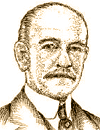
Harmon A. Baldwin addresses the objection that many professors of holiness do not bear the fruits of holiness, comparing it to the fallacy of assuming all people speak English or German just because those encountered do. He explains that some who claim holiness may lack proper evidence due to misunderstanding, lack of knowledge, or over-conscientiousness, leading to a deficiency in bearing fruits. Baldwin also highlights that some may be cleansed but mistaken in requirements, emphasizing that God purifies motives and allows room for growth in grace. Additionally, he points out the error in expecting more from holiness professing individuals than God does and acknowledges the presence of hypocrites within the holiness profession.
Text
It is objected that many or all of the professors of holiness do not bear the fruits of holiness. This objection is much like the preceding one.
As to whether all holiness professors fail to bring forth proper fruit, no matter how competent the judge may be to pass on any individual case that may come under his observation, it stands to reason, that, because those he has met are a failure, he cannot legitimately conclude that all he has not met are failures. Because all the people I ever met spoke either English or German it does not follow that all people in the world speak English or German. Those who indulge in such arguments are sophists. They draw conclusions with no proper ground upon which to base them.
The fact that many of the persons who profess holiness really do not or do not seem to hear proper fruits can he readily accounted for without in the least disturbing the fact that some actually have the experience.
1. Those who profess to have attained the experience and do not bear proper fruits may be mistaken in their evidence. This, it must be confessed, is too often the case. But let it be said that a misunderstanding of evidence is no proof of the impossibility of evidence. God's witness is true and when it is actually received it settles the question. This misunderstanding of evidence may arise from a lack of knowledge, a lack of thoroughness or a lack of spiritual insight; these shortcomings may have their foundation in a failure to comprehend the word of God or to know what holiness is and what evidence is to be expected. Again this misunderstanding of evidence may arise from a lack of conscientiousness, or strange as it may seem, over-conscientiousness. The former is seen in those who are over-anxious to profess the experience either to be rid of the trouble of further seeking, to be able to testify to the same thing that they hear others professing or for numerous other reasons; the latter is seen in those who, generally because of faulty teaching, are fearful of grieving the Spirit by failing to "take him at his word" and profess the experience. These persons, notwithstanding all their conscientiousness, not having received the proper grace, lack the fullness of the fruits.
2. Some may be cleansed and at the same time be mistaken in some things that are or are not required of them. God nowhere promises to make his children perfect in knowledge in this world. The Seat of actual evil is in the motive. If God has purified the motive (and who is competent to judge that he has not?) then the heart is clean, and if the heart is clean sooner or later all wrong things will be discovered and rectified. This very point leaves room for walking in the light (new light) and for growth in grace.
3. The person who views the one professing holiness may be mistaken and be expecting more than God does. We would not kill all the robins because their notes are not as sweet as the canaries. We would not drown the faithful watch dog because he cannot pull a plow. Neither would we cut down the crab apple tree because it does not bear harvest sweets. Man, who art thou that thou shouldst assume authority to dictate the work another man's servant shall do, or how he shall do it? "To his own master he standeth or falleth." -- Rom. 14:4.
4. To the shame of the person who dares to do so it must be said that there are some who profess holiness and are hypocritical in so doing. There are at least two reasons for hypocrisy: (a), The hypocrite hopes to gain some temporal advantage by his hypocrisy, or, (b), He hopes to bring disrepute on the cause he is hypocritically advocating. Which ever of these may be true in any particular case nothing is actually proven against the clean doctrine and profession of holiness; the only point that is made is that the devil and wicked men still exist.
Sermon Outline
- I. The Objection to Holiness Professors
- A. Many profess holiness but do not bear its fruits
- B. This objection is based on a flawed assumption
- II. The Flawed Assumption
- A. A judge cannot conclude all are failures based on a few
- B. Just because some people do not bear fruit does not mean all do not
- III. Reasons for Not Bearing Fruit
- A. Mistaken evidence or misunderstanding of holiness
- B. Lack of knowledge, thoroughness, or spiritual insight
- C. Hypocrisy or seeking temporal advantage
- IV. Conclusion
- A. Holiness is not disproven by those who do not bear its fruits
Key Quotes
“Man, who art thou that thou shouldst assume authority to dictate the work another man's servant shall do, or how he shall do it?” — Harmon A. Baldwin
“To his own master he standeth or falleth.” — Harmon A. Baldwin
“God nowhere promises to make his children perfect in knowledge in this world.” — Harmon A. Baldwin
Application Points
- We should not judge others based on a few examples, but rather look at the overall fruit of their lives.
- We should be careful not to assume authority over others, but rather let them stand or fall before their own master.
- We should strive for spiritual growth and insight, and not be satisfied with a superficial understanding of holiness.