
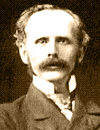
The Greatest Thing in the World and Other Addresses
Love is the greatest thing in the world, and it is the key to a happy and fulfilling life.
Henry Drummond preaches about the profound message of love and the Kingdom of God, emphasizing the transformative power of love in our lives and the world. He highlights Christ's purpose to create a better world by founding a Society known as The Kingdom of God, with a Programme focused on binding up the broken-hearted, proclaiming liberty to the captives, comforting the mournful, and exchanging beauty for ashes, joy for mourning, and liberty for chains.
Text
THE GREATEST THING IN THE WORLD
THOUGH I speak with the tongues of men and of angels, and have not
love, I am become as a sounding brass, or a tinkling cymbal. And
though I have the gift of prophecy, and understand all mysteries, and
all knowledge; and though I have all faith, so that I could remove
mountains, and have not LOVE I am nothing. And though I bestow all my
goods to feed the poor, and though I give my body to be burned, and
have not Love, it profiteth me nothing.
Love suffereth long, and is kind;
Love envieth not;
Love vaunteth not itself is not puffed up,
Doth not behave itself unseemly,
Seeketh not her own,
Is not easily provoked,
Thinketh no evil;
Rejoiceth not in iniquity, but rejoiceth in the truth;
Beareth all things, believeth all things, hopeth all things, endureth
all things.
Love never faileth: but whether there be prophecies, they shall fail;
whether there be tongues, they shall cease; whether there be
knowledge, it shall vanish away. For we know in part, and we prophesy
in part. But when that which is perfect is come, then that which is in
part shall be done away. When I was a child, I spake as a child, I
understood as a child, I thought as a child: but when I became a man,
I put away childish things. For now we see through a glass, darkly;
but then face to face: now I know in part; but then shall I know even
as also I am known. And now abideth faith, hope, Love, these three;
but the greatest of these is Love.--I Cor. xiii.
_________________________________________________________________
THE GREATEST THING IN THE WORLD
EVERY one has asked himself the great question of antiquity as of the
modern world: What is the summum bonum--the supreme good? You have
life before you. Once only you can live it. What is the noblest object
of desire, the supreme gift to covet?
We have been accustomed to be told that the greatest thing in the
religious world is Faith. That great word has been the key-note for
centuries of the popular religion; and we have easily learned to look
upon it as the greatest thing in the world. Well, we are wrong. If we
have been told that, we may miss the mark. I have taken you, in the
chapter which I have just read, to Christianity at its source; and
there we have seen, "The greatest of these is love." It is not an
oversight. Paul was speaking of faith just a moment before. He says,
"If I have all faith, so that I can remove mountains, and have not
love, I am nothing. "So far from forgetting, he deliberately contrasts
them, "Now abideth Faith, Hope, Love," and without a moment's
hesitation, the decision falls, "The greatest of these is Love."
And it is not prejudice. A man is apt to recommend to others his own
strong point. Love was not Paul's strong point. The observing student
can detect a beautiful tenderness growing and ripening all through his
character as Paul gets old; but the hand that wrote, "The greatest of
these is love," when we meet it first, is stained with blood.
Nor is this letter to the Corinthians peculiar in singling out love as
the summum bonum. The masterpieces of Christianity are agreed about
it. Peter says, "Above all things have fervent love among yourselves."
Above all things. And John goes farther, "God is love." And you
remember the profound remark which Paul makes elsewhere, "Love is the
fulfilling of the law." Did you ever think what he meant by that? In
those days men were working their passage to Heaven by keeping the Ten
Commandments, and the hundred and ten other commandments which they
had manufactured out of them. Christ said, I will show you a more
simple way. If you do one thing, you will do these hundred and ten
things, without ever thinking about them. If you love, you will
unconsciously fulfil the whole law. And you can readily see for
yourselves how that must be so. Take any of the commandments. "Thou
shalt have no other gods before Me." If a man love God, you will not
require to tell him that. Love is the fulfilling of that law. "Take
not His name in vain." Would he ever dream of taking His name in vain
if he loved Him? "Remember the Sabbath day to keep it holy." Would he
not be too glad to have one day in seven to dedicate more exclusively
to the object of his affection? Love would fulfil all these laws
regarding God. And so, if he loved Man, you would never think of
telling him to honour his father and mother. He could not do anything
else. It would be preposterous to tell him not to kill. You could only
insult him if you suggested that he should not steal -.how could he
steal from those he loved? It would be superfluous to beg him not to
bear false witness against his neighbour. If he loved him it would be
the last thing he would do. And you would never dream of urging him
not to covet what his neighbours had. He would rather they possessed
it than himself. In this way "Love is the fulfilling of the law." It
is the rule for fulfilling all rules, the new commandment for keeping
all the old commandments, Christ's one secret of the Christian life.
Now Paul had learned that; and in this noble eulogy he has given us
the most wonderful and original account extant of the summum bonum. We
may divide it into three parts. In the beginning of the short chapter,
we have Love contrasted; in the heart of it, we have Love analysed;
towards the end we have Love defended as the supreme gift.
_________________________________________________________________
THE CONTRAST
PAUL begins by contrasting Love with other things that men in those
days thought much of. I shall not attempt to go over those things in
detail. Their inferiority is already obvious.
He contrasts it with eloquence. And what a noble gift it is, the power
of playing upon the souls and wills of men, and rousing them to lofty
purposes and holy deeds. Paul says, "If I speak with the tongues of
men and of angels, and have not love, I am become as sounding brass,
or a tinkling cymbal." And we all know why. We have all felt the
brazenness of words without emotion, the hollowness, the unaccountable
unpersuasiveness, of eloquence behind which lies no Love.
He contrasts it with prophecy. He contrasts it with mysteries. He
contrasts it with faith. He contrasts it with charity. Why is Love
greater than faith? Because the end is greater than the means. And why
is it greater than charity? Because the whole is greater than the
part. Love is greater than faith, because the end is greater than the
means. What is the use of having faith? It is to connect the soul with
God. And what is the object of connecting man with God? That he may
become like God. But God is Love. Hence Faith, the means, is in order
to Love, the end. Love, therefore, obviously is greater than faith. It
is greater than charity, again, because the whole is greater than a
part. Charity is only a little bit of Love, one of the innumerable
avenues of Love, and there may even be, and there is, a great deal of
charity without Love. It is a very easy thing to toss a copper to a
beggar on the street; it is generally an easier thing than not to do
it. Yet Love is just as often in the withholding. We purchase relief
from the sympathetic feelings roused by the spectacle of misery, at
the copper's cost. It is too cheap--too cheap for us, and often too
dear for the beggar. If we really loved him we would either do more
for him, or less.
Then Paul contrasts it with sacrifice and martyrdom. And I beg the
little band of would-be missionaries and I have the honour to call
some of you by this name for the first time--to remember that though
you give your bodies to be burned, and have not Love, it profits
nothing--nothing! You can take nothing greater to the heathen world
than the impress and reflection of the Love of God upon your own
character. That is the universal language. It will take you years to
speak in Chinese, or in the dialects of India. From the day you land,
that language of Love, understood by all, will be pouring forth its
unconscious eloquence. It is the man who is the missionary, it is not
his words. His character is his message. In the heart of Africa, among
the great Lakes, I have come across black men and women who remembered
the only white man they ever saw before--David Livingstone; and as you
cross his footsteps in that dark continent, men's faces light up as
they speak of the kind Doctor who passed there years ago. They could
not understand him; but they felt the Love that beat in his heart.
Take into your new sphere of labour, where you also mean to lay down
your life, that simple charm, and your lifework must succeed. You can
take nothing greater, you need take nothing less. It is-not worth
while going if you take anything less. You may take every
accomplishment; you may be braced for every sacrifice; but if you give
your body to be burned, and have not Love, it will profit you and the
cause of Christ nothing.
_________________________________________________________________
THE ANALYSIS
AFTER contrasting Love with these things, Paul, in three verses, very
short, gives us an amazing analysis of what this supreme thing is. I
ask you to look at it. It is a compound thing, he tells us. It is like
light. As you have seen a man of science take a beam of light and pass
it through a crystal prism, as you have seen it come out on the other
side of the prism broken up into its component colours--red, and blue,
and yellow, and violet, and orange, and all the colours of the
rainbow--so Paul passes this thing, Love, through the magnificent
prism of his inspired intellect, and it comes out on the other side
broken up into its elements. And in these few words we have what one
might call the Spectrum of Love, the analysis of Love. Will you
observe what its elements are? Will you notice that they have common
names; that they are virtues which we hear about every day; that they
are things which can be practised by every man in every place in life;
and how, by a multitude of small things and ordinary virtues, the
supreme thing, the summum bonum, is made up?
The Spectrum of Love has nine ingredients:--
Patience . . . . . . "Love suffereth long."
Kindness . . . . . . "And is kind."
Generosity . . . . "Love envieth not."
Humility . . . . . . "Love vaunteth not itself, is not
puffed up."
Courtesy . . . . . . "Doth not behave itself unseemly."
Unselfishness . . "Seeketh not her own."
Good Temper . . "Is not easily provoked."
Guilelessness . . "Thinketh no evil."
Sincerity . . . . . . "Rejoiceth not in iniquity, but
rejoiceth in the truth."
Patience; kindness; generosity; humility; courtesy; unselfishness;
good temper; guilelessness; sincerity--these make up the supreme gift,
the stature of the perfect man. You will observe that all are in
relation to men, in relation to life, in relation to the known to-day
and the near to-morrow, and not to the unknown eternity. We hear much
of love to God; Christ spoke much of love to man. We make a great deal
of peace with heaven; Christ made much of peace on earth. Religion is
not a strange or added thing, but the inspiration of the secular life,
the breathing of an eternal spirit through this temporal world. The
supreme thing, in short, is not a thing at all, but the giving of a
further finish to the multitudinous words and acts which make up the
sum of every common day.
There is no time to do more than make a passing note upon each of
these ingredients. Love is Patience. This is the normal attitude of
Love; Love passive, Love waiting to begin; not in a hurry; calm; ready
to do its work when the summons comes, but meantime wearing the
ornament of a meek and quiet spirit. Love suffers long; beareth all
things; believeth all things; hopeth all things. For Love understands,
and therefore waits.
Kindness. Love active. Have you ever noticed how much of Christ's life
was spent in doing kind things--in merely doing kind things? Run over
it with that in view and you will find that He spent a great
proportion of His time simply in making people happy, in doing good
turns to people. There is only one thing greater than happiness in the
world, and that is holiness; and it is not in our keeping; but what
God has put in our power is the happiness of those about us, and that
is largely to be secured by our being kind to them.
"The greatest thing," says some one, "a man can do for his Heavenly
Father is to be kind to some of His other children." I wonder why it
is that we are not all kinder than we are? How much the world needs
it. How easily it is done. How instantaneously it acts. How infallibly
it is remembered. How superabundantly it pays itself back--for there
is no debtor in the world so honourable, so superbly honourable, as
Love. "Love never faileth". Love is success, Love is happiness, Love
is life. "Love, I say, "with Browning, "is energy of Life."
"For life, with all it yields of joy and woe
And hope and fear,
Is just our chance o' the prize of learning love--
How love might be, hath been indeed, and is."
Where Love is, God is. He that dwelleth in Love dwelleth in God. God
is love. Therefore love. Without distinction, without calculation,
without procrastination, love. Lavish it upon the poor, where it is
very easy; especially upon the rich, who often need it most; most of
all upon our equals, where it is very difficult, and for whom perhaps
we each do least of all. There is a difference between trying to
please and giving pleasure Give pleasure. Lose no chance of giving
pleasure. For that is the ceaseless and anonymous triumph of a truly
loving spirit.
"I shall pass through this world but once. Any good thing therefore
that I can do, or any kindness that I can show to any human being, let
me do it now. Let me not defer it or neglect it, for I shall not pass
this way again."
Generosity. "Love envieth not" This is Love in competition with
others. Whenever you attempt a good work you will find other men doing
the same kind of work, and probably doing it better. Envy them not.
Envy is a feeling of ill-will to those who are in the same line as
ourselves, a spirit of covetousness and detraction. How little
Christian work even is a protection against un-Christian feeling. That
most despicable of all the unworthy moods which cloud a Christian's
soul assuredly waits for us on the threshold of every work, unless we
are fortified with this grace of magnanimity. Only one thing truly
need the Christian envy, the large, rich, generous soul which "envieth
not."
And then, after having learned all that, you have to learn this
further thing, Humility-- to put a seal upon your lips and forget what
you have done. After you have been kind, after Love has stolen forth
into the world and done its beautiful work, go back into the shade
again and say nothing about it Love hides even from itself. Love
waives even self-satisfaction. "Love vaunteth not itself, is not
puffed up."
The fifth ingredient is a somewhat strange one to find in this summum
bonum: Courtesy. This is Love in society, Love in relation to
etiquette. "Love doth not behave itself unseemly." Politeness has been
defined as love in trifles. Courtesy is said to be love in little
things. And the one secret of politeness is to love. Love cannot
behave itself unseemly. You can put the most untutored person into the
highest society, and if they have a reservoir of love in their heart,
they will not behave themselves unseemly. They simply cannot do it.
Carlyle said of Robert Burns that there was no truer gentleman in
Europe than the ploughman-poet. It was because he loved
everything--the mouse, and the daisy, and all the things, great and
small, that God had made. So with this simple passport he could mingle
with any society, and enter courts and palaces from his little cottage
on the banks of the Ayr. You know the meaning of the word "gentleman."
It means a gentle man--a man who does things gently, with love. And
that is the whole art and mystery of it. The gentleman cannot in the
nature of things do an ungentle, an ungentlemanly thing. The un-gentle
soul, the inconsiderate, unsympathetic nature cannot do anything else.
"Love doth not behave itself unseemly."
Unselfishness. "Love seeketh not her own." Observe: Seeketh not even
that which is her own. In Britain the Englishman is devoted, and
rightly, to his rights. But there come times when a man may exercise
even the higher right of giving up his rights. Yet Paul does not
summon us to give up our rights. Love strikes much deeper. It would
have us not seek them at all, ignore them, eliminate the personal
element altogether from our calculations. It is not hard to give up
our rights. They are often external. The difficult thing is to give up
ourselves. The more difficult thing still is not to seek things for
ourselves at all. After we have sought them, bought them, won them,
deserved them, we have taken the cream off them for ourselves already.
Little cross then, perhaps, to give them up. But not to seek them, to
look every man not on his own things, but on the things of others--id
opus est. "Seekest thou great things for thyself? "said the prophet;
"seek them not." Why? Because there is no greatness in things. Things
cannot be great. The only greatness is unselfish love. Even
self-denial in itself is nothing, is almost a mistake. Only a great
purpose or a mightier love can justify the waste. It is more
difficult, I have said, not to seek our own at all, than, having
sought it, to give it up. I must take that back. It is only true of a
partly selfish heart. Nothing is a hardship to Love, and nothing is
hard. I believe that Christ's yoke is easy. Christ's "yoke" is just
His way of taking life. And I believe it is an easier way than any
other. I believe it is a happier way than any other. The most obvious
lesson in Christ's teaching is that there is no happiness in having
and getting anything, but only in giving. I repeat, there is no
happiness in having or in getting, but only in giving. And half the
world is on the wrong scent in the pursuit of happiness. They think it
consists in having and getting, and in being served by others. It
consists in giving, and in serving others. He that would be great
among you, said Christ, let him serve. He that would be happy, let him
remember that there is but one way--it is more blessed, it is more
happy, to give than to receive.
The next ingredient is a very remarkable one: Good Temper. "Love is
not easily provoked." Nothing could be more striking than to find this
here. We are inclined to look upon bad temper as a very harmless
weakness. We speak of it as a mere infirmity of nature, a family
failing, a matter of temperament, not a thing to take into very
serious account in estimating a man's character. And yet here, right
in the heart of this analysis of love, it finds a place; and the Bible
again and again returns to condemn it as one of the most destructive
elements in human nature.
The peculiarity of ill temper is that it is the vice of the virtuous.
It is often the one blot on an otherwise noble character. You know men
who are all but perfect, and women who would be entirely perfect, but
for an easily ruffled, quick-tempered, or "touchy" disposition. This
compatibility of ill temper with high moral character is one of the
strangest and saddest problems of ethics. The truth is there are two
great classes of sins--sins of the Body, and sins of the Disposition.
The Prodigal Son may be taken as a type of the first, the Elder
Brother of the second. Now society has no doubt whatever as to which
of these is the worse. Its brand falls, without a challenge, upon the
Prodigal. But are we right?
We have no balance to weigh one another's
sins, and coarser and finer are but human words; but faults in the
higher nature may be less venial than those in the lower, and to the
eye of Him who is Love, a sin against Love may seem a hundred times
more base. No form of vice, not worldliness, not greed of gold, not
drunkenness itself, does more to un-Christianise society than evil
temper. For embittering life, for breaking up communities, for
destroying the most sacred relationships, for devastating homes, for
withering up men and women, for taking the bloom off childhood; in
short, for sheer gratuitous misery-producing power, this influence
stands alone.
Look at the Elder Brother, moral, hard-working, patient,
dutiful--let him get all credit for his virtues--look at this man,
this baby, sulking outside his own father's door. "He was angry," we
read, "and would not go in." Look at the effect upon the father, upon
the servants, upon the happiness of the guests. Judge of the effect
upon the Prodigal--and how many prodigals are kept out of the Kingdom
of God by the unlovely characters of those who profess to be inside?
Analyse, as a study in Temper, the thunder-cloud itself as it gathers
upon the Elder Brother's brow. What is it made of?
Jealousy, anger,
pride, uncharity, cruelty, self-righteousness, touchiness, doggedness,
sullenness--these are the ingredients of this dark and loveless soul.
In varying proportions, also, these are the ingredients of all ill
temper. Judge if such sins of the disposition are not worse to live
in, and for others to live with, than sins of the body. Did Christ
indeed not answer the question Himself when He said, "I say unto you,
that the publicans and the harlots go into the Kingdom of Heaven
before you." There is really no place in Heaven for a disposition like
this. A man with such a mood could only make Heaven miserable for all
the people in it.
Except, therefore, such a man be born again, he
cannot, he simply cannot, enter the Kingdom of Heaven. For it is
perfectly certain-- and you will not misunderstand me--that to enter
Heaven a man must take it with him.
You will see then why Temper is significant. It is not in what it is
alone, but in what it reveals. This is why I take the liberty now of
speaking of it with such unusual plainness. It is a test for love, a
symptom, a revelation of an unloving nature at bottom. It is the
intermittent fever which bespeaks unintermittent disease within; the
occasional bubble escaping to the surface which betrays some
rottenness underneath; a sample of the most hidden products of the
soul dropped involuntarily when off one's guard; in a word, the
lightning form of a hundred hideous and un-Christian sins. For a want
of patience, a want of kindness, a want of generosity, a want of
courtesy, a want of unselfishness, are all instantaneously symbolised
in one flash of Temper.
Hence it is not enough to deal with the temper. We must go to the
source, and change the inmost nature, and the angry humours will die
away of themselves. Souls are made sweet not by taking the acid fluids
out, but by putting something in--a great Love, a new Spirit, the
Spirit of Christ. Christ, the Spirit of Christ, interpenetrating ours,
sweetens, purifies, transforms all. This only can eradicate what is
wrong, work a chemical change, renovate and regenerate, and
rehabilitate the inner man. Will-power does not change men. Time does
not change men. Christ does. Therefore "Let that mind be in you which
was also in Christ Jesus." Some of us have not much time to lose.
Remember, once more, that this is a matter of life or death. I cannot
help speaking urgently, for myself, for yourselves. "Whoso shall
offend one of these little ones, which believe in me, it were better
for him that a millstone were hanged about his neck, and that he were
drowned in the depth of the sea." That is to say, it is the deliberate
verdict of the Lord Jesus that it is better not to live than not to
love. It is better not to live than not to love.
Guilelessness and Sincerity may be dismissed almost with a word.
Guilelessness is the grace for suspicious people. And the possession
of it is the great secret of personal influence. You will find, if you
think for a moment, that the people who influence you are people who
believe in you. In an atmosphere of suspicion men shrivel up; but in
that atmosphere they expand, and find encouragement and educative
fellowship. It is a wonderful thing that here and there in this hard,
uncharitable world there should still be left a few rare souls who
think no evil. This is the great unworldliness. Love "thinketh no
evil," imputes no motive, sees the bright side, puts the best
construction on every action. What a delightful state of mind to live
in! What a stimulus and benediction even to meet with it for a day! To
be trusted is to be saved. And if we try to influence or elevate
others, we shall soon see that success is in proportion to their
belief of our belief in them. For the respect of another is the first
restoration of the self-respect a man has lost; our ideal of what he
is becomes to him the hope and pattern of what he may become.
"Love rejoiceth not in iniquity, but rejoiceth in the truth." I have
called this Sincerity from the words rendered in the Authorised
Version by "rejoiceth in the truth." And, certainly, were this the
real translation, nothing could be more just. For he who loves will
love Truth not less than men. He will rejoice in the Truth--rejoice
not in what he has been taught to believe; not in this Church's
doctrine or in that; not in this ism or in that ism; but "in the
Truth." He will accept only what is real; he will strive to get at
facts; he will search for Truth with a humble and unbiased mind, and
cherish whatever he finds at any sacrifice. But the more literal
translation of the Revised Version calls for just such a sacrifice for
truth's sake here. For what Paul really meant is, as we there read,
"Rejoiceth not in unrighteousness, but rejoiceth with the truth," a
quality which probably no one English word--and certainly not
Sincerity--adequately defines. It includes, perhaps more strictly, the
self-restraint which refuses to make capital out of others' faults;
the charity which delights not in exposing the weakness of others, but
"covereth all things"; the sincerity of purpose which endeavours to
see things as they are, and rejoices to find them better than
suspicion feared or calumny denounced.
So much for the analysis of Love. Now the business of our lives is to
have these things fitted into our characters. That is the supreme work
to which we need to address ourselves in this world, to learn Love. Is
life not full of opportunities for learning Love? Every man and woman
every day has a thousand of them. The world is not a play-ground; it
is a schoolroom. Life is not a holiday, but an education. And the one
eternal lesson for us all is how better we can love What makes a man a
good cricketer? Practice. What makes a man a good artist, a good
sculptor, a good musician? Practice. What makes a man a good linguist,
a good stenographer? Practice. What makes a man a good man? Practice.
Nothing else. There is nothing capricious about religion. We do not
get the soul in different ways, under different laws, from those in
which we get the body and the mind. If a man does not exercise his arm
he develops no biceps muscle; and if a man does not exercise his soul,
he acquires no muscle in his soul, no strength of character, no vigour
of moral fibre, nor beauty of spiritual growth. Love is not a thing of
enthusiastic emotion. It is a rich, strong, manly, vigorous expression
of the whole round Christian character--the Christlike nature in its
fullest development. And the constituents of this great character are
only to be built up by ceaseless practice.
What was Christ doing in the carpenter's shop? Practising. Though
perfect, we read that He learned obedience, He increased in wisdom and
in favour with God and man. Do not quarrel therefore with your lot in
life. Do not complain of its never-ceasing cares, its petty
environment, the vexations you have to stand, the small and sordid
souls you have to live and work with. Above all, do not resent
temptation; do not be perplexed because it seems to thicken round you
more and more, and ceases neither for effort nor for agony nor prayer.
That is the practice which God appoints you; and it is having its work
in making you patient, and humble, and generous, and unselfish, and
kind, and courteous. Do not grudge the hand that is moulding the still
too shapeless image within you. It is growing more beautiful though
you see it not, and every touch of temptation may add to its
perfection. Therefore keep in the midst of life. Do not isolate
yourself. Be among men, and among things, and among troubles, and
difficulties, and obstacles. You remember Goethe's words: Es bildet
ein Talent sich in der Stille, Doch ein Character in dem Strom der
Welt. "Talent develops itself in solitude; character in the stream of
life." Talent develops itself in solitude--the talent of prayer, of
faith, of meditation, of seeing the unseen; Character grows in the
stream of the world's life. That chiefly is where men are to learn
love.
How? Now, how? To make it easier, I have named a few of the elements
of love. But these are only elements. Love itself can never be
defined. Light is a something more than the sum of its ingredients--a
glowing, dazzling, tremulous ether. And love is something more than
all its elements-- a palpitating, quivering, sensitive, living thing.
By synthesis of all the colours, men can make whiteness, they cannot
make light. By synthesis of all the virtues, men can make virtue, they
cannot make love. How then are we to have this transcendent living
whole conveyed into our souls? We brace our wills to secure it. We try
to copy those who have it. We lay down rules about it. We watch. We
pray. But these things alone will not bring Love into our nature. Love
is an effect. And only as we fulfil the right condition can we have
the effect produced. Shall I tell you what the cause is?
If you turn to the Revised Version of the First Epistle of John you
will find these words: "We love, because He first loved us." "We
love," not "We love Him" That is the way the old Version has it, and
it is quite wrong. "We love--because He first loved us." Look at that
word "because." It is the cause of which I have spoken. "Because He
first loved us," the effect follows that we love, we love Him, we love
all men. We cannot help it. Because He loved us, we love, we love
everybody. Our heart is slowly changed. Contemplate the love of
Christ, and you will love. Stand before that mirror, reflect Christ's
character, and you will be changed into the same image from tenderness
to tenderness. There is no other way. You cannot love to order. You
can only look at the lovely object, and fall in love with it, and grow
into likeness to it And so look at this Perfect Character, this
Perfect Life. Look at the great Sacrifice as He laid down Himself, all
through life, and upon the Cross of Calvary; and you must love Him.
And loving Him, you must become like Him. Love begets love. It is a
process of induction. Put a piece of iron in the presence of a
magnetised body, and that piece of iron for a time becomes magnetised.
It is charged with an attractive force in the mere presence of the
original force, and as long as you leave the two side by side, they
are both magnets alike. Remain side by side with Him who loved us, and
gave Himself for us, and you too will become a centre of power, a
permanently attractive force; and like Him you will draw all men unto
you, like Him you will be drawn unto all men. That is the inevitable
effect of Love. Any man who fulfils that cause must have that effect
produced in him. Try to give up the idea that religion comes to us by
chance, or by mystery, or by caprice. It comes to us by natural law,
or by supernatural law, for all law is Divine. Edward Irving went to
see a dying boy once, and when he entered the room he just put his
hand on the sufferer's head, and said, "My boy, God loves you," and
went away. And the boy started from his bed, and called out to the
people in the house, "God loves me! God loves me!" It changed that
boy. The sense that God loved him overpowered him, melted him down,
and began the creating of a new heart in him. And that is how the love
of God melts down the unlovely heart in man, and begets in him the new
creature, who is patient and humble and gentle and unselfish. And
there is no other way to get it. There is no mystery about it We love
others, we love everybody, we love our enemies, because He first loved
us.
_________________________________________________________________
THE DEFENCE
Now I have a closing sentence or two to add about Paul's reason for
singling out love as the supreme possession. It is a very remarkable
reason. In a single word it is this: it lasts. "Love," urges Paul,
"never faileth." Then he begins again one of his marvellous lists of
the great things of the day, and exposes them one by one. He runs over
the things that men thought were going to last, and shows that they
are all fleeting, temporary, passing away.
"Whether there be prophecies, they shall fail" It was the mother's
ambition for her boy in those days that he should become a prophet.
For hundreds of years God had never spoken by means of any prophet,
and at that time the prophet was greater than the king. Men waited
wistfully for another messenger to come, and hung upon his lips when
he appeared as upon the very voice of God. Paul says, "Whether there
be prophecies, they shall fail" This Book is full of prophecies. One
by one they have "failed"; that is, having been fulfilled their work
is finished; they have nothing more to do now in the world except to
feed a devout man's faith.
Then Paul talks about tongues. That was another thing that was greatly
coveted. "Whether there be tongues, they shall cease." As we all know,
many, many centuries have passed since tongues have been known in this
world. They have ceased. Take it in any sense you like. Take it, for
illustration merely, as languages in general--a sense which was not in
Paul's mind at all, and which though it cannot give us the specific
lesson will point the general truth. Consider the words in which these
chapters were written--Greek. It has gone. Take the Latin--the other
great tongue of those days. It ceased long ago. Look at the Indian
language. It is ceasing. The language of Wales, of Ireland, of the
Scottish Highlands is dying before our eyes. The most popular book in
the English tongue at the present time, except the Bible, is one of
Dickens's works, his Pickwick Papers. It is largely written in the
language of London streetlife; and experts assure us that in fifty
years it will be unintelligible to the average English reader.
Then Paul goes farther, and with even greater boldness adds, "Whether
there be knowledge, it shall vanish away." The wisdom of the ancients,
where is it? It is wholly gone. A schoolboy to-day knows more than Sir
Isaac Newton knew. His knowledge has vanished away. You put
yesterday's newspaper in the fire. Its knowledge has vanished away.
You buy the old editions of the great encyclopaedias for a few pence.
Their knowledge has vanished away. Look how the coach has been
superseded by the use of steam. Look how electricity has superseded
that, and swept a hundred almost new inventions into oblivion. One of
the greatest living authorities, Sir William Thomson, said the other
day, "The steam-engine is passing away." "Whether there be knowledge,
it shall vanish away." At every workshop you will see, in the back
yard, a heap of old iron, a few wheels, a few levers, a few cranks,
broken and eaten with rust. Twenty years ago that was the pride of the
city Men flocked in from the country to see the great invention; now
it is superseded, its day is done. And all the boasted science and
philosophy of this day will soon be old. But yesterday, in the
University of Edinburgh, the greatest figure in the faculty was Sir
James Simpson, the discoverer of chloroform. The other day his
successor and nephew, Professor Simpson, was asked by the librarian of
the University to go to the library and pick out the books on his
subject that were no longer needed. And his reply to the librarian was
this: "Take every text-book that is more than ten years old, and put
it down in the cellar."Sir James Simpson was a great authority only a
few years ago: men came from all parts of the earth to consult him;
and almost the whole teaching of that time is consigned by the science
of to-day to oblivion. And in every branch of science it is the same.
"Now we know in part. We see through a glass darkly."
Can you tell me anything that is going to last? Many things Paul did
not condescend to name. He did not mention money, fortune, fame; but
he picked out the great things of his time, the things the best men
thought had something in them, and brushed them peremptorily aside.
Paul had no charge against these things in themselves. All he said
about them was that they would not last They were great things, but
not supreme things. There were things beyond them. What we are
stretches past what we do, beyond what we possess. Many things that
men denounce as sins are not sins; but they are temporary. And that is
a favourite argument of the New Testament. John says of the world, not
that it is wrong, but simply that it "passeth away." There is a great
deal in the world that is delightful and beautiful; there is a great
deal in it that is great and engrossing; but it will not last. All
that is in the world, the lust of the eye, the lust of the flesh, and
the pride of life, are but for a little while. Love not the world
therefore. Nothing that it contains is worth the life and consecration
of an immortal soul. The immortal soul must give itself to something
that is immortal. And the only immortal things are these: "Now abideth
faith, hope, love, but the greatest of these is love."
Some think the time may come when two of these three things will also
pass away --faith into sight, hope into fruition. Paul does not say
so. We know but little now about the conditions of the life that is to
come. But what is certain is that Love must last. God, the Eternal
God, is Love. Covet therefore that everlasting gift, that one thing
which it is certain is going to stand, that one coinage which will be
current in the Universe when all the other coinages of all the nations
of the world shall be useless and unhonoured. You will give yourselves
to many things, give yourselves first to Love. Hold things in their
proportion. Hold things in their proportion. Let at least the first
great object of our lives be to achieve the character defended in
these words, the character,--and it is the character of Christ--which
is built around Love.
I have said this thing is eternal. Did you ever notice how continually
John associates love and faith with eternal life? I was not told when
I was a boy that "God so loved the world that He gave His only
begotten Son, that whosoever believeth in Him should have everlasting
life." What I was told, I remember, was, that God so loved the world
that, if I trusted in Him, I was to have a thing called peace, or I
was to have rest, or I was to have joy, or I was to have safety. But I
had to find out for myself that whosoever trusteth in Him--that is,
whosoever loveth Him, for trust is only the avenue to Love--hath
everlasting life The Gospel offers a man life. Never offer men a
thimbleful of Gospel. Do not offer them merely joy, or merely peace,
or merely rest, or merely safety; tell them how Christ came to give
men a more abundant life than they have, a life abundant in love, and
therefore abundant in salvation for themselves, and large in
enterprise for the alleviation and redemption of the world. Then only
can the Gospel take hold of the whole of a man, body, soul, and
spirit, and give to each part of his nature its exercise and reward.
Many of the current Gospels are addressed only to a part of man's
nature. They offer peace, not life; faith, not Love; justification,
not regeneration. And men slip back again from such religion because
it has never really held them. Their nature was not all in it. It
offered no deeper and gladder life-current than the life that was
lived before. Surely it stands to reason that only a fuller love can
compete with the love of the world.
To love abundantly is to live abundantly, and to love for ever is to
live for ever. Hence, eternal life is inextricably bound up with love
We want to live for ever for the same reason that we want to live
tomorrow. Why do you want to live tomorrow? It is because there is
some one who loves you, and whom you want to see tomorrow, and be
with, and love back. There is no other reason why we should live on
than that we love and are beloved. It is when a man has no one to love
him that he commits suicide. So long as he has friends, those who love
him and whom he loves, he will live; because to live is to love. Be it
but the love of a dog, it will keep him in life; but let that go and
he has no contact with life, no reason to live. The "energy of life"
has failed. Eternal life also is to know God, and God is love. This is
Christ's own definition. Ponder it. "This is life eternal, that they
might know Thee the only true God, and Jesus Christ whom Thou hast
sent." Love must be eternal. It is what God is. On the last analysis,
then, love is life. Love never faileth, and life never faileth, so
long as there is love. That is the philosophy of what Paul is showing
us; the reason why in the nature of things Love should be the supreme
thing--because it is going to last; because in the nature of things it
is an Eternal Life. That Life is a thing that we are living now, not
that we get when we die; that we shall have a poor chance of getting
when we die unless we are living now. No worse fate can befall a man
in this world than to live and grow old alone, unloving, and unloved.
To be lost is to live in an unregenerate condition, loveless and
unloved; and to be saved is to love; and he that dwelleth in love
dwelleth already in God. For God is love.
Now I have all but finished. How many of you will join me in reading
this chapter once a week for the next three months? A man did that
once and it changed his whole life. Will you do it? It is for the
greatest thing in the world. You might begin by reading it every day,
especially the verses which describe the perfect character. "Love
suffereth long, and is kind; love envieth not; love vaunteth not
itself." Get these ingredients into your life. Then everything that
you do is eternal. It is worth doing. It is worth giving time to. No
man can become a saint in his sleep; and to fulfil the condition
required demands a certain amount of prayer and meditation and time,
just as improvement in any direction, bodily or mental, requires
preparation and care. Address yourselves to that one thing; at any
cost have this transcendent character exchanged for yours. You will
find as you look back upon your life that the moments that stand out,
the moments when you have really lived, are the moments when you have
done things in a spirit of love. As memory scans the past, above and
beyond all the transitory pleasures of life, there leap forward those
supreme hours when you have been enabled to do unnoticed kindnesses to
those round about you, things too trifling to speak about, but which
you feel have entered into your eternal life. I have seen almost all
the beautiful things God has made; I have enjoyed almost every
pleasure that He has planned for man; and yet as I look back I see
standing out above all the life that has gone four or five short
experiences when the love of God reflected itself in some poor
imitation, some small act of love of mine, and these seem to be the
things which alone of all one's life abide. Everything else in all our
lives is transitory. Every other good is visionary. But the acts of
love which no man knows about, or can ever know about--they never
fail.
In the Book of Matthew, where the Judgment Day is depicted for us in
the imagery of One seated upon a throne and dividing the sheep from
the goats, the test of a man then is not, "How have I believed?" but
"How have I loved?" The test of religion, the final test of religion,
is not religiousness, but Love. I say the final test of religion at
that great Day is not religiousness, but Love; not what I have done,
not what I have believed, not what I have achieved, but how I have
discharged the common charities of life. Sins of commission in that
awful indictment are not even referred to. By what we have not done,
by sins of omission, we are judged. It could not be otherwise. For the
withholding of love is the negation of the spirit of Christ, the proof
that we never knew Him, that for us He lived in vain. It means that He
suggested nothing in all our thoughts, that He inspired nothing in all
our lives, that we were not once near enough to Him to be seized with
the spell of His compassion for the world. It means that--
"I lived for myself, I thought for myself,
For myself, and none beside--
Just as if Jesus had never lived,
As if He had never died."
It is the Son of Man before whom the nations of the world shall be
gathered. It is in the presence of Humanity that we shall be charged.
And the spectacle itself, the mere sight of it, will silently judge
each one. Those will be there whom we have met and helped: or there,
the unpitied multitude whom we neglected or despised. No other
Witness need be summoned. No other charge than lovelessness shall be
preferred. Be not deceived. The words which all of us shall one Day
hear, sound not of theology but of life, not of churches and saints
but of the hungry and the poor, not of creeds and doctrines but of
shelter and clothing, not of Bibles and prayer-books but of cups of
cold water in the name of Christ. Thank God the Christianity of to-day
is coming nearer the world's need. Live to help that on. Thank God men
know better, by a hairsbreadth, what religion is, what God is, who
Christ is, where Christ is. Who is Christ? He who fed the hungry,
clothed the naked, visited the sick. And where is Christ?
Where?--whoso shall receive a little child in My name receiveth Me.
And who are Christ's? Every one that loveth is born of God.
_________________________________________________________________
THE PROGRAMME OF CHRISTIANITY
To Preach Good Tidings unto the Meek:
To Bind up the Broken-hearted:
To proclaim Liberty to the Captives and the Opening of the Prison to
Them that are Bound:
To Proclaim the Acceptable Year of the Lord, and the Day of Vengeance
of our God:
To Comfort all that Mourn:
To Appoint unto them that Mourn in Zion:
To Give unto them--
Beauty for Ashes,
The Oil of Joy for Mourning,
The Garment of Praise for the Spirit of Heaviness.
_________________________________________________________________
THE PROGRAMME OF CHRISTIANITY
"WHAT does God do all day?" once asked a little boy. One could wish
that more grown-up people would ask so very real a question.
Unfortunately, most of us are not even boys in religious intelligence,
but only very unthinking children. It no more occurs to us that God is
engaged in any particular work in the world than it occurs to a little
child that its father does anything except be its father. Its father
may be a Cabinet Minister absorbed in the nation's work, or an
inventor deep in schemes for the world's good; but to this
master-egoist he is father, and nothing more. Childhood, whether in
the physical or moral world, is the great self-centred period of life;
and a personal God who satisfies personal ends is all that for a long
time many a Christian understands.
But as clearly as there comes to the growing child a knowledge of its
father's part in the world, and a sense of what real life means, there
must come to every Christian whose growth is true some richer sense of
the meaning of Christianity and a larger view of Christ's purpose for
mankind. To miss this is to miss the whole splendour and glory of
Christ's religion. Next to losing the sense of a personal Christ, the
worst evil that can befall a Christian is to have no sense of anything
else. To grow up in complacent belief that God has no business in this
great groaning world of human beings except to attend to a few saved
souls is the negation of all religion. The first great epoch in a
Christian's life, after the awe and wonder of its dawn, is when there
breaks into his mind some sense that Christ has a purpose for mankind,
a purpose beyond him and his needs, beyond the churches and their
creeds, beyond Heaven and its saints--a purpose which embraces every
man and woman born, every kindred and nation formed, which regards not
their spiritual good alone but their welfare in every part, their
progress, their health, their work, their wages, their happiness in
this present world.
What, then, does Christ do all day? By what further conception shall
we augment the selfish view of why Christ lived and died?
I shall mislead no one, I hope, if I say --for I wish to put the social side of Christianity in its strongest light--that Christ did not come into the world to give men religion. He never mentioned the word religion. Religion was in the world before Christ came, and it lives to-day in a million souls who have never heard His name. What God does all day is not to sit waiting in churches for people to come and worship Him. It is true that God is in churches and in all kinds of churches, and is found by many in churches more immediately than anywhere else.
It is also true that while Christ did not give men religion He gave a new direction to the religious aspiration bursting forth then and now and always from the whole world's heart. But it was His purpose to enlist these aspirations on behalf of some definite practical good. The religious people of those days did nothing with their religion except attend to its observances. Even the priest, after he had been to the temple, thought his work was done; when he met the wounded man he passed by on the other side.
Christ reversed all this--tried to reverse it, for He is only now beginning to succeed. The tendency of the religions of all time has been to care more for religion than for humanity; Christ cared more for humanity than for religion--rather His care for humanity was the chief expression of His religion. He was not indifferent to observances, but the practices of the people bulked in His thoughts before the practices of the Church. It has been pointed out as a blemish on the immortal allegory of Bunyan that the Pilgrim never did anything, anything but save his soul.
The remark is scarcely fair, for the allegory is designedly the story of a soul in a single relation; and besides, he did do a little. But the warning may well be weighed. The Pilgrim's one thought, his work by day, his dream by night, was escape. He took little part in the world through which he passed. He was a Pilgrim travelling through it; his business was to get through safe. Whatever this is, it is not Christianity. Christ's conception of Christianity was heavens removed from that of a man setting out from the City of Destruction to save his soul.
It was rather that of a man dwelling amidst the Destructions of the City and planning escapes for the souls of others--escapes not to the other world, but to purity and peace and righteousness in this. In reality Christ never said "Save your soul." It is a mistranslation which says that. What He said was, "Save your life." And this not because the first is nothing, but only because it is so very great a thing that only the second can accomplish it. But the new word altruism--the translation of "love thy neighbour as thyself"--is slowly finding its way into current Christian speech.
The People's Progress, not less than the Pilgrim's Progress, is daily becoming a graver concern to the Church. A popular theology with unselfishness as part at least of its root, a theology which appeals no longer to fear, but to the generous heart in man, has already dawned, and more clearly than ever men are beginning to see what Christ really came into this world to do.
What Christ came here for was to make a better world. The world in
which we live is an unfinished world. It is not wise, it is not happy,
it is not pure, it is not good--it is not even sanitary. Humanity is
little more than raw material. Almost everything has yet to be done to
it. Before the days of Geology people thought the earth was finished.
It is by no means finished. The work of Creation is going on. Before
the spectroscope, men thought the universe was finished. We know now
it is just beginning. And this teeming universe of men in which we
live has almost all its finer colour and beauty yet to take. Christ
came to complete it. The fires of its passions were not yet cool;
their heat had to be transformed into finer energies. The ideals for
its future were all to shape, the forces to realize them were not yet
born. The poison of its sins had met no antidote, the gloom of its
doubt no light, the weight of its sorrow no rest. These the Saviour of
the world, the Light of men, would do and be. This, roughly, was His
scheme.
Now this was a prodigious task--to recreate the world. How was it to
be done? God's way of making worlds is to make them make themselves.
When He made the earth He made a rough ball of matter and supplied it
with a multitude of tools to mould it into form--the rain-drop to
carve it, the glacier to smooth it, the river to nourish it, the
flower to adorn it. God works always with agents, and this is our way
when we want any great thing done, and this was Christ's way when He
undertook the finishing of Humanity. He had a vast intractable mass of
matter to deal with, and He required a multitude of tools. Christ's
tools were men. Hence His first business in the world was to make a
collection of men. In other words He founded a Society.
_________________________________________________________________
THE FOUNDING OF THE SOCIETY
IT is a somewhat startling thought--it will not be misunderstood--that
Christ probably did not save many people while He was here. Many an
evangelist, in that direction, has done much more. He never intended
to finish the world single-handed, but announced from the first that
others would not only take part, but do "greater things" than He. For
amazing as was the attention He was able to give to individuals, this
was not the whole aim He had in view. His immediate work was to enlist
men in His enterprise, to rally them into a great company or Society
for the carrying out of His plans.
The name by which this Society was known was The Kingdom of God.
Christ did not coin this name; it was an old expression, and good men
had always hoped and prayed that some such Society would be born in
their midst. But it was never either defined or set agoing in earnest
until Christ made its realization the passion of His life.
How keenly He felt regarding His task, how enthusiastically He set
about it, every page of His life bears witness. All reformers have one
or two great words which they use incessantly, and by mere reiteration
imbed indelibly in the thought and history of their time. Christ's
great word was the Kingdom of God. Of all the words of His that have
come down to us this is by far the commonest. One hundred times it
occurs in the Gospels. When He preached He had almost always this for
a text. His sermons were explanations of the aims of His Society, of
the different things it was like, of whom its membership consisted,
what they were to do or to be, or not do or not be. And even when He
does not actually use the word, it is easy to see that all He said and
did had reference to this. Philosophers talk about thinking in
categories-- the mind living, as it were, in a particular room with
its own special furniture, pictures, and viewpoints, these giving a
consistent direction and colour to all that is there thought or
expressed. It was in the category of the Kingdom that Christ's thought
moved. Though one time He said He came to save the lost, or at another
time to give men life, or to do His Father's will, these were all
included among the objects of His Society.
No one can ever know what Christianity is till he has grasped this
leading thought in the mind of Christ. Peter and Paul have many
wonderful and necessary things to tell us about what Christ was and
did; but we are looking now at what Christ's own thought was. Do not
think this is a mere modern theory. These are His own life-plans taken
from His own lips. Do not allow any isolated text, even though it seem
to sum up for you the Christian life, to keep you from trying to
understand Christ's Programme as a whole. The perspective of Christ's
teaching is not everything, but without it everything will be
distorted and untrue. There is much good in a verse, but often much
evil. To see some small soul pirouetting throughout life on a single
text, and judging all the world because it cannot find a partner, is
not a Christian sight. Christianity does not grudge such souls their
comfort. What it grudges is that they make Christ's Kingdom
uninhabitable to thoughtful minds. Be sure that whenever the religion
of Christ appears small, or forbidding, or narrow, or inhuman, you are
dealing not with the whole --which is a matchless moral symmetry-- nor
even with an arch or column--for every detail is perfect--but with
some cold stone removed from its place and suggesting nothing of the
glorious structure from which it came.
Tens of thousands of persons who are familiar with religious truths
have not noticed yet that Christ ever founded a Society at all. The
reason is partly that people have read texts instead of reading their
Bible, partly that they have studied Theology instead of studying
Christianity, and partly because of the noiselessness and invisibility
of the Kingdom of God itself. Nothing truer was ever said of this
Kingdom than that "It cometh without observation." Its first
discovery, therefore, comes to the Christian with all the force of a
revelation. The sense of belonging to such a Society transforms life.
It is the difference between being a solitary knight tilting
single-handed, and often defeated, at whatever enemy one chances to
meet on one's little acre of life, and the feel of belonging to a
mighty army marching throughout all time to a certain victory. This
note of universality given to even the humblest work we do, this sense
of comradeship, this link with history, this thought of a definite
campaign, this promise of success, is the possession of every
obscurest unit in the Kingdom of God.
_________________________________________________________________
THE PROGRAMME OF THE SOCIETY
HUNDREDS of years before Christ's Society was formed, its Programme
had been issued to the world. I cannot think of any scene in history
more dramatic than when Jesus entered the church in Nazareth and read
it to the people. Not that when He appropriated to Himself that
venerable fragment from Isaiah He was uttering a manifesto or
announcing His formal Programme. Christ never did things formally. We
think of the words, as He probably thought of them, not in their
old-world historical significance, nor as a full expression of His
future aims, but as a summary of great moral facts now and always to
be realized in the world since he appeared.
Remember as you read the words to what grim reality they refer. Recall
what Christ's problem really was, what His Society was founded for.
This Programme deals with a real world. Think of it as you read--not
of the surface-world, but of the world as it is, as it sins and weeps,
and curses and suffers and sends up its long cry to God. Limit it if
you like to the world around your door, but think of it-- of the city
and the hospital and the dungeon and the graveyard, of the
sweating-shop and the pawn-shop and the drink-shop; think of the cold,
the cruelty, the fever, the famine, the ugliness, the loneliness, the
pain. And then try to keep down the lump in your throat as you take up
His Programme and read--
TO BIND UP THE BROKEN-HEARTED:
TO PROCLAIM LIBERTY TO THE CAPTIVES:
TO COMFORT ALL THAT MOURN:
TO GIVE UNTO THEM--
BEAUTY FOR ASHES,
THE OIL OF JOY FOR MOURNING,
THE GARMENT OF PRAISE FOR THE SPIRIT OF HEAVINESS.
What an exchange--Beauty for Ashes, Joy for Mourning, Liberty for
Chains! No marvel "the eyes of all them that were in the synagogue
were fastened on Him" as He read; or that they "wondered at the
gracious words which proceeded out of His lips." Only one man in that
congregation, only one man in the world to-day could hear these
accents with dismay--the man, the culprit, who has said hard words of
Christ.
We are all familiar with the protest "Of course"--as if there were no
other alternative to a person of culture--"Of course I am not a
Christian, but I always speak respectfully of Christianity." Respect
fully of Christianity! No remark fills one's soul with such sadness.
One can understand a man as he reads these words being stricken
speechless; one can see the soul within him rise to a white heat as
each fresh benediction falls upon his ear and drive him, a half-mad
enthusiast, to bear them to the world. But in what school
Sermon Outline
- The Greatest Thing in the World
- The Analysis of Love
- Contrasting Love with Other Things
- Eloquence
- Prophecy
- Mysteries
- Faith
- Charity
- Patience
- Kindness
- Generosity
- Humility
- Courtesy
- Unselfishness
- Good Temper
- Guilelessness
- Sincerity
Key Quotes
“Love suffereth long, and is kind;” — Henry Drummond
“Love never faileth: but whether there be prophecies, they shall fail;” — Henry Drummond
“Love, I say, 'with Browning, 'is energy of Life.'” — Henry Drummond
Application Points
- Practice patience and kindness in your daily life.
- Cultivate generosity and humility in your relationships.
- Prioritize love and selflessness in your actions and decisions.