
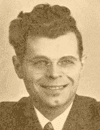
Turning the World Upside Down
J. Edwin Orr reveals how united, fervent prayer and revival movements historically transformed societies and ignited spiritual awakenings that turned the world upside down.
In this powerful teaching, Dr. J. Edwin Orr explores the history of spiritual decline and revival, emphasizing the critical role of united prayer and cooperation among believers. Drawing on historical examples from America, Britain, and Scandinavia, he illustrates how these movements transformed societies and ignited lasting spiritual renewal. Dr. Orr challenges contemporary Christians to learn from these past awakenings to foster genuine revival today.
Full Transcript
This is inspirational tape number 5048, Turning the World Upside Down, by Dr. J. Edwin Orr. Dr. Orr is a widely travelled speaker and writer who spent 25 years in Ireland, ministering North and South for a committee of six denominations. He has a Doctor of Philosophy from Oxford and a Doctor of Education from UCLA.
Now if you want scripture for what I'm going to say to you, I'm going to give it to you in a very few verses. Listen, everyone, to what I have to say. Pay attention to my utterance.
I will reveal to you forgotten truth, things obscured by the passage of time, things that we have heard and known, that our fathers have told us. We will not hide them from their children, but tell to the coming generation the glorious deeds of the Lord and his might, and the wonders that he has wrought, that the next generation might know them, the children yet unborn, and arise and tell them to their children, so that they should set their hope in God and keep his commandments. At the time of the bicentenary, I heard a dear friend of mine on television say, it was about time that this country realized that our republic was founded by men of God and men of prayer.
I said to my wife, that's only half true. Tom Paine, a man of God? He was a blasphemer. Thomas Jefferson, a great character, but he wouldn't let anyone pray with him.
When he was dying, he didn't believe in prayer. General Charles Lee, one of the heroes of the Revolutionary War, he said, tear down the churches. They stand in the way of progress.
Oh yes, George Washington prayed, and so did others. In fact, the Christians in the Revolution ganged up on Thomas Jefferson in his first draft of the Declaration of Independence, there was no mention of God. And they said, you must mention God.
So he put in a reference to the creator, to nature's God. He was a deist, not a Christian. But what is not commonly known is that in the wake of the American Revolution, Christianity almost died in this country.
The largest denomination was the congregational. Take the Reverend Samuel Shepard, Lenox, Massachusetts, who said in 16 years he hadn't taken one young person into fellowship. It was typical of the church.
The Methodists were the most aggressive. They were losing more members than they were gaining for several years. The Presbyterians met in General Assembly, the first order of business was to deplore the ungodliness of the country.
The Baptists said they had their most wintry season. The Lutherans were so languishing, they discussed uniting with the Episcopalians, who were even worse off. The Protestant Episcopal Bishop of New York, Samuel Provost, quit functioning.
He had confirmed no one for so long, he decided he was out of work, and he took up other employment. John Marshall, Chief Justice of the United States, wrote to the Bishop of Virginia, the church is too far gone ever to be redeemed. They took a poll at Harvard University, and found not one believer in the whole student body.
They took a poll at Princeton, and found only two believers, and only five students who didn't belong to the filthy speech movement of that day. Drunkenness was epidemic. Immorality was gross.
Women were afraid to go out for fear of assault, for the first time in the American settlement. It was the same around the world. Scandinavia was in darkness.
Britain was besieged. Rationalism ruled in the Netherlands and in Germany, and of course the French Revolution broke out 1789. Yet that was followed by one of the most glorious awakenings ever known in history.
How did it come about? Through a movement of prayer. A group of Scottish ministers wrote a little booklet urging people to set aside one day a month to pray for a revival. Someone sent a copy to Jonathan Edwards, the great American theologian.
He was so moved he wrote a letter in response that got longer and longer until he published it as a book. The title of the book, if my memory serves me correctly, was as follows. A Humble Attempt to Promote Explicit Agreement and Visible Union of All God's People in Extraordinary Prayer for the Revival of Religion and the Extension of Christ's Kingdom According to Scriptural Promise and Prophecies Concerning the Last Days.
That was the title, not the book. But don't miss the punch. A Humble Attempt to Promote Explicit Agreement and Visible Union of All God's People in Extraordinary Prayer.
Do any of you remember ten years ago when they were preparing for P73? A great evangelistic crusade? Someone asked me, do you think it will bring about an awakening? I don't think so. I'm not against it. Any church that puts something into it will get something out of it.
But they missed the point of explicit agreement and visible union. They said in effect, you Southern Baptists don't need to worry about the Missouri Lutherans. They'll do their thing, you'll do your thing.
You Presbyterians don't need to worry about the Assemblies of God. They'll do their thing, you do your thing. You Methodists don't need to worry about the Congregationalists.
Everyone will do his own thing and somehow or other we're going to have a revival. It didn't come that way. There must be explicit agreement and visible union.
When God's people get so anxious they pray unitedly. A.T. Pearson said there has never been a great awakening in any country or locality that did not begin in united prayer. After Jonathan Edwards died, his little book was published over in England, fell into the hands of a Baptist pastor called Andrew Fuller, who traveled the length and breadth of Britain urging the Baptists to set aside one day a month to pray for revival.
They were joined by the Congregationalists, then by the Methodist Societies, then by Evangelicals in the Church of England and Evangelicals in the Church of Scotland until Britain was interlaced with a network of prayer meetings. John Wesley died 1791 and the revival came the next year. What about the States? I told you the conditions here.
In case you think this is the hysteria of the moment, Kenneth Scott Latourette, one of our greatest Church historians, said it seemed as if Christianity were about to be ushered out of the affairs of men. Walter said Christianity will be forgotten in 30 years' time and Tom Paine was preaching this cheerfully all over the newly independent United States. Isaac Bacchus, a godly pastor in New England, wrote to the leaders of all Christian denominations.
They knew the churches had their backs to the wall, urging them to set aside one day a month to pray for a spiritual revival. The Presbyterian General Assemblies and Synods adopted it for all their churches. Bishop Francis Asbury adopted it for the Methodists.
The Congregational Associations, the Methodist Associations, one after another adopted it until there was a network of prayer all over the United States. The revival came within three years. It crested in Connecticut.
It was without extravagance, except when it hit the frontier in Kentucky and Tennessee. When you read your Church history books, you can read all about the extremes in Kentucky and Tennessee. They never say a word about the deep moving of the Holy Spirit on the eastern seaboard.
It turned the tide. Out of it came, for instance, counting Europe and America, so much good. The British and Foreign Bible Society, the Religious Tract Society, all the Bible Societies, the abolition of the slave trade, the beginning of decent conditions for workers, all these things came out of that revival.
Here I am speaking in Minnesota, so I must mention in the same revival, God laid his hand upon Hans Nielsen Hauge in Norway. All the good things we think of connected with Norway come from that event. The Haugean movement.
The same revival was felt in Sweden and in Denmark. And in Finland, God raised up Paavo Ruut Salainen. By the way, the Lutheran authorities put Hans Nielsen Hauge in jail for ten years, but he didn't leave the Church.
And today you find that leaven still working in Norway. The revival didn't begin in Germany until after the Battle of Waterloo, but in 1816 there came such a movement, not only evangelized Germany, but raised up men like Fleidner, Theodor Fleidner, one of the greatest social workers of all time. Now what about the Lutherans in the United States? I picked up something from one of the Lutheran authorities, Abdel Ross Bentz, that the German-speaking American Church, Lutheran and Reformed, felt practically nothing of the Great Awakening of 1740.
At the beginning of the 19th century they were somewhat slower than the other churches to feel the quickening impulse. Why? One reason was language, they were German-speaking, cut off from the other population. The second was conservativism.
But in 1830 came another movement of the Holy Spirit. You read nothing about it in church history books. There was a loud pouring of the Holy Spirit in Charlestown, Massachusetts in the spring of 1830 that spread all over the United States.
The Methodists, for example, increased in two years from 580,098 members to 1,713,356 in two years, doubled. That revival swept the United States. How did it affect the Lutherans? Well, here's what E.J. Wolfe says, he's a great Lutheran historian.
Symptoms of renewed spiritual life attested everywhere the presence of the Holy Ghost. He's speaking of Lutheranism. The Lutheran pulpit was marked by peculiar earnestness and pastors excelled in self-sacrificing fidelity in the catechism class and in house-to-house visitation.
The congregations experienced an increased degree of stability, a degree of spirituality, a warm spiritual life coursing through all the arteries of Christ's body. The revival of 1830 swept Lutheranism in this country. In Sweden, it gave rise to George Scott and Rosanius.
I've preached in the great Bethlehem Church in Stockholm. That movement swept Sweden, and the converts of that movement were the ones who came and settled in Minnesota and Iowa and Wisconsin. Sweden's lost, but America's gained.
A great time of revival. Revival in the Hawaiian Islands. 1830, there were only 577 members, but in the movement that began in 1836 there were more than 20,000 converts.
The same revival swept Tonga. The same revival broke out in other parts of the world. I won't wear you with detail.
But, the tide was out by the middle of the century again. Why? The country was seriously divided over the issue of slavery. Also, people were making money hand over fist.
When young D.L. Moody moved from Boston to Chicago, he worked hard, invested his savings, and got 18% interest on his savings. When people make money like that, they tend to forget God. In 1857, the Dutch Reformed Church in downtown Manhattan appointed a young man called Jeremiah Lanphier as their church visitor.
He was a man of prayer. He sent out a little leaflet. How often shall I pray? As often as the language of prayer is in my heart.
As often as I'm aware of temptation within, or a worldly spirit. In prayer, we live the business of time for the business of eternity. On the other side of the leaflet, it said, a day prayer meeting will be held each Wednesday in the upper room of the consistory building of the North Dutch Reformed Church.
Out of a population of a million in greater New York, he was the only one who showed up. But at 25 to 1, there were six men who prayed until 1. They came back the following week 14 strong, then 23. Then they began to overflow.
They began to meet every day for prayer. A movement of prayer seemed to be starting all over the United States, especially attracting businessmen at lunchtime. By February, Horace Greeley, the famous editor who said, go west, young man, sent a reporter with horse and buggy racing around the prayer meetings to see how many men were actually attending.
In one hour, he couldn't visit more than 12. He just rushed in, counted the number of men, rushed out again, found 6,100 men in prayer in downtown New York. This became news, and a landslide of prayer followed.
They not only filled every church, but every public hall, every big theater, theaters of 5,000, filled with people to do nothing other than pray. The tide swept New York. One day a minister got up in one of the prayer meetings and said, I was here till 3 o'clock dealing with people who wish to find Christ as Savior.
I know there must be many more, but I want to announce that my church will be open from tonight onwards indefinitely for the preaching of the gospel. And soon every church in New York was opened and filled. You haven't taken in what I said.
I attended the last Graham crusade in Los Angeles. Billy Graham and I have been intimate friends for many years. There were 40,000 tonight.
If Billy Graham had said on Tuesday night, don't come here tomorrow night, go to your own midweek service. And you pastors who don't have one, open up. These people are coming.
Supposing a pastor who didn't have a midweek prayer meeting told his custodian, we're having a meeting tonight, and the custodian said, how many do you expect, sir? What could he tell him? If you'd taken the 40,000 and divided it by the 5,000 sponsoring churches, it would have meant eight people per church, and they could all have sat in the front pew. How could you compare that with a movement that filled every church, every night for a year? You say every church? There were 30 Roman Catholic churches in New York. Everyone packed and filled.
Their style of service was different to the Protestant preachers. They would have different missionary orders come and preach the gospel, and then invite the people to remain behind and confess their sins and put things right with God and with one another. But that revival swept New York City.
It went up the Hudson, down the Mohawk. The Baptists had so many candidates for believers' baptism, they couldn't get them into their churches. They went down to the river, cut a big square hole in the ice, and baptized them in the cold water.
When Baptists do that, they are on fire. The revival swept Boston. It had some opposition from the Unitarians, but not much.
Frederick Dan Huntington was professor of religion at Harvard, a Unitarian. He was so moved, he started a weekly prayer meeting for students, as a result of which he was converted and became an Episcopal bishop. The revival spread over the Alleghenies into the Middle West.
All along, churches crowded everywhere for prayer, and in the evening, preaching services. When the revival reached Kalamazoo in Michigan, the prayer meeting was started by an Episcopal layman. He took the town hall, it was packed.
He said, I see our rector is here. We'll ask him to read the scripture. I see the Methodist minister is here.
Perhaps he will lead in prayer. Then the meeting will be open for prayer. But he said, there are so many people here, I'm afraid you won't get a chance to pray.
So write your request on a slip of paper, pass it up to me. I will read it, someone will pray for you. The first request was, a praying woman asks the prayers of this congregation for the conversion of her husband, who is far from God.
Immediately, a blacksmith stood and said, I'm far from God, my wife prays for me, would somebody help me? A lawyer stood up and said, it was my wife that wrote that, I'm quite sure, because I know I'm far from God. Five husbands converted immediately. Now Charles Finney said in his autobiography, the only part of the country not affected was the South.
Because of their addiction to slavery. But he was quite mistaken. The revival swept the South from Richmond all the way to Galveston in Texas.
Christ the churches, not only that, but it continued during the Civil War. Do you know that in the Northern Army of Virginia, led by Robert G. Lee, Robert E. Lee, there were 150,000 Confederate soldiers converted in one of the most remarkable revivals of all time. Oh, there's a movement among the Northern troops too.
I read in a man's diary, we were carrying some wounded down the Tennessee River. This was a Northern episode. He said, the cry of a wounded man is for water.
We made up our mind not to let any man die that night without giving him the water of life. He wrote that. D.L. Moody.
He was working as a lay evangelist during that war. By the way, when the revival reached Chicago, it had a population of 100,000. But 2,000 men meeting for prayer in the Metropolitan Hall in what's now called the Loop.
Then the revival flowed over and flowed into the churches. Every church packed. Trinity Episcopal Church had 127 members in 1857.
1800, 1860. You can't argue with things like that. A young shoe salesman went to the superintendent of the Plymouth Congregational Church and said, I would like to teach Sunday school.
The superintendent said, I'm sorry, young fella, I've got 16 teachers too many. I'll put you on a waiting list. But he said, I want to serve God now.
Well, he said, start a class. How do I start a class? He said, get some boys off the street. Don't bring them here.
Take them out into the country for a while until you have control of them. Then bring them here. He took a bunch of boys to the beach on Lake Michigan, taught them Bible stories and Bible games, and then took them to the Plymouth Congregational Church.
His name was Dwight Lyman Moody. That's how his ministry began in the revival of 1858. Moody died 40 years later, 41 years later.
He said, I would like before I go hence to see the whole Church of Christ Quickened was in 1857 and a wave going from Maine to California to sweep thousands into the kingdom of God. I think you can deduce from that that in Moody's superb 40 years of evangelism he had seen nothing to surpass what he saw during his apprenticeship in 1858. You say, what happened to the Lutherans during this? Well, I found in 1856 the Lutherans were deploring the lack of spiritual power in their churches.
But two years later, the leading Lutheran journal said, It is with feelings of gratitude to the great head of the Church I am able to communicate to numerous readers the cheering of intelligence of the artful and of the Holy Spirit upon another of our congregations. I picked up headlines from Lutheran journals. Increased attendance.
All pews taken. Weekday services well attended. Conversions.
Reviving of many members. Members awake and convicted and hopefully converted. More than half the converts heads of families.
It got so strong. Here was an item from Ohio among Lutherans. An extraordinary event is now taking place in our land.
Eyes unused to weeping or weeping over sin. Men are awed with a sense of the divine presence. There is a prayerful reading of the word of God.
The leading Lutheran weekly said in March 1858, The religious interest in our churches as well as in other denominations is so general and so widespread we are compelled to give mere extracts from the numerous accounts that reach us. It is impossible to chronicle in full the accounts we receive of the great work that is filling the land with rejoicing. Out of a population of about 27 million, 28 million at the most, more than a million added to the churches.
Probably another million converted in the churches. When a man who is a church member becomes converted he doesn't resign and join again. That's not shown in the statistics.
But this was a sweeping revival. It jumped the Atlantic, broke out of Northern Ireland, then Scotland, then Wales, then England. Do you know that the Bishop of London and the Dean of Westminster in friendly competition ran evangelistic meetings in St. Paul's Cathedral and Westminster Abbey for five years? That was for the upper class.
What about the proletariat? In those days they were called the great unwashed. They packed the theatres. Sadler's Wells, Covent Garden, the Old Victoria, all the great theatres of London packed every Sunday.
And not all Anglicans were in favour. In Bradford, the Anglicans and the preachers got together to have evangelistic meetings on Sunday nights. But the Bishop of Ripon wouldn't give permission.
He said, I do not deny that these free church ministers are servants of God according to their light, but they're not priests of the true church. So the Anglicans went back to the free church people and said the Bishop won't allow it. Then somebody came up with an idea.
Why not alternate? First Sunday of the month, Anglican. Second Sunday, free church. Third Sunday, Anglican.
Fourth Sunday, free church. And it worked. On some Sundays they had the blessing of God and the benediction of the Bishop.
On other Sundays they had to make do with the blessing of God only. That revival swept the world. It broke out in Norway, in Sweden, in Denmark, in Finland.
It lasted 30 years in Germany. It gave rise to the Gemeinschaftsbewegung. Theodor Christli was in London and saw the revival there and went back to Germany and began leading that great movement among the German Lutherans.
What about our own century? It was my privilege personally to know Evan Roberts whom God so singularly used in the Welsh Revival. The Welsh Revival began as a movement of prayer. It began with intense conviction of sin.
It was a movement in the church, of the church, by the church, for the church. It was not an outside evangelistic drive. Evan Roberts was not the Billy Graham of his day.
He wouldn't even announce where he was going to visit. He went to one church and began in his fervent Welsh way. How many of you believe the promises of God? Great roar of Amen.
Do you know one from the Lord Jesus which says where two or three are gathered in my name, there am I in the midst? Yes. Isn't that especially precious? Yes. Do you believe it? Yes.
Do we have one or two here tonight? Two or three? There were two or three thousand. Is Jesus here? Yes. Is Jesus really here? They said yes.
All right then said Evan Roberts you don't need me. He put on his hat and coat and went to another meeting. I asked the man that told me that what happened? He said we suddenly realized the Lord Jesus was there.
Everyone began to talk to him. The Welsh Revival was marked by simultaneous audible prayer. A hundred thousand converted in five months.
One of the most bitter attacks on the Revival was five years later when a man boasted or claimed that of the hundred thousand that were converted after five years only 75,000 still stood. Only 75% defected. He said many were lost to the Pentecostals.
The social effects were astounding. Drunkenness was cut in half. I have the figures from the Chief Constable of Glamorgan.
Arrests for drunkenness cut in half. But a wave of bankruptcies. He said how could the Revival cause bankruptcy? Mostly taverns.
Couldn't sell their booze. I got the figures from Somerset House. Within a year of the Revival the illegitimate birth rate in Radnorshire and Marinershire dropped 44%.
Police were unemployed. In one case a sent for a Sergeant of Police who said what do you do with your time? He said before the Revival with two main jobs to prevent crime and to control crowds at football games, market days, that sort of thing. Since the Revival there's practically no crime.
So we go with the crowds. A councillor said what do you mean you go with the crowds? Oh no he said we have 17 police in our station. But we've got three excellent quartets.
If any church wants a quartet to sing they'll notify the police. He said how could a Revival cause a strike? Not a strike, a slowdown. So many coal miners were converted and stopped using bad language that the horses that dragged the trucks in the mine couldn't understand what was being said.
And transportation slowed down. I've had people ask me why didn't the Welsh Revival last? I was in Wales in 1930, 30 years later in the 1930s. I used to say how many people were converted in the Welsh Revival? Practically everyone over the age of 50.
I asked a pastor of Mount Pleasant Baptist Church in Swansea how long did the Welsh Revival last here? He said we were bringing an extra church for 20 years. That's fair enough. But I was brought up in the United Kingdom.
So often I heard why didn't the Welsh Revival affect England? It swept every cunt in England. 30 bishops of the Church of England got together under the chairmanship of the Archbishop of Canterbury to discuss what should be the attitude of the Church to this Revival. The first speaker was the Bishop of St. Asaps.
He said, fathers and brethren, I have just come from Oswestry in Shropshire, in the west of England, where in a single church I confirmed 950 new converts. The bishops voted in favour of the Revival. Do you know that in Nuneaton, near Birmingham, the railway ran special excursions to the prayer meetings? Great torchlight demonstrations in Southampton against the evangelists, by the way, were Frederick and Arthur Wood.
Arthur Wood's son is a Bishop of Norwich today. That Revival swept England. They had big public meetings, political meetings.
David Lloyd George, the Prime Minister, went to one and in a weak moment called for someone to pray and the man got carried away. It became one of the most glorious prayer meetings you ever came across. You never did hear the speaker.
The Revival broke out in Scotland. It broke out in Ireland. Now, the Lutheran theologians in Norway said, we're interested in this Welsh Revival, but we're very suspicious of any movement that does not stress the word and sacraments.
There's an apostolic quadrilateral. They continued in the Apostles' Doctrine. That's the word.
And prayer. And the breaking of bread. That's a sacrament.
And fellowship. Sometimes we can have word and sacrament without the prayer and fellowship. And that swept Norway.
Bishop Berggrav told me once over coffee, the greatest movement I ever saw in my life was the Revival of 1905 in Oslo under Albert Lunde. I preached for Albert Lunde years later. Do you know the Revival was so strong in Norway that the Norwegians supporting the Parliament passed special legislation to permit specially licensed Lutheran laymen to conduct Holy Communion.
The clergy couldn't keep up with it. The Revival swept Denmark. The Indre Michonne there said, it's been the greatest winter since Christianity came to the Vikings.
In Sweden, Sweden and Norway were almost at war in 1905. The troops were recalled from the frontier and Bishop, I should say, Prince Oscar Bernadotte, brother of the king, invited Albert Lunde to come and preach in the most fashionable church in Stockholm, a Norwegian seaman, preaching in a Swedish aristocratic church. And the Revival swept Sweden.
I knew Prince Oscar Bernadotte. I prayed with him too. The Revival swept Finland.
Broke out in Germany. Went right around the world. You've all heard perhaps of Amy Carmichael in India.
That wonderful missionary woman. She came from the same part of Ireland I was born in. She was Anglican.
Now you know the Anglicans have liturgical services, a time to stand, a time to kneel, a time to recite the Lord's Prayer, a time to recite the Creed. The whole thing broke down in weeping. Amy Carmichael said in her diary, it was so sudden and so awful, I can use no other word.
I can't keep track of it all. Soon the whole church was on its face and the floor, man and woman, boy and girl, oblivious of all others. The sound was the sound of the wind in the trees or the ocean on the beach.
Again, simultaneous audible prayer. In that Revival in India, the Christians increased 16 times as fast as the Hindu majority for 10 years. The Revival swept China.
It was phenomenal in Korea. 79,221 converts added to the churches because of the Revival in Korea. John Wesley, when he died, left 70,000 Methodists in his societies in England.
You want to know why today, Korea has the biggest crowds in all the world, two million at a meeting? You can trace it back to the Revival of 1907. Oh, I wish I had time to tell you more about this, but this Revival swept the world. Some of these blinds have come up to me and said, well, now was that before or after Azusa Street? Azusa Street, that meeting was held in 1906 in the wake of the Revival.
I never met anyone in the United States ever heard of the 1905 Revival in the United States, but the ministers in Atlantic City said of a population of 60,000, there were only 50 adults left unconverted. In Portland, Oregon, 200 major stores closed from 11 to 2 each day for prayer. In Paducah, Kentucky, the pastor of the First Baptist Church took in 1,000 new members in two months and died of overwork.
And the Southern Baptist said, a glorious way to go. This movement broke out in Redwood Falls in Minnesota, swept the whole of the state. It broke out here, there, and everywhere, swept Canada from coast to coast.
It was a worldwide revival before the dark and terrible days of World War I in which the British lost a million men, the French more than the British, the Germans more than the French, the Russians more than the Germans. But this was the great revival, and out of this revival came the Pentecostal Alchemist. Evan Roberts, by the way, wrote from Wales to Azusa Street to encourage them.
There's not enough time to tell you about this. Now, people say, well, that's a long time ago. My dear friends, the same kind of revival is occurring today in the Solomon Islands and Papua New Guinea, in Nagaland and Meso Ram.
I saw the revival in Brazil in 1952, and the church had been growing steadily in Brazil for 30 years. There have been movements of revival. The revival of 1947 was what triggered the present Korean movement.
This was a worldwide movement, and it was renewed about 1948-49. I came across a statement in 1950 saying, every denomination is experiencing blessing today. We are in the midst of revival.
I looked to see who said this. Well, I see. Long before he became famous as a charismatic leader.
Now, we are up to 1970. 1970 was the Asbury College revival. Did you ever hear of that? It touched about 40 campuses.
1971, the revival in Western Canada. 1971, the revival in the Solomons. 1972, the revival in Romania.
1976, the revival in Nagaland. But to this moment, we haven't had revival of that kind in the United States. What I have heard at this conference has encouraged me.
There's been a tendency for us who seek the fullness of God's Spirit to be concerned about what this will do for me. I used to think that that was the main emphasis. Revive the church and win the world.
But that's not the emphasis. We need to pray for an outpouring of the Holy Spirit upon the ungodly. Peter was filled with the Spirit and preached the word on the day of Pentecost.
120 believers overnight became 3,120. Donald McGovern calls that very satisfactory church growth. What was the secret? He was filled with the Spirit.
He preached the word. But Stephen was filled with the Spirit and he preached the word. And they murdered him.
We need to pray for an outpouring of the Holy Spirit upon the people to convict them. When He has come, He will convict the world of sin, of righteousness, and of judgment. I've always believed in the gifts of the Spirit.
Some of my charismatic friends have described me as a pre-charismatic charismatic. I say I'm a charismatic with a small C. But I have to say the present movement has not convicted the United States of sin. There's more crime than ever there was.
There's more immorality than ever there was. We've got frightening pornography, gross profanity, and yet we enjoy our blessing. Oh I would like to see the energy in this movement turn towards evangelizing the world and reaching out in missions.
Now what's the secret of it all? All these great revivals of modern times began in movements of prayer. Remember what Jonathan Edwards said, explicit agreement and visible union of all God's people in extraordinary prayer. Several years ago, a young man whom I had not met before came to see me in my office at Fuller Seminary.
He said, your book says that a man called Jeremiah Lamphere started a prayer meeting of half a dozen men and it doubled and quadrupled and spread all over the country. About a million people were converted and that brought in the great revival of 1858. I said, that's right.
Now he said, I directed a campaign in New York. We didn't start with a prayer meeting. We had 1,000 prayer meetings.
He said, we didn't only have a bumper sticker with a plane lighting in the sky. He said, we spent $1,000,000 on that crusade. It was a good crusade as it went.
He said, a couple of months later I was back in Florida when the great blackout occurred and 300,000 New Yorkers tried to loot the city. My heart was sick. He said, New York is still as sin as it was before the crusade.
He said, Dr. Orr, why can't we do something today that will last? Well, I didn't know what to say to him. So I said, well, I'll illustrate from experience. It was my privilege to be with Billy Graham at Forest Home when he entered into a new experience of the filling of the Holy Spirit.
So I was close to Billy in his Los Angeles crusade. About 1,000 revived pastors, Baptist, Methodist, Presbyterian, Lutheran, Episcopalian poured their young people into that big tent and Billy had that striking success. I was with Billy here in Minneapolis, stayed with him in the Curtis and I also went with him to Portland.
The campaign there was organized by an excellent organizer, Dr. Frank Phillips of Youth for Christ, a veterinary surgeon. He told the pastors in Portland, we stand on the verge of revival. They had exactly 1,000 prayer meetings.
Billy Graham came and preached the gospel in his inimitable style, faithfully. Left several thousand inquirers to the care of the churches. The pastors went back the following Sunday to their churches expecting a new day of revival but they went back to the same routine plus the problem of integrating the curse.
My friend said, that's what I'm getting at. That's what I'm getting at. Well, I'll tell you why.
The day that Billy left town, the 1,000 prayer meetings were abandoned. They were disbanded. In other words, they existed for the success of the crusade in answer to target-oriented prayer.
Those are not my words but I think they're my sentiments. Now, I'm a Baptist by ordination. The Baptists decide to have a youth rally.
Is that a good idea? Of course it is. So they choose a good auditorium in a good center with good speakers with good music, good choir, good transportation, good publicity. Somebody might just say, let's have prayer too.
So they organize some prayer and then some dear soul said, Lord, send a great revival. Who knows what God may send a great revival. Do they get a great revival? No, they get a good Baptist youth rally.
That's what they're praying for. You cannot subordinate prayer for an awakening for the whole body of Christ to any project you do have. And that's one of our troubles today.
We're project-minded. You know, I believe in the gifts of the Spirit. Not only the nine given in Corinthians and the extra two, but God gave some apostles, prophets, evangelists, pastors, and teachers.
But they've revised the scripture in the States today. God gave some apostles, prophets, evangelists, pastors, teachers, and celebrities. We can't get along without celebrities.
We don't get revival that way. If we're going to see a movement of the Holy Spirit of God in the country that we love, it's bound to come in God's way. And that will be with humbling.
If my people called by my name shall humble themselves and pray and seek my face and turn from their wicked ways, then I will hear from heaven and will forgive their sin and will heal their land. A lot of people equate revival with success. They think if they could just pack their church or build a new one, that's revival.
You know, when revival comes, it's a painful thing. It means a lot of personal adjustments. It means humbling oneself.
It means confessing of sin. It means putting things right, restitution, reconciliation. All that has to come.
Therefore, I believe that we should pray to this end. Lord, send another great awakening around the world and begin in me. I told you I've been interested in the gifts of the Spirit long before there was a so-called charismatic movement.
But I believe the charismatic movement is a preparation for something greater. It has broken down a lot of barriers. It has deepened a life.
It has given us a new dimension in worship. But our greatest need is to harness it, just as at Pentecost. The significant thing at Pentecost was not the tongues of fire over everyone's head, but the fact they went out and won the world to Christ.
Won 3,000 to start with, 5,000 heads of families, and then began turning the world upside down. Amen.
Sermon Outline
-
I. The Spiritual State After the American Revolution
- Christianity nearly died in America post-Revolution
- Church denominations were declining and struggling
- Moral decay and ungodliness prevalent
-
II. The Power of United Prayer
- Scottish ministers urged monthly united prayer for revival
- Jonathan Edwards and others promoted extraordinary prayer
- Explicit agreement and visible union essential for awakening
-
III. The Great Awakenings and Their Impact
- Revival movements spread across Britain, America, and Scandinavia
- Social reforms and missionary efforts emerged from revival
- Notable figures like D.L. Moody began ministries during revival
-
IV. Lessons from Historical Revivals
- Revival requires unity and persistent prayer
- Spiritual renewal affects all aspects of society
- Modern efforts must learn from past movements for effectiveness
Key Quotes
“A Humble Attempt to Promote Explicit Agreement and Visible Union of All God's People in Extraordinary Prayer.” — J. Edwin Orr
“There has never been a great awakening in any country or locality that did not begin in united prayer.” — J. Edwin Orr
“When God's people get so anxious they pray unitedly.” — J. Edwin Orr
Application Points
- Commit to regular, united prayer with other believers to seek spiritual renewal.
- Promote cooperation and visible unity among different church groups for effective ministry.
- Learn from historical revivals to understand the power of prayer and social transformation.