
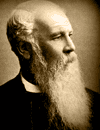
Expository Thoughts On John - JOHN 3:9-21
J.C. Ryle expounds on John 3:9-21 to reveal the necessity of spiritual rebirth and faith in Christ as the foundation for eternal life and salvation.
In this expository sermon on John 3:9-21, J.C. Ryle explores the profound conversation between Jesus and Nicodemus, emphasizing the necessity of spiritual rebirth and faith in Christ for salvation. Ryle highlights the prevalent spiritual ignorance even among religious leaders and calls believers to embrace the truth of Scripture and the work of the Holy Spirit. This message challenges listeners to examine their faith and respond to God's love with genuine belief and transformation.
Text
Nicodemus replied, "How can these things be?" Jesus answered, "Are you the teacher of Israel and yet you don’t understand these things? I tell you the solemn truth, we speak about what we know and testify about what we have seen, but you people do not accept our testimony. If I have told you people about earthly things and you don’t believe, how will you believe if I tell you about heavenly things? No one has ascended into heaven except the one who descended from heaven--the Son of Man. Just as Moses lifted up the serpent in the wilderness, so must the Son of Man be lifted up, so that everyone who believes in him may have eternal life."
For this is the way God loved the world--he gave his one and only Son that everyone who believes in him should not perish but have eternal life. For God did not send his Son into the world to condemn the world, but that the world should be saved through him. The one who believes in him is not condemned. The one who does not believe has been condemned already, because he has not believed in the name of the one and only Son of God. Now this is the basis for judging that the light has come into the world and people loved the darkness rather than the light, because their deeds were evil. For everyone who does evil deeds hates the light and does not come to the light, so that their deeds will not be exposed. But the one who practices the truth comes to the light, so that it may be plainly evident that his deeds have been done in God.
We have in these verses the second part of the conversation between our Lord Jesus Christ and Nicodemus. A lesson about regeneration is closely followed by a lesson about justification! The whole passage ought always to be read with affectionate reverence. It contains words which have brought eternal life to myriads of souls.
These verses show us, firstly, what gross spiritual ignorance there may be in the mind of a great and learned man. We see a "master of Israel" unacquainted with the first elements of saving religion. Nicodemus is told about the new birth, and at once exclaims, "How can these things be?" When such was the darkness of a Jewish teacher, what must have been the state of the Jewish people? It was indeed due time for Christ to appear! The pastors of Israel had ceased to feed the people with knowledge. The blind were leading the blind, and both were falling into the ditch. (Matt. 15:14.)
Ignorance like that of Nicodemus is unhappily far too common in the Church of Christ. We must never be surprised if we find it in quarters where we might reasonably expect knowledge. Learning, and rank, and high ecclesiastical office are no proof that a minister is taught by the Spirit. The successors of Nicodemus, in every age, are far more numerous than the successors of Peter. On no point is religious ignorance so common as on the work of the Holy Spirit. That old stumbling-block, at which Nicodemus stumbled, is as much an offence to thousands in the present day as it was in the days of Christ. "The natural man receives not the things of the Spirit of God." (1 Cor. 2:14.) Happy is he who has been taught to prove all things by Scripture, and to call no man master upon earth. (1 Thess. 5:21; Matt. 23:9.)
These verses show us, secondly, the original source from which man\
Sermon Outline
-
I
- Nicodemus's spiritual ignorance despite his status
- The need for new birth explained
- The blindness of religious leaders and its consequences
-
II
- The role of the Holy Spirit in regeneration
- The natural man's inability to receive spiritual truths
- The importance of Scripture as the ultimate authority
-
III
- God's love demonstrated through giving His Son
- Faith as the means to eternal life
- The judgment based on belief or unbelief
-
IV
- The contrast between light and darkness
- The evidence of deeds in relation to truth
- The call to come to the light and live in truth
Key Quotes
“We have in these verses the second part of the conversation between our Lord Jesus Christ and Nicodemus. A lesson about regeneration is closely followed by a lesson about justification!” — J.C. Ryle
“Ignorance like that of Nicodemus is unhappily far too common in the Church of Christ.” — J.C. Ryle
“For this is the way God loved the world--he gave his one and only Son that everyone who believes in him should not perish but have eternal life.” — J.C. Ryle
Application Points
- Examine your own understanding of spiritual rebirth and seek the Holy Spirit's guidance.
- Place your faith fully in Christ as the source of eternal life and salvation.
- Live transparently in the light of God's truth, allowing your deeds to reflect your faith.
Frequently Asked Questions
Who was Nicodemus and why is he significant?
Nicodemus was a learned Jewish teacher who represents spiritual ignorance even among religious leaders, highlighting the need for new birth.
What does 'new birth' mean in this passage?
New birth refers to spiritual regeneration by the Holy Spirit, a necessary transformation to enter the kingdom of God.
Why is faith in Christ essential according to this sermon?
Faith in Christ is essential because it grants eternal life and saves from condemnation, as God sent His Son to save the world.
What is the significance of light and darkness in John 3:19-21?
Light symbolizes truth and salvation, while darkness represents evil deeds and rejection of God's truth.
How should believers respond to spiritual ignorance today?
Believers should rely on Scripture, seek the teaching of the Holy Spirit, and avoid placing blind trust in human authority.