
Do You Belong to Christ?
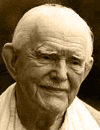
Norman Grubb explains that true belonging to Christ means a living, unified relationship where Christ lives His life through us, replacing the false god of self-centeredness with the true God of self-giving love.
In this profound teaching, Norman Grubb explores the essential truth of belonging to Christ as a living union where Christ Himself lives His life through believers. He examines humanity's captivity under a false god of self-centeredness and the divine rescue accomplished through Christ's incarnation, death, and resurrection. Grubb emphasizes the foundational gospel truths of substitutionary atonement and justification, inviting listeners to embrace a faith grounded in the person of Jesus Christ. This sermon challenges believers to understand and live out their identity in Christ fully.
Full Transcript
I seem to have fallen among thieves. Tommy steals all I want to say, and I've got nothing for me to say. I'm sure you're all blessed to our depths this morning.
And Glenn, too, on the same line. It's the one person coming through all. The Lord's speaking by the same voice through us all.
Once again, as I said previously, I somewhat feel it's like you've had good, warm flesh, and now you've got to split the flesh open and find there's some bones underneath. At least the flesh needs some bones to keep it in its proper shape. And that's about it.
Tommy, by the Spirit, so wonderfully this morning opened up to us the fact which is the basis of this life we're talking about. Using the various terms such as the... Has that gone wrong? No. Oh, thank you.
The baptism of the Spirit, centering on the fact that it is a living union, unity, I'll later on say why I prefer the word unity to union, between the person and we as derivative persons, and such a union, a unity, that we just live naturally, and yet deep down in the centre of our consciousness it isn't we, but he. In a sense, perhaps, what I'm saying this afternoon will be the least interesting, perhaps the driest of the five talks we're seeking to give, give because I only want to go over with you the why of the unity or the union. On what solid foundation can we say that? So I'm only, as I say, opening up to see what lies behind.
Therefore it is, in a sense, commonplace to us all, and most of us here, I hope, are just a reminder, but as I say, I've always been one that feels I must have my feet on earth, solid. I know the way that's under me if I'm walking on it. There mustn't be any questions with me why it should be so and how it can be so.
So we're looking at that this afternoon. We've seen all through these talks this one fact that there's this one person. We needn't go over that again.
We've gone over it again and again. There's one person, this one person who is love, which means he lives other people's lives. He really is other people, get down to it.
Being spirit, he must have his means of manifestation. All manifests him, as Glenn's been pointing out to us, but supremely persons manifest him because he's a person. Therefore, the reason for our creation is to be in such a natural unity that we are as he is, as Tommy pointed out so plainly, not by imitation, but impartation, and know how we live like that.
So we're the eternal love, as he is, so we're the eternal love. We're other people, this is what comes out. Tommy underlined that again this morning, that whatever term we may use, Pentecost, baptism with the Spirit, Taoist sanctification, purist, whatever it is, it only has one meaning to it ultimately, a union relationship between him and us, a unity between us.
So we are he and we, and yet such a relationship that it turns out to be just he, I beg your pardon, turns out to be just we, but it's really he. This is the paradox we get onto. On what basis can we live naturally? Never again questioning this basic fact of this unity, he and we, he by we, he by us, we as he, whatever phrase we like to use.
Now we left it yesterday afternoon at the point of the fact that there's another he who's captured humanity, it's not that he. He's only a created he, but he's a God, and he's called the God of this world. And John stated to us that there are two he's, and one he lives in the unredeemed and the other he lives in the redeemed.
So he said, greater is he that is in you, the redeemed, than he that is in the world. And gave them their names, and said, hereby know we the spirit of truth, that is the person who is the truth, in the believer, and the spirit of error, that is the person, the God who is the error, in the unbeliever. So the relationship and the condition in which we come into this world is a wrong God in us, and a wrong God by us.
The God of self-centeredness, instead of the God of self-giving, the false one. Now we discussed that yesterday, we needn't discuss that again today, I take it. But what we've got to find out is the means by which, and the grounds upon which there's been a change of Gods.
Because that's all there is. All there is for humanity, the only possibility for humanity is a change of Gods. The God being the inner person, so joined to us that we spontaneously function as he functioning.
How can the wrong one be out, and the right one be in, as a permanency. So we can forget it, and live. So you see, I'm going back in a sense to common places.
The foundations of the Gospel, but just to give, it's helpful, to give the re-examination of those foundations. We saw, yesterday also, that we're in a hopeless condition, we're captives, we cannot get out. We're captors.
One of the scriptural expressions is we're slaves. Slaves of the devil. Slaves of the spirit of self-centeredness.
We're captors, we can't get out of it. The only way we can be out is if somebody else gets us out. Who can get us out? No man can get men out, because of one of us.
And so we get the great revelation of the Gospel. Which is, of course, the perfect revelation of the kind of person God is. Love means it exists for need, it belongs to need.
It's the possession of need. Need's the creditor, love's the debtor. And where there's need, love belongs to that need.
And the supreme need of the human race is that we've been caught up in the wrong garden and going in the wrong direction. And living, and if it should be so, living eternally in the constant distortions. Therefore, the Gospel is this person, this living person himself being the one who rescues us.
And the rescue means the means by which, as I said yesterday, he regains his stolen property. God couldn't create higher than humanity, because you can't create higher than yourself. And he created us in his similitude, in his likeness.
Because only can he as a person function through persons. So it's the very topmost of his creation which has been lost to him, and become a stolen property. And the whole human creation, expressing all forms of the activity of self-centeredness, where we're meant to express all the forms of the activity of self-giving.
Self-love, self-giving. So there's no other purpose in redemption than that God should regain his stolen property. And be able, naturally and easily, through time and eternity, to express himself in infinite variety of self-giving love and self-giving activity, instead of humanity expressing the wrong God in all forms of self-seeking.
This we know how it is done. By God becoming a man. The Bible leaves us no question about that.
Because John says that this one who came was the Word, he was with God, he was God. And the Word was made flesh. So he says this one on earth was God.
John says as differently as Paul says it. Paul says God was manifest in the flesh. Now this is a tremendous fact.
A fact far beyond reason. That the one who is, it's fantastic to reason, the one who is in the sense of the universe itself, the upholder of the universe, the one who expresses himself in the universe, became a tiny part of it, a human. I don't ultimately base my faith on trying to stretch my reason to believe things or not believe things.
I base my faith ultimately on what I might call my instinctive ideal. In this, I can't conceive, I can't conceive, I can never conceive anything more wonderful than a God whose real life is living the lives of the people he creates. I can't conceive of one, a God whose only interest is to be us, to live our lives.
So his life, his joy, his gaieties, his fulfillment is being us, being we. I can't conceive any higher than a love like that. When that love has been exemplified on earth by a person who did that, I'll bet my life on that for God.
I'll take all the rest in. So I never have any difficulty with liberalism and so on, because I say, well, until you find me a better God, I'm going to have this one. I'm waiting.
That's all. He hasn't turned up yet. With all my being, I see in God my ultimate.
I can't conceive a higher ultimate. All right, I'll bet my life on my ultimate. And I'll choose the wrong right horse and I'll win in the end.
That's all. So I don't base my faith, really, on historic facts. Basically, I gather in all historic facts, because if it's centered on that person, I'll take the lot.
So on that basis, I'll take the whole Bible. If he took the whole Bible, I'll take the whole Bible. The way in which he completed for us a total deliverance without one crack in it, is known to us.
That's what the Bible presents. And all those who interpret Jesus Christ and him crucified to us on earth bear the same message. So if we turn one down, we turn the lot down.
Paul says the same, and John says the same, and James says the same, and Peter says the same. That's all that's left, except Jude. He only goes about 30 verses, so he says the same, too.
The whole lot says the same. So we're looking at this fact now. We must say, leap of faith, unless, as I say, if to you this is the only conceivable God there could be, all right, then it's easy to take in what is said by faith.
That this was God become man. As a man, to redeem man. First of all, of course, he had to be one who couldn't himself become a captive to the wrong God.
That had to be 4001. So he himself refused every kind of solicitation and enticement to become captive to the wrong God, which had captured the first Adam. Therefore, he was in a condition in which he was free from the captivity and its consequences, which seized upon the human race of which he was a member.
Now he went in, went through a process which could produce for us a deliverance without a crack in it. An entire salvation, redemption, whatever we like to call it. This was, of course, through the process of Christ dying.
Christ rising. And ultimately Christ ascending, although we shan't touch on that. Last one this morning, this afternoon.
Christ dying, Christ rising. The Bible divides the effects of Christ dying and rising into two distinct areas. Presented to us in two distinct forms in the scriptures.
Mainly by the apostle Paul, who is the one who really opens up the whole matter for us. The others do too, but he gives us the whole structure of salvation. You may speak of the two stages of redemption as Christ for us and Christ as us.
With their different effects, Christ for us and Christ as us. It's pictured for us also in a little statement which kind of slips in to one of the comments on the Lord's Supper. Made by the apostle Paul in the 10th chapter of 1 Corinthians.
When he speaks about the Lord's Supper, in just passing remarks, so much often great truth comes in passing remarks, as you know. And he speaks about the cup of blessing which we bless. Is it not the communion of the blood of Christ? And the bread which we break, is it not the communion of the body of Christ? I'm just quoting.
The cup of blessing which we bless, is it not the communion of the blood of Christ? The bread which we break, is it not the communion of the body of Christ? Now having said that, spoken of the communion of the blood of Christ, the communion of the body of Christ. He goes on saying, for we being many are one bread and one body. He doesn't say one blood.
You'd think he'd say, is this not the communion of the blood of Christ? Is it not the communion of the body of Christ? We being many are one bread, one blood, one body. He doesn't say that. He jumps there.
He doesn't say we being many are one blood. He says we being many are one bread, one body. The bread being equivalent to the body.
There's reason for that. Because there's one necessary, preliminary, necessary part of our redemption, which is something we couldn't touch. Which he had to do for us, apart from us.
So we're not the blood. The blood is his life. We're not that.
We're the body, which is not quite so close as the blood. We're the blood. We're not the blood.
We're the body. So it doesn't connect us that way with the blood. Because for this first part, there had to be someone who did something for us, apart from us, which he couldn't do for ourselves.
Because we're caught up in a permanent condition of everlasting separation from God. The scriptural phrase is eternal destruction from the presence of the Lord. It must be.
A race captured by a God of self-sacrifice cannot live side by side with a race captured by a God of self-giving. They won't work. They won't be too friendly up there any more than they are down here.
It won't work. It's impossible. There must be an everlasting separation between the two.
So we're caught up in this everlasting separation, which has consequences of death. As Tommy read to us, sin which abuses death. And after death, remaining in whatever the consequences are of an everlasting separation.
To remain in the consequences of an everlasting separation means to remain in the consequences of self-centered life. Well, we get little of the hell you get from self-sacrifice down here. It's a faint shadow of what can be when there's no comfort.
We can comfort our self-sacrifice a little down here by nice food and nice things. When we're stripped and there's nothing except our burning desires, it won't be a pleasant life. Hell starts inside here, but we get a little comfort up here.
When we're stripped, what comfort? So we're caught up in a separation which is everlasting. In which, of course, are involved the sins of which we're conscious. And the guilt as a consequence of them.
And all that we speak of as our lost conditions. Now Christ, on Calvary, shedding his precious blood for us, means the infinite and eternal one, giving up his infinity and eternity for us. That's what he did.
He was the one who need never have died. He said so. No man taking it from me.
I lay down my life for myself. This was the one who never need die. He was voluntarily giving up his right to an unbroken eternal life to be us, and for us to take upon himself a separation which has captured us all.
So the Bible presents us with him on Calvary, in this aspect, shadowed all through scripture. If you eliminate the blood of Christ, you eliminate the Bible. The two side by side.
We begin the equivalent of blood of Christ is able. The first person of conscience there had to be a substitutionary sacrifice for his sins. Right the way through the Bible.
Until we come out at the final prophecy before Jesus Christ came. Behold the Lamb of God. The scapegoat that took the sins into the wilderness and so on.
The whole Bible says it on there. Eliminate the blood, eliminate the Bible. Eliminate the blood eliminates redemption.
In whom we have redemption through his blood. The forgiveness of sins. The blood means an eternal life, taking temporal death for our sakes.
That's what blood is. Blood is a life. Blood is the evidence that life's gone out.
And the blood means therefore an eternal life, given up being eternal, and taking upon himself the temporal death, which is the effect of sin. Which would go on into death being separation from God, would go on eternally. Taking it upon himself.
And causing him to use such expressions. My God, my God, why hast thou forsaken me? The one who never was forsaken because he was actually God himself. It was God forsaking God as it were.
And ending by saying it is finished. All that he claimed to be finished would have been meaningless unless he'd been raised from the dead. The only proof that the sacrifice was efficacious was that the one who made it was raised from the dead.
That was evidence the whole thing was entirely accepted and entirely finished. That's why Paul says he was raised again for our justification. Justification is a far, far profounder, more marvelous word than forgiveness.
Forgiveness is human. Can be. Justification is beyond.
Forgiveness means, well, if I've wronged you, you might forgive me. I couldn't be quite sure that you'd forget it, and I'm sure I shouldn't forget it. There's an element in forgiveness which isn't complete enough.
You might forget it or might not. I'm sure I shouldn't. Justification is amazing.
It means you are as if the thing was never there. That's blotting out. I'm always glad I've had 47 years of foundation on that.
I'm always glad it hasn't been sort of, well, I suppose I'm forgiven somehow. No, there's a basis to this. And I don't pretend to understand it all.
I dig and think, I don't pretend to understand. But I understand enough for it presented to me. That all that would cause me to admit I'm a sinner, which I am.
And a guilty, which I am. And a rebel against God, which I am. And justifiably under condemnation as having broken the eternal law.
There's only one law in the universe. The law is a convenient term we use for the way a thing works. Quite a simple word.
You talk about a law of something when you catch the way it works. For instance, Newton thought he found the law of gravity. Of course, Einstein tried to disagree with him.
But if you understand Einstein, God bless you. But at least the law of gravity, what does it mean? Well, something works this way. There's something that works the way.
If you do drop a cup, it'll break. Well, the consequence of a broken law, I'll drop the cup. Defy the law, and at least in days when you've got decent china cups, you get a broken cup.
So there's an effect of broken law. All those things involve. I mean, I wholly understand it.
Therefore, the whole of life is broken law. Why? There's only one law of the universe. The law of the universe is the way God works.
How does God work? He's love. That's all there is in the universe. The law is the way a thing works.
How does the universe work? By a person who is love. Nothing else. So everything which isn't self-giving love is broken law.
And there's only one who is self-giving love, and that's God. So only so far as God is operating by you is there unbroken law in you. All the rest is broken law.
So poor us, we're for it. And they're simply as amazed at the fact that our effects are broken law. Now, I couldn't, mounting all those up, what real foundation do I have to say, why are they on there? Unless I present it with this gospel, this way of redemption worked out by God.
It reveals that he himself became a person. You see, he could represent humanity because he was humanity. That's the deity, he was humanity.
He's the basis of humanity, so he has the right to represent humanity. I'm glad he took the name son of man, it's a good term, it's a general term. He didn't call himself something else, just son of man or Jesus saviour.
But he was humanity. All right then, he could be humanity. This is the leap of faith.
God is manifest in the flesh. And this person giving up what was his normal, normal relationship, normal condition, eternal life, giving it up. Becoming what we are, a person under death.
In other words, he took it upon himself, the curser, it says, everyone hangeth on a tree, it's cursed, everyone hangeth on a tree and so on. The condemnation, the judgment, took it upon himself. Well, I may not understand it all, but I understand that enough.
That in the resurrection, God's saying, this person is perfectly righteous. What he went through isn't there any longer. And therefore, if I relate it here by faith, it's not there with me any longer.
Perfectly righteous, it's not there. It's as if it never was there. It'll never come out to be righteous.
I'm out. I'm as sinless in God's sight as his own son is. Righteous in God's sight as his own son is.
That is declared righteous. There's a foundation there. I find a freedom in it.
So I don't jump into a vague thing called forgiveness, not quite sure how it comes. I'm on a foundation, the basis of our freedom. And ultimately, of course, the basis of our continual cleansing.
That doesn't quite come up now. But when we know this fact, we'd also learn in our daily lives, if there's quick sinning, there's quick cleansing. Because God's attitude never changes.
Actually, it never did. Because in God's sight, the Lamb was saved from the foundation of the world. Indeed, God's a queer person.
Because he provides remedies before there are needs for them. The Bible says he foreordained Jesus to be saved, before there was any sin for us to save him from. That was a bit funny.
We usually have the need first and then the supply afterwards. He has the supply first and digs a hole for the need, then puts the supply into it. And we're the holy dug.
So God's, thank God, he knows his own business. And I like that. I hadn't heard that before, Tommy.
The devil's an ass. I think that's a great one. I agree with you.
Oh, my. Now, what is yet more important for us, and thank God, wonderfully realized by so many of us here, that's not enough. If that's all redemption is, that's not enough.
I told you that the Bible presents us, but peculiarly, Paul, the process of redemption, Christ crucified and Christ risen, in two distinct stages, phases, what word to use? Departments? Whatever word to use. Why isn't it enough? Because my ultimate problem isn't the sins I commit, it's the sin that commits them. It's the sin spirit which motivates me is my problem.
The sins I produce, which have caused me to be, and express this life of self-certainty, are a product of the sin spirit which has got me. The he that is in the world. The spirit of the world, the spirit of error.
Jesus made a great play. Jesus said some things we don't always like. He said to the Pharisees, but we also are Pharisees until we are saved, perhaps we'll get a little Phariseeism every now and then as well, after we are saved, too.
He said this, he said to the Pharisees, year of your father the devil, and the lust of your father you will do it, and say it is yours. He says, year of your father the devil, and the lust of your father, because in this spiritual relationship, your father is inside you. Just as the heavenly father is inside Jesus, so the wrong father is inside the unredeemed.
You're expressing his lustings through you. This was the comment that was made in 1 John 1, 1 John chapter 3, I should say, where it spoke about loving your brother, and not being like Cain. It's interesting what he says.
He says, love your brethren, and hate one, and slew his brother. Why put those words of that wicked one in? Why not just say, don't be like Cain and slew his brother, because it wasn't Cain who slew his brother. There was a hater and murderer inside Cain, who merely used Cain as his agent.
That's what humanity is. The wicked one was the one who hated and murdered through Cain, and Cain was the agent. So, you see, I'm getting at this, redemption is hopelessly incomplete, if it merely removes the consequences of my sins, which have separated me from God, and don't remove the motivator, and replace it by a new motivator.
The spirit of holiness, instead of the spirit of sin, if you like. The spirit of self-giving love, instead of the spirit of self-loving love. Unless it does that, it's incomplete.
I was saying, I think I moved off at the moment, I was saying in the middle there, I find at my age, my memory sometimes gives me a jump or two, so if you apologise if I miss a point or two. But I was saying about that quick-seeding, quick-cleansing, I jumped off there, I was saying now, of course, in God's sight, we always were reconciled, he never needed to be reconciled to us, oh no. He had to fulfil a process which could reconcile us to him, which could make it possible for us to come back to him.
So we'd always reconciled. I mean, therefore, there's never a need for us to remain in guilt when we do fall into sin. As quickly as we fall down into sin, we can get up again into faith.
Because what the Bible speaks of as the continual cleansing of the blood, it speaks for you in Hebrews 9, how much more shall the blood of Christ keep cleansing your conscience, and I'm not talking about the unredeemed, I'm talking about the redeemed, keep cleansing your conscience from dead works to serve the living God, not dead works, of course, self-effort works, living works, God-effort works. How much more shall the blood of Christ keep cleansing you, because in other words, always is this fact that in that act, 2,000 years ago, everything that ever could be is finished, the whole lot's out, past, present, future. So in a second, when I become consciously guilty again, quite right, I should be guilty as a conscious person.
But the moment I'm that, I'm able to move on and say, oh, it's not there, it's not there in God's sight, let's do this quick cleansing, as our basis to continual freedom from guilt. But I'm moving on now to this second aspect, which must give us the basis of a complete redemption and renewal. As Paul brings it into focus for us, I think Paul got a shock.
As we'll see a little later on, I think that very few of us find what we're talking about now in the one step when we first enter into a relationship with Christ. It's usually the second step which is involved here. I think that was with Paul.
Because if I read or write, Paul made the second great discovery when he went to Arabia. Because he speaks a great deal about the second discovery in the Galatian letter. He opens it up in its fullness in the Roman letter, but he applies it in the Galatian letter.
And in the Galatian letter he says he went to visit a journey into Arabia. He went to Mount Sinai. The shock he got was he didn't find Mount Sinai there, he found Mount Zion there, which is much more convenient.
Because he speaks of both of them. Mount Sinai is law, Mount Zion is grace. And he saw right into the... Thank God for men who recall, see right through the thing.
And he saw right through the implications of Christ crucified and Christ risen. And he saw here the implication as us. Now in one sense we had nothing to do with it.
In one sense we, all of us, come to the foot of the cross and see this person who took our place and went through a certain process of bearing our sins in his own body on the tree, being made a curse for us, and having the judgment of God upon us for our sins in our place and removed in his death and verified by his resurrection. We don't touch that. We just come there and all the... conditions as sinners are disappeared.
And we are in God's eyes if he never was there. Never was there. But they're coming to the foot of the cross.
But we've got to go beyond the foot of the cross, we've got to get on the cross. Now Christ for us, you don't touch. That's the blood of Christ.
Christ as us is we. That's why that second statement about the Holy Communion says we're part of you. And this sentiment regards us like when Christ is on the cross we're there, like a body is part of you.
One bread, one body. Now what is Paul saying in that respect? He says get this clear. If this person was humanity, humanity was there.
Now you don't only come to the cross and say he died for me. You say no, if he was humanity I was there, therefore if he died, I died. If he is buried, I was buried.
If he rose, I rose. And if he ascended, I ascended. We're getting a little closer in now.
This is the logic that keen mind could see. God uses all sorts. It's interesting to get out his great, apply his great revelations in the two dispensations.
He used two trained minds, Moses in the old dispensation and Paul in the new. So God uses the fool and the wise and he can only get much fewer wise. Say that again.
No, I won't. I like these people. Sorry.
So I'm saying Paul could see the total structure. And he said this. Now what's that he says? Therefore, if this person was we, it was we.
Now what does that mean, therefore it was we? What are we? We're a people with a sin spirit inside us. Actually, as I said before, you never get the Bible right where it remains letters and words to you or things. You only get the Bible right where it dissolves and becomes a person.
So even sin, it took me, it's a great revelation I suddenly saw that sin's a spirit. Sin is the character of the sin person. Sin, mind you, is just a spirit.
It's a sense of this. You know that. It just forms a self, so sin's a spirit, really.
Same as using the Bible word holiness. He's a holy spirit. He's the spirit of love, the spirit of the products of self-giving love, the fruits of the spirit and so on.
You see, he is the holiness in us. You see what I mean? Jesus Christ is made out of wisdom, righteousness, sanctification and redemption. The world is dissolved, these tough, dry words.
While the Bible remains dry to you, you can be sure it hasn't broken up to you yet. It lives, oh, there he is, there he is. Words you find a person.
Words I speak to you, they're spirit, they're life. The letter kills the spirit, gives life. And so I'm saying this now, I'm saying this for a reason.
Therefore John's saying, look at this. Paul is saying, look at this. This was a whole humanity hanging there.
And humanity is a human race which has got a wrong God inside it. It's got the spirit, the sin spirit, which is the spirit of self-certainness inside it. Therefore Paul made a remark.
He said, God made him to be sin for us. That's a change round. He'd always talked about bearing our sins.
Now sins are products. Sins were things which had the wrath of God upon them and separated us from God. There's the judgment and the consequences and all that.
That was his blood. That was where he died in our place and took the curse upon himself. That's the other one.
That's Christ dying for us. He doesn't talk about sins here. He talks about sin.
Sin is the sin principle, sin spirit, sin person. Now he suddenly says in 2 Corinthians 5, 24, he was made sin for us. Why? Paul says, look, if he was humanity, he was a whole race which was being motivated by a wrong God.
And being motivated by a wrong God is producing all the natural products of self-love, self-seeking, self-magnification, naturally egocentric. Here he was, he says. Here he is in God's sight.
This was the humanity in this person and therefore in God's sight, as it were, he was a humanity with this wrong spirit. Then he said he died. Now it's very clear in the Bible he really died.
That was the evidence of the soldiers. They wouldn't break his legs because he died, so they pierced his body and out came the blood and water which is the evidence of the death. And a dead body was taken down.
Why is that important? Because a death is separation and that's what he's saying to us. Look here, if this person represents humanity up there with the sin spirit, when he died, that's separation, that humanity was separated from the sin spirit. Exactly, exactly.
This was what separated the whole humanity from the inner indwelling and control and outworking of this wrong spirit of self-sense which I entered through the wrong tree all those years ago. We'll go on a little later and see how it works out. It works when you see its effects.
A scientific hypothesis is proved by its effects, isn't it? Whether it works or not, we'll see. Now you get, Paul says to us, here's the dead body, that was we, this was humanity, this was humanity lying in a tomb buried with him. Buried with him is a scriptural expression.
There you are, in that tomb, there's a new spirit here. And therefore it says, Jesus Christ was put to death in the flesh, quickened by the spirit. He was like the new life in the womb, quickened by the spirit.
Here was his own spirit, God, the spirit of self-giving love, coming into this body which was we. This is the new unity. Now this is the completed foundation for a permanent, perfect, indissoluble new unity taking place between God and the human spirit, the redeemed human spirit, in the place of the old one which went out in the death.
And the new one came in the resurrection. There's our foundation. That's how we can authoritatively, daringly, funnily, enjoyably be in this relationship.
It isn't something we vaguely grasp and hope it's so. It's given us a great historical foundation. It should have a historical foundation if sin's in history, redemption's been in history, certainly.
That doesn't mean we live by historical Jesus, no. Paul is pretty bold. Paul went on to say, yeah, if I knew him after the flesh yet, now I know him no more.
I'm not joined now to a Jesus in the human flesh. I'm joined now to a Jesus who is spirit, and yet that spirit has a body. There's a resurrection body.
That's the basis for us having a resurrection body one day. So there we are. So now we're saying this.
I've taken this time to remind you of this total square historical foundation for us who are sinners in history by which God provided in the person of his son, which was himself, this complete redemption, which is a unification, I mustn't say reunification, because it never was, a unification of God and man. Now we have to ask this question as long as we have time. Difficult in a way, that aspect, not so much to a company like you, but to many, is that's the more historic type of thing.
They say, oh, well, I don't know. That sort of thing happened 2,000 years ago. It's difficult so much, but we pass through a phase now in which we look back on something which happened.
Now what really matters, of course, is how does a general fact become a personal experience? How do general facts of life become a personal experience? Because what matters most is the personal experience. There is a perfectly simple law. Glenn has been emphasising simplicities to us.
A perfectly simple law in the working of the whole of the universe, I suppose, at least of this world, because as we've had perfectly clear up that there's no spiritual sector. There's only one. Everything is a form of God, isn't it? It's God in certain forms.
Everything is a form of spirit. So there's one law functioning through everything. The same law functions in what we call the secular as functions in what we call the spiritual.
Same thing. It's rather a word almost like a cliché and may not always convey to us what it means. Perhaps to put it in simple human terms, it's the law of supply and demand.
Because that brings us down where we leave. It's the law of supply and demand. What do I mean by the law of supply and demand? I mean this.
The whole world is full of supplies. Again, I think I've touched on this in one of the previous talks. Full of supplies.
Now, in a general sense, we have faith in the supplies. It's convenient to have a general faith. It doesn't affect us too closely.
We live by general acceptance of faith and all sorts of things. In that sense, we recognize the supply. But supply doesn't become a personal experience except when there's demand.
When I have a personal demand, I'm conditioned then to appropriate my portion of the supply if it's available to me. And then something happens. That's how we live.
There's a general supply of food in this well-blessed country. That's the demand. And so, with the supply and the demand, it's perfect, simple for us to appropriate the supply of the food.
But watch. It isn't you who appropriate the food. It's the food that appropriates you.
You find that out after you've eaten. Whether pleasant or unpleasant. Now, here is the law of supply and demand.
It's what you take takes you. This is how you experience it. There are, we'll say, 300 chairs in this room.
That's a general supply. Well, in a general way, yes, we all accept a general supply as a fact. Now, the demand is you need one chair.
Now, here's your freedom. There's the supply. You've got a demand.
Because it's available to you, you exercise your freedom. This is freedom. And you seat yourself in a chair.
You're not holding that chair up. It's holding you up. It's turned round.
What you take takes you. You come here by faith. That's to say, you are told there's a supply of a conference here.
I can't. There's a supply. Well, for some reason or other, you have a demand.
You say, I'd like to come. All right then, your faith is, your freedom is you book and you come. Here you are.
Now, the tookers took, because you've got to sit and take what you get. You can't escape. Faith isn't getting.
Faith is being got. And this is the beauty of life. Life consists of experiences which have got you.
Every one of us here have got a trade. Maybe you're a housewife. Maybe you're a musician.
Maybe you're a lawyer, a doctor, a carpenter, whatever it is. You've been taken over by your trade. You started by taking it over.
You started by learning and apprenticing yourself to this and this and this. A time came, a time when it became part of you. It caught you.
This is the beauty of life. And you move into beautiful spontaneity when you're captured by what you first captured. This is life.
So, faith, what we call faith, has never become faith until you've been taken over. This is the key to the gospel. You don't take God.
You're taken over by God. That's the fun. See, I move among circles where there's always anxieties trying to hold on to God.
That's hard work, trying to hold on to God. You're so excited about holding on to God you hold on to nothing else besides. The gospel's not holding on to God.
It's being got hold of by God and you're done for. There you are. And you live.
You dare to live free because you're caught. This is the gospel. Now, this is faith.
So, faith, put it in those terms, is the law of supply and demand. Where there's a supply, where there's a demand, we exercise our freedom. Usually it's fairly easy when there's a supply because you don't know you're being caught.
You wouldn't recognise that till afterwards. And that's how the gospel is. Now, the difference on what we may call the spiritual level and the material, I don't like to use those words, but for convenience sake, is this.
The demands in the material level are pretty obvious, are pretty constant. There's not a demand on the spiritual level. The devil's seen to that.
There's not a demand on the spiritual level. The demand's got to be created. You haven't got to create a demand in your lungs for too long.
Put it quickly there. But God has created us a demand for this supply we're talking about, which is the meaning of life, the union between God and ourselves. So there has to be a preliminary work of God by which he creates a demand in us.
Thank God he does. I didn't go, I don't want to spend too much time on that, go too far into what is obvious, but it's obvious to us here. By different ways, God has created that demand in us.
That's the value of the gospel and preaching and the Bible and the inner law, which we've touched on again this morning. Thank God, our very being is God. Because our very being is God, we know what we ought to be, thank God.
There it is. And that law comes up as you ought to be, why aren't you? And so by different ways, the inner law, the outer law, we become honest to the demand, honest to the situation. Now we all start, the consequences of law on us, whether it's the outer law or the inner law, our reaction to the law is always either hypocrisy or honesty.
Hypocrisy damns, honesty is the way to salvation. We all start by hypocrisy. Hypocrisy is, I'm not going to let on I don't do it.
So we keep a few very convenient commandments. We all most carefully keep the 11th, that should not be found out. Sean, keep them behind.
So we start, all of us start life by a mask. We try to run away from the condition. The true condition of all humanity is despair.
Humanity must be in despair because humanity is a combination of finite and infinite. And we can't live a finite life, which is a worldly life, and try to escape the infinite. Down underneath there's despair all the time.
So actually lost humanity consists of two types. There's the type who try and run away and escape from facing out the real implications of life. Or there's the type who try to bluff it out and try to affirm a false independent self.
You either run away from yourself and hide yourself by all sides of interests or you try to affirm yourself by yourself. Both have at the bottom a despair because we're not relating to the infinite. And you can't escape that.
Man is a combination of infinite and finite. You can't escape. So thank God for the despair.
The moment of truth is when at last we face the despair. That's when we become honest. That's when we come at last, by some means or other, say, yes, I am wrong.
I have broken God's laws. I am separate from him and so forth and so forth. That is what I sometimes call the first collapse.
It's the collapse on our righteousness and not easy because the whole basis of the fall is self-sufficiency, self-righteousness, self-justification, pride. Not easy. So for that breaking it's not easy for us to admit I'm wrong.
I'm out. Religion's a camouflage. Facts are my sins.
No, no, it's not easy. None of us have come except by that way. I'm not saying in many cases, it may or may not come that way.
No, there's a demand. So I'm jumping that quickly. Each of us, I trust, comes to that demand somewhere or other.
Now, when there's a demand, if there's a supply, it's easy to move into freedom and participate in the supply. That's the benefit of the gospel. I go to many nations and there are ways occasionally in which people can find God without.
I won't discuss that now. That's a private heresy of my own. It's much more difficult, much more difficult.
It's easy for us because let's thank God for Jesus Christ. It's easy for us. Thank God for the gospel.
Therefore, let us never run down our churches. No, no, anyhow the word of God is there to some extent. Anyhow the scripture's being read.
Because something's dropping in. Now, I'm an Episcopalian, so I belong to a true church. I'm sorry for the rest of you.
Tommy and Co are way out to Methodist. You left us a while ago. As for Baptists, you can't see them at all.
They're under the water. So I belong to a true. How bored stiff I was for 18 years.
A vibrant young fellow. What's this business of Jesus Christ dying for me and saying prayers? We had to go to school. We had those boarding schools in England.
I like a boys' boarding school. No girls to make a nuisance. But we had chapel every day.
We had conveniently high pews. And he used to keep our preparation books under the pews while the pastor moaned on with his prayers. But never mind.
All that time something was dropping in, something was dropping in, something was dropping in. The moment of truth for me was 18 years of age when I began to see it. And because I'd been taught, I was brought up to a personal question.
I was suddenly asked by a retired army major who used to get after our souls. He had a nice tennis lawn. We went for tennis, he went for our souls.
We tried to avoid the souls and get the tennis. It wasn't always so successful. And he asked me, do you belong to Christ? Look, an unpleasant man.
He said, do you belong to the church? Yes, but I'd just begun to doubt the person. We all ought to doubt. Thank God for good doubts.
Is God real at all? What's his business? And I couldn't say I belonged to a person. I could say I belonged to a religion. But now is the moment of truth.
That cost me something. I was only a young fellow, but I was sort of a parson, so like Tommy, of course, we're perfection, perhaps. But it cost me something, having been through all the forms of Christianity.
I nearly lied. You can lie to yourself to hell. But I couldn't say I was.
I did belong to Christ. But that's suddenly what we have shot, because of the teaching. Now, he got me down on my knees, maybe mumbled something.
I got up just as I went down. I was supposed to say a prayer of salvation or something. It didn't work very well.
But what I said had gone inside. Because as I was going home, I said, oh, look, if I can't say I belong to Christ, I'm lost. If I can't say Christ is my saviour and I knew my sins, I'm lost.
Because I'd been taught in the church without being bored stiff all the time, thinking more of football than anything else. But it was dropping in. I knew the gospel.
So when I was ready for it, oh, if I can't say Christ is my saviour, I'm lost. I'd better get on with that one. Now, there was real this time.
I really saw myself separate from God. I really saw my sins separate. And I realized I deserved it or to hell, not heaven.
So in a very simple way, I went into my room and knelt down and asked God to forgive my sins. Oh, I see. That's what the blood meant.
Oh, I see. Because he died for me, I don't live in hell. My sins are forgiven.
And a joy came to my heart as a young fellow of 18 because God was my father and heaven was my home. Well, football season was starting and the devil has played. He says, oh, that's emotion.
You think football tomorrow morning. I didn't. And I've not been thinking for 47 years now.
Next morning, I woke up. God's my father. Heaven's my home.
This, I think, is the last thing I'll be able to say this morning, this afternoon. I'll say this. Because this is important.
What's the effect? Now, what we're saying is this. The only meaning of all this is that God, this person who is nothing but love, which means his life is involved in others, living other people's lives, and we become part of him and so we then become eternal love and life for us is, the meaning of life for us is involved in others. It's a way in which we can be other people, live other people's lives and so on.
Eternal love. Now, what's this? The evidence of redemption is exactly, the evidence of redemption is what? It's the birth of the eternal love in you. That's the evidence of redemption.
What I mean is this. When you first, whatever way it was, first connected with Jesus Christ in your need and he became a real saviour to you, for the first time, something happened inside you. You, unknown to yourself, you began to love Jesus Christ's love.
What effect on you? For the first time in your human history, you began to love somebody else more than yourself. That's the eternal love. Up to that moment, you loved yourself first.
You may have loved a few other people. Survival is convenient. But at this moment, there began in you a love for somebody more than for yourself, that Jesus Christ had died for you, that God had given you, and you began to prove it that just, we love him.
Oh, no, we can't have self-giving love. We're self-loving love. This is the birth of the eternal love.
This is the birth of the person in you who is the self-giving love, has joined himself to you, and you've begun to be it. And the scripture which is given at that time is in Romans 5, that's the chapter on when we receive Christ, being justified by faith, we have peace with God. And it says this, listen.
For the love of God, not for God, for God's love is shed abroad in your heart by the Holy Spirit who has given it to you. So you've begun to be, I said to you, that historical redemption meant that we in Christ, there had been a throw-out from us of that spirit of self-sacrifice capturing humanity, and a union into us of the spirit of self-giving love which is God. And so we become the eternal love.
This is the proof of it. When you are reformed, first related to Jesus Christ, you can't help yourself, you begin to love the one who died for you. You begin to love the God who sent you.
This is the eternal love. And then you find yourself caught out because you learn that God's not vertical, he's horizontal. He doesn't come down this way, he's here.
He's people. And you can't love Jesus Christ without loving the world, and you're for it. Poor you.
So however big a stream has begun in us. So I must stop there. I want to take that further because it hasn't actually settled us completely yet in what is involved in this unity relationship.
There's some more to come yet. But this is the start. And we'll proceed from there.
Thank you.
Sermon Outline
-
I
- The nature of union and unity with Christ
- The contrast between the true God and the false god of self-centeredness
- The necessity of a living union for the Christian life
-
II
- Humanity's captivity under the wrong god
- The impossibility of self-deliverance
- The need for a divine rescuer
-
III
- God becoming man to redeem humanity
- The significance of Christ's death, resurrection, and ascension
- The distinction between Christ for us and Christ as us
-
IV
- The meaning of the blood of Christ as life given for sin
- The concept of justification versus forgiveness
- The eternal separation caused by sin and the solution in Christ
Key Quotes
“The baptism of the Spirit, centering on the fact that it is a living union, unity... that we just live naturally, and yet deep down in the centre of our consciousness it isn't we, but he.” — Norman Grubb
“The supreme need of the human race is that we've been caught up in the wrong garden and going in the wrong direction... The Gospel is this person, this living person himself being the one who rescues us.” — Norman Grubb
“If you eliminate the blood of Christ, you eliminate the Bible... Eliminate the blood eliminates redemption.” — Norman Grubb
Application Points
- Recognize and reject the false god of self-centeredness in your life to embrace Christ's self-giving love.
- Live daily in the reality of your union with Christ, allowing Him to live His life through you naturally.
- Trust fully in Christ's substitutionary sacrifice and resurrection as the foundation of your salvation and justification.